News you may have missed #471 (ex-spy edition)

  • Interview with ex-CIA analyst David Kanin. Interesting extended discussion with Dr. Kanin, who was a CIA analyst for 31 years, who suggests the US is currently on the retreat, both politically and economically.
  • New book by ex-CIA agent Everett. Watergate uncovered many high-level secrets, including the identity of CIA agent James A. Everett, whose cover was blown in Congressional hearings during the White House scandal and its fallout. Now Everett shares his story of recruitment and training by the CIA in his book The Making and Breaking of an American Spy.
  • Ex-MI5 officer questions UK spying priorities. The cascade of revelations in the UK about undercover police officers spying on environmental groups, suggest Britain needs a sense of perspective on threats to the nation, argues former MI5 intelligence officer Annie Machon.

US paying ‘price in blood’ for Israel-Palestine conflict, say ex-CIA officers

Bruce Riedel

Bruce Riedel

By IAN ALLEN | intelNews.org |
Two former CIA officers have warned that America will continue “paying an increasing price in blood” for the Israeli-Palestinian conflict, and urged the White House to directly meddle in domestic Israeli politics in order to help end the dispute. Speaking on Thursday at a conference on achieving Israeli-Palestinian peace, Bruce Riedel and Frank Anderson, whose combined CIA careers span 55 years, agreed that a new all-out war between Israel and the Palestinians would be inevitable unless the United States aggressively “puts down its own map of a two-state solution”. Anderson, who is currently President at the Middle East Policy Council, opined that America is “paying an increasing price in blood for [the Israelis’ and the Palestinians’] failure and refusal to reach an agreement”. Riedel, who is Senior Fellow at the Brookings Institution, argued that “American lives are being lost today” due to the conflict’s impact on American national security. Read more of this post
News you may have missed #470

  • Blackwater still working for US despite denials. Reports that Blackwater is out of the US government’s private-security game appear to have been greatly exaggerated. A consigliore to the company’s new owners has said the firm still holds security contracts with the US State Department, and intends to seek more.
  • CIA gets spooky with new radio commercials. The CIA’s National Clandestine Service is continuing its recruitment drive with new radio commercials, complete with a spooky soundtrack of sawing violins and rising timpani –and something about “no one will ever know what you do”.
  • Iranian shah’s son found dead in Boston. Alireza Pahlavi, the youngest son of the late shah of Iran, has been found dead from a self-inflicted gunshot wound in Boston’s South End. In June 2001, Alireza’s sister Leila was found dead in a London hotel room from an overdose of barbiturates. The late siblings’ father was overthrown in the 1979 Islamic revolution. He died in Egypt in 1980.

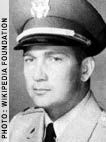
Ex-CIA agent and anti-Castro militant on trial in Texas

Carriles in 1962

Carriles in 1962

By IAN ALLEN | intelNews.org |
A former CIA agent and militant anticommunist, who is idolized by America’s anti-Castro Cubans, but is considered a terrorist in parts of Latin America, has gone on trial in Texas. Luís Posada Carriles, 82, known as “the bin Laden of the Americas” by his detractors, gained notoriety for his self-confessed participation in a string of bombings of hotels in Havana, Cuba, in 1997. He is wanted by the governments of Cuba and Venezuela for his alleged role in the dramatic 1976 midair bombing of Cubana flight 455, which killed all 73 crew and passengers onboard. The United States government has placed Carriles on trial for lying about his militant activities to US immigration officials, after arriving here in 2005. Specifically, Carriles faces 11 charges of perjury, obstruction and naturalization fraud, which he is said to have committed at a 2007 immigration hearing in El Paso. At that hearing, he allegedly denied under oath his participation in the 1997 Havana bombings, and failed to report being in possession of a fake Guatemalan passport, which he had used to enter the United States two years earlier. Read more of this post

News you may have missed #468

News you may have missed #467

  • Ex-Mossad chief says Iran nuke program behind schedule. Meir Dagan, Israel’s recently retired spy chief, thinks Iran will not be able to build a nuclear bomb before 2015, further pushing back Israeli intelligence estimates on the subject. Time for critics of the 2007 US National Intelligence Estimate to reconsider their views?
  • NSA breaks ground on Utah cybersecurity center. Ground was broken last Thursday on the Utah Data Center, a $1.2 billion, 1 million-square-foot cybersecurity center being built for the US National Security Agency at Camp Williams, near Salt Lake City. Secrecy is expected to shroud the center, with the groundbreaking being one of the public’s last chances to take an open look at the project.
  • Colombian judge orders arrest of ex-spy chief. Colombia’s Prosecutor General has ordered the arrest of Jorge Noguera, a former director of the country’s DAS intelligence agency, for his alleged involvement in the spying on government opponents. This is not the first time Noguera, who was director of the DAS between 2002 and 2006, has been sent to jail. He was imprisoned and released twice for his alleged involvement in allowing members of paramilitary organization United Self-Defense Forces of Colombia to infiltrate the intelligence agency.

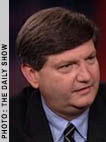
Ex-CIA officer faces up to 120 years for leaking secrets

James Risen

James Risen

By IAN ALLEN | intelNews.org |
A former CIA officer, who sued the Agency after he was fired, was arrested last Thursday in St. Louis, Missouri n charges of leaking classified information about a botched CIA covert operation in Iran. There is no information on the indictment about the recipient of the information that was leaked by Jeffrey Alexander Sterling, who worked for the CIA from 1993 until 2002. But it is common knowledge Sterling spoke to James Risen, a Pulitzer Prize winning journalist for The New York Times. In 2002, Risen wrote an article about Sterling’s lawsuit, in which the plaintiff claimed he was told by his superiors that he was “too big and black” to operate covertly overseas. According to the indictment, in 2003, after Sterling’s lawsuit was thrown out on national security grounds, he started leaking information (presumably to Risen), which he had gathered while working for the CIA’s Iran Task Force. Risen reportedly tried to publish Sterling’s disclosures, but The New York Times declined to print them, after its editors were warned by the White House that they would be severely detrimental to national security. Read more of this post
News you may have missed #465

  • Germany denies secret spy collaboration with the US. Germany’s aerospace center denied Monday that it is working with the US on a $270 million high-tech secret spy program, insisting that its plans for a high-resolution optical satellite have purely scientific and security uses. The denial was in response to US State Department cables obtained by WikiLeaks and revealed by Norwegian daily Aftenposten.
  • Was Iranian nuclear defector tortured? Iranian nuclear scientist Shahram Amiri, who returned to Tehran in July after what he called a “kidnapping” by the CIA, has been held in detention by Iranian authorities for two months and tortured so badly he was hospitalized, according to a dissident Iranian web site.
  • WikiLeaks reveals France leads industrial spying in Europe. France is the country that conducts the most industrial espionage on other European countries, even ahead of China and Russia, according to leaked US diplomatic cables, reported in a translation by Agence France Presse of Norwegian daily Aftenposten‘s reporting.

US denies Ivory Coast coup claim

Emile Guirieoulou

Emile Guirieoulou

By IAN ALLEN | intelNews.org |
The United States has emphatically rejected assertions by officials in the Ivory Coast that it is plotting to overthrow the government of the West African country. For weeks now, Washington has been echoing calls by the United Nations, the African Union and the European Union for Ivorian President Laurent Gbagbo to stand down, after losing in the November 28 national elections. But Gbagbo’s government, which controls most of the military, rejects the alleged election victory of his political rival Alassane Ouattara, and refuses to hand over power. On December 29, the Ivory Coast’s Minister of the Interior, Emile Guirieoulou, told a press conference that the United States had dispatched at least ten German “mercenaries” to its embassy in Abidjan, as part of a multinational Western plot to overthrow Laurent Gbagbo. He told journalists that the German mercenaries were onboard a US-operated flight from Algiers to Bouake, Ivory Coast’s second-largest city. Read more of this post

News you may have missed #462

  • CIA secrets could surface in Swiss nuclear case. A seven-year effort by the CIA to hide its relationship with the Tinners, a Swiss family who once acted as moles inside the world’s most successful atomic black market, hit a turning point on Thursday when a Swiss magistrate recommended charging the men with trafficking in technology and information for making nuclear arms.
  • Pakistan spy chief to ignore US summons. The Pakistani government has announced that hat there is “no possibility” that Lt. Gen. Ahmad Shuja Pasha, the head of Pakistan’s powerful Inter-Services Intelligence Directorate, would obey a summons requesting his appearance before a court in the United States relating to the 2008 Mumbai terrorist attacks.
  • Australia told to prioritize spy recruitment. Carl Ungerer, from the Australian Strategic Policy Institute, has advised the Australian intelligence agencies to “look at ways to improve information gathering from human sources”, as they undergo a period of reform.

News you may have missed #461

  • London expels Russian diplomat for spying. Britain’s troubled relations with Moscow suffered another blow on Tuesday, when London announced the expulsion of an unnamed Russian diplomat in London following “clear evidence” of spying. The request was communicated to the Kremlin on December 10, and was reportedly countered by Russia with a tit-for-tat expulsion of a British diplomat from the country.
  • Syria saw Israel behind aide’s assassination, leaked cables show. Syria suspected Israel of carrying out the murder of Brigadier General Mohammed Sleiman, a top security aide of President Bashar al-Assad, who was assassinated by a sniper in August of 2008, according to US diplomatic cables leaked by WikiLeaks. The killing empowered hardliners in Syria and put an end to moves by President al-Assad for rapprochement between Damascus and Tel Aviv, according to the cables.
  • Israel to publicly press for release of spy held in US. Israeli Prime Minister Benjamin Netanyahu plans to officially and publicly appeal to US President Barack Obama in the coming days for the release of Jonathan Jay Pollard, an American serving a life term in a US jail for spying on the US for Israel.

WikiLeaks revelations keep coming, but few pay attention

WikiLeaks

WikiLeaks

By JOSEPH FITSANAKIS | intelNews.org |
Most Western news outlets are now focusing almost exclusively on the fate of WikiLeaks founder Julian Assange. Few are paying attention to the details of Assange’s rape allegations in Sweden, which have sparked an interesting —though limited— debate about possible links between Assange’s accusers and American intelligence. Even fewer are paying attention to the actual US diplomatic cable revelations by WikiLeaks, which keep appearing daily, mostly in British quality broadsheet The Guardian (The New York Times has largely lost interest at this point). One such revelation, published on Monday, concerns allegations by the Director of the Shabat, also known as Shin Bet (Israel’s internal security service), that Palestinian group Fatah asked Israel to attack rival Palestinian group Hamas, in 2007. The leaked cable claims Shin Bet director Yuval Diskin told US diplomats that Fatah, the secular Palestinian nationalist faction that controls the West Bank, was “demoralized” and “desperate” to halt the rapid rise of Islamic Hamas, which controls the Gaza Strip. Diskin further told US officials that Fatah understood it could only survive with Israeli support, and had thus directly “asked us [Israel] to attack Hamas”. Perhaps more importantly, the leaked cable appears to confirm intense speculation among some intelligence observers that Fatah is “actively gathering information on behalf of Israeli intelligence”. Read more of this post

News you may have missed #460

Leaked cable confirms end of US-NZ spy quarrel

Hillary Clinton

Hillary Clinton

By JOSEPH FITSANAKIS | intelNews.org |
To regular readers of this blog, this is not so much a revelation, as it is a confirmation. Back in October of 2009, we wrote about a peculiar comment made Hillary Clinton. The United States Secretary of State had told a press conference that “we [the US] are resuming our intelligence-sharing cooperation [with New Zealand], which we think is very significant”. Resuming? When had it been disrupted, and why? Most intelligence observers agree that the only glitch that could have caused the cooperation to end would have been New Zealand’s nuclear ban. It was in 1984 when, under mounting popular pressure, the Labour government of David Lange voted to bar nuclear-powered or nuclear-armed ships from entering New Zealand territorial waters. At the time, the ban was heralded by the global nuclear disarmament movement as a major victory. But Washington did not see it that way. Successive US administrations pressured Wellington to repeal the nuclear-free legislation and allow US warships to make use of strategic New Zealand ports. Washington’s pressure increased in the years after 9/11, culminating in 2006, when it threatened to cancel a free-trade agreement between the two countries if New Zealand refused to repeal the ban. It appears that, at some point in time, possibly after 9/11, the US actually terminated intelligence sharing between the two countries in order to force New Zealand to comply. Read more of this post

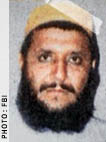
Largest Afghan narcotrafficker was CIA, DEA informant

Haji Juma Khan

Haji Juma Khan

By JOSEPH FITSANAKIS | intelNews.org |
The history of operational collision between the Central Intelligence Agency and illicit narcotics traders is both long and largely documented. But new revelations published in The New York Times this week come to add a new chapter in this ever-expanding saga. The revelations this time concern Haji Juma Khan, perhaps the most notorious of Afghanistan’s drug lords, who has been described by US federal officials as arguably the most dangerous narcotrafficker in Central Asia. In 2008, Khan was finally arrested in New York, where he was charged with conspiracy to fund terrorist operations through trading in narcotics. American prosecutors allege that Khan literally “helped keep the Taliban in business”, providing them with weapons and cash on a systematic basis. But The Times reveal that, over a number of years, Khan also acted as an informant for both the CIA and the Drug Enforcement Administration and was “paid a large amount of cash” in return for his services. Read more of this post