US denies smuggling spy equipment into Argentina [updated]

Argentina

Argentina

By JOSEPH FITSANAKIS | intelNews.org |
The United States has denied charges by Argentine officials that it tried to smuggle espionage equipment into the South American country under the pretext of transporting training supplies for Argentine Federal Police. The charges were leveled on Thursday, after Argentine customs officials conducted what the US Department of State called an “unusual and unannounced” inspection of a US Air Force C-17 cargo plane that landed in the country. According to the Argentine government, the inspection turned up communications interception equipment, “powerful GPS” hardware, as well as “technological elements containing codes labeled secret”, among other items. The material, which had apparently not been listed in the plane’s manifest, was confiscated, while the C-17, along with its American passengers, most of whom were members of the US Special Forces, flew back to the US. Authorities in Argentina are now accusing the US Pentagon and the Department of State of trying to smuggle in the equipment without declaring it to customs officials, as is prescribed under international air cargo transportation laws. Read more of this post

General arrested in Taiwan’s biggest spy scandal in 50 years

Lo Hsien-che

Lo Hsien-che

By JOSEPH FITSANAKIS | intelNews.org |
A “tall, beautiful and chic” Chinese female operative, who held an Australian passport, appears to be behind Taiwan’s most serious espionage scandal in almost half a century, according to news reports. The scandal centers on the arrest earlier this week of Major General Lo Hsien-che, who heads the Taiwanese military’s Office of Communications and Information. Taiwanese prosecutors said that General Lo is the most senior Taiwanese official to be arrested on espionage charges since the early 1960s. He had apparently been investigated for several months by Taiwanese counterintelligence investigators, who claim that Lo was recruited by Chinese intelligence while stationed in Thailand, between 2002 and 2005. Paris-based Agence France Presse cites The China Times in reporting that the General was lured by a female Chinese operative in her early 30s, who cajoled him with “sex and money”. Read more of this post


WikiLeaks documents reveal CIA’s role in Iraq

CIA HQ

CIA HQ

By IAN ALLEN | intelNews.org |
Along with unprecedented inside information on American military operations in Iraq, the 400,000 US military reports recently released by whistleblower site WikiLeaks provide several interesting snippets of the role of the Central Intelligence Agency in that ongoing conflict. Wired magazine’s Danger Room blog correctly notes that, unlike Afghanistan, where the CIA’s role has been relatively clear almost from the very start of the US invasion, the Agency’s function in Iraq has been something of a mystery for most outside observers. There has even been some speculation that the CIA has been sidelined in Iraq by a host of Pentagon-managed special operations outfits, including the Joint Special Operations Command. But the WikiLeaks documents, which are primarily composed of incident reports authored by US troops on the ground in Iraq, include frequent references to operations by “Other Government Agency” or “OGA” —a term usually reserved for the CIA in internal military documents. Collectively, the reports referring to OGA activities reveal significant paramilitary functions performed by CIA personnel until as recently as 2009. Read more of this post

Proposed US-Chinese telecom deal worries US legislators

Huawei HQ

By IAN ALLEN | intelNews.org |
Three US Congress members have raised security concerns about a proposed deal between American and Chinese telecommunications companies, claiming that it could facilitate Chinese espionage in the United States. The proposed collaboration is between US-based Sprint-Nextel and Cricket Wireless, and Chinese hardware manufacturers ZTE Corporation and Huawei Technologies. But three US Senators, Jon Kyl (R-AR), Susan Collins (R-ME), Joe Lieberman (I-CT), have written to US Federal Communications Commission (FCC) Chairman Julius Genachowski, claiming that the ZTE and Huawei are effectively controlled by China’s civilian and military intelligence establishment. According to the legislators, if the proposed deal goes through the Chinese government may be able to use ZTE and Huawei to “manipulate switches, routers, or software embedded in American telecommunications networks so that communications can be disrupted, intercepted, tampered with, or purposely misrouted”. Read more of this post

News you may have missed #442

  • Israeli lobby intensifies Pollard release effort. As convicted spy Jonathan Pollard approaches 25 years behind bars, Israelis and others are renewing efforts to secure freedom for the former US Navy intelligence analyst, who is serving a life sentence in the United States for relaying military documents to Israel.
  • No compromise in WikiLeaks expose, concludes Pentagon. Much ado about nothing. The US Pentagon has concluded that no US intelligence sources or practices were compromised by the posting of secret Afghan war logs by the WikiLeaks website. Meanwhile, WikiLeaks is preparing to publish more revelations.
  • Niger ex-spy chief arrested. Seini Chekaraou, head of counterintelligence at the uranium-rich nation of Niger, has been arrested along with four senior members of the West African country’s ruling junta, allegedly on suspicion that they were “attempt[ing] to destabilize the [military] regime” that took power in the country last February.

News you may have missed #434 (book news edition)

US Pentagon to ban book by DIA intelligence officer

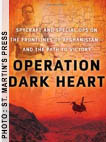
Operation Dark Heart

Op. Dark Heart

By IAN ALLEN | intelNews.org |
American military officials are in negotiations with a major publishing firm to prevent the distribution of a new book on the Afghanistan War by a US intelligence officer, even though thousands of copies of the book have already been printed. Written by US Army Reserve Lieutenant Colonel Anthony Shaffer, the book, Operation Dark Heart, is a personal memoir of the author’s five-month tour in Afghanistan in 2003, as an officer with the Defense Intelligence Agency (DIA). The Pentagon has admitted that its censors did send Shaffer an official clearance letter, authorizing him to forward the manuscript to a publisher –which he did. But it was only after the book had gone into print, that the Defense Department realized that it had neglected to forward a copy of the manuscript to the DIA, as required by regulations, which stipulate that all US government agencies mentioned in the manuscript must approve it prior to publication. Read more of this post

News you may have missed #425 (US edition)

  • US Pentagon considering pre-emptive cyber-strikes? This is what The Washington Post is reporting, noting that military officials are “still wrestling with how to pursue the strategy legally”. If anyone in the DoD discovers a legal method of launching pre-emptive aggression, we’d sure like to know.
  • More changes in US FISA court. After a recent change of leadership, the US Foreign Intelligence Surveillance Act (FISA) court is considering new compliance rules for handling surveillance requests by US counterspy agencies. The court authorizes requests by agencies for surveillance of foreign suspects operating inside the US.
  • Why do US officials want to deport Chinese defector? Washington wants to deport Li Fengzhi, a Chinese ex-intelligence agent who defected to the US in 2004, back to China, where he could be executed for treason. There are rumors that Li may have “oversold” himself to the FBI and the CIA.

News you may have missed #421 (‘not news’ edition)

  • Not news: Senior Afghan officials on CIA payroll. The New York Times‘ Mark Mazzetti and Dexter Filkins are right to air this story, but the real news here is the media industry’s collective gasp of fake shock and horror. Really?
  • Not news: Pentagon breached by foreign hacker. US Deputy Defense Secretary William Lynn has disclosed that an undisclosed foreign spy agency carried out a serious cyberattack on US military networks with the help of a tainted flash drive that was inserted into a laptop in the Middle East. Ah, the old memory-stick gift trick
  • Not news: Sex-obsessed coverage of Russian espionage continues. Russian and US media keep avoiding serious analysis of post-Cold-War Russian intelligence operations by focusing on Anna Chapman. This is no surprise, since pursuing the real story behind Russian deep-cover espionage in the United States takes hard work.>response to Le Carre’s comments.

News you may have missed #420

  • Nokia and Siemens deny helping Iranian spying. Isa Saharkhiz, a one-time reporter for the Islamic Republic News Agency, is suing Nokia Siemens Networks in US federal court, claiming the companies facilitated his capture and torture at the hands of the Iranian government. The European-based consortium denies the allegations.
  • New Aussie spy agency HQ ‘on time and on budget’. The new ASIO $606 million  (USD $540 million) headquarters in Parkes, Canberra, is progressing on time and on budget, with completion scheduled for mid-2012. Meanwhile, the 270 construction workers on site have been vetted for security clearance, must pass security checkpoints each day, and have signed papers not to discuss anything that happens on site.
  • US Pentagon spends big on outsourced spy imagery. The production and maintenance of US spy satellites used to be in government hands, but now this critical aspect of national security is routinely outsourced. The National Geospatial-Intelligence Agency (NGA), the Department of Defense’s operator of military spy satellites, recently awarded $7.3 billion in contracts for its EnhancedView commercial imagery program.

Comment: What Can the US Do To Stop WikiLeaks?

Julian Assange

Julian Assange

By JOSEPH FITSANAKIS | intelNews.org |
Ever since whistleblower site WikiLeaks published 77,000 classified US military documents on the war in Afghanistan, several pundits have urged US government agencies, including the Pentagon, to take action. Late last week, former George W. Bush speechwriter Marc Thiessen urged the Pentagon to unleash its “cyber capabilities to prevent WikiLeaks from disseminating those materials”. Some columnists have even suggested that US intelligence services should “come up with an up-to-date photo of [WikiLeaks founder Julian] Assange and distribute it to […] SEAL sharpshooters”. Pentagon representatives have also stepped up their rhetoric, warning that “[i]f doing the right thing isn’t good enough for [WikiLeaks], we will figure out what alternatives we have to compel them to do the right thing”.

Read more of this post

News you may have missed #409

  • Probe unearths secrets of Bulgaria’s assassination bureau. Previously unknown details on Service 7, Bulgaria’s Cold War-era assassination bureau, have been unearthed by one of Bulgaria’s leading newspapers, following a probe into 5,000 pages of declassified archives from the country’s former communist intelligence service, the First Directorate of the Committee on State Security.
  • US Pentagon bars troops from reading WikiLeaks. Any citizen, any foreign spy, any member of the Taliban, and any terrorist can go to the WikiLeaks web site, and download detailed information. Members of that same military, however, are now banned from looking at those internal military documents, because “doing so would introduce potentially classified information on unclassified networks”.
  • Analysis: Chasing Wikileaks. “[W]hatever the imperfections of WikiLeaks as a startup, its emergence points to a real shortcoming within our intelligence community. Secrets can be kept by deterrence –that is, by hunting down the people who leak them […]. But there are other methods: keep far fewer secrets, manage them better –and, perhaps, along the way, become a bit more like WikiLeaks. An official government Web site that would make the implementation of FOIA quicker and more uniform, comprehensive, and accessible”.

Bookmark and Share

Documents detail history of previously unknown US spy agency

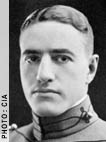
John V. Grombach

J.V. Grombach

By IAN ALLEN | intelNews.org |
A collection of tens of thousands of documents discovered in a barn in a small Virginia town, have brought to light the history and operations of a previously unknown US spy agency that competed for prominence with the CIA during the early stages of the Cold War. The secrecy-obsessed agency was known at various times as the Secret Intelligence Branch, the Special Service Branch, the Special Service Section, or the Coverage and Indoctrination Branch; but insiders referred to it simply as “the Lake” or “the Pond”. It was created in late 1942 by the then newly established US Department of Defense, whose officials did not approve of the civilian character of the Office of Strategic Services (OSS), forerunner of the CIA. In its 13-year existence, the Pond operated on a semi-autonomous base under the Departments of Defense and State, but maintained a poor relationship with the CIA, which it considered too “integrated with British and French Intelligence and infiltrated by Communists and Russians”. This information is contained in the files, which were stored in several safes and filing cabinets by the organization’s secretive leader, US Army Colonel John V. Grombach, who died in 1982. Read more of this post

News you may have missed #400 (Wikileaks Afghan War Diary edition)

  • Roundtable discussion on Wikileaks Afghan war files. Democracy Now hosts a freely-available hour-long discussion on the recent Wikileaks exposure of nearly 92,000 classified military reports on the Afghan war, with independent British journalist Stephen Grey; Pentagon Papers whistleblower Daniel Ellsberg; former State Department official in Afghanistan Matthew Hoh; independent journalist Rick Rowley; and investigative historian Gareth Porter.
  • Are the Wikileaks war docs overhyped old news? This appears to be the view of Danger Room‘s Spencer Ackerman, who suggests that “so far, there’s no My Lai, no No Gun Ri, no smoking gun linking al-Qaeda to the Boston Red Sox. And some of the heavy-breathing accounts surrounding the documents don’t really match what the logs say”.
  • Pentagon investigating source of leak. The investigation into the biggest leak in US military history centers on Bradley Manning, a US Army intelligence analyst, who allegedly boasted online that he was going to reveal “the truth” about the war in Afghanistan.

Bookmark and Share

Has US Pentagon revived Bush-era domestic spy program?

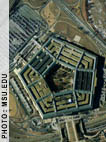
US Pentagon

US Pentagon

By JOSEPH FITSANAKIS | intelNews.org |
A little-known US Department of Defense counterintelligence is suspected to have resuscitated a notorious Bush-era domestic surveillance program, which was banned by Congress for being too obtrusive. In 2002, the then Deputy Secretary of Defense, Paul Wolfowitz authorized the Threat and Local Observation Notice (TALON), a US Air Force intelligence collection program aimed to gather data on potential threats to American armed forces personnel in the US and abroad. But the initiative was allegedly shelved by the Bush administration, after it emerged that TALON intelligence collection focused largely on political policing against lawful antiwar groups. But now new reports suggest that an obscure unit under the Pentagon’s Defense Intelligence Agency (DIA), called the Defense Counterintelligence and Human Intelligence Center (DCHC), is creating a new system of consolidated databases whose focus closely resembles that of TALON. Read more of this post