News you may have missed #842 (world reaction to Snowden leak)

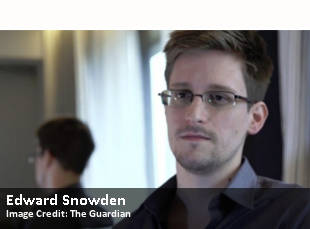
Edward SnowdenBy IAN ALLEN | intelNews.org |
►►Chinese media focus on Snowden leaks. The front pages of Chinese state media were covered Thursday with the allegations of ex-CIA employee Edward Snowden, who says the US government has been hacking computers in China for years. Speaking to media in Hong Kong, where he is currently staying, Snowden said the US has been hacking computers in Hong Kong and mainland China since 2009. He said targets include public officials, businesses and the Chinese University of Hong Kong. Those claims by Snowden were the top story on most of China’s major news portals on Thursday
►►Switzerland furious about Snowden’s charge that CIA spies on Swiss banks. One of the many lurid details in The Guardian’s remarkable interview with NSA whistleblower Edward Snowden was his account of what initially prompted him to leak: namely a CIA tour in Switzerland, where CIA officers recruited Swiss banking officials. The Snowden disclosure could not come at a worse time for the Swiss government, which is trying to convince parliament to back its emergency plan that would allow Swiss banks to turn over data on tax evaders to the US government.
►►Is Russia considering giving asylum to Snowden? Asked if the 29-year-old could claim asylum from Russia, a spokesman for President Vladimir Putin told the newspaper Kommersant: “If such a request is received, it will be considered”. Any attempt by the Kremlin to give refuge to Mr Snowden, amid calls for his prosecution under the US Espionage Act, is likely to infuriate the White House and provoke a major diplomatic standoff.

News you may have missed #841 (Snowden leak analysis)

Edward SnowdenBy IAN ALLEN | intelNews.org |
►►US officials defend spy programs as safeguards against terror. Intelligence officials sought to convince US House lawmakers in an unusual briefing that the government’s years-long collection of phone records and Internet usage is necessary for protecting Americans —and does not trample on their privacy rights. The parade of FBI and intelligence officials who briefed the entire House on Tuesday was the latest attempt to soothe outrage over NSA programs which collect billions of Americans’ phone and Internet records.
►►Some in US intelligence see Chinese behind Snowden leak. Former CIA officer Bob Baer told CNN that some US intelligence officials “are seriously looking at [the revelations made by Edward Snowden] as a potential Chinese covert action. Hong Kong is controlled by Chinese intelligence”, Baer told CNN Sunday evening. “It’s not an independent part of China at all. I’ve talked to a bunch of people in Washington today, in official positions, and they are looking at this as a potential Chinese espionage case”.
►►Leak highlights risk of outsourcing US spy work. The explosive leak uncovering America’s vast surveillance program highlights the risks Washington takes by entrusting so much of its defense and spy work to private firms, experts say. Edward Snowden, the 29-year-old man whose leak uncovered how spy agencies sift through phone records and Internet traffic, is among a legion of private contractors who make up nearly 30 percent of the workforce in intelligence agencies. From analyzing intelligence to training new spies, jobs that were once performed by government employees are now carried out by paid contractors, in a dramatic shift that began in the 1990s amid budget pressures.

Ex-CIA technician who leaked Verizon court order comes forward

Edward SnowdenBy JOSEPH FITSANAKIS | intelNews.org |
Last week, British newspaper The Guardian revealed a secret court order that enables the United States government to collect the telephone records of millions of customers of Verizon, one of America’s largest cellular phone service providers. On the morning of Sunday, June 9, the individual responsible for leaking the secret court order came forward on his own volition. He is Edward Snowden, a former technical assistant for the US Central Intelligence Agency (CIA). The 29-year-old computer expert, who has been working for the National Security Agency (NSA) for the last four years, told The Guardian that he decided to leak the injunction because he felt it posed “an existential threat to democracy”. He added that he was not motivated by money in disclosing the document. Were he after money, he said, he “could have sold these documents to any number of countries and gotten very rich”. In a video published on The Guardian’s website, Snowden told the paper that his disillusionment with America’s “federation of secret law, unequal pardon and irresistible executive powers” began even before 2007, when he was stationed under diplomatic cover at the CIA station in Geneva, Switzerland. He finally decided to act three weeks ago, he said, after careful consideration of the ramifications of his decision for his life and career.

Read more of this post

News you may have missed #840

John KiriakouBy IAN ALLEN | intelNews.org |
►►S. Korea prosecutors might seek ex-spy chief’s arrest. Prosecutors said Monday they will decide sometime this week whether to seek an arrest warrant against Won Sei-hoon, who headed South Korea’s National Intelligence Service (NIS) for about four years until early this year. He is suspected of ordering agents to post a slew of politically sensitive comments on the Internet in order to sway public opinion in favor of the ruling party candidate prior to the December 19 national election. Won, who headed the NIS under former President Lee Myung-bak, has been barred from leaving the country pending investigation.
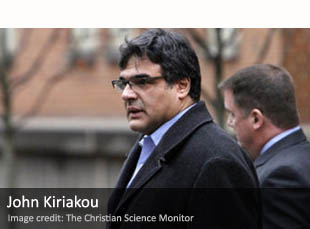
►►CIA self-described whistleblower writes about life in prison. In 2012, former CIA officer John Kiriakou pleaded guilty to violating the Intelligence Identities Protection Act. In January of this year, he was sentenced to 30 months in a low security prison in Loretto, Pennsylvania. In a letter released by his lawyer, Kiriakou describes his day-to-day life behind bars, from his own tiny cell to an almost anthropological study of the lunchroom and the relatively rare prison fights.
►►Comment: End the spy budget secrecy in Israel. Since the establishment of the Israeli state, the security establishment has enjoyed confidentiality with regard to the details of its budget, justified by the need to keep secrets from enemy intelligence services. This lack of transparency has impaired public scrutiny of security expenditure, which represents a large chunk of the Israeli economy. When the watchful eye is distant, the temptation is great to inflate job slots, exaggerate salary increments and hike up pension conditions.

News you may have missed #815 (analysis edition)

Polygraph testBy IAN ALLEN | intelNews.org |
►►Should polygraph tests be trusted?  US federal polygraph programs have flourished, targeting a growing number of private contractors with more intensely personal questions than ever before. More than 70,000 people are now screened yearly in the US. Yet thousands of people a year could be identified as lying in polygraph screenings when they are not, according to statistical models by the National Academies, which advises the federal government on scientific matters. Under the current system, many of them would have no way to legally challenge polygraphists’ conclusions, especially in the intelligence world.
►►Why the US does not need another law against intelligence leaks. Leonard Downie Jr., vice president at large of The Washington Post, warns that the 2013 Intelligence Authorization Act “would make it a crime for career intelligence officers to provide almost any type of information to the news media, whether the information is classified or not”. He argues that the proposed legislation would “end contacts that often benefit both the government and the public by allowing the exchange of accurate information about vital national security issues and intelligence activities, including abuses requiring attention”.
►►The preventable decline of British defense intelligence. Defense intelligence refers to something rather different from ‘military intelligence’. It takes place at the topmost levels of defense coordination and decision-making and draws together participation from all of the armed services with civilian subject-matter and technical experts and produce consolidated assessments for senior civil servants, ministers and the service chiefs of staff. Philip Davies, director of the Brunel Centre for Intelligence and Security Studies in the United Kingdom, argues that, in Britain, defense and military intelligence remains “something of a poor cousin in the intelligence community, the eternal Peter robbed to pay the Paul of other, seemingly more urgent, defense expenditure and policy priorities”.

News you may have missed #803

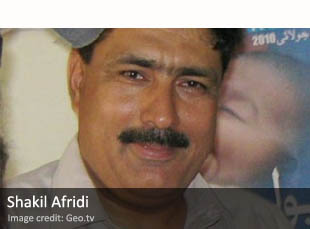
Shakil AfridiBy IAN ALLEN | intelNews.org |
►►Phone seized from Pakistani doctor who helped CIA find bin Laden. Pakistani authorities have seized a Thoraya satellite phone from jailed doctor Shakil Afridi, who helped the CIA trace Osama bin Laden, and also arrested four police commandos guarding his cell. After interrogation, one of the four arrested commandos confessed that he had provided the satellite phone to Afridi. The doctor had reportedly made more than 68 calls from the satellite phone set and most of these calls were long-distance, but the authorities are assessing the satellite phone data to ascertain the country location.
►►US whistleblower protections extended to intelligence community. US President Barack Obama has extended whistleblower protections to national security and intelligence employees. A new Presidential policy directive says employees “who are eligible for access to classified information can effectively report waste, fraud, and abuse while protecting classified national security information. It prohibits retaliation against employees for reporting waste, fraud, and abuse”. The President has also instructed agencies, including the CIA, to establish a review process, within 270 days, that allows employees to appeal actions in conflict with the directive that affect their access to classified information. It is worth noting that the Obama administration has been criticized by open-government advocates for aggressively prosecuting self-described whistleblowers.
►►What do CIA spies do after retirement? What do former spies do when they quit the spy game? Plan covert action campaigns against the nasty old ladies in their homeowners’ association? Overthrow their city council for fun? No, the majority of former CIA case officers work as consultants or contractors within the US intelligence community. However, while returning to work as intelligence consultant is the norm, some few do forge a different path, applying lessons learned from government service to a new life in the private sector.

News you may have missed #799

Russell TiceBy IAN ALLEN | intelNews.org |
►►Is NSA using UK spy base to guide predator drones? Surrounded by farmland and sheep, hundreds of National Security Agency staff go to work every day at RAF Menwith Hill, where they eavesdrop on communications intercepted by satellite dishes contained in about 30 huge golf ball-like domes. Menwith Hill has been used by the NSA since the 1960s; but lately there is growing disquiet in Britain over whether intelligence gathered at the base is being used to help with the CIA’s controversial clandestine drone strikes. And the British government is keeping mum.
►►Aussie envoy seduced by spy feared her phone was bugged. Former senior Austrade commissioner to Hanoi Elizabeth Masamune, who recently admitted before an Australian court that she had sexual relations with a Vietnamese intelligence officer, told police she feared her Hanoi offices were bugged. In her statement during the trial of eight former Reserve Bank company executives on bribery charges, she said that after receiving a call from a journalist she recalled “being concerned of the level of information which she had. I was also more concerned about whether my phone was being monitored”, she said.
►►NSA whistleblower describes beating polygraph test. Russell Tice, the National Security Agency whistleblower who helped blow the lid open on warrantless wiretapping conducted by the federal government on US citizens post-9/11, says that he took between 12 and 15 polygraph tests during his nearly 20-year-long government career. The tests mellowed over time, Tice says, and they may have also gotten easier to beat. Tice, who is no longer at the NSA, says he, along with those still in contact with at the agency, marvel at how easy it is to beat the lie detector.

News you may have missed #785 (interview edition)

Stella RimingtonBy IAN ALLEN | intelNews.org |
►►Interview with first-ever NSA Compliance Director. John DeLong, the first-ever compliance director at the US National Security Agency, has given an interview to NextGov. In it, he says that “we’re nothing if we lose the confidence of the American people”. He is referring to frequent allegations, by whistleblowers and others, that the Agency is increasingly spying on Americans’ communications. As Compliance Director, DeLong is responsible for ensuring that the NSA abides by US law, which forbids it from intercepting electronic messages exchanged between US citizens or persons.
►►Ex-MI5 boss offers comment on WikiLeaks. Former MI5 Director-General Dame Stella Rimington has criticized “the indiscriminate pouring out into the public domain of streams of leaked documents by Julian Assange and his WikiLeaks organization”. But she also said that the US government should have taken better steps to prevent WikiLeaks from acquiring the information in the first place. Speaking at an international archiving conference in Brisbane, Australia, Dame Stella said that while the WikiLeaks saga could prompt the US government to come up with better databases, it would more likely encourage it to be even more secretive. This, she added, “must be absolutely the opposite effect of what WikiLeaks was seeking”.
►►Interview with NSA whistleblower. Filmmaker Laura Poitras interviews William Binney, a 32-year veteran of the US National Security Agency, who helped set up STELLAR WIND, the NSA’s top-secret domestic spying program, which was put in place after 9/11. The program was so controversial that it nearly caused top Justice Department officials to resign in protest in 2004. Binney, who resigned over STELLAR WIND in 2001, and began speaking out publicly in the last year, explains how the program he created for foreign intelligence gathering was turned inward on America.

Interview with NSA whistleblower

News you may have missed #774 (lawsuit edition)

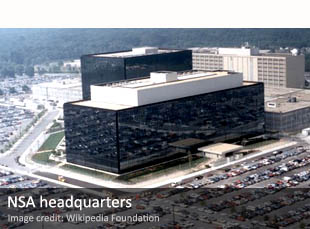
NSA headquartersBy IAN ALLEN | intelNews.org |
►►NSA whistleblower sues over property seized in leak raid. Diane Roark, a former staffer for the US House of Representatives Permanent Select Committee on Intelligence, has filed a lawsuit to seek return of computers, electronic devices and papers seized from her home in 2007. Roark, who handled the House’s oversight of the National Security Agency from 1997 to 2002, was suspected by the FBI of being a source for The New York Times‘ disclosure of the NSA’s warrantless wiretapping program STELLAR WIND, which she denies.
►►Lawsuit forces US agency to disclose CIA files. The US Veterans Administration has been ordered to disclose documents relating to the CIA’s Cold War-era experimentation on American soldiers. Beginning in the 1950s, the military and CIA utilized former Nazi scientists to test the effects of 400 types of drugs and chemicals, including mescaline, LSD, amphetamines, mustard gas, and nerve agents, on US soldiers, according to a lawsuit brought by the Vietnam Veterans of America and individual soldiers. Under the lawsuit, a judge in California has ruled the VA must hand over documents pertaining to the use of at least 7,800 service personnel as “human guinea pigs” by the US Army and the CIA.
►►Syrian spy tried to infiltrate German intelligence. A suspected Syrian spy who was arrested in Germany earlier this year and has now been charged with espionage, once tried to infiltrate the country’s intelligence services, according to German officials. The man, identified only as Akram O., was employed by Syria’s embassy in Berlin, and tasked with keeping tabs on Syrian opposition activists living in Germany. His application to work for the German federal government was made “at the behest of his intelligence agency handlers”, according to prosecutors. His application was turned down, however. The Syrian national applied for German citizenship in 2009, which was also denied.

News you may have missed #773

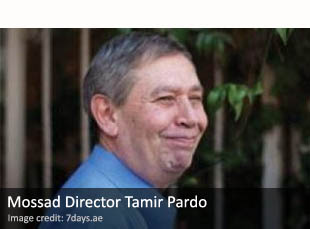
Tamir PardoBy IAN ALLEN | intelNews.org |
►►Conflicting reports on CIA-ISI meeting. Lieutenant General Zahir ul-Islam, who heads Pakistan’s premier intelligence agency, the ISI, held talks in Washington with his CIA counterpart General David Petraeus, between August 1 and 3. It was the first time in a year that the chief of the ISI made the trip to the US, signaling a possible thaw in relations. Depending on the source, the meeting was either “substantive, professional and productive”, or “made no big strides on the main issues”.
►►Senior Mossad official suspected of financial misconduct. A senior Mossad official is suspected of financial misconduct and has been forced to take a leave of absence until Israeli police complete an investigation into his alleged deeds, Israeli media reported on Sunday. The official, a department head in Israel’s spy organization, has reportedly denied any wrongdoing, but sources said he would likely not be reinstated in light of investigation findings and is effectively being forced to retire. The nature of the official’s alleged misconduct has not been reported, but it is said that the official in question has close ties to Mossad Director Tamir Pardo, who appointed him to his position last year.
►►Ex-NSA official disputes DefCon claims by NSA chief. William Binney, a former technical director at the NSA, has accused NSA director General Keith Alexander of deceiving the public during a speech he gave at the DefCon hacker conference last week. In his speech, Alexander asserted that the NSA does not collect files on Americans. But Binney accused Alexander of playing a “word game” and said the NSA was indeed collecting and indexing e-mails, Twitter writings, Internet searches and other data belonging to Americans. “The reason I left the NSA was because they started spying on everybody in the country. That’s the reason I left”, said Binney, who resigned from the agency in late 2001.

News you may have missed #764

Baroness FalknerBy IAN ALLEN | intelNews.org |
►►US government agency spied on whistleblower scientists. The US Food and Drug Administration has been found operating a massive surveillance campaign targeting its own scientists for writing letters to journalists, members of Congress and President Barack Obama. The scientists were expressing their concern over the FDA’s approval of medical imaging devices for colonoscopies and mammograms that could endanger patients with high levels of radiation. The covert spying operation, which is most likely illegal, led the agency to monitor the scientists’ computers at work and at home, copying emails and thumb drives and even monitoring individual messages line by line as they were being composed in real time.
►►UK lawmaker tells MI6 chief to ‘stop bragging’. The head of Britain’s Secret Intelligence Service (MI6), Sir John Sawers, has been accused by Liberal Democrat parliamentarian Baroness Falkner of Margravine of demonstrating a “lack of judgment” for “bragging” about MI6’s role in slowing Iran’s nuclear program. Earlier this month, Sir John said in an interview that covert operations by British spies had prevented Iran from developing nuclear weapons as early as 2008. But Lady Falkner said in a speech at the House of Lords that “Sir John’s comments could almost be construed as bragging. In my view”, she continued, “it would be best for the veneer of silence to descend on the Secret Intelligence Service once again. There is such a thing as too much information”.
►►German domestic intel agency gets new director. The German government has appointed terrorism expert Hans-Georg Maassen to head the country’s domestic intelligence body, known as the “Verfassungschutz. Maassen’s appointment comes after several turbulent weeks for the agency that have resulted in three of its top officials stepping down amid a scandal connected to a series of murders by a Neo-Nazi group calling itself the National Socialist Underground.

News you may have missed #759 (analysis edition)

Carter HamBy IAN ALLEN | intelNews.org |
►►What goes on in the mind of a spy? An interesting article on the psychology of espionage operatives and those who handle them. It includes several insightful observations, including this one: “Just as they face outward physical dangers, agents face many inner psychological adversities. These pressures in the psyche are as taxing as physical hardships. Furthermore, while physical hazards and hardships disappear once the active espionage is over, the psychological toll can linger”. IntelNews has covered psychological and psychiatric issues around espionage before.
►►Researchers propose using decoys to detect leaks. A group or researchers working for the US Pentagon’s research wing have come up with a new plan for busting leakers: spot them by how they search, and then entice the secret-spillers with decoy documents that will give them away. Computer scientists call it it “fog computing”, and it is seen as part of a broader assault on so-called “insider threats”, launched by the Pentagon in 2010, after the WikiLeaks imbroglio. In a related development, the US federal government announced recently that it spent over $11 billion to protect its secrets last year, double the cost of classification a decade ago. The total does not include the costs incurred by the US Intelligence Community, which remains classified.
►►US General says US military spies ‘across Africa’. America’s top commander in Africa, General Carter Ham, has revealed that the US military has conducted spy operations all over the continent as part of the fight against international adversaries from al Qaeda-allied terror groups that target the homeland to suspected war criminals like Joseph Kony. “Do we collect information across Africa? Yes, we do”, the commander of US Africa Command said in a leadership conference at the Africa Center for Strategic Studies. Ham noted that US troops do at times go on “short-term deployments of capabilities” in various African nations, but always with the permission of the host country.

News you may have missed #741

Glenn CarleBy IAN ALLEN | intelNews.org |
►►MI6 role in rendition could be concealed in new bill. Libyan government officials Sami al-Saadi and Abdel Hakim Belhaj, who allege that they were taken by rendition by Britain to Libya eight years ago, are expected to begin legal proceedings against the British government and Jack Straw, Britain’s former foreign secretary, next month. However, after pressure from the security services, MI5 and MI6, the British government is preparing to publish a Justice and Security Bill that could allow these cases to be held in their entirety behind closed doors.
►►Aussie spy agency defends new headquarters. The Australian Security Intelligence Organisation says its new headquarters in Canberra is not at risk of being spied upon, despite the use of a lot of glass. ASIO director general David Irvine told a senate committee on Thursday it would be impossible for someone with a high resolution camera on the other side of Lake Burley Griffin to spy on the nation’s spies. Australian Greens senator Scott Ludlam had asked whether the design of the “glass palace” could threaten the secrecy of its work.
►►Good interview with ex-CIA officer Glenn Carle. In this interview, Carle, a retired CIA case officer who wrote The Interrogator: An Education, says his former employers have called his publisher asking them to pulp his book; they rang every major network to prevent him going on air. They are, he says several times, “vicious” and have perpetrated a stain on America’s national character.

News you may have missed #732 (interview edition)

Thomas DrakeBy IAN ALLEN | intelNews.org |
►►Interview with H. Keith Melton. A well written interview with H. Keith Melton, one of the world’s best-known intelligence historians, who describes himself as “a historical consultant within the US intelligence community”. Melton has been a guest lecturer at the Federal Bureau of Investigation, the National Security Agency and the Joint Military Intelligence College. He also says he is “an ongoing adviser to other US intelligence agencies”.
►►Interview with editor of Eye Spy magazine. An extensive interview with Mark Birdsall, editor of the only independent publication dedicated to espionage and intelligence. He shares the story behind the magazine, his take on the current state of espionage and security, and on global security issues. Among other things, Birdsall says that some claim Eye Spy is “a government organ, [while] others an attempt to glean information that should not be published”. He also states that “it has taken a decade of hard work for the title to get recognition in some intelligence circles”.
►►Interview with NSA whistleblower Thomas Drake. Drake began his NSA career as a contractor in 1991, and formally joined the Agency in 2001, working until 2008 in the Agency’s Signals Intelligence and Engineering directorates. The US government took Drake to court, accusing him of leaking secrets about the NSA to a journalist. But the judge in his case, Richard D. Bennett, refused to sentence him to prison, recognizing that his genuine intention in leaking the secrets was to expose mismanagement at the NSA.

News you may have missed #702

James BamfordBy IAN ALLEN | intelNews.org |
►►NSA chief denies domestic spying allegations. In a rare break from the NSA’s tradition of listening but not speaking, National Security Agency chief General Keith Alexander was grilled last week on the topic of eavesdropping on Americans in front of a House subcommittee. The questioning from Rep. Hank Johnson (D-Georgia) was prompted by Wired magazine’s cover story earlier this month on the NSA’s growing reach and capabilities. But author James Bamford (photo) and NSA whistleblower Thomas Drake insist that the NSA is quietly building America’s the largest spy center in Utah, as part of a secret domestic surveillance program codenamed STELLAR WIND.
►►NY police says it monitored Iran operatives taking photos. Speaking before the US House Homeland Security Committee, Michael Silber, director of New York Police Department Intelligence Analysis, said New York City Police have observed Iranian operatives photographing key transportation sites at least six times since September 11, 2001. He gave an example of six men on an East River sightseeing cruise in 2005, who paired off with maps and cell phones while taking photographs and videos of the bridges over the river. The NYPD determined each was on the payroll of Iranian government, one employed at Iran’s mission to the United Nations.
►►Major Canadian Cold War era mole hunt operation revealed. Newly released archival records show that even the cream of Canada’s foreign service was not immune from scrutiny in a top secret RCMP investigation known as Operation FEATHER BED. The probe, which stretched from the late 1950s into the 1970s, saw RCMP security branch investigators pore over the backgrounds of possible Communist sympathizers in the public service and political sphere —including a future Mountie spy chief. There is no evidence the highly confidential investigation ever identified a Soviet agent.