China seeks clarification over alleged spy equipment ordered by US embassies
December 25, 2018 1 Comment
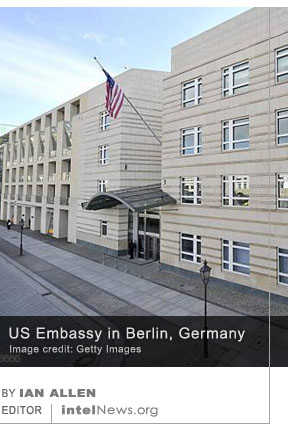 The Chinese government says it is seeking explanations from Washington after a leaked procurement database showed that American embassies purchased data forensics software and various tactical spy equipment. The purported database was published on December 21 by the international anti-secrecy website WikiLeaks, founded by Julian Assange, who is accused by some in the United States of having violated its espionage laws. WikiLeaks has dubbed the database the “US Embassy Shopping List” and says that it contains over 16,000 procurement requests from officials at American embassies located all over the world.
Most procurement requests included in the WikiLeaks database appear to be for commonplace items or services, such as passenger transportation, heating oil, outdoor freezers, or garage gates maintenance and repair. But there are some requests for so-called “tactical spy equipment”, such as those ordered by the US embassies in Colombia and El Salvador. These appear to be for miniature surveillance cameras hidden into everyday objects, such as buttons, baseball caps, watches and ties. Nearly 100 such items were requested for procurement by the US embassy in San Salvador. Several embassies ordered hardware and software for forensic examination of mobile phones. For example, the US embassy in Yerevan, Armenia, ordered a “Cell Phone Analyzer”, which allows users to access data from cell phones while bypassing security measures such as passwords. Similar devices were ordered by the US embassies in Berlin (pictured), and Kiev, capital of Ukraine, where fears were expressed on Monday about a possible military action by Russian troops during the holidays.
On Monday, China’s Ministry of Foreign Affairs said it was seeking “clarifications” from Washington about the documents made public by WikiLeaks. Speaking to reporters in Beijing, Ministry spokesman Hua Chunying said that the US owed “the rest of the world an explanation […] for what has recently been revealed by WikiLeaks”. Chunying also spoke about prior WikiLeaks revelations, including the so-called “PRISM-gate” in 2013, which revealed extensive intelligence-collection activities by the US on numerous countries, including some if its allies, such as Germany and France. She went on to ask, “why do American embassies buy so much secret surveillance equipment?”. Authorities in Washington had made no comment on the WikiLeaks revelation as of Tuesday morning.
► Author: Ian Allen | Date: 25 December 2018 | Permalink
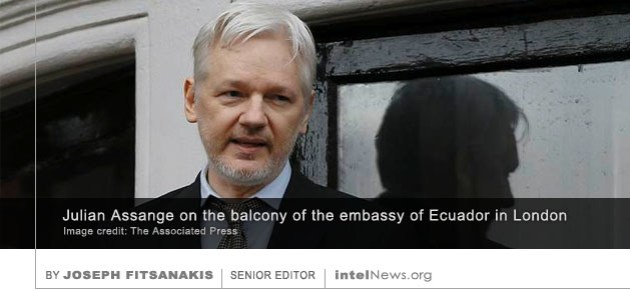 Russia and Ecuador canceled at the last minute a secret plan to smuggle WikiLeaks founder Julian Assange out of the Ecuadorean embassy in London after it was deemed “too risky”, according to a report. The Australian-born founder of the whistleblower website was granted political asylum by the government of Ecuador in June of 2012, after Swedish authorities charged him with rape. He claims that the charges are part of a multinational plot to extradite him to the United States, where he is wanted for having leaked hundreds of thousands of secret government documents. He has thus refused to leave Ecuador’s embassy in the British capital since June 2012.
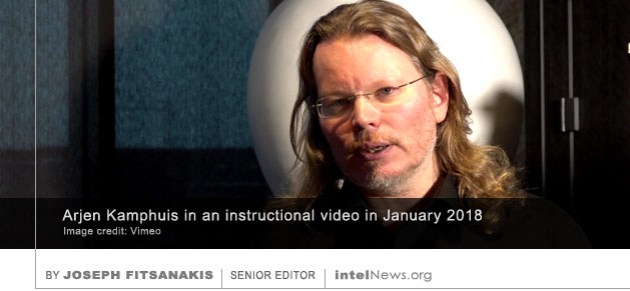 Police in Norway and Holland have opened formal investigations into the whereabouts of a Dutch cybersecurity expert and senior associate of WikiLeaks, who disappeared without trace on August 20. Arjen Kamphuis, a 47-year-old online privacy specialist, is known for his book Information Security for Journalists, which offers advice on investigative reporters working on national security and intelligence matters. Additionally, Kamphuis, who has Dutch citizenship, is a close associate of Julian Assange, founder of the international whistleblower website WikiLeaks.
 The United States federal government has launched a criminal investigation into the public disclosure of thousands of documents that purportedly belong to the Central Intelligence Agency. The documents were
 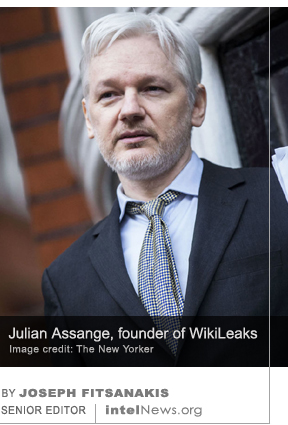 Thousands of documents belonging to the United States Central Intelligence Agency, which were released on Tuesday by the international anti-secrecy website WikiLeaks, are almost certainly genuine. They reveal an entire universe of technical intelligence collection methods used by the CIA to extract information from digital applications and electronic devices, ranging from flash drives to smart screen televisions. WikiLeaks named the collection
 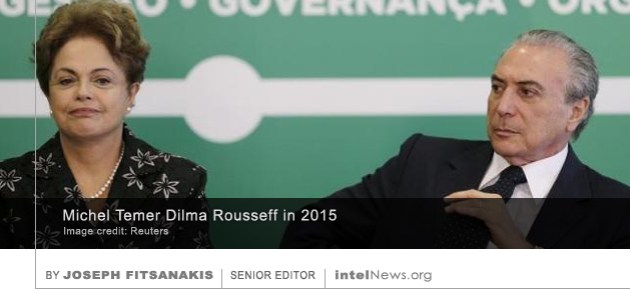 The new acting president of Brazil briefed American diplomats on sensitive political matters in 2006, according to cables published by the international whistleblower website WikiLeaks. Michel Temer is leader of the Brazilian Democratic Movement Party, known as PMDB. Although it is one of Brazil’s largest political parties, the PMDB has been unable to muster enough electoral support to govern the country on its own. As a result, under Temer’s leadership, the PMDB has been a partner of every governing coalition in Brazil since 1995. During the administration of leftwing President Dilma Rousseff, Temer held the post of Vice President.
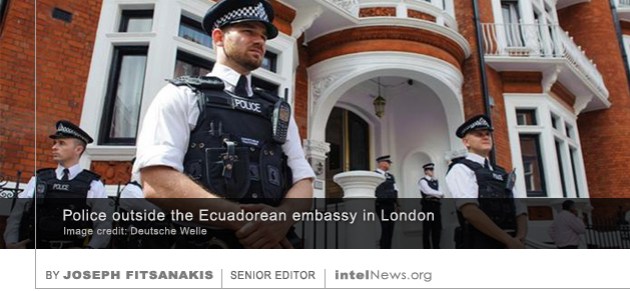 Police in London will no longer physically monitor the embassy of Ecuador in the British capital, where WikiLeaks founder Julian Assange has been living for over two years, fighting against extradition to Sweden. Assange was granted political asylum by the government of Ecuador in June of 2012, after Swedish authorities charged him with rape. But the Australian-born Assange claims that the charges are part of a plot to extradite him to the United States, where he is wanted for having leaked hundreds of thousands of documents belonging to the Department of Defense and the Department of State.
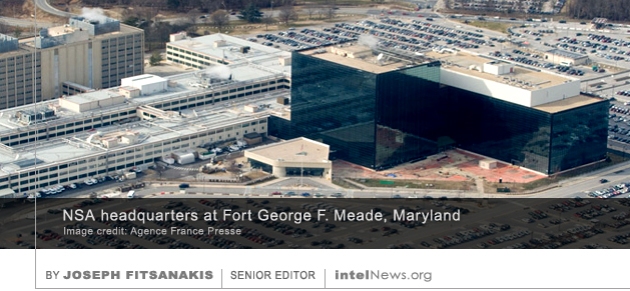 New information published by international whistleblower website WikiLeaks seems to suggest that the United States National Security Agency (NSA) collected information on export contracts by French companies and sought inside information on France’s position in international trade negotiations. According to the website, which
 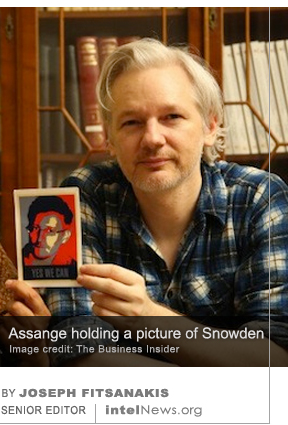 Leaders from all sides of the French political spectrum urged the French government on Thursday to offer political asylum, and even French citizenship, to the American defector Edward Snowden and to WikiLeaks founder Julian Assange. The calls were made in response to
  n in Syria and Iraq, the continuing crises in Ukraine and in Libya, as well as the financial meltdown in Greece. So there is a recognition that their intelligence agencies must continue to work together on several pressing issues.
 routine practice. However, I do believe that this regimen can easily be changed to address particular needs, through what is called a “presidential finding”, basically a direct order issued by the president of the United States to target an individual foreign leader.
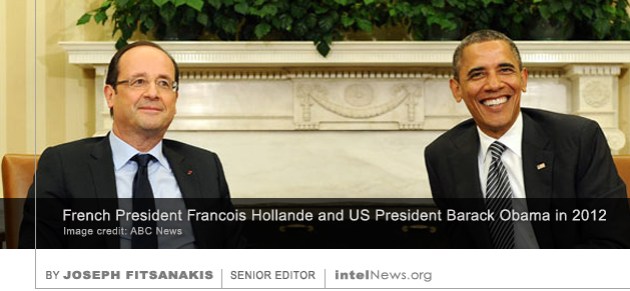 The president of France has convened an emergency meeting of the country’s highest national security forum in response to revelations that the United States spied on three French presidents. The Conseil de la Défense is to convene in Paris on Wednesday to discuss the emergence of documents that appear to implicate the US National Security Agency (NSA) in spying on Jacques Chirac and Nicolas Sarkozy, who ruled France from 1995 to 2012. The documents further indicate that the NSA may have also targeted the personal communications of Francois Hollande, France’s current head of state.
 By IAN ALLEN | intelNews.org |







 intelNews.org
Lax security behind greatest data loss in CIA’s history, internal report concludes
June 17, 2020 by Joseph Fitsanakis 1 Comment
The Vault 7 data leak occurred in the first half of 2017, when the anti-secrecy website WikiLeaks began publishing a series of technical documents belonging to the CIA. Once all documents had been uploaded to the WikiLeaks website, they amounted to 34 terabytes of information, which is equivalent to 2.2 billion pages of text. The information contained in the Vault 7 leak is believed to constitute the biggest leak of classified data in the history of the CIA.
The Vault 7 documents reveal the capabilities and operational details of some of the CIA’s cyber espionage arsenal. They detail nearly 100 different software tools that the agency developed and used between 2013 and 2016, in order to compromise targeted computers, computer servers, smartphones, cars, televisions, internet browsers, operating systems, etc. In 2017 the US government accused Joshua Adam Schulte, a former CIA software engineer, of giving the Vault 7 data to WikiLeaks. Schulte’s trial by jury was inconclusive, and a re-trial is believed to be in the works.
Now an internal report into the Vault 7 disclosure has been made public. The report was compiled by the CIA WikiLeaks Task Force, which the agency set up with the two-fold mission of assessing the damage from the leak and recommending security procedures designed to prevent similar leaks from occurring in the future. A heavily redacted copy of the report has been made available [.pdf] by Senator Ron Wyden (D-OR) who is a member of the US Senate Select Committee on Intelligence. An analysis of the report was published on Tuesday by The Washington Post.
The report recognizes that insider threats —a data leak perpetrated on purpose by a conscious and determined employee, or a group of employees— are especially difficult to stop. It adds, however, that the Vault 7 leak was made easier by “a culture of shadow IT” in which the CIA’s various units developed distinct IT security practices and their own widely different systems of safeguarding data. Many cyber units prioritized creative, out-of-the-box thinking, in order to develop cutting-edge cyber-tools. But they spent hardly any time thinking of ways to safeguard the secrecy of their projects, and failed to develop even basic counterintelligence standards —for instance keeping a log of which of their members had access to specific parts of the data— according to the report.
Such standards should have been prioritized, the report adds, given the numerous high-profile leaks that rocked the Intelligence Community in the years prior to the Vault 7 disclosure. It mentions the examples of Edward Snowden, a former contractor for the National Security Agency, who defected to Russia, as well as Chelsea Manning, an intelligence analyst for the US Army, who gave government secrets to WikiLeaks. Manning spent time in prison before being pardoned by President Barack Obama. Snowden remains in hiding in Russia.
The CIA has not commented on the release of the internal Vault 7 report. An agency spokesman, Timothy Barrett, told The New York Times that the CIA was committed to incorporating “best-in-class technologies to keep ahead of and defend against ever-evolving threats”. In a letter accompanying the release of the report, Senator Wyden warned that “the lax cybersecurity practices documented in the CIA’s WikiLeaks task force report do not appear limited to just one part of the intelligence community”.
► Author: Joseph Fitsanakis | Date: 17 June 2020 | Permalink
Filed under Expert news and commentary on intelligence, espionage, spies and spying Tagged with CIA, CIA WikiLeaks Task Force, cyberespionage, Joshua Adam Schulte, News, United States, Vault 7, Wikileaks