News you may have missed #688

U-2 surveillance aircraftBy IAN ALLEN| intelNews.org |
►►Analysis: StratFor email leaks offer frightening view of government intelligence. As promised in December, WikiLeaks has begun to release a stash of emails related to the modus operandi of the private intelligence sector, using Texas-based StratFor as a case study. The CIA has long used private intelligence firms for ‘black ops’, allowing for plausible deniability in the event that an operation goes pear-shaped and public accountability threatens. But these emails suggest that there’s now far more to the incompetence of America’s intelligence services than meets the eye.
►►US still using U-2 to spy on North Korea. For more than 35 years, the U-2 has been one of Washington’s most reliable windows into military movements inside North Korea. Unlike satellites, U-2s can be redirected at short notice to loiter over target areas. Last month, the US Air Force postponed at least until 2020 any plans to replace them with costlier, unmanned Global Hawks. Now, as the world watches for signs of instability during North Korea’s transition to a new leadership, the U-2 operations are as important ―or more so― than ever.
►►Thin line separates cyberspies from cybercriminals. New research appears to raise questions over the conventional wisdom that pure nation-state cyberspies rarely dabble in traditional financial cybercrime. Dell SecureWorks Wednesday shared details of a complex study it conducted of two families of espionage malware that have infected government ministry computers in Vietnam, Brunei, Myanmar, Europe, and at an embassy in China.

News you may have missed #686

Folkert Arie van KoutrikBy IAN ALLEN| intelNews.org |
►►WikiLeaks to publish 5 million StratFor emails. In its latest high-profile data dump, WikiLeaks is to reveal five million internal and external emails from StratFor today. In a press release late Sunday, Wikileaks said the emails “show StratFor’s web of informers, pay-off structure, payment-laundering techniques and psychological methods”, and reveal “how StratFor has recruited a global network of informants who are paid via Swiss banks accounts and pre-paid credit cards. Stratfor has a mix of covert and overt informants, which includes government employees, embassy staff and journalists around the world”.
►►Analysis: Blurred line between espionage and truth under Obama. “There is plenty of authorized leaking going on, but this particular boat leaks from the top. Leaks from the decks below, especially ones that might embarrass the administration, have been dealt with very differently […]. And it’s worth pointing out that the administration’s emphasis on secrecy comes and goes depending on the news. Reporters were immediately and endlessly briefed on the “secret” operation that successfully found and killed Osama bin Laden. And the drone program in Pakistan and Afghanistan comes to light in a very organized and systematic way every time there is a successful mission”.
►►Nazis had spy in MI5 but failed to use him. Dutchman Folkert Arie van Koutrik was the first German agent to ever infiltrate MI5 when he was employed by them in 1940, just a month before Anthony Blunt, who was later exposed as a Soviet spy. Koutrik had already worked for Abwehr, the German secret service, before the war as a double agent with MI6 in Europe and exposed some of the UK’s top agents. But, incredibly, after he moved to the UK and joined MI5 all contact appears to have broken off.
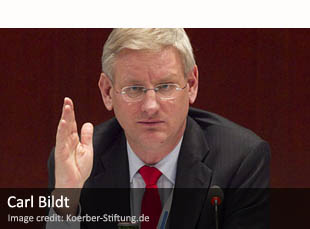
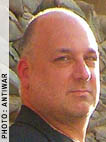
WikiLeaks document to expose Swedish Foreign Minister as US spy

Carl BildtBy JOSEPH FITSANAKIS | intelNews.org |
International whistleblower website WikiLeaks says it intends to publish a classified document that allegedly exposes Sweden’s current Foreign Minister as a spy for the United States. According to Swedish newspaper Expressen, which says it has seen the document in question, Carl Bildt, Sweden’s Minister of Foreign Affairs, is shown to have operated as an informant for the United States since the mid-1970s. The revelation, which is allegedly included in a classified diplomatic cable sent from the American embassy in Stockholm to the US Department of State, is likely to cause a major political crisis in Sweden and end the career of Carl Bildt, a popular politician who served as Sweden’s Prime Minister between 1991 and 1994. In an article published on Wednesday, Expressen cites an anonymous WikiLeaks source that claims Bildt “cooperated with the American government in a manner that is in direct violation of Swedish law”. The paper also states that, according to the incriminating document, Bildt was initially recruited by US intelligence through Republican political strategist Karl Rove, who is known to have been “an old personal friend” of the Swedish politician. According to the Expressen report, WikiLeaks has decided to publicize the leaked diplomatic cable as a warning against the Swedish government, which is said to be considering extraditing WikiLeaks founder Julian Assange to the United States. Read more of this post

News you may have missed #619 (WikiLeaks edition)

Peter Van Buren

Peter Van Buren

►►US suspends diplomat for linking blog to WikiLeaks. The State Department has suspended Peter Van Buren (pictured), a 23-year veteran foreign service officer, for writing a book critical of US policy in Iraq and blog posts that included a link to a WikiLeaks cable. Van Buren, who worked in human relations, said he was escorted out of the State Department on Monday and barred from returning for two days while officials there decide what to do next with him. They had stripped him of his top secret security clearance a few days earlier, he said.
►►Solomon Islands minister was CIA source. Classified US diplomatic cables from 2006, recently published by WikiLeaks, have revealed that the Solomon Islands’ former Foreign Affairs Minister and businessman Laurie Chan has acted as a reliable source of US and Australian intelligence in the Pacific island country.
►►Diplomatic cable sheds light on suicides of Bulgarian spies. A diplomatic following cable, sent by John Beyrle, US Ambassador to Bulgaria before going to Moscow, dated January 25, 2007, has been released by WikiLeaks. The cable sheds light on reshuffles in the leadership of the country’s intelligence services and the suicides of two high-ranking intelligence employees.

News you may have missed #597

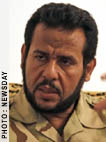
Abdel Hakim Belhaj

Abdel Belhaj

►►Inside the CIA’s secret Thai prison. The United States Central Intelligence Agency appears to have used Bangkok’s former Don Muang International Airport as a secret prison to torture Abdel Hakim Belhaj, who is now the commander of rebel Libyan military forces in Tripoli. If true, Belhaj’s allegations are the first public descriptions of a CIA black site in Thailand. Bangkok-based journalist Richard S Ehrlich investigates.
►►How is the US government using security contractors? “Mark Lowenthal, who was a high-ranking CIA official before joining the contractor work force, told the [US House Homeland Security and Governmental Affairs Committee] that during his time as assistant director of Central Intelligence for Analysis and Production, half of his staff was made up of contractors”.
►►Leaked cables show Australia nuclear power push. In 2008, John Carlson, head of the Australian Safeguards and Non-proliferation Office, which acts as the country’s nuclear safeguard authority, advised the then prime minister Kevin Rudd that no scheme to limit carbon emissions would succeed without the building of civilian nuclear power stations, according to leaked US diplomatic cables. When contacted by the media, Carlson refused to confirm or deny the accuracy of the revelations.

Taiwanese spy operation led to Chinese official’s dismissal, claims leaked cable

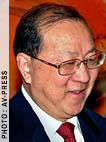
Jin Renqing

Jin Renqing

By JOSEPH FITSANAKIS| intelNews.org |
The puzzling resignation of China’s minister of finance was caused by his sexual involvement with a Taiwanese spy, who extracted classified information from him, according to a leaked American diplomatic cable. At the time of his 2007 resignation, Jin Renqing, a Communist Party bureaucrat with over 40 years of financial affairs experience, was regarded as Asia’s preeminent finance technocrat. His rise to China’s most powerful financial post, in the early years of our century, coincided with the country’s meteoric economic rise. When he quietly stepped down, a brief press statement by the Chinese government said Jin had resigned for “personal reasons”. But according to a diplomatic cable authored in September 2007 by a US State Department diplomat, Jin’s resignation was in fact a summary dismissal, caused by his sexual involvement with a much younger woman, who is now believed to have worked for Taiwanese intelligence. The cable, which has been leaked by whistleblower website WikiLeaks, describes the alleged Taiwanese spy as a “promiscuous socialite” and a “social butterfly”, who had successive affairs with a host of senior Chinese officials. The list included the country’s former Minister for Agriculture, Du Qinglin and Chen Tonghai, Director of China’s powerful Petroleum and Chemical Corporation, also known as Sinopec. Read more of this post

News you may have missed #515

  • US spies tracked suspected terrorists in Sweden. US intelligence agents have staked out suspected terrorists in Sweden without the authorization of the government there, Svenska Daglbadet newspaper has reported. Last November, Norway, Sweden and Denmark launched official investigations into reports that US embassies there operated illegal intelligence-gathering networks.
  • Aussie spy agency reported on WikiLeaks. Australian Prime Minister Julia Gillard’s department has revealed that WikiLeaks and its founder, Julian Assange, were the subject of Australian intelligence reporting last year, as the government anticipated the whistleblower website would spill “highly sensitive and politically embarrassing” secrets.
  • Former Taiwanese general accused of spying. Taiwanese government prosecutors are seeking a life sentence for Major General Lo Hsien-che, the most senior Taiwanese official to be arrested on espionage charges in the country since the early 1960s.

News you may have missed #513 (Pakistan edition)

  • Pakistan spy chief tells US to end drone strikes. Ahmed Shuja Pasha, the outgoing director of Pakistan’s Inter-Services Intelligence (ISI), has reportedly told CIA Deputy Director Michael Morell that Pakistan “will be forced to respond” if the US does not stop its drone strikes in the country.
  • CIA-ISI back in business. Overall, however, the meeting between Pasha and Morell was focused on mending CIA-ISI relations, according to Pakistan’s leading newspaper The Nation.
  • Leaked cables reveal joint US-Pakistan missions. US Special Forces were embedded with Pakistani troops on intelligence-gathering missions by 2009, confidential American diplomatic cables showed, a revelation that could hurt the Pakistani military’s public image. The Pakistani government has denied the reports.

News you may have missed #503

  • Dutch forces’ covert operations in Africa revealed. Dutch forces have for several years been training government soldiers in Mali, Senegal and Chad, without the Dutch parliament being informed, according to Dutch newspaper AD, which cites documents from the US Congress and the Pentagon.
  • Israel destroys spying devices found in Gaza. Hamas sources have told Egyptian newspaper al-Ahram that they discovered several “audio-visual spying devices” in the sand hills south of Gaza City. But, as soon as they started removing the devices, they “received a phone call from Israeli intelligence elements” telling them that the site would be bombed “within three minutes” —which is precisely what happened, according to al-Ahram. Regular readers of this blog will know this incident was not a first.
  • Leaked documents reveal Guantanamo secrets. A batch of leaked US government intelligence documents, not meant to surface for 20 years, shows that intelligence collection at Guantánamo often was much less effective than the George Bush administration has acknowledged. According to the documents, the US military used interrogation and detention practices that they largely made up as they went along.

Leaked US cable reveals concern about China spying in Chile

WikiLeaks

WikiLeaks

By JOSEPH FITSANAKIS | intelNews.org |
A leaked US government document reveals strong concerns expressed by the US embassy in Santiago about Chinese intelligence operations in Chile. The document, classified “secret”, and dated August 29, 2005, was released by whistleblower website WikiLeaks. It contains a report sent by the embassy to the US Department of State, concerning Chinese intelligence collection activities in the South American nation. The report points out that the Chinese embassy in the Chilean capital is one of the largest in Latin America, with 22 employees, who are “all good Spanish speakers”. It also notes that Chinese news agency Xinhua maintains three full-time correspondents in Chile, who are “assumed [to be] involved in some kind of collection activity”. But the leaked document focuses mostly on alleged Chinese intelligence collection activities aimed at the Chilean military, which is heavily subsisted by the United States. It suggests that bilateral ties between the Chinese and Chilean military were significantly strengthened in 2004, when, during an official visit to China, the then Chief of the Chilean Army, General Juan Emilio Cheyre, adopted a Chinese proposal to establish a Mandarin-language training program for selected officers of the Chilean military, which became operational shortly after. Read more of this post

News you may have missed #485

  • Gaza engineer describes abduction my Mossad. Dirar Abu Sissi, who was abducted by Israeli spy agency Mossad from the Ukraine on February 19, has described details of his abduction in a report issued Monday by the Gaza-based Palestinian Center for Human Rights.
  • Gaddafi regime fed names of jihadists to the CIA and MI6. Diplomatic cables obtained by WikiLeaks paint eastern Libya as a fertile ground for radical extremism. One source told US officials in 2008 that for young men from Derna, a city east of Benghazi, “resistance against coalition forces in Iraq was an important act of ‘jihad’ and a last act of defiance against the Gaddafi regime”.
  • Investigators say secret CIA files could aid Chile. Chile’s truth commission has determined that 3,065 opponents of US-supported Chilean dictator Augusto Pinochet were killed in the 1970s. Most of these cases were investigated, and some 600 military figures and civilian collaborators have been put on trial. Now campaigners are trying to get the CIA to open its files on Pinochet.

News you may have missed #476

Embassy cables show US spied on UK Foreign Office

Ivan Lewis

Ivan Lewis

By IAN ALLEN | intelNews.org |
The latest release of US embassy cables from whistleblower website WikiLeaks shows that the US Department of State ordered its diplomats to actively report on the personal lives of British Foreign Office officials. On several instances, American diplomats in London appear to have reported on the personal life of Ivan Lewis, a Labour Party politician who served as Minister of State for Foreign and Commonwealth Affairs during the closing days of Gordon Brown’s government. It seems that the reports on Lewis were compiled at the request of the State Department in Washington, which issued calls for specific background information on Lewis’ personal life. In response to the request, a memorandum was sent from the US embassy in London on August 12, 2009, suggesting that Lewis was “possibly prone to depression” and that he was described by one of his colleagues as “a bully”. The cable also indicated that Lewis had apologized “in 2007 to a female in his office who accused him of sexual harassment”, and suggested that the incident had been purposely leaked to the British media by Downing Street a few months later, after Lewis publicly joined the internal Labour Party revolt against Brown. Read more of this post

News you may have missed #474

  • Israel jails Arab activist for spying. A court in Haifa has sentenced prominent Israeli Arab activist Ameer Makhoul to nine years in prison and another year suspended sentence for charges of spying and contacting a foreign agent from Lebanon-based Hezbollah.
  • Assange used disguise to evade surveillance new book reveals. WikiLeaks editor Julian Assange disguised himself as an old woman in a wig for fear he was being followed by US intelligence, according to a book published this week by British quality broadsheet The Guardian. According to another book, to be published by journalists at German weekly newsmagazine Der Spiegel, Assange expressed private fears that the content of the US embassy cables was too explosive for his organization to withstand.
  • US Congressman wants to know who wants to know. Republican Representative Darrell Issa wants to know the names of hundreds of thousands of ordinary American citizens who have requested copies of federal government documents in recent years. Issa, the new chairman of the House Committee on Oversight and Government Reform, saying he simply wants to “make sure agencies respond in a timely fashion to Freedom of Information Act requests”. Hmmm…

News you may have missed #472

  • French spies become embroiled in Renault’s espionage saga (corrected). The Renault spying saga has taken a new turn with the carmaker accusing France’s domestic intelligence agency DGSE DCRI of sabotaging its reputation. Jean Reinhart, Renault’s lawyer, said that the DGSE DCRI had leaked details of the inquiry into accusations of industrial espionage.
  • Palestinian Authority documents leaked by ex-MI6 agent. Chief Palestinian negotiator Saeb Erekat said Wednesday in an interview that a US citizen, who worked in the US State Department, and a British former MI6 official, are responsible for leaking the so-called ‘Palestine papers‘.
  • NY Times editor calls Assange ‘spy-like’. WikiLeaks founder Julian Assange resembles a character from a detective novel and is “elusive, manipulative and volatile”, the executive editor of The New York Times says in an upcoming book. Open Secrets: WikiLeaks, War and American Diplomacy, a digital book featuring an introduction by Times executive editor Bill Keller and contributions from other Times reporters, goes on sale Monday.