Turkey refused to extradite bin Laden’s son-in-law to US

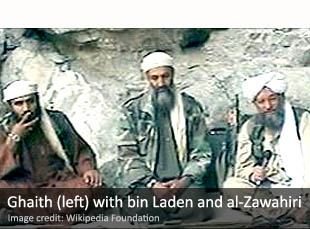
Ghaith (left) with bin Laden and al-ZawahiriBy JOSEPH FITSANAKIS | intelNews.org |
Turkish authorities have reportedly rejected a formal extradition request by the United States for a son-in-law of Osama bin Laden, who was arrested in Ankara on Friday following a tip-off by the Central Intelligence Agency. Suleiman Abu Ghaith was born in Kuwait but had his citizenship revoked after publicly opposing the rule of the Kuwaiti monarchy and demanding the institution of shari’a law in the oil emirate. In 2000, he traveled to Afghanistan where he met Osama bin Laden and joined al-Qaeda. He eventually married Fatima bin Laden, one of bin Laden’s numerous daughters, who is currently living in Saudi Arabia. He gradually rose within the ranks of the organization, eventually becoming one of its public spokesmen. Soon after the US invasion of Afghanistan, in 2001, Ghaith is believed to have escaped from Afghanistan by entering Iran on foot. He was eventually captured by Iranian government forces and placed in a detention camp along with other suspected al-Qaeda and Taliban members. It is not known how he managed to leave Iran and enter Turkey (though some say he was released the by Iranian authorities), or how the CIA knew of his presence there. However, according to Turkey’s leading daily Milliyet, the Agency contacted members of the Turkish National Intelligence Organization (known as MİT) and told them that Ghaith had entered the country on a forged passport. He was arrested soon afterwards at a hotel in Ankara’s affluent Çankaya district. The hotel where Ghaith was captured is reportedly located near the official residence of the Turkish President and a stone’s throw from numerous foreign embassies —including the embassy of the US, which was attacked by a suicide bomber on February 1. Read more of this post

Obama’s National Security Nominations: Nothing to See Here

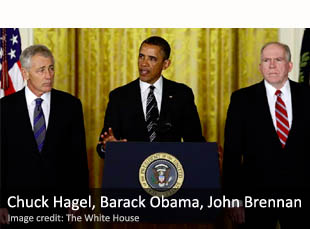
Chuck Hagel, Barack Obama, John BrennanBy I. ALLEN and J. FITSANAKIS | intelNews.org |
The deluge of reports that are flooding the news media about the national security nominations of United States President Barack Obama is both natural and understandable. The Departments of State and Defense, as well as the Central Intelligence Agency, are among the critical components of the American government, especially in matters of foreign policy. Yet much of the commentary on the nominations of John Kerry for State, Chuck Hagel for the Pentagon, and John Brennan for the CIA, is unduly over-dramatizing what is essentially a routine story. To begin with, it is clear that, in selecting Kerry, Hagel and Brennan for the nominations, the President’s priority was to surround himself with people he knows and trusts. Knowledgeable observers point out that all three nominees come from Obama’s most trusted circle of friends and —if appointed— will allow the President to stay well “within his comfort zone” as he begins his second term in office. In this sense, Obama selected the three candidates, not with some major policy shift in mind, but in order to ensure continuity and permanence in his foreign policy.

Take John Brennan, for instance: an Arabic-speaking career officer in the CIA, who has served the Agency in various positions for over 25 years. It is undeniable that, since 2008, Brennan has been instrumental in shaping the thinking behind the Obama administration’s targeted killings program using unmanned drones. According to some analysts, he has been the White House’s “most important adviser for shaping the campaign of drone strikes”. As intelNews explained recently, Washington’s unmanned drone program will continue and most likely expand, but this has little to do with Brennan. As an excellent analysis of Brennan’s nomination (by the Council on Foreign Relations’ Micah Zenko) points out, the CIA’s targeted killing program “has become institutionalized” with a momentum of its own, which ensures its sustainability, “making it far bigger than any one person —even John Brennan”.

Read more of this post

Revealed: German neo-Nazi who helped Palestinians was CIA agent

Willi Pohl, a.k.a. Willi VossBy JOSEPH FITSANAKIS | intelNews.org |
A German far-right militant, whose animosity against Jews led him to aid Palestinians kill Israeli athletes in the 1972 Munich massacre, says he was later recruited by the United States Central Intelligence Agency. Willi Pohl, also known as Willi Voss, 68, was arrested by German authorities a few weeks after Palestinian terrorist group Black September stormed the Olympic village in Munich and took hostage 11 Israeli athletes. All of them were eventually killed by their captors during a botched escape attempt at the nearby Fürstenfeldbruck airport. Voss, who was a known neo-Nazi activist at the time, was charged with possession of weapons and providing logistical support to the Black September militants. However, after his sentence was suspended, Voss managed to secretly emigrate to Beirut, Lebanon, where he was recruited as an agent of Jihaz el-Razd, the intelligence service of the Fatah, the main group in the Palestine Liberation Organization. But in 1975, while on a PLO mission in Belgrade, Yugoslavia, he decided to switch sides. He made the decision after discovering that the car he and his girlfriend were transporting on behalf of the PLO from Beirut to Belgrade contained weapons and highly unstable explosives. He says that the PLO had apparently failed to mention the existence of the hidden items when they asked him to transport the car to Europe. According to Voss’ new book, which has just been published in Germany under the title UnterGrund (Underground), the guns and explosives were discovered by customs officers in Romania (then Rumania); but because at that time the communist country was an ally of the PLO, Voss and his girlfriend were allowed to travel to Belgrade, minus the car and the weapons. Read more of this post

Year in Review: The 10 Biggest Spy-Related Stories of 2012

Happy New YearBy J. FITSANAKIS and I. ALLEN | intelNews.org |
Ever since we launched this website in 2008, we have been monitoring daily developments in the highly secretive world of intelligence and espionage, striving to provide an expert viewpoint removed from sensationalism and conspiratorial undertones. In the past year, we witnessed our fair share of significant intelligence-related stories, some of which made mainstream headlines, while others failed inexplicably to attract the attention of the news media industry. In anticipation of what 2013 may bring, we decided to take a look back to the year that just ended by compiling a list of what we think are the ten most important security- and intelligence-related developments of the past 12 months. The stories below are listed in reverse order of importance. Do you agree with our choices? Have we missed something important? Share your thoughts.

10. South African spy officials faked threats to increase budget. The historical tendency of spy agencies to overstate security threats in order to secure governmental funds is hardly novel. But officials in the South African Secret Service appear to have gone a step further: they allegedly paid some of their informants to make bogus threats against the government, in order to prompt an increase in counterterrorist funding. The bogus threats were allegedly aimed at creating “a false impression of imminent, unprecedented attacks on black people and African National Congress (ANC) members”. Incredibly, or perhaps predictably, nobody from the Secret Service has been fired in connection with this scandal.

Read more of this post

Fascinating profile of the Soviet KGB’s little-known tech wizard

US Ambassador Henry Cabot Lodge, Jr., displays the Soviet KGB's Great Seal bug at the United NationsBy JOSEPH FITSANAKIS | intelNews.org |
It is often suggested by intelligence researchers that one major difference between Western and Soviet modes of espionage during the Cold War was their degree of reliance on technology. It is generally accepted that Western espionage was far more dependent on technical innovation than its Soviet equivalent. While this observation may be accurate, it should not be taken to imply that the KGB, GRU, and other Soviet intelligence agencies neglected technical means of intelligence collection. In a recent interview with top-selling Russian newspaper Komsomolskaya Pravda, Russian intelligence historian Gennady Sokolov discusses the case of Vadim Fedorovich Goncharov. Colonel Goncharov was the KGB’s equivalent of ‘Q’, head of the fictional research and development division of Britain’s MI6 in the James Bond films. A veteran of the Battle of Stalingrad, Goncharov eventually rose to the post of chief scientific and technical consultant of KGB’s 5th Special Department, later renamed Operations and Technology Directorate. According to Sokolov, Goncharov’s numerous areas of expertise included cryptology, communications interception and optics. While working in the KGB’s research laboratories, Goncharov came up with the idea of employing the principles behind the theremin, an early electronic musical instrument invented by Soviet physicist Léon Theremin in 1928, in wireless audio surveillance. According to Sokolov, the appropriation of the theremin by the KGB under Goncharov’s leadership “changed the world of intelligence”. Read more of this post

Situation Report: China’s Huawei Going Mobile? (Exclusive)

Huawei TechnologiesBy TIMOTHY W. COLEMAN | intelNews.org |
The Chinese firm, Huawei Technologies, a provider of information and communications technology, has been constantly under fire in the United States and around for the world for its supposed deep ties to China’s military and intelligence establishment. It is not without some justifiable concern either. Prior to starting Huawei Technologies, the company’s founder and CEO, Ren Zhengfei, served for more than 10-years in China’s People’s Liberation Army’s engineering corps. This reality, rightly or wrongly, has added fodder for concerns that Chinese government interests are intertwined with those of Huawei. On September 13, Huawei Technologies and another Chinese firm, ZTE, were the subject of a Congressional hearing titled “Investigation of the Security Threat Posed by Chinese Telecommunications Companies Huawei and ZTE”. The purpose of the hearing, as explained by the US House Permanent Select Committee on Intelligence, was to assess the potential danger of “telecommunications equipment manufactured by companies with believed ties to the Chinese government”. Read more of this post

Afghan President replaces spy chief with controversial figure

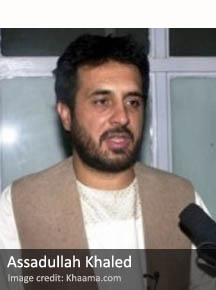
Assadullah KhaledBy JOSEPH FITSANAKIS | intelNews.org |
The office of the Afghan President announced yesterday the dismissal of the country’s intelligence chief and his replacement with a controversial official accused by Canadian and British sources of using torture to implement his policies. Speaking to reporters in Kabul, Afghan President Hamid Karzai thanked Rahmatullah Nabil, the outgoing Director of the National Directorate for Security (NDS), for his service, and said he would soon be appointed ambassador to a foreign country. According to Karzai’s representatives, the dismissal falls under the President’s decision that “no intelligence Director could serve longer than two years”. But observers point out that Nabil’s dismissal is part of a broader bureaucratic turf-war between the Office of the President and the Afghan Parliament, over the control of Afghan intelligence and military agencies. Earlier this month, the Parliament managed to oust two senior government officials, Minister of the Interior Besmillah Mohammadi and Minister of Defense Abdul Rahim Wardak. Both men are considered to be among President Karzai’s closest political allies. Nabil’s dismissal is therefore seen by many as an act of retribution by the President against defiant Afghan parliamentarians. What is arguably more interesting, however, is Karzai’s choice of the person to replace the fired Nabil, who is no other than Assadullah Khaled, currently Afghanistan’s Minister for Border and Tribal Affairs. According to sources in Kabul, Khaled’s appointment to lead the NDS is a matter of days, and that is appointment can already be considered as having been “confirmed”. This is despite the fact that Khaled is known for resorting to brutal torture and outright intimidation to get his way, especially during his time as Governor of the province of Kandahar. While there, he built a notorious reputation for abducting, torturing, and often killing, his personal and political opponents. Read more of this post

France opens murder inquiry into Palestinian leader Yasser Arafat’s death

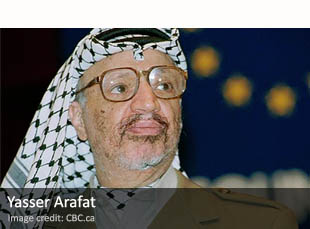
Yasser ArafatBy JOSEPH FITSANAKIS | intelNews.org |
French prosecutors have opened an official murder inquiry into the 2004 death of Palestinian statesman Yasser Arafat, following allegations that he may have been poisoned. The decision, announced Tuesday, comes less than two months after the results of a lengthy forensic toxicological investigation raised the possibility that the Palestinian leader may have been poisoned with polonium-210. The nine-month study was commissioned by Qatari news channel Al Jazeera and was conducted by the Institut de Radiophysique (IRA) in Lausanne, Switzerland. According to the results, announced in early July, significant traces of the radioactive substance were discovered on the personal artifacts that Arafat used during his final days while in hospital in Paris, France. According to the IRA, some of the Fatah founder’s personal belongings, including his underwear and his toothbrush, contained levels of polonium that were as many as ten times higher than those in random samples used as control subjects in the study. Shortly following the IRA study, Arafat’s wife and daughter filed an official complaint with French judicial authorities, who in turn decided to open an official murder investigation. The decision was taken despite the fact that many in the medical profession appear cautious about the claims of the IRA study. But one British observer told the BBC that the French government was obliged to take the request by the two women “very seriously because of its diplomatic aspect”. Last week, IRA officials in Switzerland said they had received permission from Arafat’s family and the Palestinian National Authority to travel to Ramallah, West Bank, and examine Arafat’s exhumed remains for traces of polonium-210. Read more of this post

News you may have missed #786

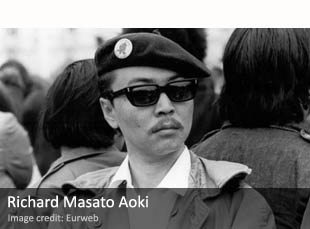
Richard Masato AokiBy IAN ALLEN | intelNews.org |
►►US Pentagon wants to share intel with Egypt. The US Department of Defense is offering Egypt a package of classified intelligence-sharing capabilities designed to help it identify military threats along its border with Israel. According to an unnamed senior US official, the Pentagon leadership is concerned about “rising militancy” along the Egyptian-Israeli border. The purported intelligence package includes satellite imagery, data collected through unmanned drones, as well as intercepts of cell phone and other communications among militants suspected of planning attacks. The Egyptian intelligence chief was summarily fired earlier this month, after more than a dozen Egyptian soldiers were killed near Israel’s border when gunmen attacked a post and tried to enter Israel.
►►Researcher disputes Aoki was FBI informant. Last week author Seth Rosenfeld alleged that prominent 1960s Black Panther Party member Richard Masato Aoki, who gave the Black Panthers some of their first firearms and weapons training, was an undercover FBI informer. But the claim, which is detailed in Rosenfeld’s new book, Subversives, is disputed by another researcher, Diane C. Fujino. A professor and chair of Asian American studies at UC Santa Barbara, and author of the recently published Samurai Among Panthers, Fujino argues that Rosenfeld has not met the burden of proof on Aoki, and that he “made definitive conclusions based on inconclusive evidence”.
►►Russian intelligence to monitor blogosphere. Russia’s Foreign Intelligence Service, the FSB, says it plans to fund a program that monitors the Internet’s “blogosphere”, with an aim to “shape public views through social networking”. Citing unnamed sources from inside the FSB, Russian newspaper Kommersant said that the project’s research stage will cost around $1 million. The article implies that the online surveillance and opinion-shaping program will target both Russian- and foreign-language online users. This is not the first time that the FSB has displayed interest in online social networking in recent years.

Cuban Vice President’s daughter defects to the United States

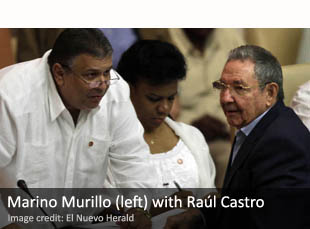
Marino Murillo (left) with Raúl CastroBy JOSEPH FITSANAKIS | intelNews.org |
The daughter of one of Cuba’s most senior government officials secretly defected to the United States earlier this month and is now living in Tampa, Florida, according to a Spanish-language newspaper. The paper, El Nuevo Herald, published in Florida, said Glenda Murillo Diaz, 24, daughter of Cuban Vice President Marino Murillo Jorge, defected on August 16, 2012. Diaz, a psychology student at the University of Havana, had apparently left Cuba earlier this month to attend an international psychology conference in Mexico. But instead of appearing at the conference, she crossed from Mexico into the US at Laredo, Texas. Her father, Marino Murillo, a prominent Cuban economist, is currently Vice President of Cuba’s State Council and longtime member of the Cuban Communist Party’s Political Bureau. In 2009, soon succeeding his brother Fidel to the post of Cuba’s President, Raúl Castro appointed Murillo Minister of Planning and Economy. Upon assuming this post, Murillo became the leading figure in the implementation of the administration’s ambitious economic reform, which is aimed at revitalizing the island’s finances. Since then, Murillo is often mentioned as one of a number of possible successors to Raúl Castro. He has made headlines recently, after voicing criticism of economic reforms taking place in China and Vietnam, and claiming that Cuba’s economic reforms aim at the establishment of a hybrid planned and market economy, but that “the planned economy will remain dominant”. Read more of this post

News you may have missed #785 (interview edition)

Stella RimingtonBy IAN ALLEN | intelNews.org |
►►Interview with first-ever NSA Compliance Director. John DeLong, the first-ever compliance director at the US National Security Agency, has given an interview to NextGov. In it, he says that “we’re nothing if we lose the confidence of the American people”. He is referring to frequent allegations, by whistleblowers and others, that the Agency is increasingly spying on Americans’ communications. As Compliance Director, DeLong is responsible for ensuring that the NSA abides by US law, which forbids it from intercepting electronic messages exchanged between US citizens or persons.
►►Ex-MI5 boss offers comment on WikiLeaks. Former MI5 Director-General Dame Stella Rimington has criticized “the indiscriminate pouring out into the public domain of streams of leaked documents by Julian Assange and his WikiLeaks organization”. But she also said that the US government should have taken better steps to prevent WikiLeaks from acquiring the information in the first place. Speaking at an international archiving conference in Brisbane, Australia, Dame Stella said that while the WikiLeaks saga could prompt the US government to come up with better databases, it would more likely encourage it to be even more secretive. This, she added, “must be absolutely the opposite effect of what WikiLeaks was seeking”.
►►Interview with NSA whistleblower. Filmmaker Laura Poitras interviews William Binney, a 32-year veteran of the US National Security Agency, who helped set up STELLAR WIND, the NSA’s top-secret domestic spying program, which was put in place after 9/11. The program was so controversial that it nearly caused top Justice Department officials to resign in protest in 2004. Binney, who resigned over STELLAR WIND in 2001, and began speaking out publicly in the last year, explains how the program he created for foreign intelligence gathering was turned inward on America.

Interview with NSA whistleblower

Syria denies Air Force intelligence chief assassinated

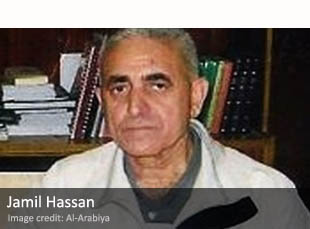
Jamil HassanBy JOSEPH FITSANAKIS | intelNews.org |
A Syrian state-owned television channel has denied reports that the head of Syria’s Air Force Intelligence has been assassinated by one of his aides. The government-controlled al-Dynya TV called reports about the assassination of Lieutenant Jamil Hassan “absolutely false”. However, unlike Syria’s Vice-President, Farouq al-Sharaa, who appeared on television yesterday to dispel rumors he had defected to Jordan, Hassan made no such appearance. Earlier on Sunday, sources affiliated with the opposition Free Syrian Army (FSA) told the Saudi-owned Al-Arabiya television network that Lieutenant Hassan had been killed in his office in Syrian capital Damascus. Born into a prominent military family in the western city of Homs, Syria’s third-largest city and site of some of the worst violence in the ongoing Syrian uprising, Hassan belongs to the country’s Alawite community. It is the same Syrian-based branch of Shiite Islam that counts the country’s President, Bashar al-Assad, as its member. Hassan is believed to be a key member of the Syrian military and a close advisor of the President. Opposition forces consider Hassan a hardline supporter of the Assad regime and charge him with leading the ‘iron fist’ caucus inside the Syrian government. A Syrian opposition source once quoted Hassan as telling Assad: “let me kill a million protesters to end the revolution and I will go to [the International Criminal Court in] The Hague in your place”. Although this quote remains anecdotal, there is little doubt that Hassan’s vocal support for the Assad regime has repeatedly attracted the attention of the opposition FSA, which sees him as one of the most vicious and criminal elements inside the Syrian state. Read more of this post

Situation Report: Is DARPA’s Phoenix Program Intelligence-Related?

DARPA's Phoenix ProgramBy TIMOTHY W. COLEMAN| intelNews.org |
The Defense Advanced Research Projects Agency (DARPA), the out-there research arm of the United States Department of Defense, is well known for it’s futuristic and bleeding-edge technology research projects. Often times, the Agency’s highflying efforts seem to protrude a motto of “failure is an option”. In fact, a 2003 article in The Los Angeles Times states that DARPA’s failure rates are between 85 and 90 percent. But this has not prevented the Agency from trying out new things, which sometimes help shape the future. It’s predecessor, Advanced Research Projects Agency, renamed DARPA in 1972, helped create what is today the Internet. Multiplexed Information and Computing Service (aka UNIX), Speech Interpretation and Recognition Interface (Siri, that female voice on your iPhone —yup, she’s a spinout from a DARPA Artificial Intelligence project called CALO), and Onion Routing (core technique for anonymous communications over computer networks, i.e. the base technology underlying Tor), were all funded, in part, by DARPA. Unsurprisingly, DARPA is at it again. The question remains, though, can the hype become a reality or will the new effort find a home in the vast majority of DARPAs forward-looking failed adventures? Read more of this post

News you may have missed #784

Aimal FaiziBy IAN ALLEN | intelNews.org |
►►US agencies still not sharing intelligence. Nearly half of US federal agencies are not sharing documented incidents of potential terrorist activity with US intelligence centers, according to officials in the Office of the Director of National Intelligence. Federal and police officials are supposed to deposit reports of suspicious behavior through a system known as the Nationwide Suspicious Activity Reporting Initiative (NSARI). It is a virtualized inventory of tips that can be reached by federal, state or local government authorities. But progress in connecting local agencies to fusion centers through the NSARI appears to be slow-going. Almost exactly a year ago, a similar report by the US Congressional Research Service found that US intelligence agencies were still struggling to strengthen their information-sharing networks.
►►Russian spies ‘top priority’ for Czech intelligence. A new report by the Czech Security Information Service (BIS) says that Russian intelligence services are the most active foreign espionage organizations in the Czech Republic. The report, published last Wednesday, states that Russian spies work under different covers, mainly at Russian diplomatic missions, and in numbers that are utterly unjustified, given the current status of Czech-Russian relations. “Russian intelligence officers were spotted at different public and corporate events, where they tried to resume old contacts and meet new people”, the report said. It is worth noting that the BIS report devoted nine paragraphs to Russian espionage and only one to Chinese. Chinese intelligence officers “do not pose an immediate risk to Czech citizens”, the report said.
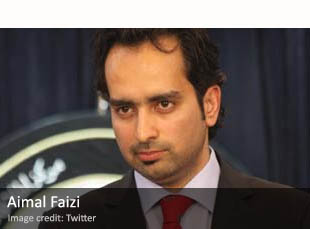
►►Afghanistan blames ‘foreign spies’ for insider attacks. Some of Afghan President Hamid Karzai’s top advisers said this week that the recent rise in insider attacks on NATO troops is the product of foreign spy agencies infiltrating Afghanistan’s security forces. They said that Afghanistan’s National Security Council has concluded that both Pakistani and Iranian intelligence organizations are recruiting young Afghans to enlist in the army and police with the intention of targeting Western service members. The officials suggested that the ultimate aim of the alleged efforts by foreign agencies is to destabilize Afghanistan’s forces. One of the Afghan government’s spokesmen, Aymal Faizi (pictured), said that the allegations from Kabul rested on classified evidence from “documents, telephone calls, pictures and audio that show direct contact between these individuals and foreign spy agencies”.

Judge orders CIA to release files on drug kingpin Pablo Escobar

Pablo EscobarBy JOSEPH FITSANAKIS | intelNews.org |
In the late 1980s, it was nearly impossible to sit through a primetime news bulletin without coming across the name ‘Pablo Escobar’. Born in 1949 in the town of Rionegro, Colombia, Escobar rose to become the leader of the Medellín cartel, history’s most notorious narcotics smuggling ring. By 1986, the Medellín cartel controlled over 80 percent of the global cocaine market, shipping daily around 15 tons of the drug (worth an estimated street value of $500,000) to the United States. In 1989, Forbes magazine included Escobar on his list of the world’s richest persons, with an estimated net worth of $3 billion. By that time, the Medellín cartel had become powerful enough to directly threaten the very institutional integrity of the Colombian state. At the same time, Escobar carefully cultivated his ‘Robin Hood’ image by regularly building hospitals, schools, and churches in some of Colombia’s most impoverished regions. He was thus able to surround himself with a sea of grateful and devoted supporters, who directly depended on his generosity for their livelihood. They also shielded him from the reach of the Colombian and United States government forces, which repeatedly went after him without success. Eventually, the Colombian government, in association with the US Drug Enforcement Administration and the Central Intelligence Agency, managed to stop Escobar by creating a rival organization called Los PEPES —a Spanish-language acronym that stands for ‘People Persecuted by Pablo Escobar’. Los PEPES, which consisted of members of rival drug smuggling cartels, as well as trained mercenaries belonging to Colombian rightwing militias, went after Escobar’s closest associates with indescribable ruthlessness. They hunted down and eventually tortured and killed several of his relatives, advisors and bodyguards. Ultimately, in 1993, they helped the Colombian National Police corner Escobar and shoot him dead at a Medellín barrio. The celebrations in Washington and Bogotá didn’t last long; as soon as Los PEPES disbanded, many of its leading members regrouped to found the United Self-Defense Forces of Colombia (AUC), a rightwing paramilitary group that has since killed thousands of civilians in Colombia’s bitter civil war. The AUC, which funds its operations through kidnappings and drug trafficking, is today a designated terrorist group by most Western governments, including the United States and the European Union. Read more of this post