Analysis: Why were Western diplomats evacuated from Yemen?

YemenBy J. FITSANAKIS and I. ALLEN | intelNews.org |
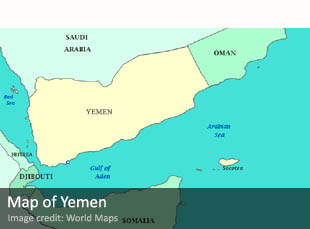
American and British embassies in Yemeni capital Sana’a were evacuated on Tuesday, soon after the United States closed 19 of its diplomatic representations in the Middle East and North Africa due to fears of a pending terrorist attack. But why exactly did the evacuations of diplomatic personnel take place in Sana’a? The Yemeni government announced on Wednesday that it had foiled a large-scale attack by al-Qaeda in the Arabian Peninsula (AQAP), which allegedly aimed to cripple the country’s frail economy. According to Yemeni government spokesperson Rajeh Badi, the attack was planned to take place in the country’s central Hadramout governorate, which includes the port cities of al-Mukkala and Ghail Ba Wazir. The Yemeni government said the AQAP forces planned to blow up several oil pipelines before proceeding to occupy the two port cities, from which the majority of Yemen’s oil exports are shipped. Badi added that AQAP planned to take several foreign oil workers hostage as part of the military operations.

However, as Foreign Policy magazine’s Dana Stuster points out, Mohammed Albasha, spokesman of the Yemeni embassy in Washington, DC, seems to dispute his own government’s claims. Early on Wednesday, Albasha tweeted that, in his view, “AQAP doesn’t have the man power nor the capabilities to capture a city the size of Mukkala in Hadramout”, let alone Ghail Ba Wazir. Read more of this post

Luxembourg government resigns following spy scandal

Jean-Claude JunckerBy JOSEPH FITSANAKIS | intelNews.org |
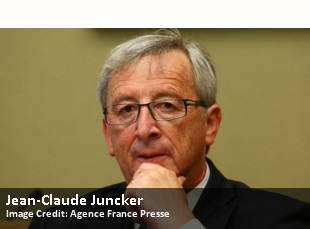
The prime minister of Luxembourg announced his intent to resign on Thursday, after a parliamentary investigation revealed scores of illegal operations conducted by the country’s intelligence service. Jean-Claude Juncker, a longtime member of Luxembourg’s Christian Social People’s Party, is Europe’s longest-serving elected leader, having been in power constantly since 1995. But on Wednesday, the astute center-right politician, who is also President of the Eurogroup —the eurozone’s finance ministers’ group— announced on Wednesday that he would step down, following seven hours of heated debate in the Luxembourg parliament. Juncker announced his intention to resign after the junior partner of his governing coalition, the Luxembourg Socialist Workers’ Party, which is the country’s second-largest, said it could no longer lend its support to the government. The reason is a parliamentary inquiry, which found that the country’s State Intelligence Service (SREL) has been engaging in serious criminal activity. The investigation was launched last year, after a local newspaper alleged that SREL’s Director, Marco Mille, had employed a surreptitious recording device disguised as a watch to record a private conversation with Prime Minister Junkcer. The parliamentary inquiry, which was released last week, found that SREL has been carrying out countless illegal wiretaps around the country and that it maintains detailed secret files on over 13,000 citizens and residents of Luxembourg. The report also alleges that SREL had set up a front company in order to facilitate the transfer of $10 million from a corrupt Russian businessman to a Spanish intelligence operative, as a personal favor to the Russian. The report did not confirm allegations, made in the country’s press, that the Grand Duke of Luxembourg has been a trusted informant of MI6, Britain’s Secret Intelligence Service. Read more of this post

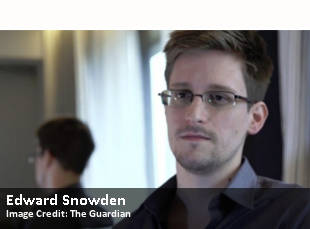
News you may have missed #844 (analysis on Snowden leak)

Edward SnowdenBy IAN ALLEN | intelNews.org |
►►Daniel Ellsberg: Snowden was right to flee US. “Many people compare Edward Snowden to me unfavorably for leaving the country and seeking asylum, rather than facing trial as I did. I don’t agree. The country I stayed in was a different America, a long time ago”, says Pentagon Papers whistleblower Daniel Ellsberg. And he continues: “I hope that he finds a haven, as safe as possible from kidnapping or assassination by US Special Operations forces, preferably where he can speak freely”.
►►NSA ‘in bed’ with German intelligence says Snowden. The fugitive US whistleblower Edward Snowden alleged on Sunday that the National Security Agency was “in bed together” with German intelligence despite claims by politicians in Chancellor Angela Merkel’s coalition that they were shocked by the extent of American spying in Germany. Snowden claimed that the NSA provided German intelligence, with analysis tools to help the organization monitor data flowing through Germany.
►►Can Snowden fly from Moscow to Caracas without being stopped? How can Snowden get from Moscow’s Sheremetyevo Airport, where he’s been holed up for nearly two weeks, to Venezuela, Bolivia or Nicaragua, which have indicated that they are willing to offer him political asylum? Former CIA analyst Allen Thomson took to Google Earth to answer the question of whether there’s a route Snowden might take that would allow him to fly from Moscow to, say, Caracas without crossing, as he puts it jokingly, the airspaces of “los Yanquis and their running dogs”.

Chinese hackers ‘stole blueprints’ of Australian spy agency’s new HQ

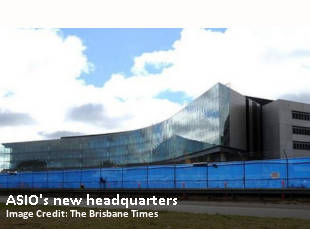
ASIO's new headquartersBy JOSEPH FITSANAKIS | intelNews.org |
Chinese government hackers allegedly stole the master blueprints and other highly classified technical information relating to the new headquarters of the Australian Security Intelligence Organisation (ASIO). The state-of-the-art building, which is located at the shore of Lake Burley Griffin in Australian capital Canberra, has so far cost taxpayers in excess of AUD $631 million (US $608 million). Although it remains under construction, the new headquarters is said to feature the most sophisticated security features of any government building in Canberra. But a report aired on May 28 by Australian television’s Four Corners investigative program, alleged that a Chinese government agency managed to steal the building’s blueprints. The program claimed that the highly classified blueprints were stolen when hackers mounted a sophisticated cyberattack on a private-sector contractor involved in constructing the ASIO’s new headquarters. Four Corners suggested that the cyberattack, which was “traced to a server in China”, also compromised the building’s communications diagram, server locations and physical security systems. The revelation will undoubtedly add to the stream of public criticism about the project, which has been severely plagued by budget increases and construction delays. As recently as 2010, the government was insisting that the project was “progressing on time and on budget, with completion scheduled for mid-2012”. Today, however, the building’s budget has gone over by AUD $171 million and the building is expected to open its doors no earlier than the fall of 2013, with some commentators suggesting that it could be 2014 before ASIO’s personnel are able to start moving in. Read more of this post

News you may have missed #826 (suspicious deaths edition)

Pablo Neruda (right) and Salvador AllendeBy IAN ALLEN | intelNews.org |
►►Key suspect in Russian spy murder refuses to cooperate. Andrey Lugovoi, who is now an elected official in Russia, says he will not talk even by video to British investigators about the poisoning of Alexander Litvinenko in London just over six years ago. The murder of former Russian spy Alexander Litvinenko in London in 2006, has never been solved and remains the subject of conflicting narratives and still-deepening intrigue over who may have killed him and why.
►►Exhumation of Neruda’s remains set for April. A court in Chile has set April 8 as the date for the exhumation of the remains of the Nobel Prize-winning poet Pablo Neruda, as part of an inquest into his death. The poet and leftwing activist died 12 days after a military coup replaced the socialist President Salvador Allende with General Augusto Pinochet. The poet’s family maintains that he died at 69 of advanced prostate cancer. But in 2011, Chile started investigating allegations by his former driver, Manuel Araya Osorio, that the poet had been poisoned.
►►Venezuela to investigate Chavez murder allegations. Venezuelan officials have said they will set up an inquiry to investigate suspicions that President Hugo Chavez was “murdered by foreign agencies”. Venezuelan Oil Minister Rafael Ramirez told the BBC the United States and Israel were to blame for Chavez’s death, and that he had no doubt that Chavez’s death was an act “similar to Yasser Arafat’s“. Earlier this week, the US expelled two Venezuelan diplomats following the expulsion of two American officials from Caracas.

Did Aussies ‘burn’ Israel’s Prisoner X and was he also a British citizen?

Ben ZygierBy JOSEPH FITSANAKIS | intelNews.org |
As intriguing questions continue to mount about the case of Israel’s so-called ‘Prisoner X’, the flow of verifiable information from official channels in Australia and Israel has slowed to a trickle. However, two important analyses appeared over the weekend, which could potentially place the incarceration and subsequent death of Ben Zygier under new light. One claims that the Australian-born Israeli was a low-level Mossad operative who did not commit any serious crime —let along high treason. The other suggests that Zygier might have held British citizenship, in addition to being a dual Australian and Israeli citizen, and that the British government might have been privy to the information regarding his arrest and subsequent incarceration in Israel’s Ayalon prison. In an article for Ynet, the online outlet for Israel’s high-selling newspaper Yediot Ahronot, veteran security correspondent Ron Ben-Yishai posits that Zygier was simply a “support operative” for the Mossad, adding that he “did not commit treason”. Instead, says Ben-Yishai, Zygier was probably arrested by the Israelis because they suspected he might have given, or might consider giving, information about forged Australian passports to Canberra. The Mossad decided to detain him after he told them he had been contacted by Australian journalist Jason Koutskoukis in late 2009 and asked whether he was a Mossad operative. Koutsoukis was tipped-off by Australian counterintelligence, which suspected Zygier of supplying the Mossad with Australian passports in his possession. It was the stigma of being considered a traitor by his own people that drove Zygier —a passionate Zionist— to suicide, claims Ben-Yishai. Read more of this post

Interview: Israel’s ‘Prisoner X’ linked to 2010 al-Mabhouh killing

Ben ZygierThis morning I spoke to SBS Radio Australia’s Greg Dyett about the mysterious case of Ben Zygier, an Australian-born naturalized citizen of Israel, who is said to have killed himself in 2010 while being held at a maximum-security prison near Tel Aviv. As intelNews reported on Wednesday, Zygier, who is believed to have been recruited by Israel’s covert-action agency Mossad, had been imprisoned incommunicado for several months and was known only as ‘Prisoner X’, even to his prison guards. Is there any connection between Zygier’s incarceration and the January 2010 assassination of Palestinian arms merchant Mahmoud al-Mabhouh, in Dubai? And what could Zygier have done to prompt Israel to incarcerate him? You can listen to me discuss this mysterious case in an eight-minute interview here, or read the transcript, below.

Q: You say that, after conferring with your contacts in Israel, Europe and the United States, you believe that Ben Zygier had some sort of involvement in the assassination of Mahmoud al-Mabhouh in Dubai in January 2010.

A: Mahmoud al-Mabhouh was a weapons procurer for the Palestinian militant group Hamas. At this point, there is little doubt that the Mossad was behind this operation. Several members of the team that killed al-Mabhouh were using third-country passports —Irish, British, Australian, and others— to travel to and from Dubai. In the aftermath of the assassination, there were questions about how the Mossad operatives managed to get those passports; and, if you’ll remember, that led to the expulsion of several Israeli diplomats from around the world, including Australia. Read more of this post

Israel’s ‘Prisoner X’ supplied Australian passports to the Mossad

Ben ZygierBy JOSEPH FITSANAKIS | intelNews.org |
Concerns about the routine use of Australian passports by Israeli spies led to the exposure of Israel’s mystery ‘Prisoner X’, who killed himself in 2010 while in prison, it has been claimed. On Tuesday, ABC Australia reporter Trevor Bromann identified the mystery prisoner as Ben Zygier, an Australian father of two, who had been recruited by the Mossad, Israel’s covert-action agency, after moving to Israel in 2000. Zygier, whose identity had been withheld even from his prison guards, was arrested in early 2010 and was held for several months in Ayalon, Israel’s most secure prison, located southeast of Tel Aviv. Ayalon’s Unit 15, where Zygier was held, consists of a single cell constructed in 1995 to house Yigal Amir, the assassin of Israel’s Prime Minister Yitzhak Rabin. Remarkably, shortly after ABC Australia revealed Zygier’s identity, Israeli news outlets received telephone calls from the Office of Israel’s Prime Minister, requesting urgent meetings “in the interest of Israel’s national security”. Israeli media reported that senior news editors across Israel were told by the government “to exercise restraint” and refrain from exposing information that could have “very dramatic repercussions” for Israel’s security. Read more of this post

French, US intelligence intensify 23-year hunt for Algerian militant

Mokhtar BelmokhtarBy JOSEPH FITSANAKIS | intelNews.org |
Although many Westerners are aware of the ongoing upsurge in al-Qaeda-linked activity in northwest Africa, few are able to point to the individual leaders behind it. To an important extent, Islamist-inspired groups in the region, notably Al-Qaeda in the Islamic Maghreb (AQIM) mirror the decentralized insurgency model developed by Islamist groups in Iraq and elsewhere during the past decade. However, the decentralized nature of the insurgency in northwest Africa does not necessarily entail the complete absence of principal figures in the movement. One case in point is that of Mokhtar Belmokhtar, who leads an AQIM-linked brigade known as al-Muaqioon Biddam (Those Who Sign With Blood). Born in 1972, Belmokhtar is an Algerian nomad who has reportedly been tracked by the United States Central Intelligence Agency for over 20 years. In the late 1980s, Belmokhtar traveled to Pakistan and then to Afghanistan, where he was taught the art of insurgency at al-Qaeda-funded training camps. Following the Soviet withdrawal, he left Afghanistan and returned to his homeland, where he joined the Armed Islamic Group of Algeria (GIA) and fought in the brutal 10-year civil war that ripped the country apart. In 2003, two years after the end of the war, Belmokhtar and his militia were pushed into northern Mali by the Algerian military. He soon set up camps in the area and used them to stage abduction raids into southern Algeria, targeting foreign oil workers and tourists. The Wall Street Journal reports that, according to the US department of State, in less than a decade, Belmokhtar’s militia managed to raise approximately $50 million through kidnapping foreigners and extorting cocaine smugglers traveling through Mali on their way to Europe. His big break came in 2011, when the collapse of the Libyan regime resulted in the unprecedented availability of illicit weapons previously in the hands of Muammar al-Gaddafi’s army. Belmokhtar’s militia became one of the principal buyers of Libyan weapons available in huge quantities in the black market. Read more of this post

Turkey refused to extradite bin Laden’s son-in-law to US

Ghaith (left) with bin Laden and al-ZawahiriBy JOSEPH FITSANAKIS | intelNews.org |
Turkish authorities have reportedly rejected a formal extradition request by the United States for a son-in-law of Osama bin Laden, who was arrested in Ankara on Friday following a tip-off by the Central Intelligence Agency. Suleiman Abu Ghaith was born in Kuwait but had his citizenship revoked after publicly opposing the rule of the Kuwaiti monarchy and demanding the institution of shari’a law in the oil emirate. In 2000, he traveled to Afghanistan where he met Osama bin Laden and joined al-Qaeda. He eventually married Fatima bin Laden, one of bin Laden’s numerous daughters, who is currently living in Saudi Arabia. He gradually rose within the ranks of the organization, eventually becoming one of its public spokesmen. Soon after the US invasion of Afghanistan, in 2001, Ghaith is believed to have escaped from Afghanistan by entering Iran on foot. He was eventually captured by Iranian government forces and placed in a detention camp along with other suspected al-Qaeda and Taliban members. It is not known how he managed to leave Iran and enter Turkey (though some say he was released the by Iranian authorities), or how the CIA knew of his presence there. However, according to Turkey’s leading daily Milliyet, the Agency contacted members of the Turkish National Intelligence Organization (known as MİT) and told them that Ghaith had entered the country on a forged passport. He was arrested soon afterwards at a hotel in Ankara’s affluent Çankaya district. The hotel where Ghaith was captured is reportedly located near the official residence of the Turkish President and a stone’s throw from numerous foreign embassies —including the embassy of the US, which was attacked by a suicide bomber on February 1. Read more of this post

Obama’s National Security Nominations: Nothing to See Here

Chuck Hagel, Barack Obama, John BrennanBy I. ALLEN and J. FITSANAKIS | intelNews.org |
The deluge of reports that are flooding the news media about the national security nominations of United States President Barack Obama is both natural and understandable. The Departments of State and Defense, as well as the Central Intelligence Agency, are among the critical components of the American government, especially in matters of foreign policy. Yet much of the commentary on the nominations of John Kerry for State, Chuck Hagel for the Pentagon, and John Brennan for the CIA, is unduly over-dramatizing what is essentially a routine story. To begin with, it is clear that, in selecting Kerry, Hagel and Brennan for the nominations, the President’s priority was to surround himself with people he knows and trusts. Knowledgeable observers point out that all three nominees come from Obama’s most trusted circle of friends and —if appointed— will allow the President to stay well “within his comfort zone” as he begins his second term in office. In this sense, Obama selected the three candidates, not with some major policy shift in mind, but in order to ensure continuity and permanence in his foreign policy.

Take John Brennan, for instance: an Arabic-speaking career officer in the CIA, who has served the Agency in various positions for over 25 years. It is undeniable that, since 2008, Brennan has been instrumental in shaping the thinking behind the Obama administration’s targeted killings program using unmanned drones. According to some analysts, he has been the White House’s “most important adviser for shaping the campaign of drone strikes”. As intelNews explained recently, Washington’s unmanned drone program will continue and most likely expand, but this has little to do with Brennan. As an excellent analysis of Brennan’s nomination (by the Council on Foreign Relations’ Micah Zenko) points out, the CIA’s targeted killing program “has become institutionalized” with a momentum of its own, which ensures its sustainability, “making it far bigger than any one person —even John Brennan”.

Read more of this post

Revealed: German neo-Nazi who helped Palestinians was CIA agent

Willi Pohl, a.k.a. Willi VossBy JOSEPH FITSANAKIS | intelNews.org |
A German far-right militant, whose animosity against Jews led him to aid Palestinians kill Israeli athletes in the 1972 Munich massacre, says he was later recruited by the United States Central Intelligence Agency. Willi Pohl, also known as Willi Voss, 68, was arrested by German authorities a few weeks after Palestinian terrorist group Black September stormed the Olympic village in Munich and took hostage 11 Israeli athletes. All of them were eventually killed by their captors during a botched escape attempt at the nearby Fürstenfeldbruck airport. Voss, who was a known neo-Nazi activist at the time, was charged with possession of weapons and providing logistical support to the Black September militants. However, after his sentence was suspended, Voss managed to secretly emigrate to Beirut, Lebanon, where he was recruited as an agent of Jihaz el-Razd, the intelligence service of the Fatah, the main group in the Palestine Liberation Organization. But in 1975, while on a PLO mission in Belgrade, Yugoslavia, he decided to switch sides. He made the decision after discovering that the car he and his girlfriend were transporting on behalf of the PLO from Beirut to Belgrade contained weapons and highly unstable explosives. He says that the PLO had apparently failed to mention the existence of the hidden items when they asked him to transport the car to Europe. According to Voss’ new book, which has just been published in Germany under the title UnterGrund (Underground), the guns and explosives were discovered by customs officers in Romania (then Rumania); but because at that time the communist country was an ally of the PLO, Voss and his girlfriend were allowed to travel to Belgrade, minus the car and the weapons. Read more of this post

Year in Review: The 10 Biggest Spy-Related Stories of 2012

Happy New YearBy J. FITSANAKIS and I. ALLEN | intelNews.org |
Ever since we launched this website in 2008, we have been monitoring daily developments in the highly secretive world of intelligence and espionage, striving to provide an expert viewpoint removed from sensationalism and conspiratorial undertones. In the past year, we witnessed our fair share of significant intelligence-related stories, some of which made mainstream headlines, while others failed inexplicably to attract the attention of the news media industry. In anticipation of what 2013 may bring, we decided to take a look back to the year that just ended by compiling a list of what we think are the ten most important security- and intelligence-related developments of the past 12 months. The stories below are listed in reverse order of importance. Do you agree with our choices? Have we missed something important? Share your thoughts.

10. South African spy officials faked threats to increase budget. The historical tendency of spy agencies to overstate security threats in order to secure governmental funds is hardly novel. But officials in the South African Secret Service appear to have gone a step further: they allegedly paid some of their informants to make bogus threats against the government, in order to prompt an increase in counterterrorist funding. The bogus threats were allegedly aimed at creating “a false impression of imminent, unprecedented attacks on black people and African National Congress (ANC) members”. Incredibly, or perhaps predictably, nobody from the Secret Service has been fired in connection with this scandal.

Read more of this post

Fascinating profile of the Soviet KGB’s little-known tech wizard

US Ambassador Henry Cabot Lodge, Jr., displays the Soviet KGB's Great Seal bug at the United NationsBy JOSEPH FITSANAKIS | intelNews.org |
It is often suggested by intelligence researchers that one major difference between Western and Soviet modes of espionage during the Cold War was their degree of reliance on technology. It is generally accepted that Western espionage was far more dependent on technical innovation than its Soviet equivalent. While this observation may be accurate, it should not be taken to imply that the KGB, GRU, and other Soviet intelligence agencies neglected technical means of intelligence collection. In a recent interview with top-selling Russian newspaper Komsomolskaya Pravda, Russian intelligence historian Gennady Sokolov discusses the case of Vadim Fedorovich Goncharov. Colonel Goncharov was the KGB’s equivalent of ‘Q’, head of the fictional research and development division of Britain’s MI6 in the James Bond films. A veteran of the Battle of Stalingrad, Goncharov eventually rose to the post of chief scientific and technical consultant of KGB’s 5th Special Department, later renamed Operations and Technology Directorate. According to Sokolov, Goncharov’s numerous areas of expertise included cryptology, communications interception and optics. While working in the KGB’s research laboratories, Goncharov came up with the idea of employing the principles behind the theremin, an early electronic musical instrument invented by Soviet physicist Léon Theremin in 1928, in wireless audio surveillance. According to Sokolov, the appropriation of the theremin by the KGB under Goncharov’s leadership “changed the world of intelligence”. Read more of this post

Situation Report: China’s Huawei Going Mobile? (Exclusive)

Huawei TechnologiesBy TIMOTHY W. COLEMAN | intelNews.org |
The Chinese firm, Huawei Technologies, a provider of information and communications technology, has been constantly under fire in the United States and around for the world for its supposed deep ties to China’s military and intelligence establishment. It is not without some justifiable concern either. Prior to starting Huawei Technologies, the company’s founder and CEO, Ren Zhengfei, served for more than 10-years in China’s People’s Liberation Army’s engineering corps. This reality, rightly or wrongly, has added fodder for concerns that Chinese government interests are intertwined with those of Huawei. On September 13, Huawei Technologies and another Chinese firm, ZTE, were the subject of a Congressional hearing titled “Investigation of the Security Threat Posed by Chinese Telecommunications Companies Huawei and ZTE”. The purpose of the hearing, as explained by the US House Permanent Select Committee on Intelligence, was to assess the potential danger of “telecommunications equipment manufactured by companies with believed ties to the Chinese government”. Read more of this post