Syria denies Air Force intelligence chief assassinated
August 27, 2012 Leave a comment
 By JOSEPH FITSANAKIS | intelNews.org |
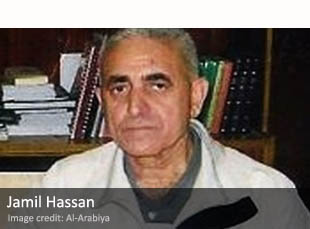
A Syrian state-owned television channel has denied reports that the head of Syria’s Air Force Intelligence has been assassinated by one of his aides. The government-controlled al-Dynya TV called reports about the assassination of Lieutenant Jamil Hassan “absolutely false”. However, unlike Syria’s Vice-President, Farouq al-Sharaa, who appeared on television yesterday to dispel rumors he had defected to Jordan, Hassan made no such appearance. Earlier on Sunday, sources affiliated with the opposition Free Syrian Army (FSA) told the Saudi-owned Al-Arabiya television network that Lieutenant Hassan had been killed in his office in Syrian capital Damascus. Born into a prominent military family in the western city of Homs, Syria’s third-largest city and site of some of the worst violence in the ongoing Syrian uprising, Hassan belongs to the country’s Alawite community. It is the same Syrian-based branch of Shiite Islam that counts the country’s President, Bashar al-Assad, as its member. Hassan is believed to be a key member of the Syrian military and a close advisor of the President. Opposition forces consider Hassan a hardline supporter of the Assad regime and charge him with leading the ‘iron fist’ caucus inside the Syrian government. A Syrian opposition source once quoted Hassan as telling Assad: “let me kill a million protesters to end the revolution and I will go to [the International Criminal Court in] The Hague in your place”. Although this quote remains anecdotal, there is little doubt that Hassan’s vocal support for the Assad regime has repeatedly attracted the attention of the opposition FSA, which sees him as one of the most vicious and criminal elements inside the Syrian state. Read more of this post

 By JOSEPH FITSANAKIS | intelNews.org |



 By IAN ALLEN | intelNews.org |








News you may have missed #785 (interview edition)
August 27, 2012 2 Comments
►►Interview with first-ever NSA Compliance Director. John DeLong, the first-ever compliance director at the US National Security Agency, has given an interview to NextGov. In it, he says that “we’re nothing if we lose the confidence of the American people”. He is referring to frequent allegations, by whistleblowers and others, that the Agency is increasingly spying on Americans’ communications. As Compliance Director, DeLong is responsible for ensuring that the NSA abides by US law, which forbids it from intercepting electronic messages exchanged between US citizens or persons.
►►Ex-MI5 boss offers comment on WikiLeaks. Former MI5 Director-General Dame Stella Rimington has criticized “the indiscriminate pouring out into the public domain of streams of leaked documents by Julian Assange and his WikiLeaks organization”. But she also said that the US government should have taken better steps to prevent WikiLeaks from acquiring the information in the first place. Speaking at an international archiving conference in Brisbane, Australia, Dame Stella said that while the WikiLeaks saga could prompt the US government to come up with better databases, it would more likely encourage it to be even more secretive. This, she added, “must be absolutely the opposite effect of what WikiLeaks was seeking”.
►►Interview with NSA whistleblower. Filmmaker Laura Poitras interviews William Binney, a 32-year veteran of the US National Security Agency, who helped set up STELLAR WIND, the NSA’s top-secret domestic spying program, which was put in place after 9/11. The program was so controversial that it nearly caused top Justice Department officials to resign in protest in 2004. Binney, who resigned over STELLAR WIND in 2001, and began speaking out publicly in the last year, explains how the program he created for foreign intelligence gathering was turned inward on America.
Interview with NSA whistleblower
Filed under Expert news and commentary on intelligence, espionage, spies and spying Tagged with 0 Ex-MI5 boss offers comment on WikiLeaks, 0 Interview with first-ever NSA Compliance Director, 0 Interview with NSA whistleblower, communications interception, domestic intelligence, interviews, John DeLong, Julian Assange, MI5, News, news you may have missed, NSA, operation STELLAR WIND, Stella Rimington, Terrorist Surveillance Program (STELLAR WIND), UK, United States, whistleblowing, Wikileaks, William Binney