News you may have missed #703: US edition

NSA headquartersBy IAN ALLEN | intelNews.org |
►►NSA pressed to reveal details on Google deal. The Electronic Privacy Information Center is locking horns with the National Security Agency over a secret deal the agency cut with Google following an attack on Gmail by Chinese hackers in 2010. The information center has filed a Freedom of Information Act request with the NSA to obtain information about the deal. That request was rejected by a federal court and an appeal process continues.
►►US spy agencies can keep data on Americans longer. Until now, the US National Counterterrorism Center had to immediately destroy information about Americans that was already stored in other government databases when there were no clear ties to terrorism. But it will now be able to store information about Americans with no ties to terrorism for up to five years under new Obama administration guidelines. The new rules replace guidelines issued in 2008 and have privacy advocates concerned about the potential for data-mining information on innocent Americans.
►►Islam convert leads CIA’s Counterterrorism Center. Roger, which is the first name of his cover identity, has been chief of the CIA’s Counterterrorism Center for the past six years. Colleagues describe Roger as a collection of contradictions. A chain-smoker who spends countless hours on a treadmill. Notoriously surly yet able to win over enough support from subordinates and bosses to hold on to his job. He presides over a campaign that has killed thousands of Islamist militants and angered millions of Muslims, but he is himself a convert to Islam. His defenders don’t even try to make him sound likable. Instead, they emphasize his operational talents, encyclopedic understanding of the enemy and tireless work ethic.

News you may have missed #702

James BamfordBy IAN ALLEN | intelNews.org |
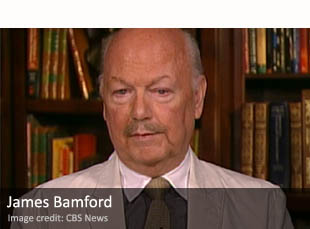
►►NSA chief denies domestic spying allegations. In a rare break from the NSA’s tradition of listening but not speaking, National Security Agency chief General Keith Alexander was grilled last week on the topic of eavesdropping on Americans in front of a House subcommittee. The questioning from Rep. Hank Johnson (D-Georgia) was prompted by Wired magazine’s cover story earlier this month on the NSA’s growing reach and capabilities. But author James Bamford (photo) and NSA whistleblower Thomas Drake insist that the NSA is quietly building America’s the largest spy center in Utah, as part of a secret domestic surveillance program codenamed STELLAR WIND.
►►NY police says it monitored Iran operatives taking photos. Speaking before the US House Homeland Security Committee, Michael Silber, director of New York Police Department Intelligence Analysis, said New York City Police have observed Iranian operatives photographing key transportation sites at least six times since September 11, 2001. He gave an example of six men on an East River sightseeing cruise in 2005, who paired off with maps and cell phones while taking photographs and videos of the bridges over the river. The NYPD determined each was on the payroll of Iranian government, one employed at Iran’s mission to the United Nations.
►►Major Canadian Cold War era mole hunt operation revealed. Newly released archival records show that even the cream of Canada’s foreign service was not immune from scrutiny in a top secret RCMP investigation known as Operation FEATHER BED. The probe, which stretched from the late 1950s into the 1970s, saw RCMP security branch investigators pore over the backgrounds of possible Communist sympathizers in the public service and political sphere —including a future Mountie spy chief. There is no evidence the highly confidential investigation ever identified a Soviet agent.
News you may have missed #701

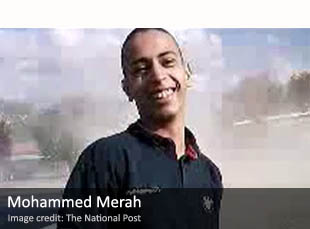
Mohammed MerahBy IAN ALLEN| intelNews.org |
►►Ex-NASA scientist gets 13 years for spying for Israel. Former US government scientist Stewart Nozette was once on the cutting edge of space exploration, but he will spend 13 years in prison for trying to sell some of his country’s most closely guarded secrets. In 2009 Nozette sought to sell classified information to someone he thought was an Israeli Mossad officer but was in fact an FBI agent in an undercover sting operation. As intelNews explained back in 2010, Nozette was not simply a Mossad agent-wannabe, but had actually passed information to Israel in the past.
►►French intel under fire over Toulouse gunman. The French government went on the defensive last week amid questions over why its intelligence service had failed to deal with Mohammed Merah. The self-confessed al-Qaeda militant died in a police assault on his flat last Thursday, where he was tracked down after murdering seven people, including three children and three soldiers, in a series of attacks. With hindsight, Merah’s past appears to make him an obvious suspect —he had at least 15 criminal convictions, some with violence, had become a radical Islamist and travelled to Pakistan and Afghanistan. One press report said that in 2010 Merah forced a youth to watch videos of al-Qaeda hostage beheadings. When the boy’s mother complained, Merah allegedly attacked her, putting her in hospital for several days.
►►Ex-Mossad chief says Israel will know when Iran begins producing nukes. Former Mossad head Meir Dagan said he believes Israel will be aware when Iran moves to the stage of nuclear weapon production —for example, enriching uranium to a degree of 90 percent. Dagan said that at that stage Israel would have to attack the Iranian nuclear sites if the international community does not stop its program. Dagan said he believed the Israeli Air Force has the capability to significantly damage Iran’s nuclear sites, yet repeated previous warnings that such a strike will have serious repercussions.

News you may have missed #700: analysis edition

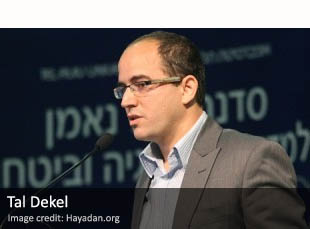
Tal DekelBy IAN ALLEN | intelNews.org |
►►Egypt struggles to advance spy satellite program. Since Egyptian technicians lost touch two years ago with an observation satellite they hoped would help carry the country into the “space club”, the country has struggled to make progress in gaining intelligence satellite capabilities, but it remains committed to the program. This is according to Tal Dekel, a research fellow at Tel Aviv University’s Yuval Ne’eman Workshop for Science, Technology and Security. He said few are aware of the extent of Egypt’s satellite program: “People talk about the Iranians, but no one talks about Egypt’s program, which includes much more than a satellite”.
►►China spying on Taiwan despite thaw. When Taiwanese security personnel detained a suspected spy for China at a top secret military base last month, they may have had a sense of déjà vu. Four suspected spies have been detained in Taiwan during the last fourteen months. The cases show that China is seeking information about systems that are integral to Taiwan’s defenses and built with sensitive US technology. A major breach could make Taiwan more vulnerable to Chinese attack.
►►US intel says water shortages threaten stability. Competition for increasingly scarce water in the next decade will fuel instability in regions such as South Asia and the Middle East that are important to US national security, according to an intelligence report from the US Director of National Intelligence. The report, drafted principally by the Defense Intelligence Agency, reflects a growing emphasis in the US intelligence community on how environmental issues such as water shortages, natural disasters and climate change may affect US security interests.

News you may have missed #699

Hilda MurrellBy IAN ALLEN | intelNews.org |
►►Diplomatic war over the arrest of Gaddafi’s spy chief. The Libyan authorities have confirmed the arrest in Mauritania of former Libyan leader Muammar Gaddafi’s intelligence chief, Abdullah al-Senussi, who was reportedly detained at Nouakchott airport. Senussi, 63, was Gaddafi’s brother-in-law, and has been described as one of his most trusted aides. But his arrest has kicked off an international row about which of his alleged crimes —ranging from terrorism to war crimes and mass murder— should take precedence in the pursuit of justice. The Mauritanians are now saying that they are willing to extradite al-Senussi, but this remains to be seen in practice.
►►Azerbaijan arrests 22 in alleged Iran spy plot. Azerbaijan has arrested 22 of its own citizens, on suspicion of spying for Iran. Weapons and ammunition were seized, authorities say, accusing the group of links to Iran’s Islamic Revolutionary Guard Corps. Their alleged targets included the US and Israeli embassies as well as Western-linked companies. Surveillance by the Azeri security services is reported to have helped foil the alleged Iranian-sponsored plot.
►►Was there MI5 link to murder of UK nuclear activist? One of Britain’s leading human rights lawyers, Michael Mansfield QC, has demanded a fresh police inquiry to establish what the British intelligence services knew about the murder of a prominent anti-nuclear campaigner. The lawyer said new evidence meant that an independent police force should be appointed to examine enduring concerns and inconsistencies relating to the death of Hilda Murrell, in March 1984.

News you may have missed #698

Cecilia LooströmBy IAN ALLEN | intelNews.org |
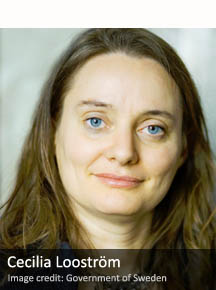
►►Swedish official sent top-secret intel briefing via Hotmail. A high-ranking official at Sweden’s Ministry of Defense sent notes on highly confidential arms trade negotiations with a Saudi Arabian official through a Hotmail email address. The four-page-long email, which details a secret conversation with a Saudi General, was sent in 2008 from assistant Under-Secretary for Defense Cecilia Looström, according to a Swedish newspaper.
►►Russian diplomat won’t deny espionage activity in Canada. Russia’s ambassador to Canada, Georgiy Mamedov, has refused to deny that his country carries out spy activity in Canada. He told a Canadian television reporter that “I am neither denying nor confirming [Russian espionage in Canada]. I would be a fool […] if I would confirm that we are doing as much”. He said Russia conducts intelligence activities in other countries —although he didn’t specify which— but refused to give any details on what activities, if any, are conducted within Canada.
►►New Taiwan spy case raises concerns. A Taiwanese air force captain surnamed Chiang is believed to have passed intelligence to China. Reportedly, Chiang’s uncle, who operates a business in China, helped pass on the information allegedly obtained by Chiang, which is said to have included classified material on Taiwan’s early-warning radar system as well as E-2T/E-2K Hawkeye surveillance aircraft. The case has rocked the Taiwanese military, as it comes a little more than a year after a high-profile spy for China was caught and is now serving a life sentence.

News you may have missed #697: US edition

David PetraeusBy IAN ALLEN| intelNews.org |
►►What happens when CIA couples divorce? One retired CIA senior paramilitary officer, who served for more than two decades and lives in Virginia, said he was told several years ago that the divorce rate for the agency’s operations division was astonishingly high. But unlike the Pentagon, which studies how often service members split up, and knows, for instance, that 29,456 of 798,921 military couples divorced last year, the CIA does not keep official tabs on its employees’ divorce rates.
►►Spies exchange tips in the cloud. While some US federal agencies shy away from cloud computing for fear of losing control over their data, the intelligence community and military increasingly are turning to networked services expressly to exert tighter security restraints, according to Jim Heath, Senior Science Adviser for the National Security Agency.
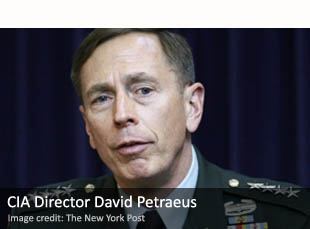
►►CIA Chief: We’ll spy on you through your dishwasher. More and more personal and household devices are connecting to the internet, from your television to your car navigation systems to your light switches. CIA Director David Petraeus cannot wait to spy on you through them. Earlier this month, Petraeus mused about the emergence of an “Internet of things” —that is, wired devices— at a summit for In-Q-Tel, the CIA’s venture capital firm. “‘Transformational’ is an overused word, but I do believe it properly applies to these technologies”, Petraeus enthused, “particularly to their effect on clandestine tradecraft”.

News you may have missed #696

NSA's Utah Data CenterBy IAN ALLEN| intelNews.org |
►►French spies to stage labor protest. The main union representing French domestic intelligence officers, those charged with counter-espionage and anti-terror investigations, called Wednesday on its members to stage a protest. The head of the SNOP union, which represents senior police officers and is the main labor body for members of the DCRI security agency, said his members planned a “gathering” at their Paris headquarters. A smaller union said it wanted no part in the protest, and it was not clear how many of the agency’s 4,000 intelligence officers planned to take part.
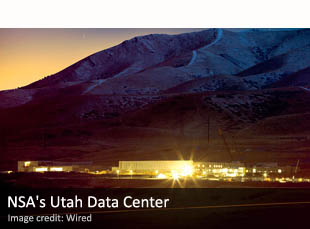
►►James Bamford on the NSA’s new spy center in Utah. Under construction by contractors with top-secret clearances, the blandly named Utah Data Center is being built in Bluffdale for the National Security Agency. A project of immense secrecy, it is the final piece in a complex puzzle assembled over the past decade. Its purpose: to intercept, decipher, analyze, and store vast swaths of the world’s communications as they zap down from satellites and zip through the underground and undersea cables of international, foreign, and domestic networks. The heavily fortified $2 billion center should be up and running in September 2013.
►►Author of unauthorized CIA book gave proceeds to charity. After former CIA officer Ishmael Jones wrote a book about the CIA without gaining prior approval from the Agency, the government sought and won a judicial ruling that Jones had acted in violation of his CIA secrecy agreement, and that he could be held liable for the breach. But the government’s current efforts to seize the financial proceeds from Jones’ 2010 book, The Human Factor: Inside the CIA’s Dysfunctional Intelligence Culture, have been frustrated by the fact that the author has already given the proceeds away to charity.

News you may have missed #695

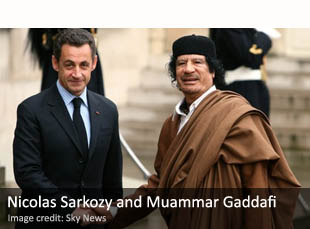
Nicolas Sarkozy and Muammar GaddafiBy IAN ALLEN| intelNews.org |
►►Spies meet over Syrian crisis. CIA chief David Petraeus met Turkey’s Prime Minister Recep Tayyip Erdogan on Tuesday for closed-door talks focusing on the crisis across the border in Syria. Meanwhile, General Murad Muwafi, who heads Egypt’s General Intelligence Directorate, left Cairo on Tuesday for a visit to Riyadh, Saudi Arabia. Also, US General Ronald Burgess, Defense Intelligence Agency Director, has arrived in Egypt and is expected to meet with several Egyptian officials to discuss the situation in Syria.
►►Gaddafi contributed €50m to Sarkozy election fund. Damaging new claims have emerged about the funding of Nicolas Sarkozy’s 2007 election campaign and his links with former Libyan leader Muammar Gaddafi. The French investigative website Mediapart claims to have seen a confidential note suggesting Gaddafi contributed up to €50 million to Sarkozy’s election fund five years ago.
►►Analysis: US relations on the agenda for Pakistan’s new spy chief. Yusuf Raza Gilani has appointed Lieutenant General Zahir ul-Islam as the new chief of the Inter-Services Intelligence (ISI) agency, the main spy arm of the Pakistani military, ending weeks of speculation he would extend the term of Lieutenant Gen Ahmed Shuja Pasha, due to retire on March 18. The new spymaster faces a tough task fixing ever-worsening ties with the United States, but analysts say he is unlikely to reform an institution accused of helping militants in Afghanistan.

News you may have missed #694

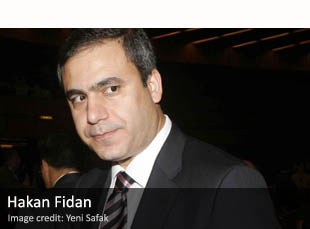
Hakan FidanBy IAN ALLEN| intelNews.org |
►►India’s spy satellite to be launched in April. The Radar Imaging Satellite, or RISAT-1, is a wholly Indian-built spy-surveillance satellite that can see through clouds and fog and has very high-resolution imaging. The Indian Space Research Organisation (ISRO) has said that RISAT-1 is slated for launch in April. The satellite would be used for disaster prediction and agriculture forestry, and the high-resolution pictures and microwave imaging “could also be used for defense purposes”.
►►GCHQ staff could risk prosecution for war crimes. British law firm Leigh Day & Co. and the legal action charity Reprieve are launching the action against Britain’s foreign secretary William Hague, accusing him of passing on intelligence to assist US covert drone attacks in Pakistan. Human rights lawyers have said that civilian staff at GCHQ, Britain’s signals intelligence agency, could also be at risk of being prosecuted for war crimes.
►►Turf war between Turkey’s top spy and police commander? A news report appeared yesterday, which claimed that there was a rift between Turkish intelligence agency MİT Undersecretary Hakan Fidan and National Police Chief Mehmet Kılıçlar, over intelligence sharing in the fight against the terrorist Kurdistan Workers’ Party (PKK). But the two agencies issued a rare joint statement calling media reports “unsubstantiated”.

News you may have missed #693: Israel edition

Meir DaganBy IAN ALLEN| intelNews.org |
►►India soon to announce Iranian role in New Delhi bomb attack. The Delhi Police has cracked the Israeli embassy car blast case and traced the conspiracy to Iranian secret agents. According to sources privy to the investigation, it has now been “conclusively established” that Syed Mohammad Kazmi, the freelance journalist recently arrested in the case, was in touch with an Iranian intelligence officer and had even visited Iran as part of the conspiracy. Sources in the Indian security establishment said that the breakthrough in the February 13 blast on an Israel diplomat’s car, will be announced by the New Delhi Police in a “day or two.” They added that another couple of detentions have been made in the case.
►►Ex-Mossad chief says Iran’s response to attack would be devastating. An Israeli attack on Iran would lead to a missile attack on Tel Aviv that would have a “devastating impact” on the ability of Israelis to continue their daily lives, Meir Dagan, former head of Israel’s spy agency Mossad, said on Monday. Dagan said that Iran doesn’t have only four nuclear sites, but it has “dozens” of them. He seemed quite skeptic over the effectiveness of an Israeli attack on Iran, saying that no military attack could halt the Iranian nuclear project. “The attack could only delay it”, he said.
►►Ex-Mossad chief says Iran regime is ‘very rational’. The Iranian regime is “very rational” and is moving deliberately in its secretive nuclear program, the former head of Israel’s Mossad intelligence agency says. “Maybe it’s not exactly rational based on what I call ‘Western thinking’, but no doubt that they are considering all the implications of their actions”, Meir Dagan said in an interview with CBS‘ 60 Minutes that aired Sunday.

News you may have missed #692

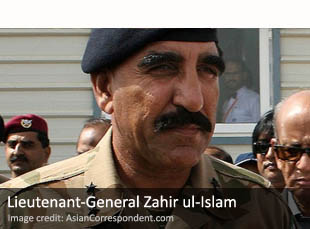
Lieutenant-General Zahir ul-IslamBy IAN ALLEN| intelNews.org |
►►Mole theory over MI6 codebreaker’s death. It is one of Britain’s most baffling spy mysteries. In 2010, the body of expert code breaker Gareth Williams was found locked in a large sports bag in the bathtub of his London flat. There were no obvious signs of how he died or who was responsible —with many claiming a “wall of silence” surrounding his death points to a cover-up at the very heart of the British establishment. And now it has been revealed Gareth may have been betrayed by a British double agent.
►►Pakistan picks new director for spy agency. The prime minister of Pakistan appointed a new general to run the country’s most powerful intelligence agency on Friday, signaling an important change in the military leadership at a pivotal moment in relations with the United States. Lt. Gen. Zahir ul-Islam will take over as the director general of the Inter-Services Intelligence Directorate, or ISI, on March 18, replacing Lt. Gen. Ahmed Shuja Pasha, who has held the post since 2008.
►►Russian diplomat alleges 15,000 foreign fighters in Syria. Addressing a one-day humanitarian forum on Syria at the United Nations in Geneva, Russia’s deputy ambassador Mikhail Lebedev said rebels had recently committed large-scale attacks against Syrian infrastructure, including schools and hospitals. Asked by Reuters how many foreign fighters were believed to be in Syria, he said: “how many got in through illegal routes? The border there is not demarcated, not delimited, so nobody knows. But at least 15,000”.

News you may have missed #691

Thomas DrakeBy IAN ALLEN| intelNews.org |
►►NSA whistleblower says Obama worse than Bush. Thomas Drake, the whistleblower whom the administration of US President Barack Obama tried and failed to prosecute for leaking information about waste, fraud and abuse at the National Security Agency, now works at an Apple store in Maryland. In an interview with Salon, Drake says the Obama administration is “expanding the secrecy regime far beyond what Bush ever intended”.
►►Australian spies reportedly buying computer bugs. The Australian government is buying computer security weaknesses found by hackers before they are sold on the black market, as part of its defense strategy, according to an Australian security consultant who wishes to remain anonymous. He says while the government won’t admit it, buying vulnerabilities is an obvious part of “gathering intelligence”.
►►Refugees in Finland face spying threats. Foreign governments and groups are carrying out more spying on refugees and dissidents living in Finland, according to SUPO, the country’s security intelligence service. SUPO issued a report last week contending that while the Scandinavian country isn’t seeing an increased threat of terrorist acts on its soil, it still faces several terror-related challenges. One of them is “regular” surveillance activity by foreign intelligence services operating within Finland, whose aim is spy on their home countries’ dissidents and develop links with other refugees and expatriates.

News you may have missed #690

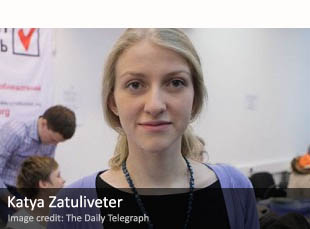
Katya ZatuliveterBy IAN ALLEN| intelNews.org |
►►Interview with Katia Zatuliveter. Just over three months ago Katia Zatuliveter was fighting to clear her name over claims she was a Russian spy who had passed British military secrets to Moscow. Now, in her first newspaper interview since winning her appeal against deportation from the UK, Katia Zatuliveter has told The Daily Telegraph why she does not support Vladimir Putin.
►►US Special Forces in Afghanistan to transfer to CIA. Top US Pentagon officials are considering putting elite special operations troops under CIA control in Afghanistan after 2014. If the plan were adopted, the US and Afghanistan could say there are no more U.S. troops on the ground in the war-torn country because once the SEALs, Rangers and other elite units are assigned to CIA control, even temporarily, they are not considered soldiers.
►►Indian army accused of spying on government officials. The Indian army is accused of using two surveillance vehicles to snoop near the offices and houses of senior Indian Defense Ministry officials. The vehicles with “off the air interceptors” were alleged to be parked in various localities in the New Delhi. Similar equipment is said to be used by the National Technical Research Organisation to listen to conversations without bugging the premises. The Defense Ministry has reportedly ordered a probe by the country’s Intelligence Bureau.

News you may have missed #689: NSA edition

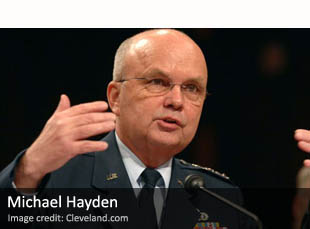
Michael HaydenBy IAN ALLEN| intelNews.org |
►►Ex-NSA Director calls Stuxnet a ‘good idea’. General Michael Hayden, once head of the NSA and CIA, who was no longer in office when the Stuxnet attack on Iran occurred, but who would have been around when the computer virus was created, denies knowing who was behind it. He calls Stuxnet “a good idea”. But he also admits “this was a big idea, too. The rest of the world is looking at this and saying, ‘clearly, someone has legitimated this kind of activity as acceptable'”.
►►NSA develops secure Android phones. The US National Security Agency has developed and published details of an encrypted VoIP communications system using commercial off-the-shelf components and an Android operating system. A hundred US government employees participated in a pilot of Motorola hardware running hardened VoIP called ‘Project FISHBOWL’, NSA Information Assurance Directorate technical director Margaret Salter told the RSA Conference in San Francisco on Wednesday. “The beauty of our strategy is that we looked at all of the components, and took stuff out of the operating system we didn’t need”, said Salter. “This makes the attack surface very small”.
►►Senior US Defense official says DHS should lead cybersecurity. In the midst of an ongoing turf battle over how big a role the National Security Agency should play in securing America’s critical infrastructure, Eric Rosenbach, deputy assistant secretary of Defense for Cyber Policy in the Department of Defense, said on Wednesday that the NSA should take a backseat to the Department of Homeland Security in this regard. “Obviously, there are amazing resources at NSA, a lot of magic that goes on there”, he said. “But it’s almost certainly not the right approach for the United States of America to have a foreign intelligence focus on domestic networks, doing something that throughout history has been a domestic function”.