UK spy agency sued by Internet providers over malware attacks
July 3, 2014 1 Comment
 By JOSEPH FITSANAKIS | intelNews.org
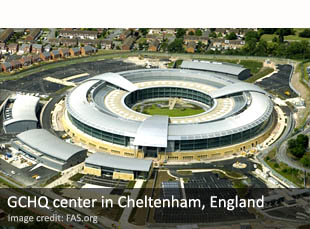
A group of Internet service providers from North America, Europe, Asia and Africa have filed a lawsuit against Britain’s foremost signals intelligence agency, accusing it of hurting their business by spying on them. The legal complaint was filed against the Government Communications Headquarters (GCHQ), the British government agency tasked with communications interception, which also provides information assurance to both civilian and military components of the British state. Service providers from the United States, United Kingdom, Germany, Netherlands, South Korea and Zimbabwe are listed as plaintiffs in the complaint, which was filed on Wednesday in a court in London. The legal action against the spy agency is based on articles that surfaced in the international press last year. They alleged that GCHQ targeted Belgium’s largest telecommunications service provider Belgacom. The revelations surfaced first in September of 2013 in Flemish newspaper De Standaard. The paper claimed that Belgacom’s mainframe computers had been deliberately infected by an “unidentified virus”, which had specifically targeted telecommunications traffic carried by Belgacom’s international subsidiaries. De Standaard further claimed that the scope and technical sophistication of the operation pointed to a state-sponsored agency as the culprit. Further revelations about the Belgacom malware attacks were made in German newsmagazine Der Spiegel in November of last year, pointing to GCHQ as the agency behind the operation. The allegations originated in information provided by Edward Snowden, an American defector to Russia who used to work for GCHQ’s American equivalent, the National Security Agency. In their lawsuit, the Internet service providers allege that, regardless of whether they were themselves targeted by GCHQ in a manner similar to that of Belgacom, the British spy agency effectively compromised the integrity of their industry. It did so, they argue, by allegedly targeting employees of telecommunications service providers, by infecting telecommunications networks with malware, by Read more of this post
















 intelNews.org
Germany summons US ambassador following arrest of CIA spy
July 7, 2014 3 Comments
Authorities in Germany have summoned the American ambassador to Berlin following the arrest of a German intelligence officer who was apprehended last week on suspicion of spying for the United States. The man, who has not been named, is suspected of passing classified government information to American intelligence operatives on a variety of subjects. His most recent undertakings are said to have targeted activities of a German parliamentary committee investigating US espionage against Germany. The episode is expected to further strain relations between the two allies, which were damaged by revelations last year that the National Security Agency, America’s signals intelligence organization, had bugged the telephone of German Chancellor Angela Merkel. The revelation, which was made public by Edward Snowden, an American defector to Russia who had previously worked for the NSA, showed that Chancellor Merkel had been targeted as part of a wider US spy operation against Germany. The revelations sparked the establishment of a nine-member parliamentary committee that is tasked with evaluating Snowden’s revelations and proposing Germany’s response. It appears that the man arrested, who is believed to have been secretly employed by the Central Intelligence Agency, tried to spy on the activities of the committee on behalf of his American handlers. According to German media reports, the man, who is said to be 31 years old, is a “low-level clerk” at the Bundesnachrichtendienst, or BND, Germany’s external intelligence agency. According to Der Spiegel newsmagazine, he is believed to have spied for the CIA for approximately two years, and to have supplied the American spy agency with around 200 classified German government documents in exchange for around €25,000 —approximately $30,000. Read more of this post
Filed under Expert news and commentary on intelligence, espionage, spies and spying Tagged with BND, CIA, counterintelligence, Edward Snowden, espionage, Germany, News, United States