Taliban insurgents attack CIA station in Kabul
June 25, 2013 15 Comments
 By IAN ALLEN | intelNews.org |
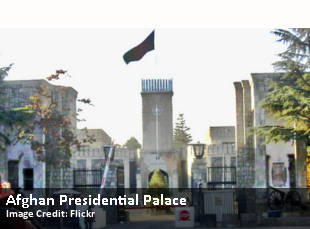
Taliban assailants launched an unprecedented attack against the presidential palace in Afghan capital Kabul on Tuesday morning, which included a targeted assault on a nearby command post of the United States Central Intelligence Agency (CIA). The daring attack began at approximately 6:30 a.m. outside the eastern gate of the palace, which is located in Kabul’s downtown Shash Darak district. The heavily guarded district contains, aside from most Afghan government buildings, dozens of foreign embassies and media offices. Hundreds of Afghan and foreign officials run for cover as over a dozen explosions were heard near the headquarters of Afghanistan’s Ministry of Defense, which is located next door to the presidential palace. The attack reportedly began when a group of about four or five insurgents approached the palace’s eastern gate with a small track laden with explosives. As the vehicle approached the gate, the passengers jumped out and began throwing grenades, while the car exploded at the gate. Afghan security guards fled the scene and the assailants were able to enter the grounds of the presidential palace and roamed around for several minutes before they were engaged in a firefight by Afghan and North Atlantic Treaty Organization security personnel. The attackers appeared to concentrate primarily on three buildings: the presidential palace, the Ministry of Defense, and the nearby Ariana Hotel, which is widely understood to host the main CIA command post in Kabul. On Tuesday afternoon, Taliban spokesman Zabihullah Mujahid, told French news agency AFP that “the CIA office” in downtown Kabul was “the main target” of the assault, along with the palace and defense ministry. Read more of this post













 intelNews.org
Australia fears Asia backlash over PRISM surveillance revelations
June 26, 2013 by Joseph Fitsanakis 8 Comments
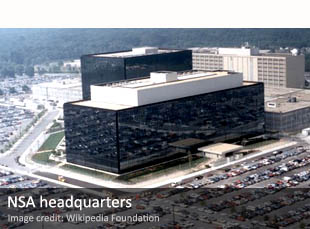
The government of Australia is concerned that American whistleblower Edward Snowden may leak classified information that could damage Australia’s relations with its Asian neighbors, including China and Malaysia. Early this month, Snowden, a former technical assistant for the United States Central Intelligence Agency (CIA), disclosed the existence of PRISM, a clandestine electronic surveillance program operated by the US National Security Agency (NSA). Information provided by Snowden to British newspaper The Guardian suggests that Washington routinely shares PRISM intelligence with Canada, New Zealand, the United Kingdom and Australia. These four countries, along with the United States, are signatories to the so-called UKUSA agreement, a multilateral accord for cooperation in signals intelligence (SIGINT) collection, which was established secretly in 1946. Australian media reported on Wednesday that the Australian Parliament’s Joint Committee on Intelligence and Security had been briefed by senior intelligence officials on Australia’s role in PRISM. The Sydney Morning Herald said that David Irvine, Director of the Australian Security Intelligence Organisation, and Ian McKenzie, who heads Australia’s Defence Signals Directorate, were among those who briefed the parliamentary Committee. Its members were reportedly told that the disclosures about PRISM were likely to damage Canberra’s relations with several Asian countries, in ways that are difficult to predict. One unidentified Australian intelligence official told The Herald that Snowden had “very wide access” to classified information held by the NSA, and that some of it probably includes “much detail of communications intelligence cooperation between the US and Australia”. One source went as far as to say that Snowden’s disclosures have already “damaged […] Australia’s intelligence capabilities”. Read more of this post
Filed under Expert news and commentary on intelligence, espionage, spies and spying Tagged with ASIO, AUSCANZUKUS, Australia, China, David Irvine, Defence Signals Directorate (Australia), Edward Snowden, Ian McKenzie, intelligence cooperation, Malaysia, News, PRISM surveillance program, UKUSA, United States