George Blake, arguably the most prolific Soviet spy of the Cold War, dies at 98

George BlakeGEORGE BLAKE, A DUTCH-born British intelligence officer, whose espionage for the Soviet Union gained him notoriety in the West and hero status in Moscow, has died aged 98. His death was announced on Saturday by the state-owned Russian news agency RIA Novosti. It was later corroborated by a spokesman for the Russian Foreign Intelligence Service (SVR), who said Blake “had a genuine love for our country”.

Blake was nearly 18 when German troops entered his native Holland, prompting him to join the local anti-Nazi resistance forces. A British subject thanks to his Egyptian Jewish father, who had acquired British citizenship by fighting in British uniform during World War I, Blake eventually made his way to London via neutral Spain and Gibraltar. Within two years, he had been recruited by the Secret Intelligence Service, or MI6, and by war’s end he was working in its Dutch Section.

Named after King George by his fiercely pro-British and royalist father, Blake drew no suspicion by his MI6 colleagues. He was hard-working and came across as a strict Calvinist, with strong religious leanings. But his view of the Soviet Union began to change at Cambridge University, where he had been sent by MI6 to learn Russian language and history. In 1950, while he was serving under official cover at the British embassy in Seoul, Korea, he was captured and detained for three years by North Korean forces. His ideological defection to communism appears to have taken place during his capture, during which he was given access to English-language Marxist literature and had long discussions with Soviet political instructors.

By 1953, when he was released by his captors and returned to a hero’s welcome in London, Blake was a committed communist. Less than a month following his release, he made contact with Nikolai Rodin (codename SERGEI) who was the KGB’s station chief in London. He began to spy for the Soviet Union, and did so for eight years, including during his stint as an MI6 case officer in Berlin. During that time, he is believed to have betrayed information that led to the detection of over 500 Western intelligence officers and assets operating behind the Iron Curtain, with as many as 44 of those losing their lives as a result. His career as a double spy ended in 1960, when he was betrayed by Polish defector Michael Goleniewski. Goleniewski’s debriefing by the United States Central Intelligence Agency helped Britain identify two Soviet moles inside its intelligence establishment, one of whom was Blake.

In 1960, after pleading guilty to espionage, Blake began serving a 42-year prison sentence in Britain’s Wormwood Scrubs maximum security prison complex. But in 1966 he was able to escape with the help of a group of Irish republican prisoners, and made contact with Soviet intelligence. He was eventually smuggled into East Germany and from there to Russia. Once there, he joined the KGB and served as a consultant and instructor until his retirement in the early 1990s. He learned to speak Russian fluently, married a Russian wife (his British wife having divorced him once he was convicted of espionage) and had a son.

Russian President Vladimir Putin issued a statement on Sunday, praising Blake’s espionage “in the cause of peace”, while the SVR described him as a model intelligence officer. A report published by RIA Novosti on Sunday said that the Moscow city council was considering a proposal to rename a street in the Russian capital after Blake.

Author: Joseph Fitsanakis | Date: 28 December 2020 | Permalink

Colombia and Russia expel diplomats over espionage allegations

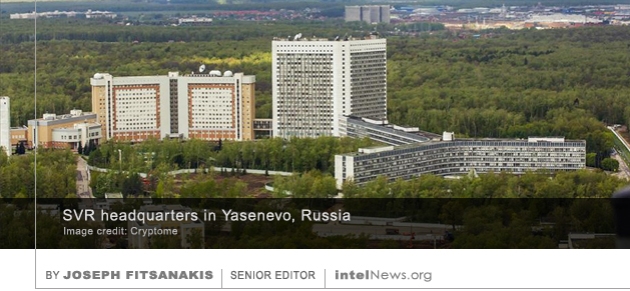
SVR hqCOLOMBIA EXPELLED TWO RUSSIAN diplomats earlier this month, without publicly explaining why, according to news reports. Several Colombian news outlets reported on Tuesday that the two Russians were expelled after they were found engaging in espionage. Also on Tuesday, Colombian officials confirmed earlier reports that Moscow had expelled two Colombian diplomats in a tit-for-tat response.

At a press conference held in Bogota on Tuesday December 22, officials from Colombia’s Ministry of Foreign Affairs revealed that two Russian diplomats had been expelled from the Colombian capital on December 8. However, they refused to provide the reasons for the expulsions, other than to claim that the two Russians had “engaged in violations” of the Vienna Convention on Diplomatic Relations. In a separate interview, Colombian President Ivan Duque said that “to reveal more information at this moment would not correspond with the principal of continuing bilateral relations” between Colombia and Russia.

However, several leading Colombian newspapers, including El Tiempo and Semana claimed that the two Russians had engaged in espionage that targeted Colombia’s energy and minerals industry in the city of Cali. An urban center of 2.2 million inhabitants, Cali is known as southern Colombia’s leading economic hub, and is among Latin America’s fastest-growing local economies.

El Tiempo named the two Russians as Alexander Paristov and Alexander Belousov. Also on Tuesday, Colombia’s W Radio alleged that Paristov is an officer in the Russian Foreign Intelligence Service, which is the Russian equivallent of the United States’ Central Intelligence Agency. It added that Belousov is an officer in the Main Directorate of the Russian Armed Forces’ General Staff, which is known as GRU.

The Russian Ministry of Foreign Affairs and the Russian embassy in Bogota did not respond to questions by Colombian media about the diplomats’ expulsions.

Author: Joseph Fitsanakis | Date: 24 December 2020 | Permalink
Mutual distrust of China heightens US-Indian intelligence cooperation to historic levels

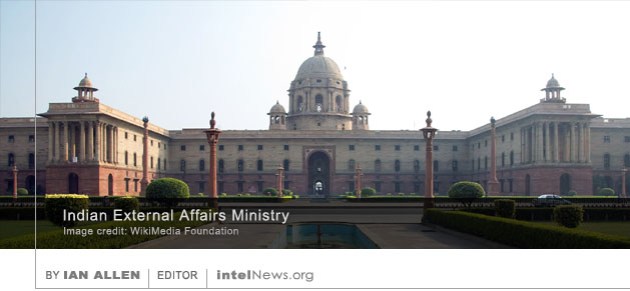
India External Affairs MinistryINTELLIGENCE COOPERATION BETWEEN THE United States and India has reached historic levels in the closing months of 2020, and is driven by the two countries’ mutual distrust of China. This development is particularly noteworthy for India, which has traditionally maintained a non-aligned stance in military and intelligence matters for much of its existence. New Delhi’s increasingly close relationship with Washington is described by some experts as “a revolution in the way that India views the world and aligns with partners in Asia”.
The deepening intelligence cooperation between India has its roots in 2002, when the military forces of the two nations formalized intelligence-sharing systems on matters of regional security. In 2016, a new bilateral logistics agreement enabled them to share each other’s facilities in order to repair or resupply vehicles, vessels and aircraft. Two years later, the US gave India access to secure communications equipment that is also used by the US Navy and Air Force.

These military- and intelligence-sharing agreements were reinforced in recent months, after India and China were involved in a bloody border dispute in the Himalayan region. The heated dispute lasted for over a month, resulting in the death of nearly 30 Indian and Chinese military officers. The incidents alarmed observers, as they marked the first violent clashes between Indian and Chinese troops in several decades. Since that time, India has deliberately deepened its intelligence-sharing relationship with the US, led by its growing rift with China.

The most recent demonstration of the deepening relationship between India and the US is the Basic Exchange and Cooperation Agreement (BECA), which was signed by Washington and New Delhi in October of this year. It allows US intelligence agencies, such as the Defense Intelligence Agency and the National Geospatial-Intelligence Agency, to provide India with archival and real-time geospatial data. The latter includes aeronautical, nautical and topographical intelligence, much of which concerns China or the activities of Chinese vessels and aircraft in Southeast Asia and the Pacific. BECA is said to be instrumental in allowing India to advance its understanding of Chinese military targets, as well as detect the pattern of Chinese military activity in the wider region. However, the agreement has raised concerns among officials in India’s regional foe, Pakistan, as well as in Russia, which has historically been one of India’s closest regional allies.

Author: Ian Allen | Date: 23 December 2020 | Permalink

British Channel Islands being used as ‘offshore global spy center’ study finds

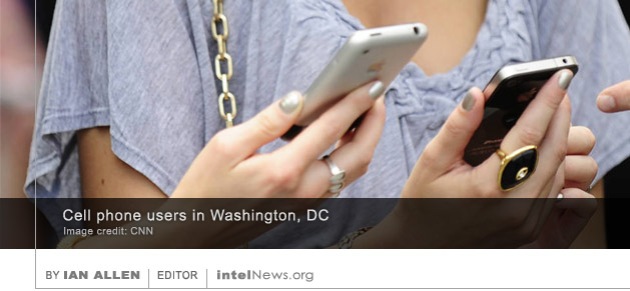
Cell Phone - IATHE CHANNEL ISLANDS, AN archipelago consisting of dependencies of the British Crown located off the northern coast of France, are being used as an offshore global spy center due to their unregulated telecommunications industry, according to a new study. The archipelago is made up of Jersey and Guernsey, groups of islands that are not technically part of Britain, but are instead considered offshore British territories. They are regularly new study as offshore tax havens.
But now a referred to by Britain’s Guardian newspaper and the Bureau of Investigative Journalism, claims that lax regulation of the Channel Islands’ telecommunications systems is allowing foreign spy agencies and contractors to use them as a base to carry out worldwide surveillance operations. Many of these operations rely on SS7, a decades-old feature of the global cellular telecommunications system, which allows cellular providers to provide service to mobile phone users as they travel internationally.

The SS7 system allows a mobile phone registered in a specific country to be used in a different country, and its user to be billed for the service. But to do so with accuracy, the SS7 system enables the service provider to track the owner of the device being charged for the phone call. This is done through what is known in cellular telecommunications parlance as a Provide Subscriber Location, or PSL, request.

Citing “leaked data, documents and interviews with industry insiders”, the study claims that intelligence agencies exploit the Channel Islands’ lax telecommunications regulation, which allows them to file PSL requests, not for billing purposes, but to detect the physical whereabouts of targets around the world. They do so by renting access from mobile phone operators based in the Channel Islands.

These PSL requests originate from Britain’s +44 country code, which is generally trusted in the global telecommunications industry, and are thus facilitated without raising suspicions. Notably, many of these PSL queries do not seek to acquire bulk data on users, but rather target specific individuals around the world. Additionally, if handled in certain ways, PSL queries can provide spies with access to the content of targeted communications, and thus information relating to unsuspecting users’ personal data, including text messages, bank accounts and passwords.

The study suggests that the British government is aware of this misuse of the system, but is finding it difficult to stop it because it has no direct legal jurisdiction over the Channel Islands.

Author: Ian Allen | Date: 22 December 2020 | Permalink

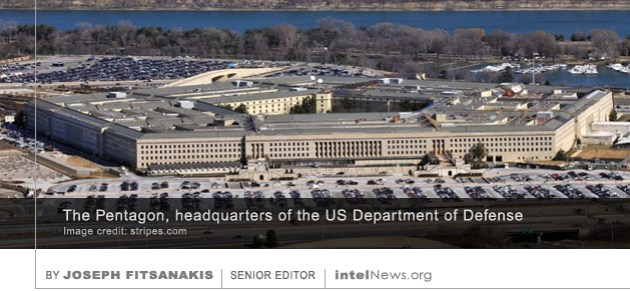
White House seeks to split Pentagon cybersecurity functions from signals intelligence

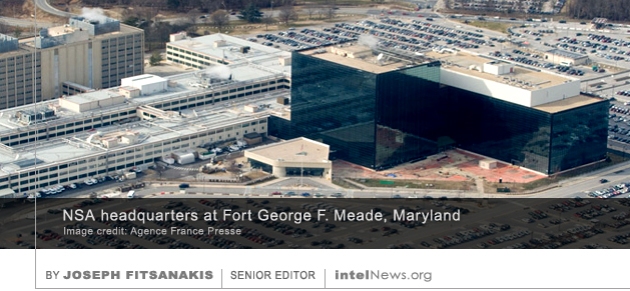
NSATHE WHITE HOUSE IS reportedly trying to implement what could be one of the most important changes in the United States Department of Defense in recent years, by separating the cybersecurity functions from its signals intelligence functions. Until 2009, the US National Security Agency (NSA) was in charge of protecting America’s cyber networks and combating online threats. But in 2009 the administration of US President Barack Obama determined that the online environment represented a new theater of war and established a brand new Cyber Command (CYBERCOM).
Since that time, these two agencies, NSA and CYBERCOM, have been operated in parallel and have been led by the same director, who is always a four-star military officer. Moreover, CYBERCOM has historically relied on NSA’s impressive technical infrastructure and cyber arsenal. But there are some in government, especially those who support a more offensive US cyber posture, who have championed the view that CYBERCOM should be removed from the NSA’s command structure, and should operate as a completely separate agency. The administration of US President Donald Trump pushed this idea in 2017, but strong resistance from the NSA prevented it from materializing.

Now, however, the Trump administration appears determined to implement this proposed split, despite strong resistance from NSA’s leadership. Citing anonymous US officials, Defense One reported last week that the White House had sent Chairman of the Joint Chiefs of Staff General Mark Milley and Acting Secretary of Defense Christopher Miller documents detailing the proposed split. The two men are required to consent to the proposal before its implementation is officially authorized.

Acting Secretary Miller is believed to be in support of the move, according to several sources. However, General Milley has previously voiced support for the logic behind the existing close operational relationship between NSA and CYBERCOM. Therefore, some believe he may decide to stall on the proposal, thus waiting for the Trump administration to transition out of power. On Sunday a spokesman for Milley said that the General had “not reviewed, nor endorsed, any proposal to split CYBERCOM and NSA”.

According to reports, there are some at the Pentagon who feel strongly that the decision to split CYBERCOM from NSA should be left to the incoming administration. Nevertheless, the Trump administration seems determined to demonstrate that it can enact sweeping changes in the Department of Defense, as demonstrated by its recent decision to scale down significantly America’s military footprint in Afghanistan, Iraq and Somalia.

Author: Joseph Fitsanakis | Date: 21 December 2020 | Permalink

Activist portrayed in movie Hotel Rwanda sues airline for alleged abduction

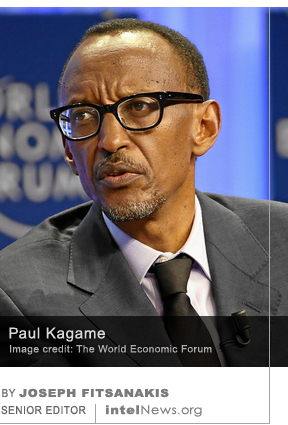
Paul KagameAn anti-genocide activist, whose story was made famous in the 2004 Hollywood film Hotel Rwanda, has sued an airline company for complicity in his alleged abduction from Dubai and eventual imprisonment in Rwanda. During the Rwandan genocide of 1994, Paul Rusesabagina was the manager of the Hôtel des Mille Collines in the Rwandan capital Kigali. The hotel catered largely to Westerners, and its grounds were seen as off-limits by the brutal armed gangs that perpetrated the genocide. Therefore, Rusesabagina used his position to shelter over 1200 displaced civilians from the warring militias.
After the end of the genocide, Rusesabagina, a Hutu, became a vocal critic of Rwanda’s Tutsi president, Paul Kagame (pictured). In 1996, Rusesabagina survived an assassination attempt, after which he went into self-exile in Belgium, of which he is a citizen. Eventually he obtained permanent residency to the United States and relocated to San Antonio, Texas. He continued to voice strong criticisms of President Kagame from exile, whom he accuses of dictatorial tendencies, corruption and mismanagement.

In August 2020, Rusesabagina boarded a chartered airplane in Dubai, United Arab Emirates, which he was told would transport him to Burundi. While there, he had agreed to do a lecture tour, hosted by a Christian group. However, according to Rusesabagina, the invitation was a trap designed to lure him to Rwanda. He was allegedly bound and gagged shortly after the plane took off from Dubai. He was then transported to Kigali, where he was arrested on August 31 on an international warrant issued by the Rwandan government.

Rusesabagina has remained in prison since his arrest, charged with terrorism, murder, kidnap, arson, and forming, as well as funding, terrorist organizations. He rejects these charges and claims he was abducted and subjected to extraordinary rendition for supporting groups that oppose President Kagame’s rule. He is awaiting trial, which is scheduled to take place on January 26, 2021.

On Thursday, Rusesabagina’s lawyers filed a lawsuit in the US state of Texas, claiming that GainJet, the charter airline company whose plane was allegedly used to transport him from Dubai to Kigali, was complicit in his abduction. According to the BBC, the airline, which is registered in Greece, agreed to participate in his abduction because of its close relationship with senior Rwandan government officials. Rusesabagina’s lawyers are expected to file a similar lawsuit against GainJet in Belgium.

Author: Joseph Fitsanakis | Date: 17 December 2020 | Permalink

Massive hacker attack triggers US National Security Council emergency meeting

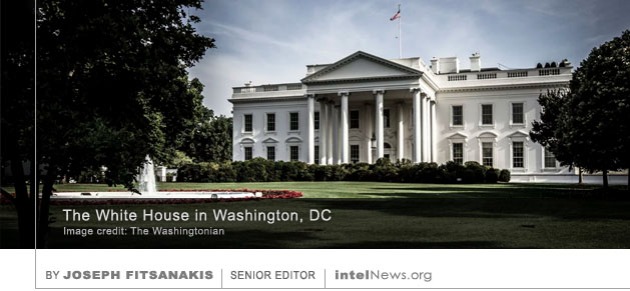
White HouseA large-scale cyberespionage attack targeting United States government computer systems, which some experts described as potentially being among “the most impactful espionage campaigns on record”, triggered an emergency meeting of the US National Security Council on Sunday, according to reports. Chaired by the US president, the National Security Council is the country’s most senior decision-making body.
Although it was only discovered last week, the cyberespionage campaign is believed to date to last spring, possibly as early as March. Sources called it a highly sophisticated operation that originated from a “top-tier” adversary –a term that refers to a handful of state actors that have access to the most elite cyber operatives and advanced technologies known to exist.

As of last night, US government officials had not publicly identified the state actor believed to be behind the cyberespionage campaign, which experts have coined the “2020 supply chain attack”. But several American and European news outlets pointed to Russia as the culprit, citing sources familiar with the investigation. The Washington Post said the Russian Foreign Intelligence Service, known as SVR, was behind the attack. The Russian government denied on Monday that its agencies had any role in the attacks.

The origins of the attack are believed to be in the private sector. It began when a sophisticated illicit cyber actor, known by the nickname Advanced Persistent Threat (APT) 29, or Cozy Bear, stole cyber tools used by two major government contractors, FireEye and SolarWinds. These cyber tools are used to detect and patch vulnerabilities in computer systems. These companies provide services to numerous US government customers, including the Departments of Defense, State, Treasury and Commerce. Other US government customers include the National Security Agency and the Office of the President, including the White House Situation Room. All of these entities have reportedly been affected by this cyber espionage operation.

By disguising their malicious software as software patches, the hackers were reportedly able to access and monitor, in real time, email traffic within and between government agencies. It is not known at this time whether US intelligence agencies, other than the National Security Agency, have been affected by this hack. All branches of the US military maintain intelligence components. Additionally, the Department of the Treasury operates the Office of Intelligence Analysis, while the Department of State is in charge of the Bureau of Intelligence and Research. The White House said yesterday that it had asked the Federal Bureau of Investigation and the Cybersecurity and Infrastructure Security Agency to probe the attack and evaluate the extent of the damage caused to US government operations.

Author: Joseph Fitsanakis | Date: 15 December 2020 | Permalink

Holland expels two Russian diplomats, summons Kremlin envoy to issue protest

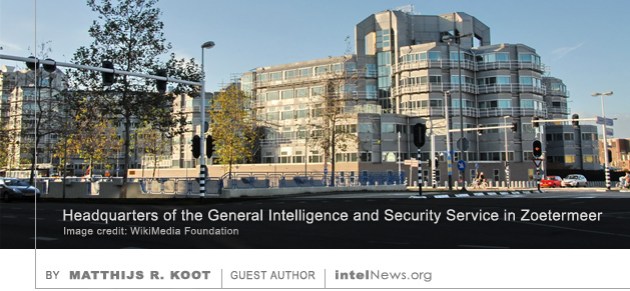
AIVD HollandOn 10 December 2020, the Dutch Minister of the Interior and Kingdom Relations, Kajsa Ollongren, sent a letter to the House of Representatives to inform them about the disruption of a Russian espionage operation in the Netherlands by the Dutch General Intelligence and Security Service (AIVD).
In connection with Ollongren’s revelations, two Russians using a diplomatic cover to commit espionage on behalf of the Russian Foreign Intelligence Service (SVR) were expelled from the Netherlands. The Russian ambassador to the Netherlands was summoned by the Dutch ministry of Foreign Affairs, which informed him that the two Russians have been designated as persona non grata (unwanted persons). In an unusual move, the AIVD also issued a press statement about this incident in English. The AIVD also released surveillance footage (see 32nd minute of video) of one of the two Russian SVR officers meeting an asset at a park and exchanging material.

The two expelled persons were officially accredited as diplomats at the Russian embassy in The Hague. Minister Ollongren says one of the two SVR intelligence officers built a “substantial” network of sources working in the Dutch high-tech sector. He pursued unspecified information about artificial intelligence, semiconductors, and nano technology that has both civilian and military applications. The Netherlands has designated “High Tech Systems and Materials” (HTSM) as one of 10 “Top Sectors” for the Dutch economy.

In some cases the sources of the SVR officers received payments for their cooperation. According to Erik Akerboom, Director-General of the AIVD, said the agency had detected “relatively intensive” contact between sources and the SVR officers in ten cases. The case involves multiple companies and one educational institute, whose identities have not been revealed. The minister states in her letter that the espionage operation “has very likely caused damage to the organizations where the sources are or were active, and thereby to the Dutch economy and national security”.

The minister announced that the Immigration and Naturalization Service (IND) will take legal action against one source of the two Russians, on the basis of immigration law. The minister also announced that the government will look into possibilities to criminalize the act of cooperating with a foreign intelligence service. Currently, that act on and by itself is not a punishable offense. Under current Dutch and European law, legal possibilities do exist to prosecute persons for violation of confidentiality of official secrets or company secrets.

This newly revealed espionage operation follows other incidents in the Netherlands, including a GRU operation in 2018 that targeted the Organization for the Prohibition of Chemical Weapons in The Hague, and a case in 2015 involving a talented Russian physicist working on quantum optics at the Eindhoven University of Technology. In the latter case, no information was made public about what information the physicist sold to Russian intelligence services. And in 2012, a senior official of the Dutch Ministry of Foreign Affairs was arrested for intending to sell classified official information to a Russian couple in Germany who spied for Russia. He was eventually given an eight year prison sentence.

Author: Matthijs Koot | Date: 14 December 2020 | Permalink

US Pentagon signals it will stop supporting CIA’s counterterrorism mission

PentagonTHE UNITED STATES DEPARTMENT of Defense has reportedly notified the Central Intelligence Agency that it plans to terminate most of the military support it provides for the spy agency’s counterterrorism operations. Some of these changes may occur as early as January, according to reports published on Thursday in several US news outlets.
After the terrorist attacks of September 11, 2001, the CIA incorporated an increasingly expansive counterterrorist mission into its list of activities. But it has relied on Pentagon resources to support many of these activities, for things like transportation, physical security, logistics, and even execution. The Pentagon’s role in these activities tends to be crucial, given that they usually take place in active combat zones or other dangerous locations around the world. They therefore require heavy military protection.

However, President Trump has been implementing his plan to withdraw American military forces from warzones such as Somalia, Afghanistan and Iraq. These troops provide logistical and material support to CIA missions in some of the world’s most dangerous regions. Additionally, the Department of Defense has been signaling for quite some time its intention to focus less on counterterrorism and more on what experts refer to as “near-peer competitors” —namely China and Russia.

According to reports, Acting Defense Secretary Christopher Miller sent a letter to CIA Director Gina Haspel, in which he informs her of the Pentagon’s decision to make drastic changes to its support for the spy agency’s counterterrorism operations. It is believed that some of these changes will take place as early as January 5, 2021. It has also been reported that this decision marks the culmination of a so-called “pet project” of Acting Under-Secretary of Defense for Intelligence Ezra Cohen-Watnick, a Trump political appointee, who was placed in his current position by the president following November’s election.

Author: Joseph Fitsanakis | Date: 11 December 2020 | Permalink

Research uncovers vast online disinformation network with presence in 100 countries

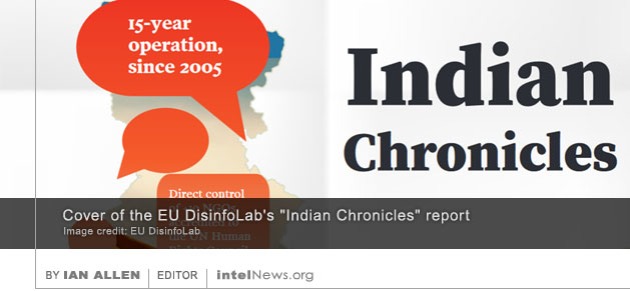
EU DisinfoLabA TEAM OF RESEARCHERS in Belgium has uncovered one of the world’s largest known online disinformation networks, which has existed for 15 years and is believed to incorporate at least 750 fake media outlets in over 100 countries. The network, described by researchers as “one of the most persistent and complex operations” in the area of disinformation, is believed to exist in order to support the national interests of India.
A team of researchers at the Brussels-based EU DisinfoLab has termed the network “Indian Chronicles”. This is also the title of an extensive 90-page report (.pdf), which was published on Wednesday. The researchers stress that the size of the disinformation network, and its systematic promotion of Indian interests, do not in themselves provide proof that the Indian government and its intelligence services are behind the project.

They do note, however, that the Indian Chronicles network of fake media outlets relies extensively on news reports that are produced by the Asian News International (ANI). Founded in 1971 in Delhi, ANI is India’s largest news bureau and the nation’s most prolific provider of news-related television content. There is no evidence that ANI is aware of the Indian Chronicles network. Additionally, according to EU DisinfoLab, the disinformation network has links with “at least 10” non-government organizations (NGOs) that have been accredited by the United Nations.

Some of these NGOs have been known to promote Indian views vis-à-vis Pakistan’s and China’s views in the United Nations and other intergovernmental bodies. They also own think-tanks and publishing houses that publish books and monographs supporting Indian positions on international affairs. The network also relies on hundreds of fake news websites that use fake personas of fictitious editors and reporters, and have been registered using fake names and non-existent contact information. The content of these fake publishers is then forwarded to United Nations and other intergovernmental bodies, in an attempt to influence decision-making, according to EU DisinfoLab.

Author: Ian Allen | Date: 10 December 2020 | Permalink

Saudi crown prince dismisses US lawsuit brought by ex-spy official as ‘baseless’

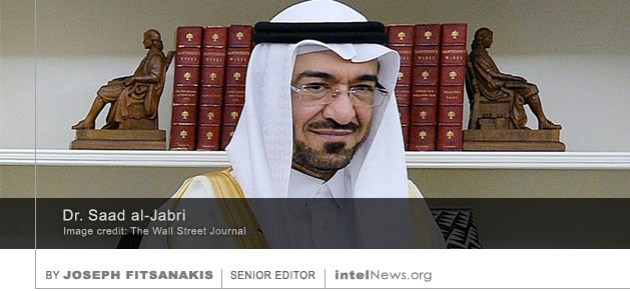
Saad al-JabriA LAWSUIT FILED IN a United States court by a Saudi former senior intelligence official, accuses Saudi Arabia’s crown prince Mohammed bin Salman of planning an illegal assassination on Canadian soil. But in a new court filing, the crown prince denies the accusation and claims that it is an attempt to distract attention from the alleged crimes carried out by the plaintiff.
The target of the alleged assassination attempt is Dr. Saad al-Jabri, who rose through the ranks of the Saudi aristocracy in the 1990s, under the tutelage of his patron, Crown Prince Muhammad bin Nayef. Prince bin Nayef is the grandson of Saudi Arabia’s founding monarch, King Abdulaziz, and until 2015 was destined to succeed King Abdullah and occupy the kingdom’s throne. Eventually, bin Nayef appointed Dr. al-Jabri as Minister of State and made him his most senior and trusted adviser on matters of security and intelligence.

But Dr. al-Jabri’s standing changed suddenly in 2015, when King Abdullah died and was succeeded by King Salman. Salman then quickly began to rely on his son, Mohammed bin Salman, who he eventually named as his successor. That meant that Dr. al-Jabri’s mentor and protector, Prince bin Nayef, was effectively usurped. Bin Salman abruptly fired Dr. al-Jabri in September of 2015. Less than two years later, bin Nayef was dismissed from his post as Minister of Interior and went under house arrest in Saudi Arabia’s coastal resort city of Jeddah. Fearing for his life, Dr. al-Jabri took his eldest son, Khalid, and escaped to Canada in the middle of the night. They remain there to this day.

In a 106-page lawsuit, filed in August with the United States District Court in Washington, DC, Dr. al-Jabri claims that bin Salman sent spies to conduct physical surveillance on him. The lawsuit also claims that bin Salman dispatched members of his “personal mercenary group”, known as the Tiger Squad, to Canada, in order to assassinate Dr. al-Jabri. The members of the squad allegedly arrived at Toronto’s Pearson International Airport sometime in mid-October 2018. The documents claim that the Tiger Squad members traveled to Canada just days after they were dispatched to Istanbul, Turkey, where they killed Saudi journalist Jamal al-Khashoggi. However, they were allegedly turned back by suspicious Canada Border Services Agency officers.

Dr. al-Jabri’s lawsuit relies on the 1991 Torture Victim Protection Act, which allows non-US citizens to file lawsuits in US courts for alleged human rights abuses that took place outside the US. But lawyers for the crown prince claim that he, along with his father, represent the top echelon of Saudi Arabia’s ruling family. As such, they claim, the crown prince is “entitled to status-based immunity from any suit in a US court”. Therefore, they argue, Dr. al-Jabri’s complaint “fails as a legal pleading”. The crown prince’s lawyers also accuse the plaintiff and his associates of having embezzled nearly $11 billion in funds belonging to the Saudi government.

Author: Joseph Fitsanakis | Date: 09 December 2020 | Permalink

Belgium says foreign spies have infiltrated its largest mosque

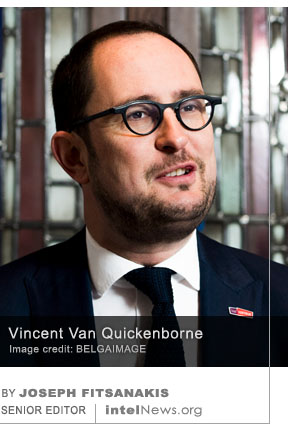
Vincent Van QuickenborneBELGIUM’S LARGEST MOSQUE has been infiltrated by Moroccan intelligence, according to the Belgian minister of justice, who allegedly consulted the country’s spy services in making that determination. The announcement has further-strained relations between the Belgian government and the country’s Muslims, which account for about 5% of the Belgian population.

Until recently, the Grand Mosque of Belgium had been operated by the Muslim World League (MWL), a Saudi Arabian missionary society that is primarily funded and controlled by Riyadh. The lease agreement was struck between the Saudi Arabia and Belgian governments in 1969. It stipulated that Saudi Arabia would supply Belgium with cheap oil, in return for the MWL operating the Grand Mosque without interference from the Belgian state. Since then, Saudi Arabia has been able to have a say in the selection of imams who preach at the mosque.

But the Belgian security services began to scrutinize the activities of the Grand Mosque following the 2016 Brussels bombings —three coordinated suicide attacks carried out by the Islamic State. The attacks killed 32 people and injured hundreds. Earlier this year, the Belgian government annulled the 1969 agreement with Saudi Arabia, claiming that the oil kingdom was using the mosque to spread the tenets of radical Wahhabi Islam. Belgian authorities said at the time that they would assume control over the Grand Mosque, in order to “terminate foreign interference in the teachings of Islam” in Belgium.

Last week, the Belgian government rejected an effort by the Grand Mosque to be officially recognized as a local community provider of faith services. The designation comes with substantial financial support from the Belgian state. Media reports suggested that the decision to deny the application was made by Belgium’s Minister of Justice, Vincent Van Quickenborne (pictured), following consultations with the country’s intelligence services. According to the reports, Belgium’s intelligence services have identified at least three members of the Grand Mosque’s clerical and administrative staff as members of the Moroccan intelligence services.

On Friday, the minister gave an interview to VRT Radio 1, Belgium’s Flemish-language public broadcaster, in which he justified his decision to turn down the mosque’s application. “I am unable to —and will not— accept that foreign agencies can hijack Islam for their own ideological and political goals”, said Van Quickenborne. He added that he saw it as his duty to stop those who attempt to “prevent Muslims in [Belgium] from developing their own progressive Islam”.

Author: Joseph Fitsanakis | Date: 08 December 2020 | Permalink

New report says ‘Havana Syndrome’ was caused by directed microwave radiation

US embassy in CubaA NEW REPORT BY the United States National Academies of Sciences, Engineering, and Medicine, has found that the so-called ‘Havana Syndrome’, which afflicted American and Canadian diplomats in Cuba and China in 2016 and 2017, was likely caused by directed microwave radiation. The study, which was commissioned by the US Department of State, is the latest in a long list of scientific assessments of the mysterious syndrome. The case remains a source of debate in the scientific, diplomatic and intelligence communities.
In 2017 Washington recalled the majority of its personnel from the US embassy in Havana, and at least two more diplomats from the US consulate in the Chinese city of Guangzhou. The evacuees reported experiencing “unusual acute auditory or sensory phenomena” and hearing “unusual sounds or piercing noises”. Subsequent tests showed that they suffered from sudden and unexplained loss of hearing, and possibly from various forms of brain injuries. In April of 2019 the Canadian embassy evacuated all family members of its personnel stationed in the Cuban capital over similar health concerns.

The latest study by the National Academies of Sciences resulted from the coordination of leading toxicologists, epidemiologists, electrical engineers and neurologists. The resulting 66-page report describes in detail the symptoms experienced by nearly 40 US government employees, who were examined for the purposes of the study. Its authors said they examined numerous potential causes, including psychological factors, infectious diseases, directed radio frequency energy, and even exposure to insecticides. Ultimately, the authors concluded that “many of the distinctive and acute signs, symptoms and observations reported by [US government] employees are consistent with the effects of directed, pulsed radio frequency (RF) energy”, according to their report.

However, the study does not attempt to answer the burning question of whether the symptoms experienced by the sufferers resulted from deliberate attacks, and if so, who may have been behind them. Some have accused the governments of Cuba and/or Russia of being responsible for the syndrome. However, the Cuban and Russian governments have strongly denied the accusations. The National Academies of Sciences report does state that the systematic study of pulsed radio frequency energy has a history of over half a century in Russia and the Soviet Union.

Author: Joseph Fitsanakis | Date: 07 December 2020 | Permalink

US wants to share sensitive intelligence with Honduras to combat drug traffickers

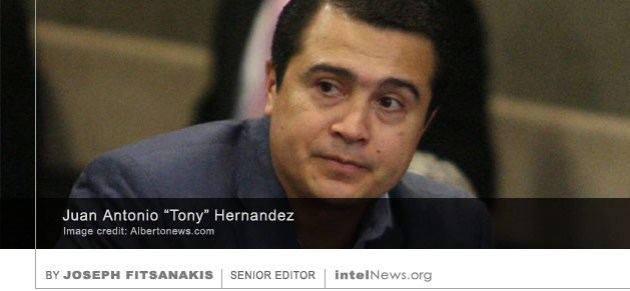
Tony HernandezA PROPOSED MEMORANDUM OF understanding could enable the sharing of extremely sensitive intelligence between the United States and Honduras, as part of an effort by Washington to stop the impoverished Central American country from becoming a drug-trafficking stronghold. However, some in the US intelligence community are concerned that the sensitive intelligence given to the Honduran government may be passed on to the drug cartels by paid informants.

According to the Reuters news agency, American and Honduran officials are currently finalizing a proposed memorandum of understanding between the two nations’ intelligence communities. The memorandum would allow the US to provide the Honduran government with information about secret flights carrying drugs, which are known to regularly enter the Honduran airspace. The drugs are then trafficked north and subsequently enter the US through Mexico. Reuters said that, although the memorandum of understanding is in the drafting stage, the Honduran government appears to be willing to accommodate its conditions. The latter include provisions allowing for planes that do not identify themselves and are believed to be carrying drugs to be shot down by military aircraft.

There are, however, concerns among some in the US intelligence community that the Honduran government and its institutions cannot be trusted with sensitive intelligence. They argue that the corruption at all levels of the Honduran government and intelligence establishments is so extensive, that the drug traffickers will be able to access the information provided by the US government. It should be noted that last year a court in New York convicted one of Central America’s most notorious cocaine traffickers, Juan Antonio “Tony” Hernandez (pictured), who is the brother of Honduras’ current president, Juan Orlando Hernandez. During the trial, it was repeatedly alleged that President Hernandez provided protection to his brother and other drug traffickers in Honduras.

But Honduran officials, including the country’s ambassador to the US, Luis Fernando Suazo Barahona, point out that those receiving sensitive intelligence form the US would be carefully vetted —and presumably polygraphed— prior to being given access to the information. Reuters reports that the US Department of State says it is “taking steps to resume information-sharing [with the government of Honduras] for aerial interception upon the successful negotiation and conclusion” of the memorandum of understanding that is currently being drafted.

Author: Joseph Fitsanakis | Date: 03 December 2020 | Permalink

Mossad helped Syrian intelligence official flee to Austria, despite alleged crimes

BVT AustriaA SYRIAN INTELLIGENCE OFFICIAL, who was denied political asylum in France due to claims he committed serious war crimes, received protection from Austria with assistance from Israel, according to a report. This was revealed on Sunday by British newspaper The Telegraph, which said it had been given the information by “a judicial source”.

The Syrian official in question is Khaled al-Halabi, a former Brigadier General in the Syrian Military Intelligence Directorate (MID). He served as head of the MID in the northern Syrian city of Raqqa amidst the Syrian Civil War, which began in 2011. But in 2013, as the civil war became fiercer, al-Halabi defected from Syria and took his family to France, where applied for political asylum.

Two years later, al-Halabi was notified by the French authorities that his application for political asylum had been denied, due to serious concerns that he had been involved in criminal acts against opponents of the regime of Syrian President Bashar al-Assad. However, soon after being notified that his application for asylum had been rejected, al-Halabi mysteriously disappeared from France, and was never seen there again.

According to The Telegraph, while waiting for a decision from the French authorities in regards to his application for asylum, al-Halabi was negotiating with the Israeli external intelligence agency, the Mossad. The Israeli spy agency allegedly whisked al-Halabi away from France and took him to nearby Austria. Once there, al-Halabi went into the custody of the Office for the Protection of the Constitution and Counterterrorism (BVT), Austria’s primary intelligence agency.

In December of 2015, al-Halabi was granted asylum in Austria, and today he is believed to live in Vienna, in a four-bedroom apartment provided to him by the Austrian government. The decision by the Austrian government to give the former Syrian spy official asylum made headlines in Austria in October, causing significant controversy. This is because at least one lawsuit has been filed against al-Halabi for his alleged participation in war crimes and crimes against humanity during the Syrian Civil War, according to The Telegraph.

But the alleged involvement of the Mossad in al-Halabi’s case was not known until last Sunday. If true, the Mossad’s role in this case could signify that al-Halabi had established a relationship with the Israeli spy agency prior to his defection from Syria in 2013. According to the Austrian press, al-Halabi denies that he was involved in war crimes and crimes against humanity.

Author: Joseph Fitsanakis | Date: 02 December 2020 | Permalink