Saudi king hosts CIA director a day after US charges two Saudis with espionage

Gina HaspelA day after the United States Department of Justice charged two Saudi citizens with engaging in espionage on American soil, Saudi officials hosted the director of the Central Intelligence Agency in Riyadh, reportedly to discuss “the longstanding Saudi-US partnership”.

According to the Federal Bureau of Investigation, two Saudi men, both employees of the US-based company Twitter, were instructed by a member of the Saudi royal family to surrender the personal information of at least 6,000 Twitter users who posted criticism of the Saudi government on social media. As intelNews reported on Thursday, one of the men is under arrest, while the other managed to evade US authorities and is thought to be sheltered by the Saudi government.

It is believed that the member of the Saudi royal family who instructed the two men to carry out espionage was no other than Mohammed bin Salman, the oil kingdom’s crown prince. Wednesday’s developments marked the first time that US authorities have publicly filed espionage charges against Saudi nationals in America.

A day after the charges were filed in the US state of California, Gina Haspel, the director of the Central Intelligence Agency, was reportedly hosted by Saudi Arabia’s king Salman in Riyadh. In addition to Salman and Haspel, the meeting was attended by several senior Saudi officials, including Khalid al-Humaidan, who directs the kingdom’s General Intelligence Directorate. Saudi Arabia’s foreign minister, Prince Faisal bin Farhan, was also present at the meeting.

A tweet by the Saudi Arabian embassy in Washington said that the meeting between Haspel and the Saudi officials revolved around “the longstanding Saudi-US partnership”. It also said that participants discussed “a number of regional and international developments”, but gave no further information. The state-owned Saudi Press Agency said simply that the meeting focused on “a number of topics of mutual interest”, but did not elaborate.

Author: Joseph Fitsanakis | Date: 08 November 2019 | Permalink

FBI charges Twitter employees with working as spies for Saudi Arabia

TwitterUnited States authorities have charged two employees of the social media firm Twitter and a member of staff of Saudi Arabia’s royal family with spying for Riyadh. The Federal Bureau of Investigation filed a complaint on Wednesday in San Francisco, accusing the three men of “acting as unregistered agents” for Saudi Arabia. The phrase is used in legal settings to refer to espionage.

According to the FBI, the charges stem from an investigation that lasted several years and centered on efforts by the oil kingdom to identify and silence its critics on social media. In 2015, the Saudi government allegedly reached out to Ali Alzabarah, a 35-year-old network engineer working for Twitter, who lived in San Francisco. The complaint alleges that Ahmed Almutairi (also known as Ahmed Aljbreen), who worked as a “social media advisor” for Saudi Arabia’s royal family, arranged for Alzabarah to be flown from San Francisco to Washington to meet with an unidentified member of the Saudi dynasty.

Alzabarah, along with another Twitter employee, 41-year-old Ahmad Abouammo, were given money and gifts by the Saudi government in return for supplying it with private information about specific Twitter users, according to the complaint. The information provided by the two Twitter employees to the Saudi authorities allegedly included the email addresses, IP addresses and dates of birth of up to 6,000 Twitter users, who had posted negative comments about the Saudi royal family on social media.

Special Agents from the FBI’s Settle field office arrested Abouammo at his Seattle home on Tuesday. However, Alzabarah is believed to have fled the United States along with his family before the FBI was able to arrest him. He is currently believed to be in Saudi Arabia and is wanted by the FBI, which has issued a warrant for his arrest. The Saudi government has not commented on the case. Twitter issued a statement on Wednesday, saying it planned to continue to cooperate with the FBI on this investigation.

Author: Joseph Fitsanakis | Date: 07 November 2019 | Permalink

Turkey’s arrest of al-Baghdadi’s sister is ‘intelligence goldmine’ says official

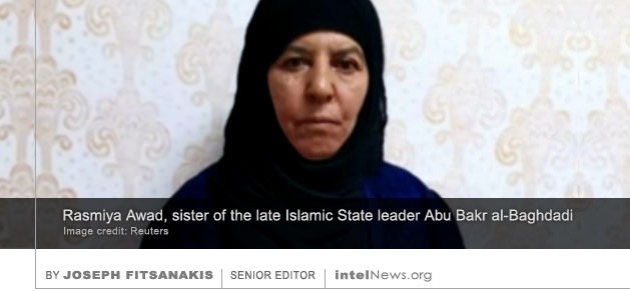
Rasmiya AwadA Turkish government official has described the arrest of the sister of the late Islamic State leader Abu Bakr Al-Baghdadi as “an intelligence goldmine”. The official was referring to the arrest of Rasmiya Awad, an Iraqi citizen, who was reportedly arrested on Monday. Little is known about al-Baghdadi’s sister. She is believed to have been born in 1954, which makes her 65 years old this year.

Awad was arrested during a raid by the Turkish-backed Free Syrian Army at a makeshift refugee camp in the suburbs of Azaz, a city of 30,000 located approximately 20 miles northwest of Aleppo. The Aleppo province in northwestern Syria has been under Turkish military control since 2016. Since then, the Turkish military command has relied on the Ankara-backed Free Syrian Army and a selection of smaller pro-Turkish militia to control the region.

The Associated Press reported that Awad was detained along with her family, including her husband, her daughter-in-law, and her five children. Five other adults were arrested in the vicinity of the refugee camp, all of them Iraqi citizens, but there is no word yet on whether they are in any way connected with the Islamic State. Turkish officials told the Associated Press yesterday that Awad, her husband and her daughter-in-law were being interrogated.

The news agency quoted one Turkish government official as saying that Awad’s capture was “an intelligence goldmine. What she knows about [the Islamic State] can significantly expand our understanding of the group and help us catch more bad guys”, the official is reported to have told the Associated Press.

Author: Joseph Fitsanakis | Date: 06 November 2019 | Permalink

High-ranking Russian security official gunned down in Moscow

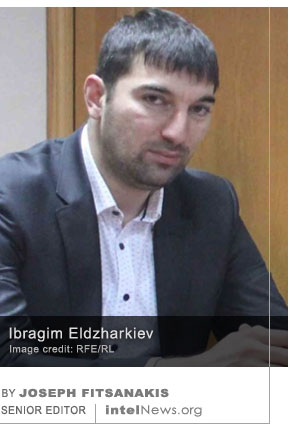
Ibragim EldzharkievA senior counter-terrorism officer in the Russian police has been gunned down along with his brother in a downtown Moscow street, in what authorities describe as a contract killing. One of the two victims has been named as Ibragim Eldzharkiev (pictured), who headed the Russian Interior Ministry’s Anti-Extremism Center in the Republic of Ingushetia in the Russian Caucasus. His younger brother was reportedly also killed in the attack.

Eldzharkiev assumed the position of director of Ingushetia’s Anti-Extremism Center in 2018, after his predecessor, Timur Hamhoev, was among several senior police officials who were convicted of torturing and extorting detainees. The high-profile caset shed light on the ongoing low-intensity conflict in the Russian Caucasus, which in the 1990s and 2000s was the site of two wars between the Russian military and local separatists.

Russian media reported that Eldzharkiev had been visiting Moscow on private business. Security camera footage allegedly shows the shooter approaching the victim outside the entrance of a building, as he is waiting for his brother to park a vehicle. He then shoots Eldzharkiev repeatedly before directing his gun on the victim’s younger brother, who was trying to flee the scene on foot. Once the two brothers are laying on the ground, the shooter approaches them again and shoots them in the head. The shooter then leaves the murder scene in a car. Both men died at the scene of the attack. The shooter remains at large.

The state-owned Russian news agency TASS said on Saturday that Eldzharkiev’s killing was connected with his professional activities at the Anti-Extremism Center and that he had been targeted by Ingushetian “religious extremist groups”. An anonymous security source told the news agency that the shooter is believed to have used a foreign-made gun to kill the two brothers. This was the second time that Eldzharkiev was targeted by unknown assailants. The first time was in January of this year, when two unidentified gunmen opened fire at his service car, injuring a member of his protection team.

Author: Joseph Fitsanakis | Date: 05 November 2019 | Permalink

London accused of hiding report about Russian meddling in Brexit referendum

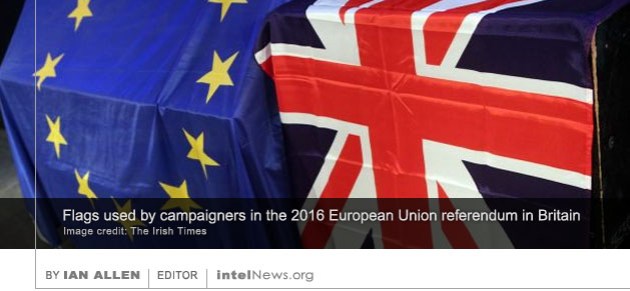
BrexitThe British government has been accused by opposition parties, and by pro-remain conservative figures, of trying to conceal a report documenting Russian meddling in British politics. The report documents the results of an investigation into Russia’s alleged attempts to influence the outcome of the 2017 general election in the United Kingdom, as well as the result of the 2016 European Union referendum, which ended in victory for the pro-Brexit campaign.

The investigation was carried out by the British Parliament’s Intelligence and Security Committee and is largely based on closed-door testimony by senior officials from Britain’s intelligence community. It reportedly contains evidence from Russia experts in agencies such as the Security Service (MI5), the Secret Intelligence Service (MI6) and the Government Communications Headquarters (GCHQ).

According to media reports the probe was completed in March of this year and underwent a redaction process to safeguard intelligence methods and sources. On October 15 it was submitted to Downing Street and on October 17 it reportedly landed on the desk of British Prime Minister Boris Johnson. British opposition politicians allege that even sensitive reports are usually made public no later than 10 days after they are submitted to Downing Street, which means that the document should have been released prior to October 28.

Some fear that, with Parliament about to suspend operations on Tuesday, in anticipation for December’s general election, the report will effectively remain hidden from public view until the spring of 2020. On Friday, Labour Party leader Jeremy Corbyn publicly urged the government to release the report and claimed that the prime minster may have “something to hide”. But cabinet minister Andrea Leadsom argued that it is not unusual for parliamentary committee reports to remain in the government’s hands until they are properly evaluated. “The government has to respond properly, it cannot respond in haste”, said Leadsom.

Author: Ian Allen | Date: 04 November 2019 | Permalink

WhatsApp sues Israeli firm for enabling spy attacks on 1,400 users worldwide

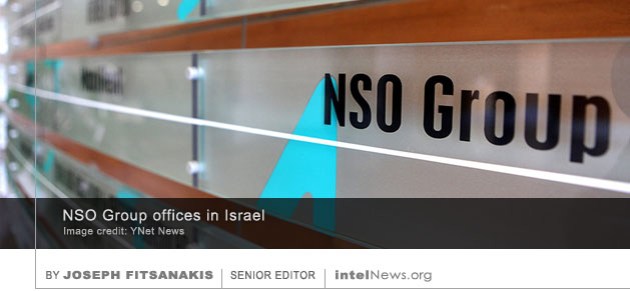
NSO GroupThe Facebook-owned company WhatsApp has filed a lawsuit against a leading Israeli technology firm, accusing it of enabling governments around the world to spy on 1,400 high-profile users, including politicians and diplomats. The Reuters news agency said it spoke to “people familiar” with the investigation into the spy scandal, which it says was launched “earlier this year”.

What is interesting about the case, says Reuters, is that a “significant” proportion of the hundreds of WhatsApp users who were targeted by governments worldwide are “high profile” officials. The victims reportedly serve in various government agencies, including the armed forces, of at least 20 countries on five continents. They allegedly include politicians, diplomats, military officers, academics, journalists, lawyers and human-rights activists in countries such as the United States, India, Mexico, Bahrain, the United Arab Emirates and Pakistan.

WhatsApp alleges that the spy activities against these individuals were enabled by NSO Group, an Israeli software development company that specializes in surveillance technologies. The Facebook-owned company alleges that NSO Group specifically developed a hacking platform that allows its users to exploit flaws in WhatsApp’s servers in order to gain access to the telephone devices of targeted individuals. At least 1,400 of WhatsApp’s users had their telephones compromised between April 29 and May 10, 2019, says WhatsApp.

NSO Group, whose clientele consists exclusively of government agencies worldwide, denies any wrongdoing. The company claims that its products are designed to “help governments catch terrorists and criminals”, says Reuters. But WhatsApp and Citizen Lab, a research initiative based at the University of Toronto, which worked with WhatsApp on the NGO Group case, claim that at least 100 of the 1,400 victims were news journalists, political activists and the lawyers who defend them. There was no overlap between ongoing criminal or terrorism investigations and those targeted by NSO Group’s software, they claim.

The names on the list of espionage victims are not known. But Reuters said that, depending on how high-profile the victims are, the WhatsApp-NSO Group spy scandal could have worldwide political and diplomatic consequences.

Author: Joseph Fitsanakis | Date: 01 November 2019 | Permalink

Analysis: ISIS leader’s hideout in Turkish-controlled part of Syria raises questions

Turkey SyriaIn 2011, the discovery of Osama bin Laden’s hideout in Abbottabad raised questions about Pakistan’s knowledge of his whereabouts. Today it is hardly controversial to suggest that at least some elements in the Pakistani government must have been aware of bin Laden’s location. Last week’s discovery of Abu Bakr al-Baghdadi in a region of Syria controlled by Turkey inevitably raises similar questions about Ankara’s role in the Syrian conflict and its relationship with the Islamic State.

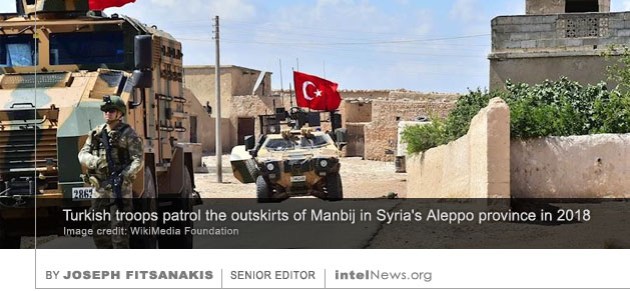
The self-proclaimed caliph of the Islamic State was found hiding in Barisha, a village in the Syrian province of Idlib, which is located just two miles from the Turkish border. The region that surrounds Barisha is under the control of Turkey and can most accurately be described as a Turkish protectorate inside Syria. The area north of Barisha has been under Turkish control since August of 2016, when Ankara launched Operation Euphrates Shield, a cross-border operation conducted by the Turkish Armed Forces in cooperation with Turkish-baked militias in Syria. In early 2018, Turkish and pro-Turkish forces extended their territorial control further south, capturing Barisha and all surrounding regions. They remain in control of the area to this day.
Turkish-occupied northern Syria is often described as a “proto-state”. It is governed by a collection of local councils of Turkmens and Arabs, with some Kurds and Yazidis also present. These councils elect representatives to the self-proclaimed Syrian Interim Government, which was formed in Turkey by Turkish-backed Syrian exiles and is currently headquartered in Azaz, an Arab-majority city of 30,000 that is under direct Turkish military control. Azaz is also the headquarters of the Turkish-backed “Free Police”, a gendarmerie-style militia that is funded, trained and equipped by the Turkish government.

In addition to the Turkish troops, the region is controlled by the Turkish-funded Syrian National Army. The 25,000 troops of the SNA —which is jokingly referred to by the locals as the “Turkish Syrian National Army”— operate completely under Turkish command. A substantial portion of the SNA’s force consists of former Islamic State fighters who switched their allegiance to the SNA once they saw the writing on the wall. Others are former members of the group that used to call itself Jabhat al-Nusra, an al-Qaeda affiliate that has become the most powerful Salafi-jihadist force in Syria after the demise of the Islamic State.

Turkish-occupied northern Syria is also the base of Ahrar al-Sham, a Salafi-jihadist group consisting of over 20,000 fighters, which is not officially aligned with al-Qaeda, but has similar goals. Since at least 2017, Ahrar al-Sham has effectively operated as a Turkish proxy militia and is in charge of dozens of check points and observation posts throughout the region. Lastly, the area is home to Hurras al-Din, yet another Salafi-jihadist group that is affiliated with al-Qaeda —though its leaders deny it. The group is able to operate in Turkish-controlled areas of Syria with suspicious ease. It was this group, Hurras al-Din, that sheltered al-Baghdadi in Barisha in return for cash.

Given Turkey’s military and political control of Idlib province, the question arises of how the world’s most high-profile terrorist leader was able to enter the region and receive protection from a militia that operates there under the watchful eye of the Turkish military. The New York Times reports that al-Baghdadi had been living in Barisha for several months before last week’s raid, and that Washington had been aware of his hideout location since the summer. Was Turkish intelligence also aware of the Islamic State leader’s whereabouts? If not, how could that be? If yes, why did it take a Kurdish spy, handled by Syrian Kurdish intelligence, to locate him and provide information to the Untited States? More importantly, what exactly is the relationship between Turkey and the al-Qaeda-linked Islamists who seem to operate freely in Idlib and provide protection to senior Islamic State officials in exchange for cash?

There are clearly more questions than answers here. If the United States is serious about combating Islamist extremism in the Middle East, it must press Ankara on these questions as a matter of urgency.

Author: Joseph Fitsanakis | Date: 31 October 2019 | Permalink

Former CIA officer connected with abduction of Muslim cleric flees Europe

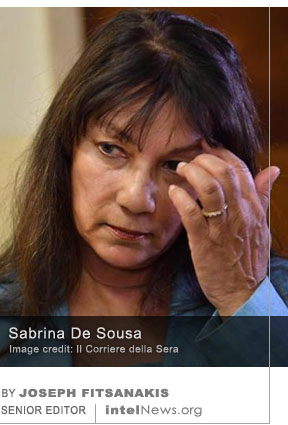
Sabrina De SousaA former officer in the United States Central Intelligence Agency, who was convicted of involvement in the 2003 abduction of a Muslim cleric in Italy, says she fled Europe for the United States in fear of her safety. Sabrina De Sousa, 63, was a diplomat at the US consulate in Milan, Italy, when a CIA team abducted Hassan Mustafa Osama Nasr from a Milan street in broad daylight. Nasr, who goes by the nickname Abu Omar, is a former member of Egyptian militant group al-Gama’a al-Islamiyya, and was believed by the CIA to have links to al-Qaeda. Soon after his abduction, Nasr was renditioned to Egypt, where he says he was brutally tortured and raped, and held illegally for years before being released without charge.


Upon Nasr’s release from prison, Italian authorities prosecuted the CIA team that abducted him —apparently without Italy’s permission or consent. They were able to trace the American operatives through a substantial trail of evidence they left behind, including telephone records and bill invoices in luxury hotels in Milan and elsewhere. In 2009, De Sousa was among 22 CIA officers convicted in absentia in an Italian court for their alleged involvement in Nasr’s abduction. The US government has refused to extradite the 22 officers to Italy to serve prison sentences. However, those convicted are now classified as international fugitives and risk arrest by Interpol and other law enforcement agencies, upon exiting US territory.

De Sousa was arrested in Lisbon, Portugal, in 2015. Portuguese authorities threatened to extradite her to Italy, but in 2017 the Italian government partially commuted her sentence to house arrest and reduced it from seven to four years. There were reports at the time that Italy had bowed to diplomatic pressure from Washington. On Monday, however, Italian newspaper Il Corriere della Sera said that De Sousa had fled Europe and returned to the US in fear for her personal safety. The former CIA officer told the paper that she decided to return to the US after senior American officials, including CIA Director Gina Haspel and Secretary of State Mike Pompeo, visited Italy earlier this month. Pompeo traveled to Rome for an official visit on October 1, while Haspel met with senior Italian intelligence officials on October 9.

De Sousa told Il Corriere della Sera that Haspel’s visit to Italy “verified for the Italian government that the American administration had washed its hands of my situation”. For this reason, and “terrified of the consequences that I could face” in Italy, “I decided to leave”, said De Sousa. She did not elaborate on the precise connection between her partially commuted sentence and Pompeo and Haspel’s visit to Italy. She added that recent changes to the US Whistleblower Act made it possible for her to openly discuss further details on her case, but did not elaborate. Her Italian lawyer, Andrea Saccucci, spoke to the Reuters news agency and confirmed that his client had left Europe for the US.

Author: Joseph Fitsanakis | Date: 30 October 2019 | Permalink

US spy agencies pore over intelligence acquired in raid that killed al-Baghdadi

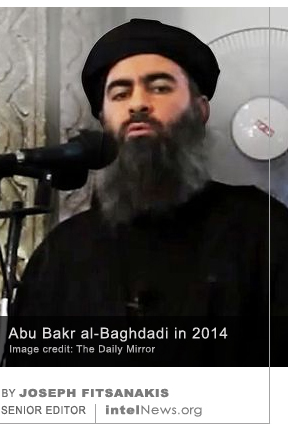
Abu Bakr al-BaghdadiAmerican intelligence agencies are studying up to seven terabytes of data that were captured by Special Operations Forces during last week’s nighttime raid that killed Abu Bakr al-Baghdadi in Syria. Officials in Washington told The New York Times on Monday that Delta Force commandos confiscated “a large amount of material” from the raid that killed the Islamic State leader. The material allegedly includes several laptops and cellphones, which contain an estimated “four to seven terabytes of data”, according to one United States official who spoke anonymously to the paper.

It is believed that al-Baghdadi changed hideouts across northern Syria every few days, so it is unlikely that he and his entourage carried with them a large printed archive of Islamic State files. However, even a few hard drives or memory sticks could contain extensive information, said The Times. The commandos that carried out the nighttime raid reportedly spent two hours on the ground collecting intelligence from the site. All of it has now been delivered to experts in the Defense Intelligence Agency, the Central Intelligence Agency and other elements of the US Intelligence Community, who are currently “conducting a preliminary review of the confiscated documents and electronic records”, said the paper.

The information may shed light on questions such as if and how al-Baghdadi ran the Islamic State, how he communicated with the group’s military commanders across Iraq and Syria, and how he exchanged information with other senior Islamic State officials in the Middle East and beyond. There are also questions about al-Baghdadi’s links with the leaders of Islamic State affiliates around the world. Essentially, to what extent did the core leadership of the Islamic State under al-Baghdadi direct the operations of the group’s affiliates abroad? There may also be documents among the confiscated information material that discuss the Islamic State’s changing strategy following the collapse of its territorial base in the Middle East.

In addition to the confiscated information, American troops captured two of al-Baghdadi’s lieutenants who were guarding his compound during last weekend’s raid. The two men are currently being questioned by American interrogators and are eventually going to be handed over to the Iraqi government to face justice, according to The Times.

Author: Joseph Fitsanakis | Date: 29 October 2019 | Permalink

ISIS quickly replaces dead leader with former Saddam loyalist, say sources

Abdullah QardashBarely a day after the United States announced the killing of Islamic State leader Abu Bakr al-Baghdadi, the militant Sunni group has replaced him with an Iraqi former military officer, according to sources. US President Donald Trump said on Sunday that al-Baghdadi, the self-styled Caliph of the Islamic State of Iraq and Syria (ISIS), died by detonating an explosive vest. He reportedly did so after being cornered by American Special Operations Forces troops at his hideout in the northwestern village of Barisha, which is located in the Syrian province of Idlib near the border with Turkey.

Since Sunday’s announcement by the White House, ISIS has remained silent. But an intelligence source reportedly told Newsweek that the Sunni militant group had appointed a new leader just hours after al-Baghdadi’s killing. The American newsmagazine cited a “regional intelligence official” who asked “not to be identified by name or nation”. The official said that al-Baghdadi had been replaced with Abdullah Qardash (pictured), a former high-ranking officer in the Iraqi army, who served under the country’s late leader Saddam Hussein. Qardash’s name is often spelled Karshesh in English, and he is also referred to in some documents as Hajji Abdullah al-Afari —presumably his ISIS moniker.

In August of this year, al-Baghdadi reportedly nominated Qardash to lead ISIS’ religious affairs engagement office, known as “Muslim Affairs”. The nomination is believed to have been accepted, and was even announced in Amaq, the militant group’s semi-official news agency. But Qardash’s name has not been mentioned again in subsequent ISIS communiques. According to Newsweek, the former Iraqi Army officer had already “taken over a number of duties from al-Baghdadi” prior to the latter’s demise. The anonymous regional intelligence officer told the newsmagazine that al-Baghdadi’s role within ISIS was “largely symbolic” in recent months. He was “a figurehead [and] was not involved in operations day-to-day. All he did was say yes or no —no planning”, added the intelligence official.

Author: Joseph Fitsanakis | Date: 28 October 2019 | Permalink

Veil of secrecy may soon be lifted on Novichok nerve agent used to attack Skripal

Sergei SkripalThe chemical structure and action mechanism of a top-secret family of nerve agents known as novichoks may soon be available to a wider pool of researchers through its inclusion into the Chemical Weapons Convention (CWC) list of the Organization for the Prohibition of Chemical Weapons (OPCW). The term novichok (meaning ‘newbie’ in Russian) was given by Western scientists to a class of rarely used nerve agents that were developed in the Soviet Union and Russia between 1971 and the early 1990s.

The first public discussion about the existence of these agents took place in the early 1990s, when Vil Mirzayanov, a chemical warfare expert working for the Soviet military, revealed their existence. However, Western intelligence agencies have discouraged public scientific research on these nerve agents, fearing that such activities could reveal their chemical structure and mechanism of action. That could in turn facilitate the proliferation of novichok nerve agents worldwide.

But this attitude shifted drastically after March 2018, when —according to British intelligence— Russian spies used novichok in an attempt to kill Sergei Skripal, a Russian defector to Britain. The British government claims that Russians spies smuggled novichok into Britain by hiding it inside an imitation perfume bottle.

The attempt on Skripal’s life failed, but it prompted the United States, Canada and the Netherlands to propose that two categories of novichoks be chemically identified and added to the CWC list of Schedule 1 chemical weapons. If that were to happen, members of the OPCW —including Russia— would be required to declare and promptly destroy any stockpiles of novichoks in their possession.

Russia’s initial reaction was to oppose the proposal by the United States, Canada and the Netherlands. The Russian OPCW delegation questioned the proposal’s scientific validity and dismissed it as politically motivated. However, according to a report published yesterday in the leading scientific journal Science, Moscow has now agreed with the proposal to list two classes of novichoks in the CWC list, and even proposed adding a third class of the obscure nerve agent to the list. Russia also proposed the inclusion into the CWC list of two families of carbamates —organic compounds with insecticide properties, which the United States is reputed to have included in its chemical weapons arsenal during the Cold War.

According to the Science report, the OPCW Executive Council has already approved Russia’s proposal, which means that the organization is now close to classifying novichoks as Schedule 1 nerve agents. If this happens, academic researchers in the West and elsewhere will be able for the first time to collaborate with defense laboratories in order to research the chemical structure, as well as the mechanism of action, of novichoks. This is likely to produce computer models that will shed unprecedented light on the symptoms of novichoks and the various methods of treating them. But they will also provide information about the chemical structure of the nerve agent, which may eventually lead to proliferation concerns.

Author: Joseph Fitsanakis | Date: 24 October 2019 | Permalink

Iranians may have used female spy to ‘honey-trap’ dissident living in France

Ruhollah ZamThe Iranian government may have used a female intelligence officer to lure a leading Iranian dissident from his home in France to Iraq, where he was abducted by Iranian security forces and secretly transported to Iran. Iranian authorities announced the arrest of Ruhollah Zam on October 15. On that day, Iranian state television aired a video showing a blindfolded Zam surrounded by officers of the Islamic Revolutionary Guard Corps (IRGC).

Zam, 46, was a prominent online voice of dissent during the 2009 Green Movement, an Iranian youth-based reform campaign whose leaders called for the toppling of the government in Tehran. He joined other young Iranians in launching AmadNews, a website whose stated purpose was “spreading awareness and seeking justice” in Iran. Soon after its emergence, AmadNews became the online voice of the Green Movement. Following a brief period of detention in 2009, Zam fled Iran and settled in France, from where he continued his online work through AmadNews and its successor, a website and Telegram channel called Seda-ye Mardom (Voice of the People).

Earlier this month, the Iranian government announced that Zam had been captured in a “complicated intelligence operation” that used “modern intelligence methods and innovative tactics” to lure Zam out of France and into the hands of the IRGC. But it did not provide further information about the method that was used to convince Zam to travel to Iraq, whose government is closely aligned with Iran’s. A few days ago, however, the London-based newspaper The Times claimed that the IRGC used a woman to gain Zam’s trust and lure him to Iraq.

Citing exiled Iranian activists that work closely with Zam, the British newspaper said that the woman entered his life nearly two years ago, thus pointing to a lengthy intelligence operation by the IRGC. Over time, she won his trust and eventually convinced him to travel to Jordan on October 11, and from there to Baghdad, Iraq, on October 12. The reason for his trip was that, allegedly, the woman convinced him that Ali al-Sistani, one of the most prominent Shiite clerics in Iraq, had agreed to fund Zam’s online activities. However, the cleric needed to confer with the exiled dissident in person before agreeing to fund his work, according to the woman. It is not known whether Zam and the unnamed woman were romantically involved.

The Times also alleged that Zam’s abduction and arrest was met with “at least tacit approval” by the French intelligence services. The latter now expect that two French academics, who have remained imprisoned in Iran for alleged espionage activities for over a year, will be released as part of a swap with Zam.

Author: Joseph Fitsanakis | Date: 23 October 2019 | Permalink

Russian government cyber spies ‘hid behind Iranian hacker group’

Computer hackingRussian hackers hijacked an Iranian cyber espionage group and used its infrastructure to launch attacks, hoping that their victims would blame Iran, according to British and American intelligence officials. The information, released on Monday, concerns a Russian cyber espionage group termed “Turla” by European cyber security experts.

Turla is believed to operate under the command of Russia’s Federal Security Service (FSB), and has been linked to at least 30 attacks on industry and government facilities since 2017. Since February of 2018, Turla is believed to have successfully carried out cyber espionage operations in 20 different countries. Most of the group’s targets are located in the Middle East, but it has also been connected to cyber espionage operations in the United States and the United Kingdom.

On Monday, officials from Britain’s Government Communications Headquarters (GCHQ) and America’s National Security Agency (NSA) said Turla had hijacked the attack infrastructure of an Iranian cyber espionage group. The group has been named by cyber security researchers as Advanced Persistent Threat (APT) 34, and is thought to carry out operations under the direction of the Iranian government.

The officials said there was no evidence that APT34 was aware that some of its operations had been taken over by Turla. Instead, Russian hackers stealthily hijacked APT34’s command-and-control systems and used its resources —including computers, servers and malicious codes— to attack targets without APT34’s knowledge. They also accessed the computer systems of APT34’s prior targets. In doing so, Turla hackers masqueraded as APT34 operatives, thus resorting to a practice that is commonly referred to as ‘fourth party collection’, according to British and American officials.

The purpose of Monday’s announcement was to raise awareness about state-sponsored computer hacking among industry and government leaders, said the officials. They also wanted to demonstrate the complexity of cyber attack attribution in today’s computer security landscape. However, “we want to send a clear message that even when cyber actors seek to mask their identity, our capabilities will ultimately identify them”, said Paul Chichester, a senior GCHQ official.

Author: Joseph Fitsanakis | Date: 22 October 2019 | Permalink

Iran abducts France-based dissident in ‘complex intelligence operation’

Ruhollah ZamIranian authorities have announced the capture of a Paris-based Iranian dissident, who was reportedly lured out of France and then abducted by Iranian agents in a third country. The kidnapped dissident is Ruhollah Zam, 46, son of  Mohammad-Ali Zam, a well-known reformist cleric who served in top Iranian government posts after the 1979 Islamic Revolution. But in 2009 the younger Zam distanced himself from this father and sided with the so-called Green Movement, whose leaders called for the toppling of the government in Tehran. Around that time, Zam was part of a group of Internet-savvy Iranians who launched AmadNews. The website’s stated purpose was “spreading awareness and seeking justice” in Iran, and it soon became the online voice of the Green Movement.

Zam was promptly arrested and jailed for urging Iranian protesters to topple the government. He was eventually released thanks to his father’s status and reputation. He quickly fled Iran and settled in France, from where he continued his online work through AmadNews and its successor, a website and Telegram channel called Seda-ye Mardom (Voice of the People). The Iranian government accuses Zam of inciting violence against the state and claim that his online agitation is funded by the intelligence services of countries like France, Israel and the United States.

On October 15, Iran’s state-owned media network aired a video showing a bound and blindfolded Zam surrounded by armed officers of the Islamic Revolutionary Guard Corps (IRGC). The Iranian government announced that Zam had been captured following a “complicated intelligence operation” using “modern intelligence methods and innovative tactics” to lure Zam out of France and into the hands of the IRGC. It eventually emerged that Zam had flown from France to Jordan on October 11, and from there to Baghdad, Iraq, on October 12. He appeared to be under the impression that he would travel to the Iraqi city of Najaf in order to meet Ali al-Sistani, arguably the most senior Shiite cleric in Iraq.

In the same video, Zam is shown sitting in an armchair next to an Iranian flag, making a statement. He calmly looks at the camera and says that he “fully regrets” his actions directed against Iran. He then says that he made the mistake of entrusting his security to the intelligence services of France. Finally, he warns other dissidents who are involved in agitation against the Iranian state to not trust foreign governments. He names the latter as “the United States, Israel, Saudi Arabia and Turkey”. Iranian officials have not responded to questions about Zam’s current status and fate.

Author: Joseph Fitsanakis | Date: 21 October 2019 | Permalink

Russia preparing to swap imprisoned spies with NATO members, sources claim

LithuaniaThe Russian government is preparing to swap a number of imprisoned spies with at least two member states of the North Atlantic Treaty Organization (NATO), according to reports. The Estonia-based news agency BNS, which is the largest news agency in the Baltics, said on Wednesday that negotiations between Russian and Lithuanian, as well as probably Norwegian, officials were nearing completion.

The alleged spies at the center of the reputed spy swap are said to include Nikolai Filipchenko, who is reportedly an intelligence officer with the Russian Federal Security Service (FSB). Filipchenko was arrested by Lithuanian counterintelligence agents in 2015, allegedly while trying to recruit double agents inside Lithuania. He was charged with using forged identity documents to travel to Lithuania on several occasions between 2011 and 2014. His mission was allegedly to recruit officers in Lithuania’s Department of State Security in order to install listening bugs inside the office of the then-Lithuanian President Dalia Grybauskaite. In 2017, a district court in the Lithuanian capital Vilnius sentenced Filipchenko to 10 years in prison. The alleged Russian spy refused to testify during his trial and reportedly did not reveal any information about himself or his employer. He is believed to be the first FSB intelligence officer to have been convicted of espionage in Lithuania.

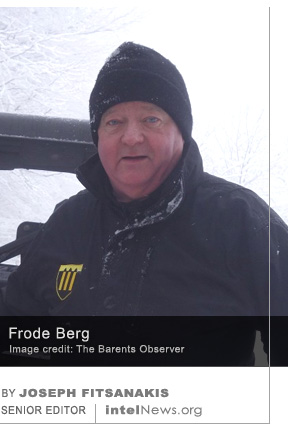
BNS reported that the Russians have agreed to exchange Filipchenko for two Lithuanian nationals, Yevgeny Mataitis and Aristidas Tamosaitis. Tamosaitis is serving a 12-year prison sentence in Russia, allegedly for carrying out espionage for the Lithuanian Defense Ministry in 2015. In the following year, a Russian court sentenced Mataitis, a dual Lithuanian-Russian citizen, to 13 years in prison, allegedly for supplying Lithuanian intelligence with classified documents belonging to the Russian government. Lithuanian authorities have refused to comment publicly about Filipchenko and Mataitis, saying that details on the two men are classified. According to BNS, the spy swap may involve two more people, an unnamed Russian national and a Norwegian citizen, who is believed to be Frode Berg, a Norwegian retiree who is serving a 16-year jail sentence in Russia, allegedly for acting as a courier for the Norwegian Intelligence Service.

BNS said on Wednesday that the Lithuanian State Defense Council, which is chaired by the country’s president, had approved the spy exchange, and that Moscow had also agreed to it. On Thursday, however, a spokeswoman for Russia’s Foreign Affairs Ministry said she had “no information on this issue” that she could share with reporters.

Author: Joseph Fitsanakis | Date: 18 October 2019 | Research credit: E.G. | Permalink