ISIS quickly replaces dead leader with former Saddam loyalist, say sources
October 28, 2019 2 Comments
 Barely a day after the United States announced the killing of Islamic State leader Abu Bakr al-Baghdadi, the militant Sunni group has replaced him with an Iraqi former military officer, according to sources. US President Donald Trump said on Sunday that al-Baghdadi, the self-styled Caliph of the Islamic State of Iraq and Syria (ISIS), died by detonating an explosive vest. He reportedly did so after being cornered by American Special Operations Forces troops at his hideout in the northwestern village of Barisha, which is located in the Syrian province of Idlib near the border with Turkey.
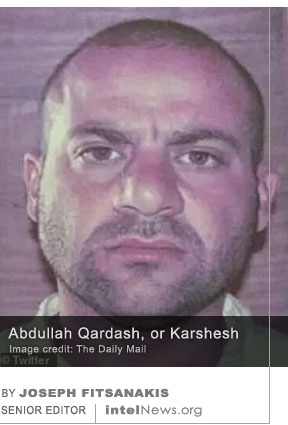
Since Sunday’s announcement by the White House, ISIS has remained silent. But an intelligence source reportedly told Newsweek that the Sunni militant group had appointed a new leader just hours after al-Baghdadi’s killing. The American newsmagazine cited a “regional intelligence official” who asked “not to be identified by name or nation”. The official said that al-Baghdadi had been replaced with Abdullah Qardash (pictured), a former high-ranking officer in the Iraqi army, who served under the country’s late leader Saddam Hussein. Qardash’s name is often spelled Karshesh in English, and he is also referred to in some documents as Hajji Abdullah al-Afari —presumably his ISIS moniker.
In August of this year, al-Baghdadi reportedly nominated Qardash to lead ISIS’ religious affairs engagement office, known as “Muslim Affairs”. The nomination is believed to have been accepted, and was even announced in Amaq, the militant group’s semi-official news agency. But Qardash’s name has not been mentioned again in subsequent ISIS communiques. According to Newsweek, the former Iraqi Army officer had already “taken over a number of duties from al-Baghdadi” prior to the latter’s demise. The anonymous regional intelligence officer told the newsmagazine that al-Baghdadi’s role within ISIS was “largely symbolic” in recent months. He was “a figurehead [and] was not involved in operations day-to-day. All he did was say yes or no —no planning”, added the intelligence official.
► Author: Joseph Fitsanakis | Date: 28 October 2019 | Permalink
 The chemical structure and action mechanism of a top-secret family of nerve agents known as novichoks may soon be available to a wider pool of researchers through its inclusion into the Chemical Weapons Convention (CWC) list of the Organization for the Prohibition of Chemical Weapons (OPCW). The term novichok (meaning ‘newbie’ in Russian) was given by Western scientists to a class of rarely used nerve agents that were developed in the Soviet Union and Russia between 1971 and the early 1990s.
 The Iranian government may have used a female intelligence officer to lure a leading Iranian dissident from his home in France to Iraq, where he was abducted by Iranian security forces and secretly transported to Iran. Iranian authorities
  Russian hackers hijacked an Iranian cyber espionage group and used its infrastructure to launch attacks, hoping that their victims would blame Iran, according to British and American intelligence officials. The information,
  Iranian authorities have announced the capture of a Paris-based Iranian dissident, who was reportedly lured out of France and then abducted by Iranian agents in a third country. The kidnapped dissident is Ruhollah Zam, 46, son of Mohammad-Ali Zam, a well-known reformist cleric who served in top Iranian government posts after the 1979 Islamic Revolution. But in 2009 the younger Zam distanced himself from this father and sided with the so-called Green Movement, whose leaders called for the toppling of the government in Tehran. Around that time, Zam was part of a group of Internet-savvy Iranians who launched AmadNews. The website’s stated purpose was “spreading awareness and seeking justice” in Iran, and it soon became the online voice of the Green Movement.
 The Russian government is preparing to swap a number of imprisoned spies with at least two member states of the North Atlantic Treaty Organization (NATO), according to reports. The Estonia-based news agency BNS, which is the largest news agency in the Baltics,
  Russian authorities detained three American diplomats because they allegedly tried to enter a highly secret weapons testing site in northern Russia, according to reports. The site in question is located near the northern Russian city of Severodvinsk. The city is home to a number of military shipyards and is thus restricted for non-Russians. The latter require a special permit to enter it.
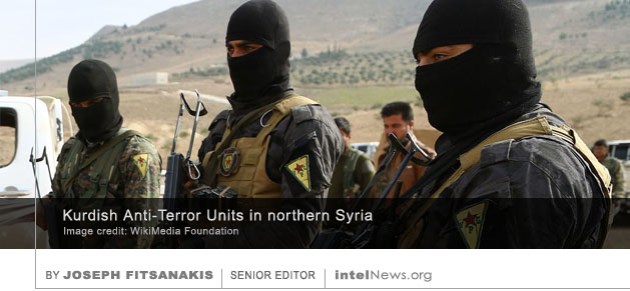 American defense officials with knowledge of Special Operations Forces activities in Syria are concerned that their secrets may fall into the hands of the Russians, as the Kurds switch their allegiance to the Moscow-backed Syrian government. Members of the United States Special Operations Forces and the Central Intelligence Agency (CIA) have had a presence in Kurdish-dominated northern Syria since
 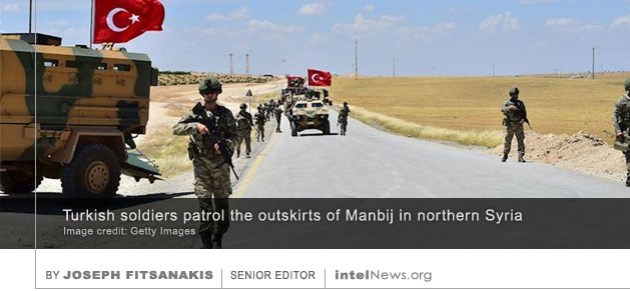 Senior White House officials close to United States President Donald Trump believed that Turkish President Recep Tayyip Erdoğan was bluffing when he threatened to invade northern Syria, according to sources. For over two years, most of northern Syria has been controlled by American-supported Kurdish militias, who were instrumental in helping Washington defeat the Islamic State. But the growing strength of the Kurdish forces alarmed Turkey, which views Kurdish nationalism as a bigger threat than the Islamic State.
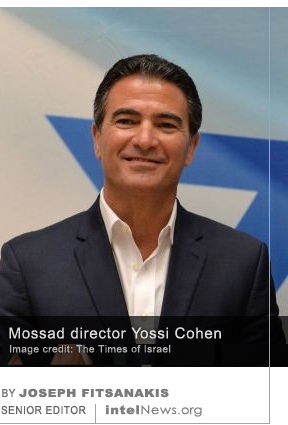 Yossi Cohen, the chief of the Mossad —Israel’s main external intelligence agency— said he has authorized “more than a few” assassinations during his tenure and warned that more may be on the way. Cohen, 57, who took command of the Mossad in 2016, spoke last week to Mishpacha, a magazine aimed at ultra-orthodox Jews. His comments were
 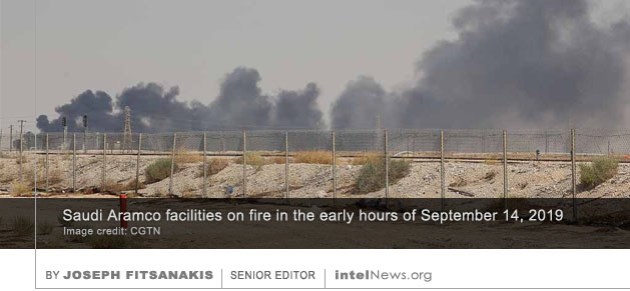 Saudi Arabia and the United States suffered “a total and embarrassing [intelligence] failure” in the lead-up to the drone strikes that shut down half of the kingdom’s oil production last month, according to Israeli sources. In the early hours of September 14, missiles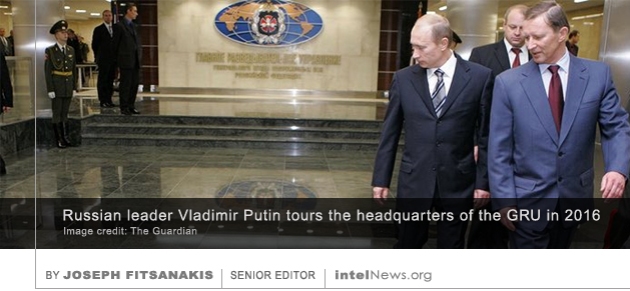
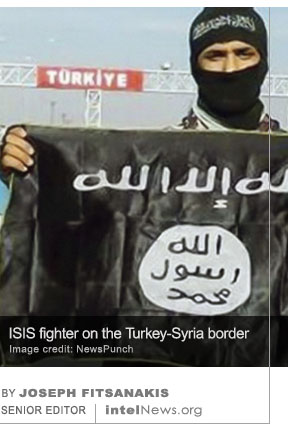 Officials in the United States, Europe and the Middle East have warned that thousands of jailed members of the Islamic State could escape from Kurdish-controlled prisons in northern Syria if Turkey invades the region. For more than two years, the area has been controlled by American-supported Kurdish militias, who were instrumental in helping Washington defeat the Islamic State —also known as Islamic State of Iraq and Syria, or ISIS. But the growing strength of the Kurdish forces has alarmed Turkey, which views Kurdish nationalism in the region as a bigger threat than Salafi jihadism. Ankara has repeatedly threatened to invade northern Syria and disarm the Kurdish groups, which it sees as terrorist.
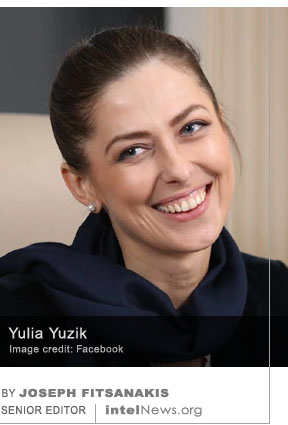 In a surprising move last week, Iranian authorities arrested a Russian journalist and expert on the Caucasus region, whom they accused of spying for Israel. They later agreed to release her following significant diplomatic pressure from Russia. But the move surprised observers, because Iran rarely acts in ways that have the potential to damage its close relations with Moscow.






 intelNews.org
US spy agencies pore over intelligence acquired in raid that killed al-Baghdadi
October 29, 2019 by Joseph Fitsanakis Leave a comment
It is believed that al-Baghdadi changed hideouts across northern Syria every few days, so it is unlikely that he and his entourage carried with them a large printed archive of Islamic State files. However, even a few hard drives or memory sticks could contain extensive information, said The Times. The commandos that carried out the nighttime raid reportedly spent two hours on the ground collecting intelligence from the site. All of it has now been delivered to experts in the Defense Intelligence Agency, the Central Intelligence Agency and other elements of the US Intelligence Community, who are currently “conducting a preliminary review of the confiscated documents and electronic records”, said the paper.
The information may shed light on questions such as if and how al-Baghdadi ran the Islamic State, how he communicated with the group’s military commanders across Iraq and Syria, and how he exchanged information with other senior Islamic State officials in the Middle East and beyond. There are also questions about al-Baghdadi’s links with the leaders of Islamic State affiliates around the world. Essentially, to what extent did the core leadership of the Islamic State under al-Baghdadi direct the operations of the group’s affiliates abroad? There may also be documents among the confiscated information material that discuss the Islamic State’s changing strategy following the collapse of its territorial base in the Middle East.
In addition to the confiscated information, American troops captured two of al-Baghdadi’s lieutenants who were guarding his compound during last weekend’s raid. The two men are currently being questioned by American interrogators and are eventually going to be handed over to the Iraqi government to face justice, according to The Times.
► Author: Joseph Fitsanakis | Date: 29 October 2019 | Permalink
Filed under Expert news and commentary on intelligence, espionage, spies and spying Tagged with Abu Bakr al-Baghdadi, counterterrorism, Islamic State, News, special operations, United States