Intelligence chief warns of foreign interference in German coalition talks
September 29, 2017 Leave a comment
 A senior German intelligence official has warned that foreign powers, including Russia, could try to shape the outcome of talks by German parties to form a governing coalition, following last week’s national elections. The elections resulted in a major shakeup of Germany’s political landscape, as Chancellor Angela Merkel’s Christian Democratic Union lost nearly 10 percentage points compared to its 2013 election result. It is now forced to seek the participation of other conservative or centrist political parties in a broad governing alliance. Meanwhile, the far-right Alternative for Germany (AfD) won 12.6 percent, propelling it to third place and giving it 91 seats in the Bundestag. The AfD result marks the first time since 1945 that a German far-right party has managed to secure parliamentary representation.
On Thursday, senior intelligence official Burkhard Even said that, unlike France and the United States, Germany was spared major foreign interference during its recent election period. Speaking at a security conference in Berlin, Even, who is director of counterintelligence at the Federal Office for the Protection of the Constitution, said interference attempts were limited in both volume and impact. He described them as “low-level propaganda” operations conducted mainly by Russian media, which “did not have a significant impact on voters” and did not affect “the election outcome as a whole”. However, the official added that such attempts were possible in the post-election period. For instance, there could be efforts by foreign intelligence agencies to discredit certain government officials or political figures, said Even. Alternatively, methods of propaganda could be employed by a foreign power “to affect the forging of a new government”, he added, referring to the ongoing talks between German political parties to enter into a governing coalition. “The risks are enormous”, said Even, and “they are not diminishing”.
The far-right AfD campaigned in favor of ending Muslim immigration to Germany and expelling most non-Western immigrants from the country. The party has also called for a tighter relationship between Berlin and Moscow and opposes Germany’s decision to impose economic sanctions on Russia in response to its alleged intervention in Crimea. Some have suggested that the Russian intelligence services launched a secret campaign to gather voter support for the AfD in the run-up to last week’s elections.
► Author: Joseph Fitsanakis | Date: 29 September 2017 | Permalink
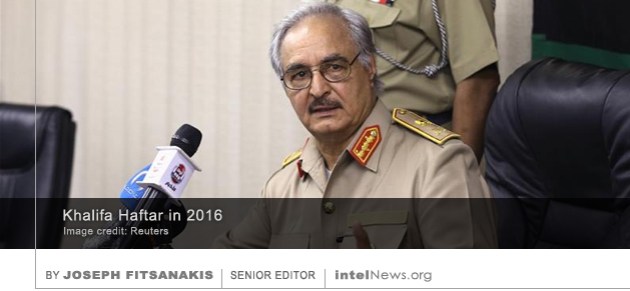 Libya’s most powerful warlord, who was an asset of the United States Central Intelligence Agency before entering the Libyan Civil War, ordered his troops to commit war crimes, according to two American legal experts. Libya has remained in a state of war since 2011, when a popular uprising backed by the West and its allies led to the demise of the country’s dictator, Colonel Muammar Gaddafi. Currently the strongest faction in the ongoing Libyan Civil War is the eastern-based Tobruk-led Government, which is affiliated with the Libyan National Army (LNA). The commander of the LNA is Field Marshal Khalifa Haftar, an old adversary of Colonel Gaddafi, who lived in the United States under Washington’s protection for several decades before returning to Libya in 2011 to launch his military campaign.
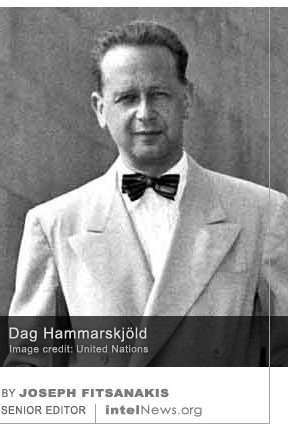 A deliberate attack by another aircraft may have caused the plane crash that killed the United Nations Secretary General in 1961, according to a report commissioned by the intergovernmental organization. On September 17, 1961, a Douglas DC-6 transport aircraft carrying United Nations Secretary General Dag Hammarskjöld crashed in the British-administered territory of Northern Rhodesia (now Zambia). The crash killed everyone onboard. At the time of his death, Hammarskjöld was flying to the Congo’s mineral-rich Katanga region to meet European-supported chieftains who in 1960 had seceded from the nationalist government of Congolese Prime Minister Patrice Lumumba. Ironically, Lumumba had been
 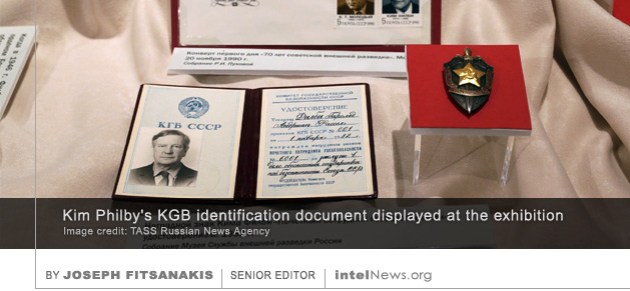 The life of Kim Philby, one of the Cold War’s most recognizable espionage figures, is the subject of a new exhibition that opened last week in Moscow. Items displayed at the exhibition include secret documents stolen by Philby and passed to his Soviet handlers during his three decades in the service of Soviet intelligence. While working as a senior member of British intelligence, Harold Adrian Russell Philby, known as ‘Kim’ to his friends, spied on behalf of the Soviet NKVD and KGB. His espionage lasted from about 1933 until 1963, when he secretly defected to the USSR from his home in Beirut, Lebanon. Philby’s defection sent ripples of shock across Western intelligence and is often seen as one of the most dramatic incidents of the Cold War.
 The world’s largest building materials manufacturer, LafargeHolcim, which is headquartered in France and Switzerland, allegedly bribed the Islamic State to keep its factory working in Syria, according to court witnesses. The company specializes in the manufacture of building materials such as cement, concrete and various byproducts. It was formed in 2015 by a merger of France-based Lafarge and Swiss-based Holcim, and currently employs an estimated 120,000 employees in nearly 100 countries around the world.
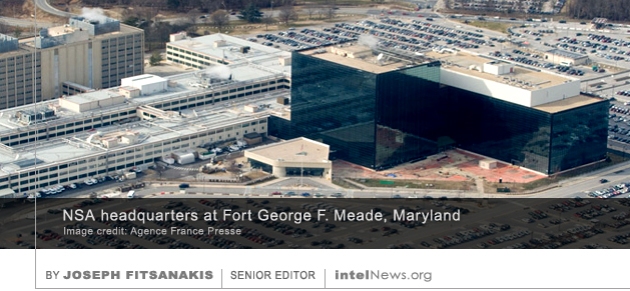 Representatives from the United States National Security Agency (NSA) withdrew a proposal to introduce new global industry standards for data encryption, after encountering prolonged skepticism by experts representing other Western countries. Some observers have interpreted this development as indicative of the damaged relationship between the NSA and its Western counterparts following revelations by American defector Edward Snowden.
 A group of cyber spies with close links to the Iranian government is becoming increasingly competent and adept, and could soon bring down entire computer networks, according to a leading cyber security firm. The California-based cyber security company FireEye said that it has been monitoring the operations of the mysterious group of cyber spies since 2013. The company, whose clients include Sony Pictures, JP Morgan Chase and Target, said that the Iranian group appears to be especially interested in gathering secrets from aviation, aerospace and petrochemical companies.
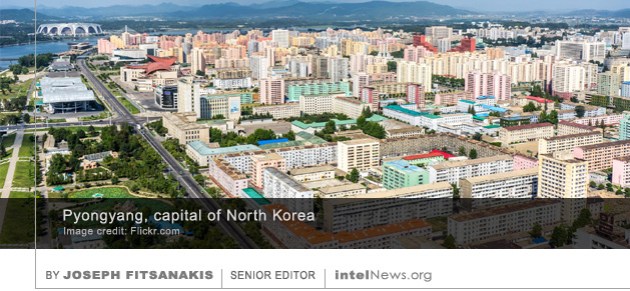 Australia rejected a secret request by the United States Central Intelligence Agency to open an embassy in North Korea, which the Americans hoped to use as a base from where to collect intelligence on the communist state.
  Germany’s most famous living spy is on trial this week for hiding assets totaling $50 million in offshore bank accounts. He claims the money was given to him by unspecified “Western intelligence agencies” for his services. Werner Mauss became widely known in 1997, when he was arrested in Colombia for using a forged passport. He had traveled to the Latin American country to secure the release of a German woman who had been kidnapped by leftist guerrillas. The Colombian authorities eventually released him, following heavy diplomatic pressure from the German government. But the German media began investigating his background, and it soon became apparent that he was working for the German Federal Intelligence Service.
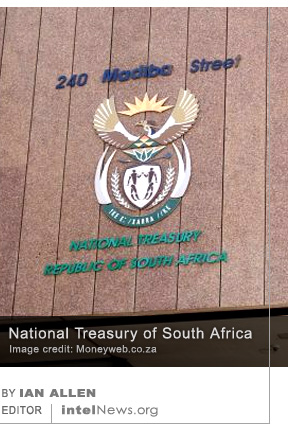 South Africa’s National Treasury threatened to terminate all funding for covert operations last year, after the country’s spy agency refused to account for tens of millions of dollars in expenses, saying the money had been put to “secret use”. An investigation by two leading South African news outlets, the Afrikaans-language weekly newspaper Rapport and the English-language online news portal News24, has revealed the existence of a major bureaucratic spat between the National Treasury and the State Security Agency (SSA), the country’s primary civilian intelligence organization.
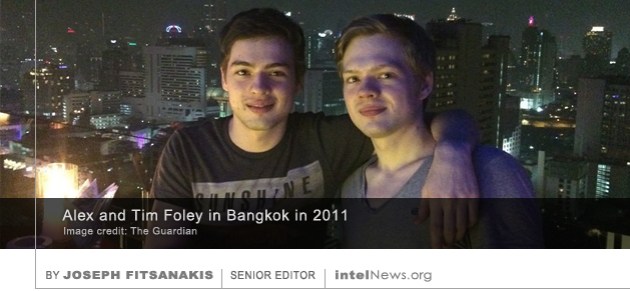 The sons of a Russian couple, who fraudulently acquired Canadian citizenship before being arrested for espionage in the United States, are seeking to reinstate their Canadian citizenship, which was annulled when their parents were found to be Russian spies. Tim and Alex Vavilov are the sons of Donald Heathfield and Tracey Foley, a married couple arrested in 2010 under Operation GHOST STORIES —a counterintelligence program run by the US Federal Bureau of Investigation (FBI). Following their arrest, their sons, who allegedly grew up thinking their parents were Canadian, were told that their parents were in fact Russian citizens and that their real names were Andrei Bezrukov and Elena Vavilova. Their English-sounding names and Canadian passports had been forged in the late 1980s by the KGB, the Soviet Union’s primary external intelligence agency.
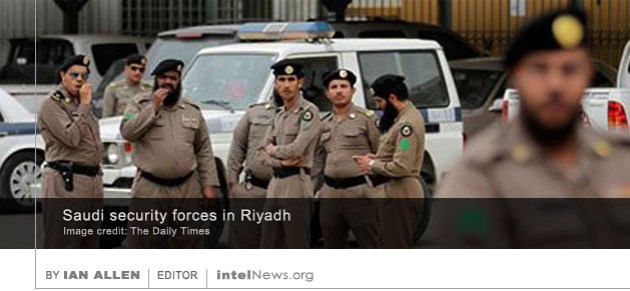 Officials in Saudi Arabia said on Tuesday that they foiled an elaborate suicide attack on the country’s defense ministry headquarters and infiltrated a foreign spy ring in the Kingdom, arresting its members. The near-simultaneous announcements were made by a member of the Presidency of State Security, an intelligence body founded only in July of this year, which is directly accountable to the county’s prime minister.
 A former director of Kazakhstan’s feared intelligence agency has been given a lengthy prison sentence, as a ruthless power struggle between rival factions surrounding the country’s president widens. From 2001 to 2006, Nartai Dutbayev directed the Kazakh National Security Committee (KNB), a direct institutional descendant of the Soviet-era KGB. Founded in 1992, the KNB is today directly controlled by Kazakhstan’s authoritarian President, Nursultan Nazarbayev. Many officials serving in senior KNB positions are members of the president’s family, or close friends.
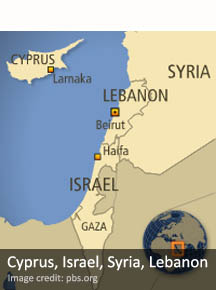 A sophisticated spying device disguised as a rock, which was allegedly planted by Israeli intelligence, was found by Lebanese Army troops on a hill located a few miles from the Lebanese-Israeli border. The discovery was reported early on Saturday by several Lebanese news websites, including Al-Mayadeen and Al-Manar, which are closely affiliated with Hezbollah. Al-Manar






 intelNews.org
Researcher seeks access to classified US document about Gandhi killing
October 2, 2017 by Joseph Fitsanakis 3 Comments
But there are many who claim that Gandhi’s assassination resulted from a far larger conspiracy, involving many more people and groups, but was covered up. One such proponent is Mumbai-based researcher Dr Pankaj Phadnis, who has been pushing for a new official investigation into Gandhi’s assassination since 1996. Last week, Dr Phadnis petitioned India’s Supreme Court, arguing that an American intelligence officer was present during Gandhi’s assassination and filed a report that may point to a broader conspiracy to kill the Indian civil rights leader. Dr Phadnis also argues that American intelligence agencies may have been involved in a secret effort to protect Gandhi from physical danger.
The Mumbai-based researcher told the Indian Supreme Court that he was able to obtain access to American diplomatic documents during one of his recent visits to the US National Archives and Research Administration in Washington, DC. Among them were telegrams sent to the Department of State by the US embassy in New Delhi before and after Gandhi’s assassination. The two most telling telegrams, said Dr. Phadnis, were written shortly after the assassination by a longtime American diplomat, Herbert Tom Reiner. According to many eyewitness accounts, including Reiner’s own, Reiner was present during Gandhi’s assassination, and was standing no more than five feet from the Indian leader when he was shot by Godse. The American diplomat helped apprehend the assassin before he and others surrendered him to the authorities.
Reiner submitted two telegrams to Washington as soon as he returned to the US embassy following Gandhi’s assassination, which Dr Phadnis was able to access. But a third one, sent at 8:00 p.m. that same evening, remains classified and out of the reach of researchers. Dr Phadris said he filed a Freedom of Information Act request with the US government and is expecting an answer. Now he is trying to get the Indian courts to agree that the existence of new evidence, including Reiner’s telegrams, justify the reopening of the probe into Gandhi’s assassination.
Reiner left India in the summer of 1949 and served briefly as assistant attaché in Budapest, Hungary, before being transferred again, this time to Seoul, South Korea. He then held posts in Sierra Leone, South Africa and Canberra. He died in 1999 in the US state of Massachusetts.
► Author: Joseph Fitsanakis | Date: 02 October 2017 | Permalink
Filed under Expert news and commentary on intelligence, espionage, spies and spying Tagged with assassinations, declassification, Herbert Tom Reiner, history, India, Mahatma Gandhi, News, Pankaj Phadnis, US Department of State