Alleged Islamic State informant sues Danish spy services over prison sentence

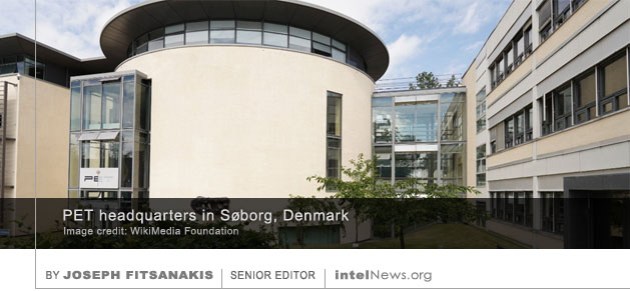
PET DenmarkA DANISH CITIZEN IS suing two Danish spy agencies, claiming that he was wrongly jailed for being a member of the Islamic State, when in fact he had been asked by his handlers to join the group as an undercover informant. The lawsuit has been brought in Copenhagen by Ahmed Samsam, a 34-year-old Danish citizen of Syrian origin. Samsam’s father, Jihad Samsam, fled to Denmark from Syria following the 1982 Hama massacre, when the Syrian military violently quelled an anti-government uprising by members of the Muslim Brotherhood.
Ahmed Samsam grew up in Copenhagen with his six siblings. He was involved in numerous criminal activities, including robbery and drugs possession. In September 2012, he traveled to from Denmark to Turkey. From there he entered Syria, intending to join the civil war on the side of the anti-government rebels. Upon returning to Denmark in December of that year, Samsam was imprisoned for a prior criminal offense. It was during his time in prison that members of the Danish Security and Intelligence Service (PET) allegedly approached him, asking him to work as an undercover informant abroad. Samsam claims that he undertook several trips to Syria as an informant between 2013 and 2015. While he was there, he claims that he spied on the Islamic State on behalf of the PET and the Danish Defense Intelligence Service (FE), which also recruited him as a spy.

Samsam eventually returned to Denmark, but in 2017 fled to Spain, allegedly to escape harassment by a rival criminal gang in Copenhagen. In June of that year, he was arrested by Spanish police near the coastal city of Malaga in southern Spain. Samsam was charged with terrorism, after police discovered several photos of himself posing with Islamic State symbols and flags on his mobile telephone. He was eventually convicted to eight years in prison, which were later reduced to six. Since 2020, Samsam has been serving his prison sentence in Denmark.

But, in a lawsuit he brought against the Danish state, Samsam claims he had engaged with Islamic State fighters in Syria at the behest of the PET and the FE, and argues that he should not be jailed for terrorism offenses. However, the Danish intelligence agencies have rejected calls to confirm or deny that Samsam had been recruited by them as an informant. Attorney Peter Biering, who represents the defendants in the case, told the court last week that forcing the intelligence agencies to identify their informants would “harm [the agencies’] ability to […] protect [their sources] and prevent terrorism”. Samsam’s attorney, Erbil Kaya, argues that the Danish state is morally obligated to admit to his client’s role as an undercover informant, even if this is formally prevented by the law of the land.

The trial is expected to conclude on September 8. Several witnesses, including government officials and investigative reporters, have been scheduled to testify in court, almost certainly behind closed doors.

Author: Joseph Fitsanakis | Date: 28 August 2023 | Permalink

Chinese government arrests second alleged CIA spy in 10 days

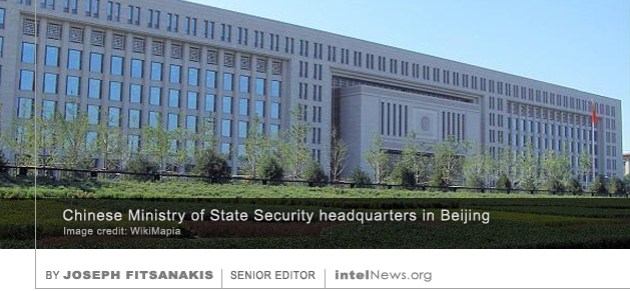
Chinese Ministry of State SecurityFOR THE SECOND TIME in 10 days, the government of China has announced the arrest of a Chinese government employee on suspicion of spying for the United States Central Intelligence Agency (CIA). In a statement issued on Monday, China’s civilian intelligence agency, the Ministry of State Security (MSS), said it had launched an investigation into an official of a government ministry, who was allegedly caught conducting espionage on behalf of the CIA.
The MSS statement did not name the government ministry where the alleged spy works. But it identified the accused by his surname, Hao, describing him as a 39-year-old Chinese national. According to the MSS statement, Hao spent a number of years as a graduate student in Japan. While he was studying in Japan, he allegedly visited the United States embassy in Tokyo, in order to apply for a travel visa. During his visit to the embassy, he met a United States embassy official, who befriended him.

Over time, Hao allegedly formed a close relationship with the unnamed American embassy official. The latter treated him to meals, sent him gifts in the mail, and secured funds for him to conduct research. Eventually, the embassy official introduced Hao to another American official, who, according to the MSS, was a CIA case officer. The CIA case officer allegedly recruited Hao to spy for the United States and instructed him to seek employment at “a core and critical department” of the government upon his return to China.

After completing his studies in Japan, Hao returned to China and secured employment in a government agency. He continued to meet regularly with his alleged CIA handler and other CIA officers, who to whom he “provided intelligence” in return for “espionage funds”, according to the MSS statement. The statement said that Hao’s case remains under investigation and that no official charges have yet been filed.

The MSS statement about Hao’s case came exactly 10 days after the spy agency posted on its WeChat social media account that it had caught another government official spying for the CIA. On August 11, the MSS said it had detained an alleged CIA spy named Zeng, whom it described as a 52-year-old “staff member of a Chinese military industrial group and an important confidential employee” of the Chinese state. Zeng had reportedly been sent to Italy by his employer, presumably in order to pursue graduate studies or receive technical training. While in there, he was allegedly accosted and eventually recruited by an employee of the United States embassy in Rome.

It is not known if the two cases are in any way connected. Government officials in Washington and at the United States embassy in Beijing have not commented on the story.

Author: Joseph Fitsanakis | Date: 23 August 2023 | Permalink

Eighth person detained in sprawling Taiwanese probe of Chinese spy ring

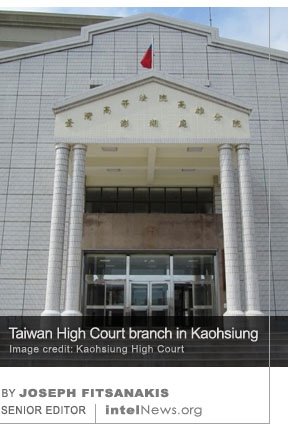
Kaohsiung High Court, TaiwanA SEVENTH PERSON HAS been detained in Taiwan as a result of a broadening investigation into a Chinese spy ring that allegedly provided Beijing with sensitive military intelligence. The existence of the investigation was revealed in January of this year, when the Taiwanese authorities announced the arrests of one retired and six active-duty military officers, all of whom were charged with spying for China.
On January 6 of this year, a retired Taiwanese Air Force colonel, identified only by his last name, Liu, was arrested for spying. According to court documents unsealed at the Taiwan High Court branch in Kaohsiung, Liu retired from the Air Force 2013. Soon afterwards, he began business dealings in China. It was during one of his trips to China when Liu was allegedly recruited by the Chinese government. He then carried out espionage operations on behalf of Beijing for approximately eight years.

Throughout his espionage activities, Liu allegedly used his military contacts to recruit six active-duty Taiwanese Air Force and Navy officers to carry out espionage, in return for monetary payments. The six active-duty military officers were arrested along with Liu on January 6. In April of this year, all seven individuals were formally charged with spying for China, in violation of Taiwan’s Classified National Security Information Protection Act.

Taiwanese government prosecutors alleged that each member of the spy ring received between NT$200,000 and NT$700,000 (approximately US$6,500-23,000) for agreeing to spy for Beijing. As the principal agent, Liu received individual bonuses of between NT$30,000 and NT$100,000 (US$1,000-3,200) each time he gave his Chinese handlers information gathered by one of the members of the spy ring.

On August 16, the Taiwanese government announced that one more individual, referred to as “a field officer” was detained on suspicion of spying for China. The suspect was identified only by his last name, Cheng. He was reportedly arraigned in the Taiwan High Court branch in Kaohsiung, the same court that last January delivered espionage charges against the other seven suspects involved in the spy ring investigation. All eight suspects have been denied bail. Their trial has not yet been set.

Author: Joseph Fitsanakis | Date: 21 August 2023 | Permalink

UK charges three Bulgarians with spying for Russia in ‘major national security’ case

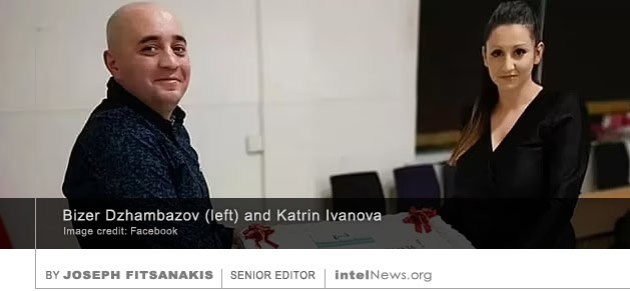
Bizer Dzhambazov and Katrin IvanovaAUTHORITIES IN BRITAIN HAVE charged three Bulgarian nationals with spying for Russia, as part of “a major national security investigation” that led to at least five arrests as early as last February. Two of the Bulgarians appear to be legally married. They have been identified as Bizer Dzhambazov, 41, and Katrin Ivanova, 31, who live in Harrow, a northwestern borrow of Greater London. The third Bulgarian, Orlin Roussev, 45, was arrested in Great Yarmouth, a seaside town in the east coast identity dof England. None of the suspect appears to have a formal diplomatic connection to either Bulgaria or Russia.

The Bulgarians were reportedly arrested in February of this year by the Counter-Terrorism Command of the Metropolitan Police, whose law enforcement mandate includes working on counterespionage cases. Two other individuals who were arrested at the time have not been charged or named. The three suspects have been charged under Section 4 of the United Kingdom’s Identity Documents Act 2010, which prohibits the possession of fake identity documents with “improper intention” and with the owner’s knowledge that they are fake. According to British government prosecutors, the suspects possessed forged passports and identity cards for Spain, France, the United Kingdom, Croatia, Italy, Greece, Bulgaria, the Czech Republic, and Slovenia.

Dzhambazov and Ivanova are believed to have moved to the United Kingdom as a couple in 2013. Both worked in the British healthcare sector —Ivanova as a laboratory assistant for a private company and Dzhambazov as a driver for a hospital. Roussev moved to the United Kingdom in 2009 and worked on the technical side of the financial services industry. He claims to have worked as an adviser for the Ministry of Energy of Bulgaria. He also claims to have previously owned a private company that operated in the area of signals intelligence (SIGINT), which involves the interception of electronic communications.

Bulgaria was one of the Soviet Union’s closest allies during the Cold War. Relations between Bulgaria and Russia plummeted in the 2000s, but pro-Russian sentiments continue to survive among some nationalist segments of the Bulgarian electorate. In June of this year, Kiril Petkov, the leader of Bulgaria’s We Continue the Change party, which today backs Bulgaria’s Prime Minister, Nikolai Denkov, spoke publicly about “Moscow-backed agents” operating inside Bulgaria’s intelligence services. Petkov proposed an ambitious plan to reform the Bulgarian intelligence services in order to “diminish the influence of Russia”. He proposed to do this through the administration of “integrity and ethical tests” to intelligence personnel.

Author: Joseph Fitsanakis | Date: 15 August 2023 | Permalink

China arrests government worker who gave CIA ‘core information’ about military

US embassy Rome ItalyA CHINESE GOVERNMENT EMPLOYEE gave “core information” about China’s military to the United States, after he was recruited by a Central Intelligence Agency (CIA) officer in Italy, a Chinese state agency has said. The allegation was made in a statement that was issued on Friday by China’s civilian intelligence agency, the Ministry of State Security (MSS), on its WeChat social media account.


The MSS statement did not specify the period during which the alleged espionage took place. But it named the alleged spy as “Zeng” and described him as a 52-year-old “staff member of a Chinese military industrial group and an important confidential employee” of the Chinese state. According to China’s state-owned newspaper The Global Times, Zeng had been sent to Italy by his employer, presumably in order to pursue graduate studies or receive technical training. While in Italy, Zeng was allegedly accosted by an employee of the United States embassy in Rome, which the MSS identified as “Seth”.

According to the MSS, Seth was a CIA case officer, who befriended Zeng through “dinner parties, outings and trips to the opera”. The Chinese man “developed a psychological dependence” on Seth and was “indoctrinated” by him “with Western values”, the MSS statement claims. Seth eventually convinced Zeng to sign an agreement with the CIA to conduct espionage, after which the Chinese man allegedly received intelligence tradecraft training. Upon returning to China from his stay in Italy, Zeng is alleged to have carried out espionage on behalf of his CIA handlers. The MSS claims Zeng gave his CIA handlers “a great amount of core intelligence” during “multiple secret meetings” with them.

The information Zeng is alleged to have provided to the CIA concerned “key developments about China’s military” to which he had access through his employer. In exchange for this information, Zeng is accused of having received “a huge amount of [financial] compensation” by his CIA handlers. The latter also promised him that they would help his family emigrate to the United States, as per the MSS statement. The spy agency said that Zeng remains in detention while the case is under investigation. The MSS statement also warned other Chinese citizens living or traveling abroad of “the risks and perils” of recruitment by Western spy agencies.

The Reuters news agency said it contacted the United States embassy in Beijing about the MSS allegations, but received no response.

Author: Joseph Fitsanakis | Date: 14 August 2023 | Permalink

China’s intelligence modernization has outpaced military increases: British report

Chinese Ministry of State SecurityTHE MODERNIZATION OF CHINA’S intelligence community is without parallel in recent history and has even outpaced the funding increases given to the Chinese military, a British government report has concluded. According to the same report, the Chinese government spends more on what it perceives as domestic threats than on external targets involving Western countries and their allies.

The redacted version of the report was issued last month by the British Parliament’s Intelligence and Security Committee, which monitors the activities of the British intelligence community. It concentrates on China’s domestic and global ambitions and discusses the role of the Chinese intelligence services in these pursuits. A theme that permeates the 222-page report is that China’s domestic and international ambitions are interconnected, as Beijing does not distinguish between its key national interests in the domestic and foreign domains. Moreover, the report notes that the Chinese intelligence community plays a central role in both facets.

The report notes that China “almost certainly maintains the largest state intelligence apparatus in the world”, dwarfing those of its Western rivals. The latter are forced to concentrate their counterintelligence work “on those aspects that are most demanding”. The official Chinese intelligence agencies are three, the report notes; they consist of the Ministry of State Security and the Ministry of Pubic Security —both of which are civilian— as well as the Strategic Support Force of the Chinese People’s Liberation Army. The latter provides signals intelligence support, whereas the two civilian agencies carry out a host of intelligence and counterintelligence duties.

Nevertheless, the Chinese state’s “whole-of-government” approach on matters of security means that almost every government agency fulfils some type of intelligence-related role. This makes it difficult to calculate with accuracy the full extent of the Chinese intelligence apparatus, the report notes.

Notably, Chinese intelligence agencies are focused primarily on what the Chinese government perceives as domestic threats to its rule, which Beijing has termed “the five poisons”. According to the report, these consist of: the Taiwanese independence movement; the separatist movements in Tibet and Xinjiang; the Falun Gong religious movement; and pro-democracy activism inside China. Intelligence collection and other operations that relate to the so-called “five poisons” include intelligence activities that take place abroad and target Chinese expatriate communities.

It is also worth noting that, according to the report, Beijing spends “almost 20% more on domestic security than on external defence”. Moreover, the rise in expenditures for intelligence infrastructure and operations is impressive by any standards of assessment and “has outpaced even China’s recent dramatic military modernization” of recent years, the report notes. The increase in spending “appears to have led to an improvement in capability”, the report concludes.

Author: Joseph Fitsanakis | Date: 09 August 2023 | Permalink

Russian spies allegedly impersonated Microsoft staff to hack government agencies

SVR hqMEMBERS OF A PROLIFIC hacker group that many associate with Russian intelligence impersonated Microsoft technicians in order to compromise nearly 40 government agencies and companies around the world. Microsoft security researchers said last week that the “highly targeted” social engineering campaign was guided by “specific espionage objectives” by the hackers.

According to Microsoft, the hackers behind the spying campaign are associated with a prolific hacker group named APT29 (also known as “Cozy Bear” and “Midnight Blizzard”) by cybersecurity researchers. It rose to infamy in 2020, when it was connected with the worldwide SolarWinds attack, which some experts described as possibly being among “the most impactful espionage campaigns on record”. It is believed that APT29 is closely associated with the Russian Foreign Intelligence Service (SVR, pictured).

Starting in late May 2023, APT29 hackers used several previously compromised Microsoft 365 accounts in order to set up internet domains with technical support-themed names. They then used these domains to contact a number of “highly targeted” individuals through Microsoft Teams, pretending to be Microsoft technical support representatives. Eventually, some of their targets were persuaded to provide the hackers with information they received through Microsoft’s multifactor authenticator system, thus granting them full access to their user accounts.

Microsoft did not disclose the identities of the targets, saying only that they were nearly 40 in number, and included government agencies, various multinational technology and manufacturing firms, media companies, as well as non-governmental organizations.

Author: Joseph Fitsanakis | Date: 07 August 2023 | Permalink

Poland’s super-secretive ‘school of spies’ marks 50 years of operation

ABW PolandDURING THE COLD WAR, Poland hosted the Eastern Bloc’s only known intelligence training facility for operations officers situated outside of the Soviet Union. The highly secretive training facility operated out of a heavily guarded compound located near the northern Polish village of Stare Kiejkuty in Gmina Szczytno county, approximately 65 miles from the Polish-Soviet border. Today, 50 years after its establishment, the facility continues to train the operations officers of post-communist Poland’s intelligence services.

During World War II, and in the immediate post-war period, Soviet authorities trained Polish intelligence personnel in Kuybyshev (in 1991 renamed to Samara) in southwestern Russia. This setup continued following the establishment of the Soviet-controlled Polish intelligence community. By the 1960s, the Polish intelligence community was being led by the Ministry of Public Security, referred to by its Polish initials, SB. The SB’s elite operations officers, which staffed its First Department, were all trained in the Soviet Union and in a Soviet-controlled facility in Warsaw.

But in 1970, Poland’s reformist President, Edward Gierek, put in motion a plan to modernize the Polish intelligence services. Gierek’s goal was for Polish intelligence to catch up with the pace of technological development, especially in the emerging digital realm. He also wanted Polish spy organizations to be able to compete directly against rival agencies in Western Europe. The rapid establishment of the Intelligence Personnel Training Centre near Stare Kiejkuty was the centerpiece of Gierek’s intelligence reforms.

Construction began in 1971 and was mostly completed within two years. In 1973, the heavily guarded training facility, which had been disguised as a “holiday resort” in official government maps, welcomed its first students. Students were taught how to operate undercover in the West and how to recruit sources in countries like West Germany, France and the United Kingdom. They were taught about Western European lifestyles and had access to Western products, including soft drinks and vending machines, which were absent from Polish life. Read more of this post

Brazil judges block international requests to extradite alleged Russian spy

GRUTHE BRAZILIAN GOVERNMENT IS blocking requests from the United States and Russia to extradite an alleged Russian deep-cover spy, whose forged Brazilian identity papers were discovered by Dutch counterintelligence. Sergey Cherkasov was expelled by authorities in the Netherlands in June 2022, after he attempted to enter the country using a Brazilian-issued passport under the name of Victor Muller Ferreira.

Within a few days of his expulsion, Dutch and American counterintelligence had outed Cherkasov as an intelligence officer of the Main Directorate of the Russian Armed Forces’ General Staff, which is commonly known as GRU. Cherkasov is alleged to have built his forged identity over several years, while operating in Brazil and the United States. Upon returning to Brazil, Cherkasov was sentenced to 15 years in prison for using forged Brazilian identity documents.

Last week, Cherkasov’s sentence was reduced to 5  years, after a court in Brazil dropped some of the initial charges that had been filed against him by the Brazilian government prosecutor’s office. Cherkasov’s lawyers are now arguing that their client does not pose a flight risk and should therefore be allowed to serve the remainder of his sentence outside of prison, wearing an electronic tagging device.

These recent developments are of concern to authorities in the United States. The latter have filed an extradition request for Cherkasov, claiming that he spent several years as a graduate student in an American university while using his forged Brazilian identity papers. During that time, Cherkasov is alleged to have repeatedly communicated with his Russian intelligence handlers, supplying them with information about American politics and policy.

However, the Ministry of Justice and Public Security of Brazil said on Friday that Washington’s extradition request had been denied and that Cherkasov would remain in Brazil. The apparent reason for the denial is that Brazil’s Supreme Federal Court had already approved a similar extradition request for Cherkasov, which was filed in April by the Russian government. Moscow claims that Cherkasov is wanted in Russia for narcotics trafficking. The Russians also deny that the alleged spy worked for the GRU or any other government agency.

Yet, despite claims to the contrary, the Brazilian government appears to be essentially stalling on Moscow’s extradition request. On Friday, Flávio Dino, who serves as Minister of Justice under the administration of President Inácio Lula, stated that Cherkasov would continue to serve his prison sentence in Brazil until further notice. In the United States, CBS News reported that Cherkasov’s extradition to Russia would take place “only […] after the final judgment of all of his cases here in Brazil” has been issued, according to the accused spy’s lawyers.

Author: Joseph Fitsanakis | Date: 31 July 2023 | Permalink

Revealed: Little-known Russian counterintelligence unit that targets foreigners

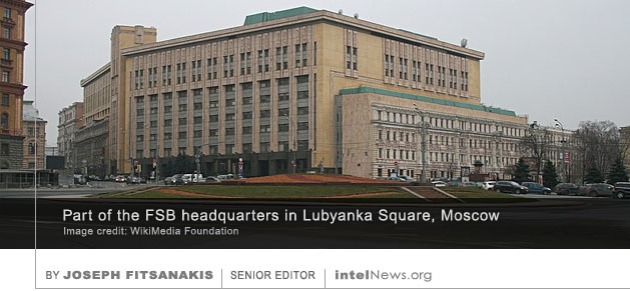
FSB - JFAN INVESTIGATIVE REPORT BY the Wall Street Journal discusses a little-known Russian counterintelligence unit that targets foreign diplomats in ways that often “blur the lines between spycraft and harassment”. Among other activities, this secretive unit is likely behind a string of operations targeting American citizens, which have led to the arrest of at least three of them since 2018. These include the Wall Street Journal correspondent Evan Gershkovich, who earlier this year became the first American reporter to be held in Russia on espionage charges since the Cold War.

The Journal Text highlights the activities of the Department for Counterintelligence Operations, or DKRO, a highly clandestine unit belonging to the counterintelligence arm of Russia’s Federal Security Service (FSB). It is believed that the DKRO is responsible for monitoring the activities of foreigners living in Russia. The unit reports to Vladislav Menshchikov, director of the counterintelligence arm of the FSB. Prior to his current post, Menshchikov headed the Office of Special Presidential Programs, a Kremlin outfit that operates and safeguards secret underground facilities in Russia’s metropolitan areas.

According to the paper, the DKRO consists of sub-units that focus on various nationalities of foreigners living in Russia, including diplomats. Its first and largest section, known as DKRO-1, focuses on Americans and Canadians. The operations of this sub-unit have intensified significantly in recent times, as relations between Washington and Moscow have worsened. The Journal’s information reportedly came from “dozens of interviews” with senior Western diplomats in Europe and the United States, American citizens that were previously detained and imprisoned in Russia, as well as Russian analysts and journalists who now live abroad.

In addition to Menshchikov, the DKRO has been behind operations that led to the arrests of two other Americans, Paul Whelan (arrested in 2018) and Trevor Reed (arrested in 2019), both of whom were charged with carrying out espionage for the United States. However, most of the activities of the DKRO focus on monitoring the activities of foreign subjects inside Russia. These include journalists and diplomats. Many of the DKRO’s targets have been subjected to campaigns of harassment and intimidation, the Journal claims. Examples include following diplomats’ children to school, breaking into diplomats’ residences to plant recording devices, sabotaging diplomatic vehicles, and even “cutting the power to the residence of the current U.S. Ambassador”.

The paper also reports that, according to American diplomatic staff, the Russian police officers that are posted along the perimeter of the United States embassy in Moscow are in fact “DKRO officers in disguise”. The Journal said it reached out to the FSB and the Kremlin for comment on these allegations, but received no response. The paper also reached out to the United States embassy in Moscow and to the State Department, but officials there declined to comment.

Author: Joseph Fitsanakis | Date: 12 July 2023 | Permalink

German spy services had foreknowledge of Wagner mutiny, report claims

BND GermanyCONTRARY TO EARLIER CLAIMS that the German intelligence agencies failed to anticipate last month’s showdown between PMC Wagner and the Kremlin, German intelligence did in fact have foreknowledge of the mercenary group’s uprising, a new investigative report has concluded. The report further claims that German intelligence had unique and real-time insights into the negotiations between Wagner PMC leader Yevgeny Prigozhin and Belarussian President Aleksandr Lukashenko, who intervened in the dispute.

In the days following the June 23 mutiny by soldiers of the Russian private military firm Wagner Group, German intelligence agencies were publicly criticized for allegedly failing to warn Berlin about the unprecedented incident. Specifically, it was claimed that Germany’s primary foreign intelligence agency, the Federal Intelligence Service (BND), did not issue an actual warning about the mutiny until Saturday —a full 12 hours after the first clashes had erupted between Wagner mercenaries and forces loyal to the Russian Ministry of Defense.

Much of the criticism came from the ranks of the center-left German Social Democratic Party (SPD), which is the primary political party behind the government of German Chancellor Olaf Scholz. However, criticism also came from the Green Party, which supports Scholz’s administration, and the liberal center-right Free Democratic Party (FDP), which also supports Scholz’s government. The criticism intensified after June 28, when, during a live television interview, Chancellor Scholz appeared to confirm speculation that the BND had left his administration in the dark about the Wagner mutiny until it was too late.

Late last week, however, a joint investigation by two of Germany’s most respected public television broadcasters, the Hamburg-based NDR and the Cologne-based WDR, concluded that the BND had been far more informed about the Wagner mutiny than its critics have claimed. The investigation concluded that, not only did the BND have foreknowledge of the mutiny nearly a week before it materialized, but that it was able to listen-in to the frantic telephone conversations between Prigozhin and Belarussian President Lukashenko, as the latter tried to dissuade the Wagner leader from storming the Russian capital with his heavily armed band of mercenaries.

According to the NDR-WDR report, the BND had been able to hack into Wagner’s internal communications system up for over a year. However, its operation was betrayed by “Carsten L.”, a German intelligence officer who was arrested late last year for spying for Russia. However, the German spy service was able to continue to monitor the internal affairs of Wagner through other sources and had access to channels of information within Wagner in the months leading up to the mutiny. Thus, according to the report, the BND had “vague indications of an imminent uprising by Wagner” about a week prior to June 23.

However, the agency was unsuccessful in verifying these indications through other sources, including its foreign counterpart agencies. For this reason, it chose not to notify the German Chancellery in concrete terms.

Nevertheless, the BND did issue a warning on Friday evening, a few hours before the Wagner mutiny began. The warning was issued a full day prior to the takeover of Wagner’s armed takeover of the Russian armed forces’ operational headquarters in Rostov, which occurred on Saturday. The two state broadcasters reportedly reached out to the BND for confirmation of the report’s findings. However, a BND spokesperson declined to comment on the matter, saying simply that the BND “generally does not comment publicly on matters relating to intelligence findings or operations”.

Author: Joseph Fitsanakis | Date: 11 July 2023 | Permalink

Brazil launches investigation into illegal activities of Russian deep-cover spies

José Giammaria Mikhail MikushinAUTHORITIES IN BRAZIL HAVE launched a nationwide probe into the abuse of the country’s citizenship documentation system by Russian spies, who are allegedly using it to build forged identities. According to The Wall Street Journal, Brazil was placed “in an uncomfortable international profile” in the past year, after at least three alleged Russian deep-cover spies were outed by intelligence services in the Netherlands, Norway and Greece.

In June of 2022, authorities in the Netherlands expelled Sergey Cherkasov after he attempted to enter the country using a Brazilian-issued passport under the name of Victor Muller Ferreira. As intelNews explained at the time, Dutch and American counterintelligence outed Cherkasov as an intelligence officer of the Main Directorate of the Russian Armed Forces’ General Staff, which is commonly known as GRU. Cherkasov is alleged to have built his forged identity over several years, while operating in Brazil and the United States. Cherkasov is currently serving a 15-year prison sentence in Brazil for using forged identity documents. He is wanted in the United States for espionage. The alleged spy has reportedly admitted to the use of forged documents, but is denying he worked as a Russian intelligence officer.

In October of last year, the Norwegian police arrested another Brazilian citizen, José Assis Giammaria (pictured), accusing him of operating under deep cover on behalf o the GRU. According to the Office of the Norwegian state prosecutor, the suspect’s actual name is Mikhail Mikushin. He is believed to have been operating as a deep-cover spy in Brazil, Canada and Norway since 2006. Mikushin is now facing charges of “aggravated intelligence-gathering activity targeting state secrets”, which carry a maximum prison term of 10 years.

In early 2023, Gerhard Daniel Campos Wittich, a resident of Rio de Janeiro, disappeared while traveling abroad. A few months later, he was connected to Irena Shmyrev, a Russian deep-cover spy who was living in Greece under an assumed Greek identity, until she disappeared without trace, reportedly leaving the country in a hurry. According to Greek counterintelligence investigations, Wittich was Irena A.S.’s Russian husband who, like her, worked as a deep-cover intelligence operative out of Brazil.

According to The Wall Street Journal, an official investigation is currently underway in Brazil into how many Russian deep-cover intelligence operatives may be using forged Brazilian citizenship documents to “lurk undetected within the country or around the world”. The paper says that Brazilian investigators have shared “few public details about their probe”. However, it cites “people familiar with the matter” in claiming that the probe centers on “security gaps within Brazil’s documentation system”, which appear to be exploited by undercover spies. Such security gaps allegedly include the ability to obtain a Brazilian identity card and a passport with the use of a single document, namely a birth record.

Author: Joseph Fitsanakis | Date: 03 July 2023 | Permalink

Switzerland overrun with foreign spies, Swiss intelligence service warns

Russian embassy SwitzerlandINTENSIFYING COMPETITION BETWEEN THE superpowers has turned Switzerland into an espionage battlefield, with more foreign spies being active there than in most other European countries, according to a new report. The report, published earlier this week by the Swiss Federal Intelligence Service (FIS), notes that Russian operatives are particularly active in the alpine country. Many Russian intelligence officers have relocated there after being expelled by a host of European countries in the past 18 months, according to the report.

Traditionally neutral Switzerland has not joined most other European countries in expelling Russian intelligence officers —posing as diplomats— following Russia’s full-scale invasion of Ukraine in 2022. Therefore, as Russia tries to rebuild its shattered intelligence-gathering networks in Europe, it is using Switzerland as a forward-operating base, according to the FIS. As of 2023, the number of Russian intelligence personnel stationed on Swiss soil, and the ensuing espionage activity, “is notably high”, states the report.

According to the FIS report, that the lion’s share of Russian intelligence officers —“several dozen”— are stationed “at the Russian diplomatic and consular missions in Geneva”. A major international diplomatic hub, Geneva is an “ideal operational environment” for foreign intelligence agencies. It hosts a significant number of international organizations —including one of the four major offices of the United Nations. Additionally, it is situated close to the largely unmonitored French border. This allows intelligence operatives to move seamlessly in and out of European Union soil.

Furthermore, as Western intelligence agencies increase their presence in Switzerland, in order to counter Russian intelligence activities there, “espionage levels […] are continuously rising”, according to the FIS report. This situation is unlikely to change in the coming year, as “intensifying competition between superpowers” is expected to continue to involve Switzerland as an espionage battlefield that draws in rival intelligence agencies, the FIS report concludes.

Author: Joseph Fitsanakis | Date: 28 June 2023 | Permalink

Analysis: Prigozhin’s goal was to survive, not to remove Putin from power

Yevgeny PrigozhinIN THE EARLY HOURS of June 23, PMC Wagner leader Yevgeny Prigozhin declared the launch of an armed campaign against the Ministry of Defense of the Russian Federation. Within hours, several thousand soldiers belonging to Wagner, one of the world’s largest private military companies, had abandoned their positions in eastern Ukraine and were en route to Moscow. Their mission, according to Prigozhin, was to arrest Minister of Defense Sergei Shoigu and Chief of the General Staff Valery Gerasimov, and try them for mismanagement and corruption.

In the ensuing hours, National Guard units along the M-4, a 1,100-mile-long expressway that connects the northeastern shores of the Black Sea to Moscow, began blocking or destroying critical junctures across that vast road network, in an attempt to obstruct the Wagner convoy. In a televised nationwide address, a visibly shaken Vladimir Putin accused Prigozhin of leading an armed insurrection, and warned those who followed him that they would be treated as traitors. Meanwhile, tickets on flights from Moscow to several visa-free international destinations were sold out within hours, as Muscovites braced for the outbreak of civil war.

Yet, within fewer than 24 hours, Prigozhin, who had repeatedly vowed to reach Moscow or die trying, was on his way to Belarus. He had seemingly accepted a deal to abandon his loyal troops in exchange for amnesty and a life in exile. Prigozhin’s sudden about-face surprised many observers, who had expected to see firefights between Spetsnaz units and Wagner forces in Moscow’s southern districts by Sunday afternoon. Even some of Prigozhin’s own troops took to social media to openly accuse their former leader of betrayal, and vow revenge.

PRIGOZHIN: A RATIONAL AND CALCULATED ACTOR

How are we to explain this unexpected turn of events? The difficulty of such a task is amplified by the lack of reliable reporting from Russia, along with the inherent chaos of war and the rapidly changing nature of events. It must be stressed, however, that Prigozhin is neither impulsive nor irrational. His maneuvers over the past week were calculated and almost certainly pre-planned and choreographed —most likely long in advance. His ultimate decision to seek political asylum in Belarus —one of the few countries in the world that is unlikely to turn him over to the United States— makes sense under one premise: that the motive behind his “justice march” to Moscow was not to challenge Putin, but to save his life.

To begin with, the bitter feud between Prigozhin and the Russian Ministry of Defense is not new. It has been raging for years. It both precedes and exceeds Russia’s ongoing military campaign in Ukraine. The Wagner leader has repeatedly expressed his dismay at being viewed as an outsider by the Ministry of Defense, which it views as an elitist and incompetent bureaucracy. His experience in Ukraine, where Wagner’s forces faced stiff resistance from the local population and the Ukrainian military alike, added fuel to his rage against a host of Russian defense officials. Prigozhin has been voicing his denunciations of the way these officials have managed the war since March of 2022, just two weeks into the invasion of Ukraine.

PRIGOZHIN’S DISILLUSIONMENT

The disastrous Russian military campaign in Ukraine only served to sharpen Prigozhin’s criticism of his country’s defense establishment. One can observe this in the evolution of his critiques over time. In recent months, the Wagner leader has not only criticized the Ministry of Defense, accusing his leadership of corruption, but he has increasingly directed his ire against broad segments of Russian society. In his video tirades, he often decries what he describes as “the Russian elite” and the “oligarchy”, whom it accuses of living in luxury, while Russia’s working class fights and dies in Ukraine, Syria, Libya, and elsewhere. Read more of this post

Russian intelligence planned to assassinate SVR defector living in the United States

Aleksandr PoteyevTHE RUSSIAN INTELLIGENCE SERVICES planned to assassinate a Russian former intelligence officer, who had defected to the United States and was living in an apartment complex in Florida, according to a new report. The alleged assassination plan is discussed in the forthcoming book Spies: The Epic Intelligence War Between East and West (Simon and Schuster), authored by Harvard University academic Calder Walton.

According to Dr. Walton, Russian intelligence targeted Aleksandr Poteyev, who served as Deputy Director of the Russian Foreign Intelligence Service (SVR) from 2000 until 2010. Poteyev was reportedly in charge of the SVR’s Directorate “S”, which oversees the work of illegals —a term that refers to SVR operations officers who work in without official cover around the world. It is believed that Poteyev began working for the United States Central Intelligence Agency (CIA) in 1999, as an agent-in-place.

By 2010, when he openly defected to the United States, Poteyev had provided the CIA with information that led to the high-profile arrest of 10 Russian illegals by the Federal Bureau of Investigation (FBI). Some believe that the SVR defector was also responsible for the arrests of Russian spies in Germany and Holland. In 2011, a Russian court tried Poteyev in absentia and sentenced him to 25 years in prison. Poteyev remains at large and is believed to be living in the United States under the protection of the CIA’s National Resettlement Operations Center.

On Monday, The New York Times reported that it had independently confirmed Dr. Walton’s claims, with the help of “three former senior American officials who spoke” to the paper “on the condition of anonymity”. According to The Times, a 2016 report by the Moscow-based Interfax news agency, which claimed that Poteyev had died in the United States, was part of a deliberate disinformation operation by the SVR, which was aimed at enticing the defector to emerge from his hideout.

When that attempt failed, the SVR allegedly recruited a Mexican scientist who lived in Singapore, Hector Alejandro Cabrera Fuentes, to travel to Miami, Florida, in 2020, in order to locate Poteyev. But Fuentes attracted the attention of the authorities while driving around in Miami and was subsequently detained by US Customs and Border Protection agents as he was trying to board a flight to Mexico City. Fuentes then provided details of his mission to the FBI. The Bureau eventually determined that the goal of the SVR had been to assassinate Poteyev.

According to The New York Times, the realization that the SVR had planned to carry out an assassination operation on American soil “spiraled into a tit-for-tat retaliation by the United States and Russia”, which included cascading sanctions and diplomatic expulsions on both sides. The paper reports that, in April 2021, the White House ordered the expulsion of 10 Russian diplomats from the United States, including the SVR’s chief of station, who had two years left on his Washington, DC, tour. The Kremlin responded by expelling an equal number of American diplomats from Russia, including the CIA station chief in Moscow.

Author: Joseph Fitsanakis | Date: 21 June 2023 | Permalink