Ex-Ukraine pro-Russian leader’s son killed in mystery accident

By JOSEPH FITSANAKIS | intelNews.orgViktor Yanukovych and son
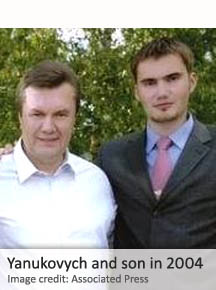
The son of Viktor Yanukovych, Ukraine’s pro-Russian former president, has been killed in Siberia, in what is the seventh death in mysterious circumstances of a member of his family or close associate this year. Yanukovych’s 33-year-old second son, also called Viktor, was reportedly drowned in a lake in the Russian region of Siberia last Friday evening. He had been living in Russia with his wife and child since February 2014, when street protests by pro-Western Ukrainians toppled his father’s pro-Moscow government. He had been a member of Ukraine’s national parliament, the rada, since 2012, representing the pro-Moscow Party of Regions, which at the time was led by his father.

According to reports, Yanukovych’s son was killed when a Volkswagen minibus carrying him and five other people fell through thin ice near Lake Baikal’s Olkhon Island. The lake, known as the world’s deepest, regularly attracts tourists and campers due to its natural beauty. The group was apparently touring that part of the lake to take photographs when their vehicle plunged into the frozen waters. Yanukovych was reportedly the only one in the group to die, as the other five members were found alive following a two-hour rescue operation by local authorities.

Several Western media noted on Sunday that Yanukovych’s death marks the seventh such macabre ending of a family member or close associate of the former president this year. Most recently his close political ally, Oleksandr Peklushenko, a former regional governor with the Party of Regions, was found dead with a gunshot wound to the neck, in what Ukrainian authorities said was a suicide. The BBC notes that Yanukovych’s son’s demise also marks the latest in a series of deaths of members of the former president’s team in traffic accidents, dating as far back as 2009. Neither the Yanukovych family nor the Ukrainian government have commented on the reported death of the former president’s son.

Did US threaten to stop sharing intel if Germany protected Snowden?

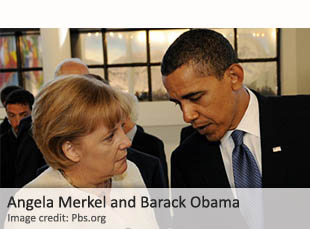
Angela Merkel and Barack ObamaBy JOSEPH FITSANAKIS | intelNews.org

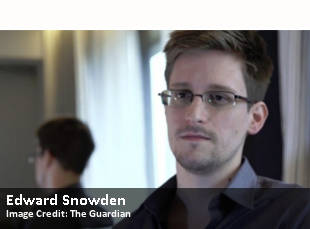
The vice chancellor of Germany has allegedly told an American journalist that the United States warned Berlin it would stop sharing intelligence if it offered protection to American defector Edward Snowden. The claim was made by Glenn Greenwald, a former reporter for British newspaper The Guardian, who became widely known by publishing Snowden’s revelations. The American former technical expert for the Central Intelligence Agency and the National Security Agency is currently living in Russia, where he was offered political asylum in 2013. Some of the most extraordinary disclosures made by Snowden since his defection center on allegations of extensive American intelligence operations against Germany. These led to an unprecedented cooling in relations between Washington and Berlin, which worsened in July of last year, after Germany expelled the CIA station chief —essentially the top American spy in the country— from its territory.

Many German politicians, who are appreciative of Snowden’s disclosures about American intelligence operations against their country, have pressed the government of Chancellor Angela Merkel to offer Snowden political asylum, thus shielding him from the possibility of arrest and imprisonment by American authorities. In 2013, however, when Snowden applied for political asylum in Germany, the government rejected his application after a notably short evaluation period.

According to Greenwald, the rejection of Snowden’s application came after direct warnings by the US that all intelligence cooperation between the two countries would seize if Berlin approved Snowden’s bid for political asylum. The American reporter says he was informed about the US warning by none other than German Vice Chancellor Sigmar Gabriel, following a speech he made in the southern German city of Homburg last week. During his speech, says Greenwald, the vice chancellor, who is also head of Germany’s Social Democratic Party, argued that Snowden should not have been forced to seek protection from “Vladimir Putin’s autocratic Russia” and criticized the unwillingness of Western countries to offer him asylum instead. In response to a comment from a member of the audience, who asked Gabriel why Germany had rejected the American defector’s application for asylum, the vice chancellor said Germany would have been “legally obligated to extradite Snowden to the US if he were on German soil”.

Following Gabriel’s speech, Greenwald asked him to clarify why Germany was so quick to reject Snowden’s asylum application. The German politician allegedly responded that Washington had warned Berlin that it would be “cut off’ from all intelligence sharing in a variety of pressing matters. “They told us they would stop notifying us of [terrorist] plots and other intelligence matters”, Gabriel allegedly told Greenwald. As intelNews reported last month, Britain has also threatened to end intelligence cooperation with Germany if Berlin launches —as it has threatened to do— a parliamentary investigation of British intelligence operations in Germany, which were also disclosed by Snowden.

A third of Russian diplomats are spies, says Swedish security service

Wilhelm UngeBy JOSEPH FITSANAKIS | intelNews.org
Approximately a third of all Russian diplomats stationed in Sweden are in reality intelligence officers, according to Sweden’s intelligence service. The Scandinavian country’s primary intelligence agency, the Swedish Security Service, known as SAPO, told reporters on Wednesday that around one in three accredited officials stationed in Russia’s embassy and consulate in Gothenburg routinely engage in various forms of espionage. The claim was made at SAPO’s headquarters in Solna, in the suburbs of Stockholm, during the unveiling of the agency’s annual counterintelligence report. The main presenter at the press conference, SAPO chief analyst Wilhelm Unge, told reporters that Russia constitutes “the biggest intelligence threat against Sweden” at present.

Unge told the audience that SAPO had prevented “several attempts” by Russian diplomatic personnel to steal Swedish-made technology last year, especially related to weapons systems and other military technologies. Especially notable, said Ugne, was that the new, post-Soviet generation of Russian intelligence officers stationed in Sweden are younger in age than their Soviet-era counterparts. He added that they are also well-educated, very driven, goal-oriented and socially competent —something that Soviet intelligence officers were admittedly not known for. Unge noted that Iranian and Chinese intelligence operatives were also markedly active on Swedish soil, but refused to provide details.

The Swedish Ministry of Foreign Affairs, which is responsible for accrediting foreign diplomats stationed in Sweden, declined comment on whether it had expelled any Russian diplomats in recent months. In a brief statement, the Ministry’s spokeswoman Anna Ekberg said simply that the Swedish government expected the Russian Federation “to respect the Vienna Convention and that their diplomats [in Sweden] are actually diplomats”. The Associated Press contacted the Russian embassy in Stockholm for a response, but officials there refused to provide one. IntelNews regulars will recall that Swedish authorities shut down airspace over Stockholm last October, while conducting an extensive search for an alleged Russian submarine, which was believed to be lurking in the port of Stockholm. The incident caused tension between the two countries, prompting calls for more stringent Swedish counterintelligence measures against Russia.

Turkish media disclose identity of alleged spy for Canada

Mohammed al-RashedBy JOSEPH FITSANAKIS | intelNews.org

Turkish media have released the name, as well as video footage, of an alleged agent for Canadian intelligence, who says he helped three British schoolgirls travel to territory controlled by the Islamic State of Iraq and Syria. The three girls, aged between 15 and 16 years old, crossed into ISIS-controlled territory on February 17, after traveling by plane from London to Istanbul. The incident prompted international criticism of the Turkish government’s hands-off attitude toward a growing influx of Western Islamists who cross into Syria from Turkey, intent on joining ISIS. However, Turkey’s Minister of Foreign Affairs, Mevlut Cavusoglu said last week that the girls had been assisted by an intelligence agent working for a member-state of the military coalition fighting ISIS.

The minister declined to offer further details. But Turkish media eventually disclosed the identity of the alleged agent, who has been detained by authorities in Turkey as Mohammed al-Rashed. Also known as “Mohammed Mehmet Rashid” or “Dr. Mehmet Rashid”, the man is a Syrian national who claims to be working for the Canadian Security Intelligence Service. According to Turkey’s pro-government daily Sabah, al-Rashed is a 28-year-old Syrian dentist who fled from Syria to Jordan in 2013 to escape the civil war there. While in Jordan, he sought asylum at the Canadian embassy in Amman. He was subsequently offered Canadian citizenship, said Sabah, in return for working as an agent of CSIS. According to the Turkish daily, al-Rashed then traveled to Canada, where he stayed for several months before returning to Jordan.

Sources in Turkey say al-Rashed explained upon his detention that he had been tasked by CSIS to uncover the methods by which European and American ISIS recruits travel to Syria through Turkey. For that reason, he said, he had helped at least 15 individuals, including the three British schoolgirls, cross form Turkey to Syria. He would then provide information on the transfers —including passport data and baggage tags— to the Canadian embassy in Jordan, he said. Sabah added that the Canadians would pay for al-Rashed’s frequent trips to Jordan, where he would meet a Canadian embassy employee called “Matt”, who would then pass on the information to his superior at the embassy, called “Claude”. The Syrian alleged agent added that CSIS would compensate him for his work through frequent deposits of between $800 and $1,500 made to bank accounts opened in his name in British banks. Turkish sources added that al-Rashed had recorded details of his activities on a personal laptop, which had been seized and was being examined.

The Canadian government has yet to comment publicly on the allegations about al-Rashed. Unnamed Canadian sources said last week that he was neither a Canadian citizen nor a CSIS employee. But officials so far refused to speculate on what they describe as “operational matters of national security”.

CIA funds given to Afghan officials ended up in al-Qaeda coffers

Atiyah Abd al-RahmanBy IAN ALLEN | intelNews.org
Millions of dollars given by the United States Central Intelligence Agency to Afghanistan following the 2001 American invasion ended up in the hands of al-Qaeda, according to documents found in the personal archive of the organization’s founder, Osama bin Laden. The documents were confiscated by US Special Forces from bin Laden’s hideout in Abbottabad, Pakistan, where he was killed in 2011. They were declassified this week for use as evidence in the trial of Abid Naseer, a Pakistani citizen accused of planning a series of suicide bombings in Britain and the US. The New York Times, which cited “interviews with Afghan and Western officials”, said the documents show that Washington “has sometimes inadvertently financed the very militants it is fighting”. The paper attributed this to poor oversight of the billions of dollars in cash payments that the CIA supplied to the corrupt Afghan government of Hamid Karzai for over a decade.

The letters used in Naseer’s trial concern $5 million paid as ransom to al-Qaeda by the Afghan government in 2010, in exchange for the release of Abdul Khaliq Farahi, Afghanistan’s consul general in the Pakistani city of Peshawar. Farahi had had been abducted by militants two years earlier and delivered to the hands of al-Qaeda, who promptly contacted Kabul demanding payment. In the spring of 2010, the Afghan government agreed to pay a $5 million ransom for the kidnapped diplomat’s release. According to The Times, at least $1 million in ransom money came from the several millions of dollars in cash that the CIA would deliver each month to the presidential palace in Kabul. The other $4 million came from Iran as well as from a number of Arab oil kingdoms, says the paper.

In June 2010, almost as soon as the funds were delivered to al-Qaeda’s hands, the organization’s accounts manager, Atiyah Abd al-Rahman, wrote to bin Laden: “Allah blessed us with a good amount of money this month”. The al-Qaeda founder responded by expressing surprise that the US would have allowed a ransom to be paid to the militant group, and cautioned al-Rahman to check the cash for signs of poison or radiation that may have been planted there by the Americans. It appears, however, that no trap had been set up by the CIA, and al-Qaeda was able to use the funds for weaponry and routine operational expenses. The Times said it asked the CIA whether officials at Langley were aware of the ransom paid to al-Qaeda by the Afghan government, but the Agency declined comment.

Turkey says Canadian spy helped British schoolgirls travel to Syria

CCTV footage of UK girls heading to SyriaBy JOSEPH FITSANAKIS | intelNews.org
In a development described by observers as “highly unusual”, a Turkish government minister has claimed that a Canadian spy helped three British schoolgirls travel to territory controlled by the Islamic State of Iraq and Syria. The three girls, Kadiza Sultana, 16, Shamima Begum, 15, and Amira Abase, also 15, crossed into ISIS-controlled territory on February 17, after having traveled by plane from London to Istanbul. The incident prompted renewed international criticism of the Turkish government’s hands-off attitude toward the growing influx of Western Islamists who cross into Syria from Turkey, intent on joining ISIS.

But Turkey’s Minister of Foreign Affairs, Mevlut Cavusoglu said on Thursday that the girls had been assisted during their trip by an intelligence agent working for a foreign country. In responding to criticism against Turkey, the minister claimed during a television interview that Turkish security forces had arrested a foreign intelligence operative who had enabled the three British citizens to cross into Syria. The man, said Cavusoglu, was a spy from a member-state of the military coalition fighting ISIS. “It is not a member-state of the European Union”, he added, “nor is he from the United States. But he is working for the intelligence [agency] of a country within the [anti-ISIS] coalition”. Later on Thursday, an unnamed Turkish government source told local media that the agent was not a Turkish citizen and that he had been arrested earlier in March.

Several press agencies, including Reuters and Agence France Presse reported on Thursday that the individual in question was “connected” with the Canadian Security Intelligence Service, but stopped short of saying that he was working for the government of Canada. A statement from the office of Steven Blaney, Canada’s Minister for Public Safety, who is responsible for overseeing the work of CSIS, said simply that the Ministry was “aware of these reports” but would “not comment on operational matters of national security”. An anonymous government source in Ottawa denied that the individual arrested in Turkey was a Canadian citizen or that he ever worked for CSIS.

Saudis recall ambassador from Sweden after arms deal is scrapped

Margot WallströmBy IAN ALLEN | intelNews.org
The government of Saudi Arabia has withdrawn its ambassador from Sweden after the Scandinavian country annulled a multimillion dollar defense contract with the Arab kingdom. Stockholm scrapped the contract on Monday, a day after the Saudis blocked a scheduled speech by the Swedish Minister of Foreign Affairs, Margot Wallström, at the Arab League conference in Cairo. Wallström said she was “astonished” after Arab delegates backed a last-minute push by the Saudi delegation to the meeting to block her from speaking. The effort to block the Swedish politician’s speech was initiated once it became clear that she intended to criticize the Kingdom’s human-rights record. The Swedish politician had reportedly planned to broach the issue of freedom of expression and religious worship, as well as touch on the subject of women’s rights in Saudi Arabia. The speech was meant to highlight Wallström’s “feminist foreign policy”, which she has previously said will form “an integral part” of the policy strategy of the Swedish Ministry of Foreign Affairs under her leadership.

On Tuesday, the Swedish government announced that a lucrative weapons agreement, which was first signed between Stockholm and Riyadh in 2005, would be scrapped in protest against the Arab Kingdom’s poor human-rights record. The day before the announcement, Wallström had proceeded to post online the text of the speech that she had been scheduled to deliver in Cairo, where she had been invited by the Arab League as a guest of honor. Fewer than 24 hours later, the Saudi Foreign Ministry said it would be recalling its ambassador to Sweden, Ibrahim bin Saad Al-Ibrahim, in protest against what it said were Sweden’s “offensive” and “harmful” actions against the Kingdom. An official statement by the Saudi government described Wallström’s criticisms as a “blatant interference” in the Kingdom’s internal affairs that had “violated accepted international conventions”.

Sweden’s Ministry of Foreign Affairs confirmed late on Wednesday that the Saudi ambassador to the country was being recalled, but it refused to speculate on whether it would respond by recalling its ambassador to the Arab Kingdom.

In surprise move, Turkey’s spy chief cancels plans to run for office

Hakan FidanBy JOSEPH FITSANAKIS | intelNews.org

The director of the all-powerful Turkish intelligence service, who resigned his post last month in order to run for parliament, has surprised observers by announcing his return to his previous duties saying he had a change of heart. Hakan Fidan has been in charge of Turkey’s National Intelligence Organization (MİT) since 2010, when he was personally appointed to the position by then Prime Minister and current President, Recep Tayyip Erdoğan. Following his appointment, he personally supervised operations against political enemies of Erdoğan, who is widely seen as his mentor and close political ally. Early last February, Fidan, a mysterious figure who rarely speaks to the media, announced his resignation as director of MİT in order to run for parliament in June. His move was immediately hailed by the Justice and Development Party, which represents Erdoğan, as well as Turkey’s current Prime Minister, Ahmet Davutoğlu.

On Monday, however, Fidan surprised political observers by stating that he had decided not to enter politics after all, and was returning to the post of MİT director, effective immediately. The Turkish strongman’s change of heart appears to have come despite a public approval of his earlier decision to resign his MİT post, from Prime Minister Davutoğlu. Some observers claim that the surprise U-turn may reflect a widening split within the Justice and Development Party, between the prime minister and President Erdoğan, who first appointed Fidan to MİT’s helm back in 2010. Commenting on Fidan’s resignation last month, Erdoğan had signaled displeasure with the move, saying that Fidan “should have stayed [at MİT] instead of leaving without permission”. There are rumors in Ankara that Fidan’s U-turn came after considerable pressure from the pro-Erdoğan faction in the Justice and Development Party. The latter did not approve of Fidan’s resignation from MİT, believing that the spy chief is more needed in helping strike a peace treaty with Turkey’s disaffected Kurdish population. However, Davutoğlu’s people in the party believed that Fidan could add to the political prestige of their electoral campaign.

Does Fidan’s sudden return to MİT signal a widening tactical fragmentation within the Justice and Development Party? Davutoğlu told reporters on Monday that rumors of a division had been invented by the media, and that he and Erdoğan continue to “always consult” each other. Meanwhile the media-shy MİT chief declined to speak publicly about his decision, and instead issued a brief statement that said he had come to the conclusion that it was “necessary” to resume his previous post.

Ex-Mossad chief calls for ouster of Israeli prime minister

Meir DaganBy JOSEPH FITSANAKIS | intelNews.org

A longtime former director of the intelligence agency Mossad has called for the ousting of the country’s Prime Minister Benjamin Netanyahu, dismissing him as dangerous for Israel’s security. Meir Dagan stepped down from his post as head of the Mossad in November of 2010, after leading the agency for over eight years —the longest tenure of any Mossad director in history. Soon after his retirement, Dagan emerged as a leading critic of the government of Prime Minister Netanyahu, whom he accuses of endangering Israel’s security by wrecking its international reputation and isolating the country from its friends and allies around the world. In 2011, Dagan gave a lengthy interview in which he admonished calls by Netanyahu to bomb Iran’s nuclear facilities as “the stupidest idea” he had ever heard. In a subsequent interview to Reuters news agency, Dagan insisted that the military option should be last on the table and said that the Iranian nuclear issue should be “left in the hands of the international community”.

Responding to the Israeli Prime Minister’s controversial trip to the United States last week, Dagan said last week it had been destructive to Israel’s interests. Speaking on Israel’s Channel 2 television, the former spy chief did not deny that Iran’s nuclear program was a potential threat to Israel’s security, “but going to war with the US [over Iran] is not the way to stop it”, he said. Dagan’s supporters, who come mostly from the center-left of the Israeli political scene, accuse the government of Prime Minister Netanyahu of focusing almost exclusively on the Iranian nuclear program and neglecting the increasingly volatile relationship between Israel and the Palestinians. Many Israeli left-of-center voters blame the Prime Minister for the 2014 war in the Gaza Strip, which they say damaged Israel’s reputation and failed to provide a long-term solution to the lingering Palestinian issue.

Last weekend, the former Mossad chief was the keynote speaker at a rally against the Netanyahu administration that brought together nearly 40,000 people in Tel Aviv. He told the crowd that the prime minister’s policies were leading to an apartheid state in the Occupied Territories and was making Israel less safe. “For 45 years I have served this country, all of them dedicated to safeguarding its security”, said Dagan. “I don’t want that dream to disappear”, he added, at one point breaking down in tears. Many of the speakers at the rally also called on the Israeli government to refocus its policy priorities away from Iran and toward domestic social issues, including education, housing, healthcare, income levels in relation to the rising cost of living, and services for the elderly.

German-British intelligence dispute worsens: media reports

GCHQ center in Cheltenham, EnglandBy JOSEPH FITSANAKIS | intelNews.org

An intelligence-sharing dispute between Britain and Germany, which was sparked by revelations about Anglo-American espionage against Berlin, is turning into a “burgeoning crisis”, according to German media reports. Relations between Germany and the United Kingdom worsened in September, after the revelation of TREASURE MAP, a top-secret program led by the US National Security Agency, which allegedly allows American spies to map the entire network of German telecommunications providers. Reports suggest that TREASURE MAP enables the NSA and its British counterpart, the Government Communications Headquarters, to map the German Internet and reveals the addresses and locations of individual subscribers’ routers, as well as those of targeted computer and smart-phone users.

Late last year, the German parliament set up a body known informally as the NSA investigative commission, and tasked it with probing the allegations of American and British spying activities against the German state. In February, however, German newsmagazine Focus reported that British intelligence officials issued formal warnings aimed at their German counterparts, telling them that London would reconsider its intelligence cooperation with Berlin should the German parliament proceed with the probe into alleged British spying on German soil. According to Focus, British officials were concerned that such an inquiry by the NSA investigative commission would unearth British intelligence activities and would debate them openly during parliamentary sessions.

Earlier this week, the German broadsheet Süddeutsche Zeitung said that Gerhard Schindler, head of the German intelligence agency BND, tried to convince members of the NSA investigative commission to avert public disclosures of GCHQ activities in Germany. The parliamentarians’ response was reportedly extremely negative, with some members of the commission threatening to launch a lawsuit against any attempt to censor its proceedings. Süddeutsche Zeitung added that Schindler had been recalled from his holidays this week and had spent several days feverishly briefing German politicians about the ongoing dispute with London. According to the paper, the British government insists that all intelligence cooperation with Germany will be suspended should the parliamentary committee proceed with its investigation. Berlin considers this prospect “an unconcealed threat”, said the paper, and added that such an eventuality would “certainly go against the spirit of the European Union and could even be a breach of European cooperation treaties”.

Colombian ex-spy head convicted over wiretapping scandal

Maria del Pilar HurtadoBy IAN ALLEN | intelNews.org
The former director of Colombia’s intelligence service, who recently surrendered after being on the run for five years, has been convicted for organizing an illegal wiretapping campaign against politicians, judges and other high-profile personalities. María del Pilar Hurtado directed the highly disreputable Administrative Department for Security (DAS) from 2007 to 2009. But on October 31, 2010, she left Colombia, apparently unobstructed, despite being a prime subject in a high-level investigation into political spying by DAS. She later surfaced in Panama, where she formally requested political asylum. The latter was granted to her in November 2010, causing the amazement of public prosecutors in Bogota, who accused the Panamanian government of subverting Colombian justice.

Hurtado is among 18 senior officials facing charges for criminal activities during the administration of Colombia’s former President Alvaro Uribe. His critics accuse him of authorizing a massive program of political surveillance, which targeted former presidents, Supreme Court judges, prominent journalists, union leaders, human rights campaigners, and even European politicians. Last summer, after consistent diplomatic pressure from the Colombian government, Panama’s Supreme Court to ruled that Hurtado’s asylum had been granted to her in violation of the Panamanian constitution. Eventually, Hurtado’s asylum was revoked; but by that time the fugitive former spy director had once again disappeared. Her whereabouts remained unknown until September 30 of this year, when Interpol issued an international arrest warrant for her capture. That same evening, Hurtado appeared at the Colombian embassy in Panama and promptly identified herself, stating that she was turning herself in.

In delivering its unanimous guilty verdict, Colombia’s Supreme Court said on Friday that Hurtado had “abused her authority” through a series of “wrongful and arbitrary acts”, which included the systematic “unlawful violation of communications”. Commenting on the court’s decision, a lawyer for one of Hurtado’s victims, former senator Piedad Cordoba, said the court should also consider the question of “who drove [Hurtado] to commit the offenses” against Uribe’s critics. Many of the victims in the court case against Hurtado have publicly accused former President Uribe of ordering the wiretaps. He denies the accusations. Hurtado could face up to 18 years in prison. She is expected to be sentenced today.

Was China behind mystery raids on South African nuclear facilities?

Pelindaba Nuclear Research CenterBy JOSEPH FITSANAKIS | intelNews.org
China is believed to be the culprit of a mysterious armed raid that took place at a South African nuclear facility in 2007, which has puzzled security experts for years, according to classified documents leaked to the media. The raid took place on November 8, 2007, at the Pelindaba Nuclear Research Center, located outside Johannesburg. That evening, two groups of armed assailants, later described by authorities as “technically sophisticated criminals”, skillfully deactivated numerous layers of physical security around the facility, including a 10,000-volt electrical perimeter fence. They entered the grounds of the nuclear station and fired at an off-duty night guard who saw them and tried to raise the alarm as he was leaving his post. The injured guard managed to summon a police team patrolling nearby, but by the time it arrived the assailants had managed to escape carrying with them a laptop computer stolen from the research facility’s control room. They were never caught despite an extensive investigation by South African authorities.

In the weeks following the raid, South African officials publicly dismissed the incident as the work of small-time criminals. Abdul Minty, the South African representative at the International Atomic Energy Agency (IAEA) described the raid as a “failed burglary”, while the Nuclear Energy Corporation of South Africa, which owns the Pelindaba facility, said the incident had been simply “a piece of random criminality”. One theory, which was especially popular in American media circles, was that the raid had been conducted by a terrorist group, or by an organized criminal gang employed by a terrorist group, aimed at acquiring nuclear material or designs that would enable them to build a nuclear weapon.

However, television channel Al Jazeera said recently that it had seen a copy of a secret intelligence briefing prepared by South African intelligence, in which it is stated with certainty that the 2007 raid on Pelindaba was ordered by the Chinese government. The Qatar-based news channel said the briefing related to counterespionage and was prepared in 2009. It said that the government of China had dispatched the sophisticated assailants’ team that raided the nuclear facility, and that the operation was part of an effort to steal sensitive technology that would give Beijing an advantage in building a state-of-the-art nuclear power plant as part of its Chinergy project. Chinergy is a massive collaborative effort by the Chinese government and the country’s private sector to reduce China’s reliance on coal and oil by building dozens of nuclear power plants across the country. There was no immediate comment by the Chinese and South African governments.

Israeli ex-military, intelligence leaders, join forces against Netanyahu

Sunday's press conference in IsraelBy JOSEPH FITSANAKIS | intelNews.org
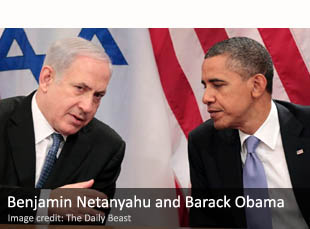
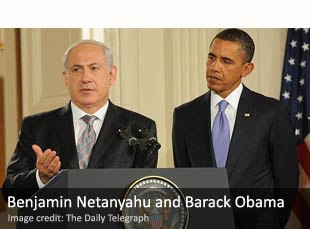
Nearly 200 former senior officials in Israel’s intelligence and security services called a public press conference on Sunday and denounced the foreign policy of Israeli Prime Minister Benjamin Netanyahu. The Israeli leader, who has been in office since 2009, has spoken out repeatedly against attempts by the United States and other Western countries to improve relations with Iran. As his critics held the press conference, the Israeli prime minister was leaving Tel Aviv for a controversial trip to the US, where he is scheduled to speak before a joint session of Congress. He was invited by senior Republicans in Washington, who, like Netanyahu, are sharply critical of US President Barack Obama’s policy on Iran. Netanyahu is also expected to address the annual conference of the American Israel Public Affairs Committee, which is widely considered the most powerful arm of the pro-Israel lobby in the US. But President Obama has refused to meet with the Israeli Prime Minister, whose trip to DC is seen as an attempt by the Republican Party to subvert the US leader’s foreign-policy agenda on Iran.

On Sunday, notable figures from Israel’s military and intelligence establishment gathered at a press conference to deliver sharp criticism against Netanyahu’s controversial trip to Washington and to blast the Israeli leader for allegedly injuring the Jewish state’s relationship with America. Among the numerous speakers at the press conference was the decorated veteran of Israel’s 1973 war, Major General Amnon Reshef. He appealed to Netanyahu to scarp his trip to the US and stop criticizing the Obama Administration “before it is too late”. The rift between Washington and Tel Aviv “cannot be accepted”, said Reshef, as it poses “clear and present dangers to the very security of Israel”.

Another speaker at the event, former deputy director of the Mossad, Major General Amiram Levin, told reporters that it was not easy for him to criticize Netanyahu, who had served under him in the Israel Defense Forces. But the Israeli prime minister’s actions left him with no choice, he said. Instead of working with President Obama to resolve the dispute with Iran, Netanyahu had chosen to “go there and stick his thumb in his eye”, said Levin. Such actions, aside from offending Obama, damage Israel’s image in the US among Americans. The latter, even when they are friends of Israel, said Levin, “are Americans first and foremost”. The former Mossad official concluded by saying that, without the strong support of Washington, Israel would be “far weaker strategically” and would allow Iran to get closer to building a nuclear arsenal.

A spokesman for the Likud party, which backs Prime Minister Netanyahu, dismissed the press conference as “a propaganda vehicle of the left”, whose campaign “is funded with millions of American dollars originating from left-wing circles abroad”.

News you may have missed #889

Malcolm RifkindBy IAN ALLEN | intelNews.org
►►US agency warns of domestic right-wing terror threat. A new intelligence assessment, circulated by the US Department of Homeland Security this month, focuses on the domestic terror threat from right-wing so-called “sovereign citizen” extremists and comes as the Obama administration holds a White House conference to focus efforts to fight violent extremism. Some federal and local law enforcement groups view the domestic terror threat from sovereign citizen groups as equal to —and in some cases greater than—the threat from foreign Islamic terror groups, such as ISIS, that garner more public attention.​
►►Chair of UK parliament’s spy watchdog resigns over corruption scandal. Sir Malcolm Rifkind, a British parliamentarian who chaired the Intelligence and Security Committee, has announced that he will stand down, after a video emerged showing him discussing with what he thought were representatives of a Chinese company, who asked him to help them buy influence in the British parliament. Rifkind offered to get them access to British officials in exchange for money. The people he was talking to, however, turned out to be journalists for The Daily Telegraph and Channel 4 News who recorded the conversations.
►►The case of the sleepy CIA spy. Although a federal judge ruled in favor of the CIA last week in a discrimination suit brought by an employee who claimed he was harassed out of his job because of his narcolepsy and race, the African-American man is back in court with another complaint. On December 4, “Jacob Abilt”, the pseudonym for the CIA technical operations officer who sued the CIA, filed a second, until now unreported suit, complaining that he was unjustly denied a temporary duty assignment to a war zone due to a combination of his race and narcolepsy.

Al Jazeera reporters not linked to mystery drones seen over Paris

Eiffel TowerBy JOSEPH FITSANAKIS | intelNews.org
Three Al Jazeera journalists, who were arrested yesterday for flying a drone over a Paris park, are not linked to the earlier mysterious sightings of drones flying over famous landmarks and security installations in the French capital, according to media reports. The bizarre sightings began last October, when security officials from France’s state-owned power company EDF filed a police complaint after noticing several mini-drones flying over at least seven nuclear power plants. Another 20 sightings of drones were documented in November, all of them seen flying over nuclear installations in various parts of France.

On January 20, another drone was seen hovering over the Elysee Palace in Paris, which is the official residence French President Francois Hollande. Less than a week later, several drones were observed flying over a maximum-security French naval base in Brittany, which houses nuclear submarines. At least ten more sightings were reported on Monday and Tuesday night this week, this time flying over important buildings and landmarks in Paris. Among the apparent surveillance targets of the mysterious drones were the embassy of the United States, the Eiffel Tower, the Invalides national military museum, the Place de la Concorde at the eastern end of the Champs-Élysées, and the Bastille monument. Security forces also reported drone sightings near major public thoroughfares leading in and out of the French capital. French authorities said on Tuesday that they were investigating the incidents under the assumption that they were linked.

On Wednesday, French police announced that three journalists working for Qatar-based television station Al Jazeera had been detained for piloting a drone that was seen flying over a park in Bois de Boulogne, an area located at the edge of the French capital. But initial reports in the media that the three Al Jazeera reporters were somehow linked to the mysterious drone sightings of earlier weeks appear to be dismissed by the authorities. The latter said on Wednesday that there was “no suggestion” of any connection between the journalists and the string of drone incidents over the French capital. As for explaining the drone sightings, French authorities say they have no idea whether it is the work of tourists, practical jokers, criminals or prospective terrorists. Government spokesman Stephane Le Foll told reporters on Wednesday that “people should not be worried, but vigilant”, as the incidents were “taken very seriously”.