UK to pardon genius wartime cryptanalyst convicted of ‘indecency’
July 24, 2013 4 Comments
 By IAN ALLEN | intelNews.org |
One of the greatest mathematical minds of modern times, who is widely considered the father of computer science and is credited with helping the Allies win World War II, is to receive a posthumous pardon by the British government, who in 1952 convicted him of homosexuality. Alan Turing, a mathematician and logician, with careers at the universities of Cambridge and Princeton, worked as a cryptanalyst for the British government during World War II. His work for Britain’s Government Code and Cypher School (GC&CS) at Bletchley Park, the British Armed Forces’ wartime joint codebreaking center, was instrumental in helping the British crack German military ciphers. Turing is personally credited with devising a complex method for compromising the Enigma machine, a highly secretive message-encoding device used by the German military and intelligence services. In 1952, while working for the Department of Mathematics at the University of Manchester, Turing was charged with “gross indecency” under Section 11 of the Criminal Law Amendment Act of 1885, which criminalized homosexuality. After pleading guilty to having a sexual relationship with a 19-year-old unemployed man, Turing was convicted and given a choice of imprisonment or undergoing “chemical castration”. The latter was a hormonal treatment based on injections of synthetic estrogen, aimed at reducing a person’s sexual drive. Turing chose the latter option, which rendered him impotent and caused massive chemical imbalance in his brain. Read more of this post

 By JOSEPH FITSANAKIS | intelNews.org |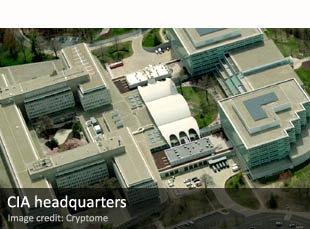














 intelNews.org
CIA finances geoengineering study on climate change
July 25, 2013 by Joseph Fitsanakis 2 Comments
The United States Central Intelligence Agency (CIA) is among the principal funding bodies of a scientific research program on using geoengineering to slow down or halt climate change. The 21-month $630,000 study will be administered by the US National Academy of Science (NAS). Alongside the CIA, the project is funded by the National Oceanic and Atmospheric Administration (NOAA) and the National Aeronautics and Space Administration (NASA). The science of geoengineering encompasses techniques of large-scale intervention on the Earth’s climatic system, aimed at controlling solar radiation and removing carbon dioxide from the environment. Its ultimate goal is to reduce global warming by removing a portion of greenhouse gasses from the atmosphere and by causing the planet to absorb reduced amounts of solar radiation. The NAS study will be the first one of its kind at the Academy to be financially backed by an intelligence agency. In addition to exploring technical ways of altering the course of climate change, the study aims to evaluate the implications of geoengineering efforts on international security and American national security in particular. The CIA’s interest in climate science is not new. Since the middle of the last decade, intelligence agencies have shown interest in the national security ramifications of climate change, as well as in climate change negotiations between governments. In 2009, the CIA opened its Center on Climate Change and National Security, a small unit led by senior specialists from the Agency’s Directorate of Intelligence and the Directorate of Science and Technology. Read more of this post
Filed under Expert news and commentary on intelligence, espionage, spies and spying Tagged with academic research, CIA, CIA Center on Climate Change, climate change, Edward Price, NASA, News, NOAA, United States, US National Academy of Science