News you may have missed #654

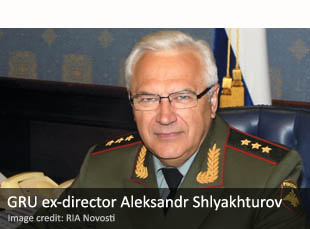
Aleksandr ShlyakhturovBy IAN ALLEN | intelNews.org |
►►Anonymous hacks intel analysis firm StratFor. The loose-knit hacking movement Anonymous claimed Sunday via Twitter that it had stolen thousands of credit card numbers and other personal information belonging to clients of intelligence analysis firm Stratfor. The company had apparently failed to encrypt its customers’ credit card account information. The hackers announced their intention to use the credit cards for charitable donations.
►►CIA Inspector General clears assistance with NYPD. Back in August, The CIA denied allegations by the Associated Press that it helped the New York Police Department conduct covert surveillance on New York Muslims. The agency said the report “mischaracterized the nature and scope” of the CIA’s support for the NYPD. Now a report by the office of the CIA Inspector General, the CIA’s internal watchdog, has concluded that there was “no evidence that any part of the agency’s support to the NYPD constituted ‘domestic spying’”. The Associated Press notes that it is not clear if this report opens the door for other municipal police departments nationwide to work closely with the CIA in the war on terrorism.
►►Russia replaces head of military spy agency. After denying initial rumors, Russia’s Defense Ministry said on Monday that “Major General Igor Sergun has been appointed head of the GRU [Russia’s Main Intelligence Directorate] through a Kremlin decree”. Sergun replaces Aleksandr Shlyakhturov, who had spearheaded a shake-up of the service since his appointment in 2009. The state RIA Novosti news agency quoted a ministry spokesman suggesting that Shlyakhturov had reached retirement age. No other reason was given for the move. Incidentally, if you are wondering how spies are faring in Dmitri Medvedev’s and Vladimir Putin’s administration, read this enlightening analysis by Mark Galeotti, Professor of Global Affairs at New York University.

South Korea to buy from France, after US delays sale of spy planes

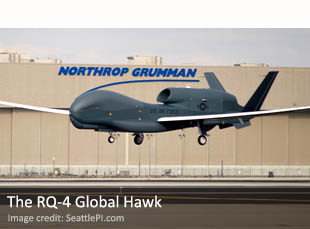
RQ-4 Global HawkBy JOSEPH FITSANAKIS | intelNews.org |
The United States has unexpectedly delayed a previously agreed sale of spy drones to South Korea, prompting the Asian country to announce it will begin purchasing spy planes from France. The South Korean military has been under increasing pressure to improve its intelligence reconnaissance capabilities since last year, when North Korean forces opened fire at South Korea’s Big Yeonpyeong island, killing four and injuring over a dozen people. But an earlier agreement with Washington to supply Seoul with RQ-4 Global Hawk high-altitude surveillance spy planes, appears to have been derailed, after the Pentagon failed to approve the sale. South Korea’s state-run Yonhap news agency quoted an anonymous “government source” who said that Seoul had expected to receive the unmanned drones, built by US defense contractor Northrop Grumman, by 2015. But the sale cannot be completed without official approval by the US Department of Defense, which “has yet to send a letter of agreement” for the planned transaction. The South Korean government source did not explain why the US government appears to be backing out of the deal. But US sources tell intelNews that Washington’s move may be “of a punitive nature”, intended to penalize South Korea for challenging Northrop Grumman’s actions in the Korean Peninsula. IntelNews readers may remember a little-reported incident in November of 2009, when the government in Seoul ordered the arrest of two former South Korean army colonels, identified only as “Hwang” and “Ryu”, for allegedly leaking South Korean defense secrets to Northrop Grumman. The two worked for the Security Management Institute, a Seoul-based intelligence think-tank with strong connections to South Korea’s armed forces. According to the indictment by the prosecutor, Hwang and Ryu gave Northrop Grumman classified information on hardware purchase plans and operations of South Korea’s navy and coast guard. Read more of this post

News you may have missed #654

Abdel Hakim Belhaj►►Libyan military commander sues British intelligence. Just as he said he would, Abdel Hakim Belhaj, who commands the new Libyan military forces in Tripoli, has sued Britain for its role in his rendition into imprisonment and torture at the hands of Muammar Gaddafi’s regime. He said he resorted to legal action after waiting in vain for the British government to offer an apology for his seven years spent in the jails of the secret police.
►►Argentine Admiral fired over espionage scandal. The head of the Argentine Navy, Admiral Jorge Godoy, has stepped down after being accused of illegal espionage. He has been indicted for alleged practices of “domestic intelligence” –which are prohibited by Argentina’s laws– against political leaders and of human rights activists, in the years between 2003 and 2006.
►►US intelligence warned of strive after US Iraq pullout. This is what Reuters news agency reports, citing anonymous sources inside the US government. Then again, US intelligence agencies warned in 2002 of increasing strife in case of a US invasion in Iraq, and nobody in government listened to them. So why would anyone listen to them now?

Analysis: The strange world of cyberspy vendor conferences

ISS WorldBy JOSEPH FITSANAKIS | intelNews.org |
It is common knowledge among intelligence observers that espionage activity around the world is on the increase, having in some cases surpassed Cold-War levels. The main facilitator of this phenomenon is technological, namely the ease of access to classified information afforded by relatively safe cyberespionage techniques. In our 21st-century, therefore, the spy v. spy game takes place largely online. Ironically, however, many of the government agencies engaged in offensive cyberintelligence operations against each other buy the required software and hardware from the same vendors. The latter are private companies, headquartered in Milan, London, Johannesburg, Montreal, and other cities around the world, which periodically participate in industry trade shows. These gatherings are eerie, secretive meetings, frequented by international spies representing various governments, and are strictly closed to outsiders. Vernon Silver, of Bloomberg, which has done an admirable job lately tracking the operations of these secretive vendors, has penned a fascinating exposé of one such bizarre trade show, called ISS World. Known informally as ‘Wiretappers Ball’, ISS (short for Intelligence Support Systems) World convenes several times a year in various cities around the world. One recent show, which took place in Malaysia, hosted nearly 1,000 attendees from 56 countries, writes Silver: “unlike trade shows, this one had no social events [and] no corporate-sponsored cocktail parties”. Instead, merchants of communications interception technologies offered demonstrations to agents of various governments, of what is called “offensive IT intelligence”. These demonstrations, conducted by appointment only in darkened conference rooms, center on technologies that can hack cell phones, break into email accounts, unscramble encrypted Skype calls, and surreptitiously access targeted web cams. Read more of this post

News you may have missed #653: India edition

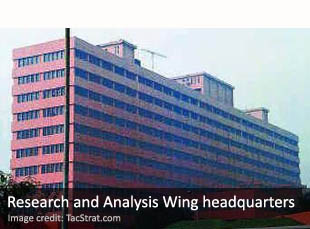
Research and Analysis WingBy IAN ALLEN | intelNews.org |
►►India’s external intel agency gets wiretapping powers. India’s government has given the country’s external intelligence agency, the Research and Analysis Wing (RAW), the right to intercept domestic phone calls, emails and voice and data communications. This is the first time that RAW has been authorized to intercept communications inside the country. Should Indian citizens be bracing for more political policing?
►►India uncovers alleged Pakistan honey trap operation. A lieutenant colonel in the Indian Army was reportedly caught in a ‘honey trap’ by Pakistani intelligence agencies, as a result of which he was forced to spy for them against Indian interests, according to Indian media. The officer was allegedly in Bangladesh this past summer to attend a course at a military academy, when he was trapped by Pakistan’s Inter-Services Intelligence (ISI), sources said. What is it with Indian government employees and honey trap operations?
►►Indian arrested for spying for Pakistan. Indian police in Rajasthan said it arrested Pawan Kumar Sharma, a clerk working at the regional Sub-Divisional Magistrate’s office in Suratgarh town, on charges of spying for Pakistan. Authorities said Sharma is suspected of spying for Pakistan’s Inter-Services Intelligence (ISI) directorate for the past year-and-a-half, using a prepaid cell phone provided by the ISI.

Half of all IRA leaders were government spies, report claims

Ian HurstBy JOSEPH FITSANAKIS | intelNews.org |
A report to be presented before an Irish government inquiry states that nearly half of the leadership of the Provisional Irish Republican Army (PIRA) during the ‘Troubles’ of the 1960s and 1970s consisted of informants working for British or Irish intelligence services. The 24-page report is part of a larger dossier of evidence that is soon to be presented before the Smithwick Tribunal, a judicial inquiry into the 1989 killing by the Provisional IRA of two police officers of the Royal Ulster Constabulary (see previous intelNews coverage here). The evidence dossier has reportedly been prepared by Ian Hurst, former member of the Force Research Unit (FRU), a secretive body within the British Army’s Intelligence Corps, tasked with running agents inside militant groups. Hurst, who worked in the Intelligence Corps from 1981 to 1990, was responsible for handling informants and agents inside Irish paramilitary groups, including the Provisional IRA. He is believed to be the first-ever member of the FRU to have spoken publicly about his experience. In the report, which was leaked to The Belfast Telegraph, Hurst suggests that approximately one in every four volunteers of the Provisional IRA was an agent of an intelligence organization, and that among leading members this number increased to one in two. Among them was allegedly the British agent codenamed STAKEKNIFE, identified by some as Freddie Scappaticci, a senior member of the Provisional IRA Northern Command’s Internal Security Unit (ISU), tasked with counterintelligence operations (Scappaticci denies these claims). Read more of this post

News you may have missed #652

Amir Mirzaei HekmatiBy IAN ALLEN | intelNews.org |
►►Kremlin accused of covert tactics against opposition. The Kremlin says it will allow opposition groups to hold rallies, but cases of alleged preemptive arrests and phone-tapping show that it may be still seeking to defeat the protest movement. For previous intelNews coverage of civil liberties in Russia see here.
►►Iran releases two Kuwaitis accused of spying. Iran’s semi-official Mehr news agency says that two Kuwaitis detained In Iran for spying last month have been cleared of their charges and released. The report quoted Iran’s ambassador to Kuwait, Ruhollah Qahremani, as saying the men had illegally worked as journalists in Iran while traveling on tourist visas, but initial speculation that they were spies “had been wrong”.
►►US sources deny spy charges for American detained in Iran. Amir Mirzaei Hekmati (pictured), from Arizona, who has been captured in Iran allegedly on a CIA mission, has not received any intelligence training from the US military, according to Pentagon sources. Also, one of Hekmati’s colleagues claims the Iranian-American helped develop an electronic translator for US troops but “wouldn’t have been involved in espionage”.

Who is behind mystery spy devices dropped over Syria?

Radio transmitters found in Afrin, SyriaBy JOSEPH FITSANAKIS | intelNews.org |
On December 14, residents of a small town in northern Syria reported seeing unidentified aircraft circling overhead, and dropping several small items attached to mini-parachutes. Two days ago, one local resident, Adnan Mustafa, posted on Facebook several photographs of some of these items, which were found scattered around the area. The gadgets, pictured here, look suspiciously like surreptitious listening devices. Residents say the question is: who dropped them, and why? The devices were found in the hills around Afrin, a predominantly ethnic-Kurdish town 20 miles south of the Syrian-Turkish border. Local townsfolk said the flight patterns of the planes observed on December 14 resembled those of previous sightings of Turkish aircraft, which routinely invade Syrian airspace before returning to the Turkish air base in Incirlik, about 100 miles north of Afrin. Syrian newspaper Al-Hakikah (The Truth), which supports the opposition Syrian National Council for Truth, Justice and Reconciliation, said the suspected spy gadgets weigh about 90 grams each and bear “Made in Germany” labels, as well as “GRAW DFM-06” inscriptions. Graw is a Nuremberg-based German company that produces radiosondes, small radio transmitters used in weather balloons, that measure various atmospheric parameters and transmit them to fixed receivers. But Al-Hakikah reports that the devices found in Afrin seem to transmit GPS coordinates, and appear to have been modified to intercept radio communications. Some suspect that the devices are aimed at eavesdropping on the communications of Syrian government troops and of Syrian Air Force planes, which are engaged in an increasingly bloody conflict against the opposition Syrian National Council. Read more of this post

News you may have missed #651

Chris VanekerBy IAN ALLEN | intelNews.org |
►►Israel defense minister forbids spy official’s lecture. Israel’s Defense Minister Ehud Barak has refused to allow the head of research for Military Intelligence, Brigadier General Itai Baron, to lecture at the annual conference of Israel’s ambassadors unless the lecture is deemed ‘unclassified’. The conference deals with diplomatic and security issues and public affairs, and the lectures are given by senior Israeli government and military officials.
►►CIA agrees to look into OSINT FOIA request. Open Source Works, which is the CIA’s in-house open source analysis component, is devoted to intelligence analysis of unclassified, open source information. Oddly enough, the directive that established Open Source Works is classified. But in an abrupt reversal, the CIA said that it will process a Freedom of Information Act request by intelligence historian Jeffrey Richelson for documents pertaining to Open Source Works.
►►Dutch former pilot convicted of espionage. A court in The Hague has sentenced former F-16 pilot Chris Vaneker to five years in jail after finding him guilty of selling state secrets to a Russian diplomat. Vaneker wanted half-a-million euros for the information he was trying to sell to the military attaché at the Russian embassy in The Hague. The pilot and the Russian diplomat were arrested in March.

United States urges Iran to release alleged CIA spy

Amir Mirzaei HekmatiBy JOSEPH FITSANAKIS | intelNews.org |
The United States has called on Iran to release an American citizen of Iranian descent, who appeared on Iranian state TV last Sunday and acknowledged that he was an operative of the Central Intelligence Agency. In the pre-recorded interview, a man identifying himself as Amir Mirzaei Hekmati, from Arizona, said he was arrested by Iranian counterintelligence while on a CIA mission. Speaking calmly in Farsi and English and —as Britain’s Daily Telegraph newspaper put it— appearing to be “not under duress”, Hekmati said the joined the US Army in 2001 and served in Iraq. He also said that he was trained “in languages and espionage” while in the US Army, and eventually worked for the Defense Advanced Research Projects Agency, the US Pentagon’s research and development wing. In 2009, after nearly a decade of intelligence training, he said he was recruited by the CIA and was specifically prepared for what intelligence operatives sometimes refer to as a ‘dangling operation’ in Iran.  The aim of the mission, said Hekmati, was to travel to Tehran, contact Iran’s Ministry of Intelligence and National Security, and pose as a genuine American defector wishing to supply the Iranians with inside information about American intelligence. His immediate task was to gain the trust of Iranian authorities by giving them some correct information, in order to set the stage for a longer campaign of disinformation aimed at undermining a host of Iranian intelligence operations. Read more of this post

Did Outside Spy Agencies Know About Kim Jong Il’s Death?

Kim Jong Il lies in state in PyongyangBy JOSEPH FITSANAKIS* | intelNews.org |
According to KCNA, North Korea’s state news agency, Premier Kim Jong Il died at 8:30 am on Saturday, December 17. However, government media did not announce the startling news until early Monday morning, that is, nearly 50 hours after the “Dear Leader’s” sudden passing. Assuming that North Korean reports of the time and location of Kim’s death are truthful, the inevitable question for intelligence observers is: did anyone outside North Korea receive news of Kim Jong Il’s death during the 50 hours that preceded its public announcement? In times like this, most Westerners tend to look at the Central Intelligence Agency, National Security Agency, MI6, DGSE, or any of the other recognizable acronyms that dominate American and European news reports. The reality is, however, that despite their often-mythical status, Western intelligence agencies tend to be limited in their global reach, which is usually heavily concentrated on selected adversaries, like Russia, or China. These agencies therefore tend to rely on their regional allies to get timely and accurate information on smaller nations that are often difficult to penetrate. In the case of North Korea, Western spy agencies depend heavily on actionable intelligence collected by South Korean and Japanese spies. Read more of this post

Announcement: intelNews gets down with social networking

Social networkingBy JOSEPH FITSANAKIS | intelNews.org |
This blog first boarded the social-networking train by joining Twitter, in June of 2009. Back then Leon Panetta was in the hot seat at the CIA, US troops (of the non-mercenary kind) were still in Iraq, Osama bin Laden was living the high life in exotic Abbottabad, and South Korean intelligence were trying to kill the North’s “dear leader”, Kim Jong-Il. We’ve since managed to post over 1,200 Tweets, and have attracted a microblogging community numbering a moderately respectable 600 members. If you haven’t signed up, you can do so, here. Today we’d also like to invite you to join our newest adventure in the land of social networking, by signing onto Facebook and becoming a member of our new breathtaking, awe-inspiring page, which is located here. Our grand plan is to use the new page as a way to interact with our readers on a more frequent basis, and to invite further feedback and discussion on issues of concern to intelNews readers. Check us out, and let us know of your thoughts. We also have a hip new channel on YouTube, where we post audiovisual content relating to our work, including our research and periodic media appearances. You can find the YouTube channel here. In case you didn’t know, you can also share or bookmark articles that appear on intelNews, you can subscribe to read intelNews in one of the popular readers out there, you can get intelNews articles on your email, and you can even place our headlines on your website or blog. So there. I think we’ve covered everything. Or, have we? If you have any suggestions or advice for our growing social-networking empire, get in touch.

News you may have missed #650

Robert BaerBy IAN ALLEN | intelNews.org |
►►US ex-DoD official says drone captured by Iran ‘seems fake’. Newspaper USA Today quotes an anonymous US former Pentagon official, who said that, according to video footage of the drone on display in Iran, not only is it the drone the wrong color, but also the welds along the wing joints do not appear to conform to the stealth design that helps it avoid radar detection.
►►Ex-CIA officer says collapse of CIA operations benefits Iran. The collapse of CIA operations in Lebanon, following Hezbollah’s unmasking of several CIA spies and the recent naming of the agency’s station chief, is a serious blow to the US’ ability to gather intelligence, says Robert Baer, a former CIA officer who operated in Lebanon in the 1980s.
►►Iran indicts 15 in alleged US-Israeli spy ring. An Iranian prosecutor announced on Tuesday that his government has indicted 15 people who allegedly spied on the Islamic Republic for the US and Israel. Tehran prosecutor Abbas Jafari Dolatabadi did not name the alleged spies, who are suspected of having ties to the American CIA and Israel’s Mossad intelligence agency. IntelNews readers may remember that, in May, Iran’s intelligence minister, Heidar Moslehi, announced the alleged discovery of a CIA-directed spy network in Iran of more than 30 people.

Does Iran have access to satellite jamming technology?

Iran displays captured US droneBy JOSEPH FITSANAKIS | intelNews.org |
A European intelligence official has said that Iran downed an unmanned American surveillance aircraft earlier this month by remotely sabotaging its satellite navigation system. The official, who has not been named, told The Christian Science Monitor that the Iranians used a state-of-the-art laser system to effectively “blind” the American spy satellite that guided the drone’s global positioning system (GPS). In doing this, Iran’s military was able to remotely skyjack the aircraft and assume control over its navigational system. The paper also published an exclusive interview with an Iranian electronic warfare specialist, who claimed he was part of a team that hacked into the drone’s communication frequency and reprogrammed its GPS data. Eventually, the Iranian specialists managed to cause the unmanned aircraft to switch into autopilot mode, and guided it to land relatively smoothly on Iranian territory, where it was eventually captured intact by Iranian authorities. If this is true, it will mark the first-ever indication that the Iranian state is in possession of sophisticated satellite jamming technology. In an important development, Iran’s Minister of Foreign Affairs, Ali Akbar Salehi, told Iran’s government-run IRNA news agency on Saturday that the American drone was brought down by Iranian armed forces, without any foreign assistance. If this is so, then does it mean that the Iranians developed the state-of-the-art jamming system themselves? Read more of this post

Spy agencies scramble for clues after North Korean leader’s death

Kim Jong IlBy JOSEPH FITSANAKIS* | intelNews.org |
Even though rumors had been rife for quite some time about North Korean leader Kim Jong Il’s worsening health, his death startled intelligence agencies the world over. In typical fashion, North Korean state media announced yesterday that “the dear leader” had died on Saturday onboard a train during one of his usual field trips, “due to immense mental and physical strain caused by his […] building of a thriving nation”. A period of national mourning has been declared in the country until December 29. In the hours following the startling announcement, which Time magazine dubbed “a nightmare before Christmas”, no unusual activity was observed in the North, while early Monday reports from North Korean capital Pyongyang stated that traffic was “moving as usual”. Moreover, despite longstanding rumors about Kim Jong Il’s ill health, few intelligence analysts in South Korea, Japan, or the United States have been observing overt signs of political instability, or a leadership crisis. However, despite the apparent calm in the North, intelligence agencies around the world have gone on high alert, led by those in South Korea, which has remained technically at war with the North since 1950.  South Korean President Lee Myung-bak reportedly placed the country’s military on emergency alert on Sunday, and has ordered government officials to remain in capital Seoul and “maintain emergency contact” with their office staff. French sources said that one of the first outcomes of an emergency National Security Council meeting that took place in Seoul on Sunday was to request that the American Pentagon, which maintains nearly 30,000 troops in South Korea, steps up aerial surveillance over the North. Japan has also stepped up its intelligence-gathering operations in North Korea, and its Prime Minister, Yoshihiko Noda, instructed his government to “closely share information” on North Korea with the United States, South Korea, and —notably— China. Read more of this post