News you may have missed #630
November 17, 2011 Leave a comment
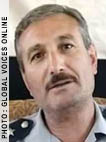
Riad al-Assad
►►Senior Syrian military defector in Turkey denies training troops. Colonel Riad al-Assad, who acts as head of Syria’s military defectors, has denied a news report that he crossed the border from Turkey to Syria to command troops loyal to the opposition force called the Free Syrian Army. “News reports that appeared on a number of Internet sites that I had crossed into Syria to command troops there are false. I am in Turkey at the moment, in a safe place,” he told the Turkey’s Anadolu Agency on Tuesday.
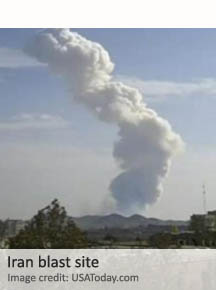
►►Iran says missile base blast was not caused by Mossad. Iran has insisted that last weekend’s huge blast at the Alghadir missile base at Bid Ganeh, 30 miles to the west of Tehran, was not carried out by Israel or the US, despite widespread reports that it was the work of the Israeli secret service, the Mossad. The explosion killed 17 of the country’s elite revolutionary guards, including Major General Hassan Moqqadam, a senior commander described as the pioneer of the regime’s missile programme.
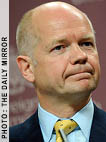
►►British official says MI6 foiled Libyan assassination plan. British intelligence foiled a plot by Colonel Muammar al-Gaddafi’s forces to assassinate Western diplomats and Libya’s revolutionary leadership, Britain’s Foreign Secretary has disclosed. In a rare speech about the secret services, William Hague said the Libyan intelligence service launched a “sustained effort” to conduct suicide and car bomb attacks against the National Transitional Council, but that “the attacks were prevented”.
 By JOSEPH FITSANAKIS | intelNews.org |
 By JOSEPH FITSANAKIS | intelNews.org |












 intelNews.org
Turf war between Mossad and Israel’s Foreign Ministry worsens
November 18, 2011 by Joseph Fitsanakis Leave a comment
Avigdor Lieberman
By JOSEPH FITSANAKIS | intelNews.org |
Israel’s foreign affairs minister has ordered his department’s employees to stop cooperating with the Mossad, according to media reports. Minister Avigdor Lieberman, one of Israel’s most hardline nationalist politicians, accuses the country’s covert operations agency of meddling in the tasks of Israel’s diplomatic community, while at the same time refusing to share its intelligence output with foreign affairs officials. According to The Washington Times, which cites the Hebrew-language edition of reputable Israeli newspaper Yediot Achronot, Mr. Lieberman’s decision was prompted by the Israeli Prime Minister’s move to entrust the country’s relations with Turkey to a Mossad official. Media reports state that the spy agency’s David Meidan has been dispatched by Benjamin Netanyahu to Turkey, in order to patch up the Jewish state’s anemic relationship with its once close regional ally. This has enraged the foreign affairs ministry’s leadership, which was already upset over salary discrepancies between diplomats and Mossad spies, as well as the latter’s chronic refusal to share intelligence with foreign policy planners. The friction between the Mossad and Israel’s diplomatic community goes back decades, but Lieberman’s controversial ascendance to Foreign Affairs Minister in 2009 intensified the turf war. At the beginning, Lieberman made calculated friendly gestures toward the Mossad, in one instance going as far as appointing a former Mossad official as Israel’s first-ever ambassador to Turkmenistan. But such moves quickly gave way to direct bureaucratic confrontations, which included direct strikebreaking action by Mossad officers, who assumed the duties of Foreign Affairs officials when the latter went on strike demanding better pay and work conditions. Read more of this post
Filed under Expert news and commentary on intelligence, espionage, spies and spying Tagged with Avigdor Lieberman, Israel, Israeli Ministry of Foreign Affairs, Mossad, News, turf wars