Iraqi spy chief warns of impeding ‘catastrophe’ as ISIS rebuilds Middle East network
November 19, 2019 Leave a comment
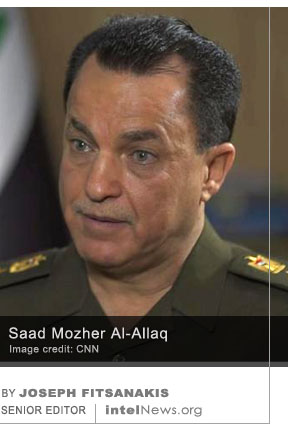 In a rare interview, the head of Iraq’s military intelligence has warned of an impending “catastrophe” as the Islamic State continues to edge ever-closer to rebuilding its networks of fighters and supporters in the Middle East. Lieutenant General Saad Mozher Al-Allaq, head of Iraq’s Military Intelligence Directorate, gave a rare interview to the American news network CNN, which was aired on Monday.
In his interview, General Al-Allaq claimed that his agency was able to intercept recent communications from senior operatives of the Islamic State —also known as the Islamic State of Iraq and Syria, or ISIS. The communications allegedly refer to “Operation BREAK DOWN THE FENCES”, which he said is a plan by ISIS to storm numerous prisoner of war camps that are located across northwestern Iraq and Kurdish- or Turkish-controlled northern Syria. These camps hold as many as 10,000 men, many of whom are believed to be ISIS fighters. Other camps hold nearly 100,000 women and children who are connected to male ISIS fighters. According to General Al-Allaq, ISIS seeks to rebuild its powerbase in the region by freeing and re-arming these prisoners.
In addition to guarding against the possibility of a mass exodus of alleged ISIS prisoners and their families, the Iraqi spy chief said that his force has been working with Turkish authorities to neutralize networks of ISIS operatives in Turkey. Several senior ISIS “emirs” —senior members of the organization, with significant political influence and funding power— were able to bribe smugglers to take them to Turkey, where they are currently reorganizing the militant group’s illicit networks. The Iraqi government recently notified Ankara of the whereabouts of nine such ISIS “emirs”, said Al-Allaq.
The Iraqi spy chief concluded his interview by warning of an impending “catastrophe”, should ISIS be able to implement Operation BREAK DOWN THE FENCES and rebuild its support base in the region. Representatives of the Turkish government told CNN that Ankara was looking into the Iraqis’ allegations of ISIS “emirs” operating inside Turkey.
► Author: Joseph Fitsanakis | Date: 19 November 2019 | Permalink
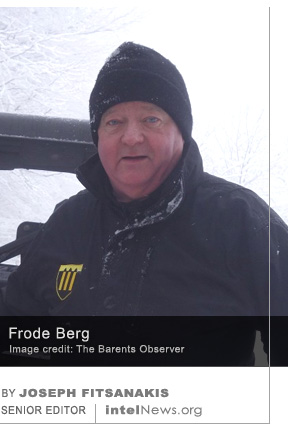 A rare three-way spy-swap has reportedly taken place between Russia and two North Atlantic Treaty Organization (NATO) members, Lithuania and Norway. Rumors of a possible exchange of imprisoned spies between the three countries first
 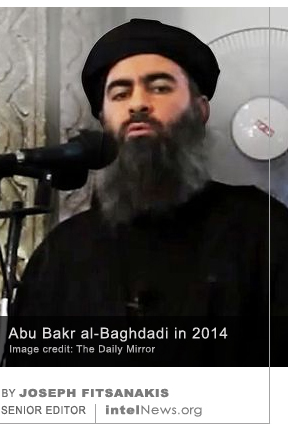 The Islamic State’s Syrian hideout that housed the group’s leader until his demise on October 26, was equipped with a frequently used internet connection, according to Arab media reports. Abu Bakr al-Baghdaid, the self-proclaimed caliph of the Islamic State, was killed by United States soldiers in Barisha, a village in the Syrian province of Idlib, which is located
 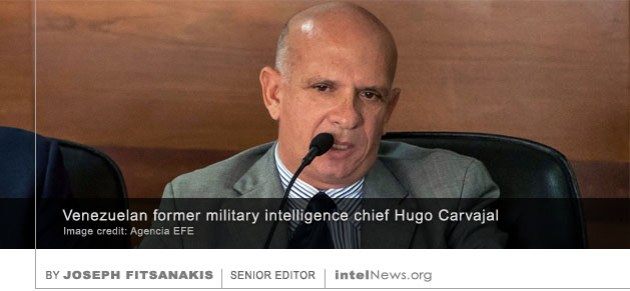 The former director of Venezuela’s military spy agency, who is wanted in the United States for drug trafficking, reportedly disappeared in Spain as authorities there were attempting to extradite him to Washington. Hugo Carvajal is a retired general and former diplomat, who was a member of the late Venezuelan President Hugo Chávez’s inner circle. From 2004 to 2011, under Chávez’s tutelage, Carvajal headed the Directorate General of Military Counterintelligence (DGCIM).
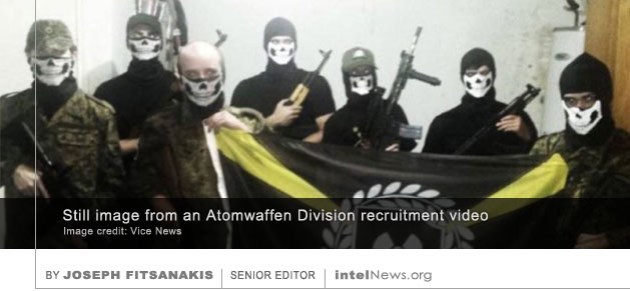 A data dump of unprecedented scale includes usernames, IP addresses and even the content of thousands of private chat logs stolen from an influential neo-Nazi website that is now defunct. The data belonged to IronMarch, which was founded in 2011 by Alexander Mukhitdinov, a Russian far-right activist using the online nom-de-guerre “Slavros”. In the nearly six years of its existence, the website featured some of the most extreme and uncompromising far-right content on the World Wide Web.
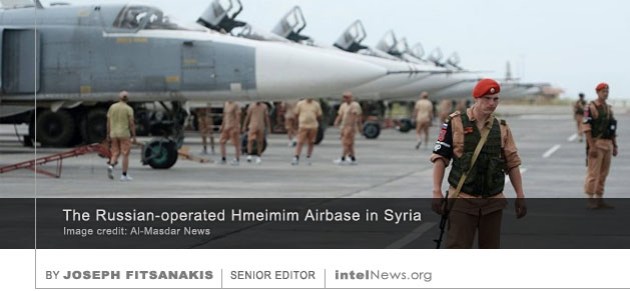 Authorities in Turkey were concerned that Russia might bomb the presidential palace in Ankara in 2015, to retaliate against the downing of a Russian fighter jet by the Turkish military, according to an intelligence report. On November 25 of that year, a Russian Sukhoi Su-24M attack bomber was shot down by a Turkish F-16 fighter jet over the Syrian-Turkish border. Ankara claimed that the Russian aircraft had violated Turkish airspace for longer than five minutes and had failed to respond to 10 warning messages communicated by radio. By the time the Russian plane was fired upon it was nearly 1.5 miles inside Turkish airspace, according to Turkey’s Ministry of Defense. But the Kremlin claimed that the downed aircraft had been flying a mile south of the Turkish border when it was shot down.
 A day after the United States Department of Justice charged two Saudi citizens with engaging in espionage on American soil, Saudi officials hosted the director of the Central Intelligence Agency in Riyadh, reportedly to discuss “the longstanding Saudi-US partnership”.
 United States authorities have charged two employees of the social media firm Twitter and a member of staff of Saudi Arabia’s royal family with spying for Riyadh. The Federal Bureau of Investigation filed a complaint on Wednesday in San Francisco, accusing the three men of “acting as unregistered agents” for Saudi Arabia. The phrase is used in legal settings to refer to espionage.
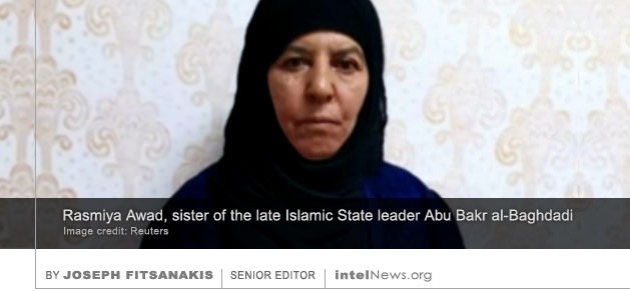 A Turkish government official has described the arrest of the sister of the late Islamic State leader Abu Bakr Al-Baghdadi as “an intelligence goldmine”. The official was referring to the arrest of Rasmiya Awad, an Iraqi citizen, who was reportedly arrested on Monday. Little is known about al-Baghdadi’s sister. She is believed to have been born in 1954, which makes her 65 years old this year.
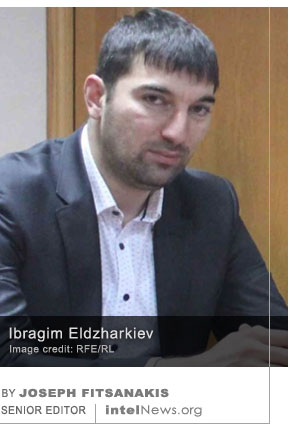 A senior counter-terrorism officer in the Russian police has been gunned down along with his brother in a downtown Moscow street, in what authorities describe as a contract killing. One of the two victims has been named as Ibragim Eldzharkiev (pictured), who headed the Russian Interior Ministry’s Anti-Extremism Center in the Republic of Ingushetia in the Russian Caucasus. His younger brother was reportedly also killed in the attack.
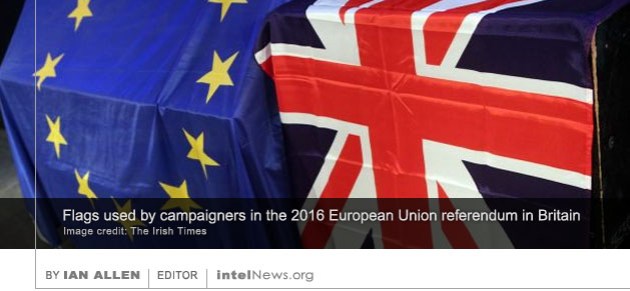 The British government has been accused by opposition parties, and by pro-remain conservative figures, of trying to conceal a report documenting Russian meddling in British politics. The report documents the results of an investigation into Russia’s alleged attempts to influence the outcome of the 2017 general election in the United Kingdom, as well as the result of the 2016 European Union referendum, which ended in victory for the pro-Brexit campaign.
 The Facebook-owned company WhatsApp has filed a lawsuit against a leading Israeli technology firm, accusing it of enabling governments around the world to spy on 1,400 high-profile users, including politicians and diplomats. The Reuters news agency
 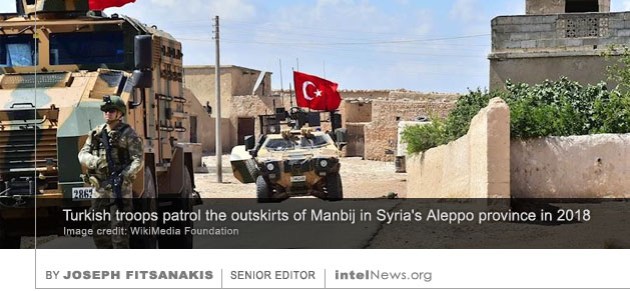 In 2011, the discovery of Osama bin Laden’s hideout in Abbottabad raised questions about Pakistan’s knowledge of his whereabouts. Today it is hardly controversial to suggest that at least some elements in the Pakistani government must have been aware of bin Laden’s location. Last week’s discovery of Abu Bakr al-Baghdadi in a region of Syria controlled by Turkey inevitably raises similar questions about Ankara’s role in the Syrian conflict and its relationship with the Islamic State.
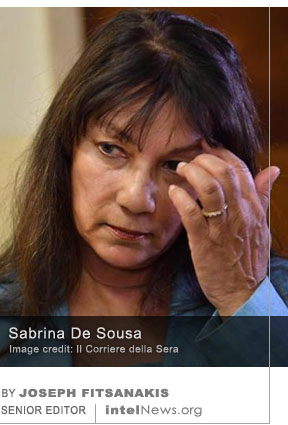 A former officer in the United States Central Intelligence Agency, who was convicted of involvement in the 2003 abduction of a Muslim cleric in Italy, says she fled Europe for the United States in fear of her safety. Sabrina De Sousa, 63, was a diplomat at the US consulate in Milan, Italy, when a CIA team abducted Hassan Mustafa Osama Nasr from a Milan street in broad daylight. Nasr, who goes by the nickname Abu Omar, is a former member of Egyptian militant group al-Gama’a al-Islamiyya, and was believed by the CIA to have links to al-Qaeda. Soon after his abduction, Nasr was renditioned to Egypt, where he says he was brutally tortured and raped, and held illegally for years before being released without charge.






 intelNews.org
Turkey arrests German embassy lawyer on espionage charges
November 21, 2019 by Joseph Fitsanakis 2 Comments
The newsmagazine said the lawyer had been hired by the German embassy to obtain information about Turkish citizens who had applied for political asylum in Germany. German authorities would regularly give the lawyer identifying information about asylum applicants. The lawyer would then verify with Turkish police that the applicants had a blank criminal record and were not wanted for participation in criminal activity. The German embassy would then forward the information collected by the lawyer to the German Federal Office for Migration and Refugees (known in Germany as BAMF), which would subsequently approve or reject the asylum applications.
Following the lawyer’s arrest by the Turkish National Intelligence Service (MİT), German authorities are concerned that the Turkish government has seized identifying information on at least 50 Turkish applicants for political asylum in Germany. Some of these applicants are reportedly members of Turkey’s persecuted Kurdish minority. Others are alleged supporters of Fethullah Gülen a United States-based former political ally of Turkish President Recep Tayyip Erdoğan, who Turkey accuses of having orchestrated the failed 2016 military coup against Erdoğan.
The German Foreign Office has described the lawyer’s arrest as “incomprehensible” and has reportedly warned those asylum seekers affected by it that their safety may be endangered. Meanwhile, German diplomats are engaged in high-level talks with the Turkish government to secure the lawyer’s release, according to Spiegel. The effort is being led by no other than Martin Erdmann, a veteran diplomat who is serving as Germany’s ambassador to Turkey.
► Author: Joseph Fitsanakis | Date: 21 November 2019 | Permalink
Filed under Expert news and commentary on intelligence, espionage, spies and spying Tagged with espionage, German embassy in Turkey, Germany, Martin Erdmann, MİT (Turkey), NATO, News, Turkey