Details of Albania’s clandestine operatives posted online due to admin error
December 19, 2018 Leave a comment
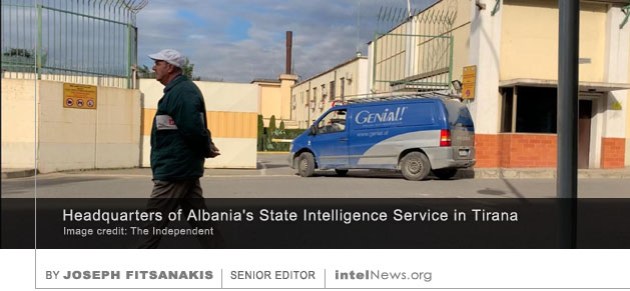 Sensitive information about the identities and activities of Albania’s intelligence operatives appeared online, apparently due to an administrative blunder. The incident has reportedly alarmed officials at the North Atlantic Treaty Organization (NATO), of which Albania has been a member since 2009. British newspaper The Independent, which reported the incident earlier this month, described it as “a dangerous breach that could have international consequences”. The paper quoted a former officer in the United States Central Intelligence Agency who described the breach as “the type of bureaucratic catastrophe that could put lives at risk”.
Until the end of the Cold War, Albania was a communist state aligned with China. Since 1991, however, the former communist country has tried to align itself with the West. As part of this strategy, successive Albanian administrations have tried to combat widespread nepotism and government corruption. A significant aspect of this ongoing anti-corruption campaign involves the daily publication of the financial activities of Albanian government agencies. This information is available in searchable spreadsheets on the website of Albania’s Ministry of Finance and Economy. Recently, however, Vincent Triest, a researcher with British-based investigative website Bellingcat, noticed that the publicly available spreadsheets contained information about the State Intelligence Service, Albania’s spy agency, known as SHISH. In reading through the spreadsheets, Triest was able to find the names, official job titles, salaries and monthly expenses of at least eight senior members of SHISH. Most of them, said Triest, serve under official (diplomatic) cover at Albanian embassies and consulates in Greece, Italy, Belgium, Serbia, and elsewhere in Europe.
In a follow-up article posted yesterday on Bellingcat’s website, Triest said that the spreadsheets on the website of the Albanian Finance Ministry contain names and national identification records of SHISH officers, the agency field offices where they are serving, and even the make and model of the vehicles they drive along with their license plate numbers. A separate spreadsheet lists the construction contractors, plumbers and electricians used by various SHISH field offices, as well as the mechanics that are contracted to service the agency’s vehicles. Remarkably, at least two of the exposed SHISH officers are serving in “sensitive posts at NATO headquarters in Brussels”, writes Triest. This has raised alarms at NATO, as Albanian intelligence officers with access to NATO’s secrets could now become susceptible to possible recruitment by adversary spy agencies, said The Independent. The paper added that it notified the Albanian government of the security breach, and was told that the sensitive data would be promptly removed from government websites.
► Author: Joseph Fitsanakis | Date: 19 December 2018 | Permalink
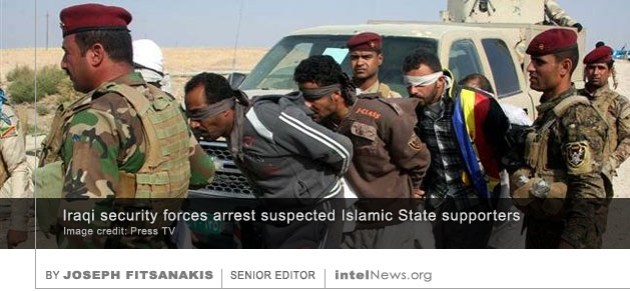 A campaign of revenge by Iraq’s Shiite-dominated government against Sunni Arabs in regions once controlled by the Islamic State is aiding Islamists and fueling another rebellion in the country, according to a new report. In 2014, the meteoric rise of the Islamic State of Iraq and Syria —ISIS, later renamed to Islamic State— was largely aided by the strong belief among Iraqi Sunnis that they were second-class citizens in a Shiite-dominated Iraq. In addition to its Sunni credentials, the Islamic State was also able to appeal to Iraqi Sunnis by portraying itself as pious, efficient and trustworthy. This image was in a sharp contrast to the widespread provincial view of politicians in Baghdad as corrupt, indifferent and ineffectual. Popular support for the Islamic State among Iraq’s Sunni Arab minority took the Iraqi government by surprise and almost enabled the militant group to conquer Baghdad in 2015.
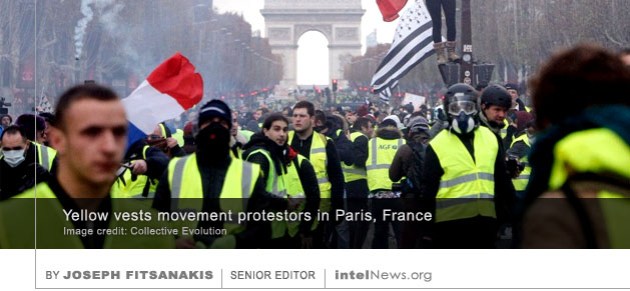 Intelligence and security services in France are investigating whether Russian involvement on social media and other platforms is playing a role in amplifying the so-called ‘yellow vests’ movement. Known in French as le mouvement des gilets jaunes, the campaign began online in May of this year as a popular protest against rising fuel prices and the high cost of living in France. In mid-November, the movement made its first public appearance with large demonstrations that have continued every weekend since then. Yellow vest protestors claim that tax increases are disproportionally affecting working- and middle-class people and that everyday life is becoming economically unsustainable in France. Some of the demonstrations have turned violent, and so far at least eight people have died as a result. The ensuing crisis has become the most significant threat to the government of Emmanuel Macron, as the protests are increasingly evolving into an anti-Macron rallies.
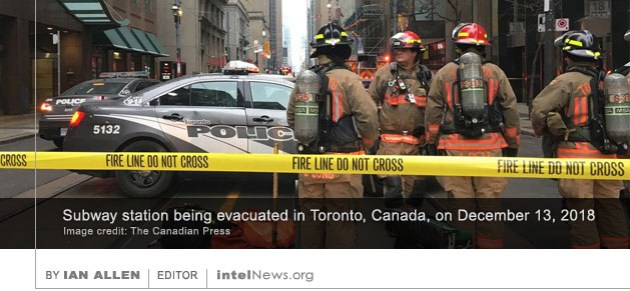 An unprecedented “flood of bomb threats” prompted hundreds of evacuations and closures of private buildings, transport hubs and offices in four countries on Thursday, causing confusion and in some cases panic. The threats —which numbered in the hundreds— were issued throughout the day Thursday against businesses, schools, hospitals and media companies in the United States, Canada, New Zealand and the United Kingdom. It is the first time in history that such a large wave of bomb threats was issued against so many targets internationally.
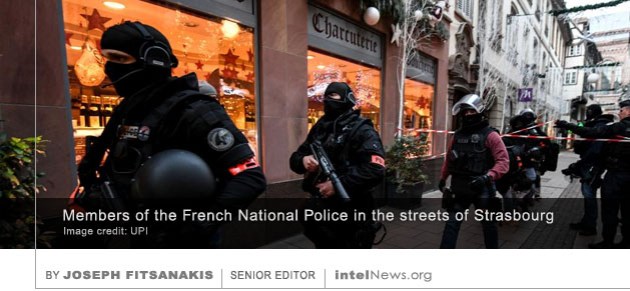 The terrorist attack in the French city of Strasbourg on December 11 raises important security concerns for Europe’s ability to defend itself against a
  Russia “paved the way” for last November’s seizure of Ukrainian Navy ships by launching a major cyber attack and disinformation campaign aimed at Ukraine, according to a cyber security firm and the European Union. In what has become known as the Kerch Strait incident of November 25, border service coast guard vessels belonging to the Russian Federal Security Service (FSB) opened fire on three Ukrainian Navy ships that were attempting to enter the Sea of Azov through the Kerch Strait. All three Ukrainian vessels, along with crews totaling 24 sailors, were captured by the Russian force and remain in detention. Ukraine condemned Russia’s action as an act of war and declared martial law in its eastern and southern provinces. But Moscow said the incident had been caused by a provocation by the Ukrainian government, in a desperate effort to increase its popularity at home. Meanwhile, the three Ukrainian ships and their crews remain in Russia.
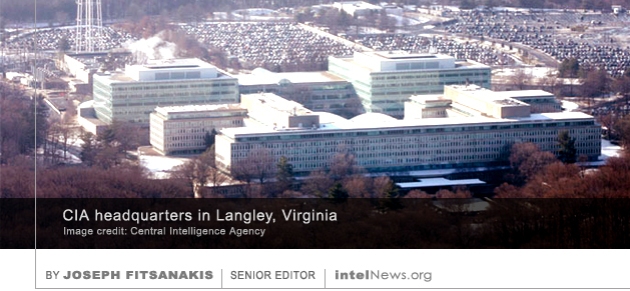 In a surprising departure from established practice, the United States Central Intelligence Agency has publicized the name of its incoming head of operations. Beth Kimber, a 34-year veteran of the Agency, will become the first woman in the CIA’s 70-year history to lead the Directorate of Operations. Officers in the Directorate of Operations, formerly known as the National Clandestine Service, spend their careers recruiting foreign agents to spy for the United States, while also carrying out covert operations around the world. This is also the first time that the CIA has chosen to publicly identify its Deputy Director for Operations —Kimber’s official title, abbreviated as DDO. Previous DDO have been undercover officers whose namse have remained undisclosed. Kimber’s promotion was
  A Russian former police officer, who is serving a prison sentence in Russia for having spied for the United States Central Intelligence Agency, has written an open letter to President Donald Trump, asking to be freed. Yevgeny A. Chistov was arrested by the Russian Federal Security Service (FSB) in 2014 on charges of spying for Washington. During his trial, he admitted having been recruited by the CIA when he worked as an officer in the police, Russia’s federal law-enforcement agency, which operates under the Ministry of Internal Affairs. Russian state prosecutors accused him of having established contact with the CIA in 2011. In 2015, he was
 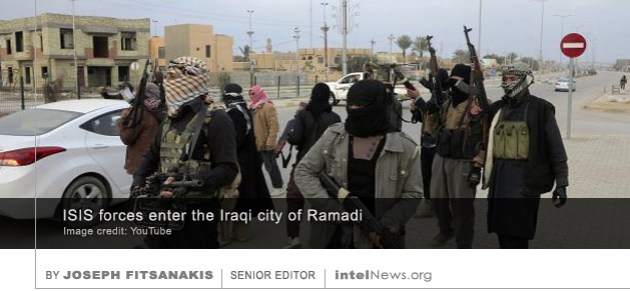 A report from the United States Department of Defense warns that the Islamic State is swiftly returning to its insurgent roots, as observers in Iraq and Syria caution that the group is witnessing a revival. It has been four years since the Islamic State —known then as the Islamic State of Iraq and Syria, or ISIS— conquered much of eastern Syria and more than a third of Iraq’s territory. But by the end of 2017, virtually the entirety of ISIS’ self-styled ‘caliphate’ had been obliterated by an ‘unholy alliance’ of US-backed Iraqi government forces, Iranian-supported Shiite militias, Kurdish guerillas and Western airpower.
 The daughter of the founder of Huawei Technologies, one of the world’s leading telecommunications hardware manufacturers, has been arrested in Canada, reportedly at the request of the United States. Meng Wanzhou (pictured, also known as Sabrina Meng) serves as Huawei’s deputy chair and chief financial officer. She is the daughter of Ren Zhengfei a former officer in the Chinese People’s Liberation Army, who established the company in 1988 and has since amassed a personal fortune estimated at $3.5 billion. By virtue of her family background and position in Huawei, Meng is often
 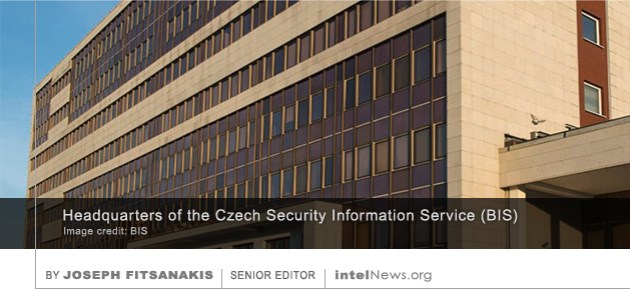 The main domestic intelligence agency of the Czech Republic has accused Russia of “the most serious wave of cyberespionage” to target the country in recent years. The claim was made on Monday in Prague by the Security Information Service (BIS), the primary domestic national intelligence agency of the Czech Republic. Details of the alleged cyberespionage plot are included in the BIS’
 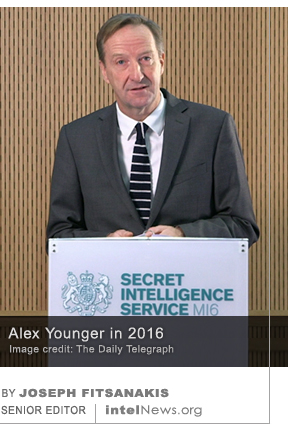 The director of Britain’s Secret Intelligence Service —known as MI6— has outlined the parameters of a new, “fourth generation of espionage”, which he said is needed to combat the “threats of the hybrid age”. Alex Younger, 55, is a career intelligence officer who joined MI6 in 1991, after serving in the British Army. He served as chief of global operations —considered the number two position at MI6— before being
  Saudi Crown Prince Mohammed bin Salman sent at least eleven text messages to the man in charge of the 15-member hit team that killed journalist Jamal Khashoggi last month, according to a classified report produced by the United States Central Intelligence Agency. The CIA report was leaked to The Wall Street Journal, which said in a
  The United States government plan to impose tighter visa restrictions and wider background checks on Chinese nationals studying at American universities, over espionage concerns. The news follows reports earlier this year that the administration of US President Donald Trump considered banning all Chinese nationals from studying at American universities. In October of this year, The Financial Times






 intelNews.org
Cyber spies accessed thousands of European Union diplomatic cables
December 20, 2018 by Ian Allen 1 Comment
The compromised cables come primarily from the European Union’s COREU communication network, a Telex-based network that uses teleprinters to exchange text-based messages. The European Union uses the COREU network to transmit information that is classified “limited” or “restricted” between officials representing the executive governments of the European Union’s member states, members of the European Commission, foreign-ministry officials, and other approved parties. Top-secret information (“tres secret” in European Union parlance) is typically not shared on the COREU network. Consequently, the hacked cables contain mostly low-level information. That does not mean, however, that their access by at least one adversary power does not represent a serious security breach. Area 1 said that its forensic examination of the method used by the hackers reveals a set of cyber-espionage techniques that are closely associated with the Chinese People’s Liberation Army (PLA). These clues, in association with the PLA’s long history of attacking Western diplomatic targets, point to Beijing as a very likely culprit behind the attacks, according to Area 1.
The American cyber-security firm said it was able to access the compromised European Union cables and made over 1,100 of them available to The New York Times. The paper reported on Tuesday that the cables reflect increasing tension between Brussels and Washington, as European Union diplomats attempt to get a handle on the unpredictability of United States President Donald Trump. A series of diplomatic cables discusses the whether the European Union should bypass the White House and work directly with the Republican-controlled US Congress, which is viewed as more reliable and responsible. Another set of diplomatic exchanges describes the frustration of the Beijing’s leadership with Trump, which Chinese President Xi Jinping is said to have described to European Union officials as “a bully [engaged in a] no-rules freestyle boxing match”.
The Times said that it notified the European Union of the breach of its diplomatic cables and was told that officials were “aware of allegations regarding a potential leak of sensitive information and [were] actively investigating the issue”. The paper also contacted the White House National Security Council but did not get a response.
► Author: Ian Allen | Date: 20 December 2018 | Permalink
Filed under Expert news and commentary on intelligence, espionage, spies and spying Tagged with Area 1, China, computer hacking, COREU communication network, cyber security, cyberespionage, diplomacy, European Union, News