Swiss police saw Russian oligarch Abramovich as threat to security, files reveal

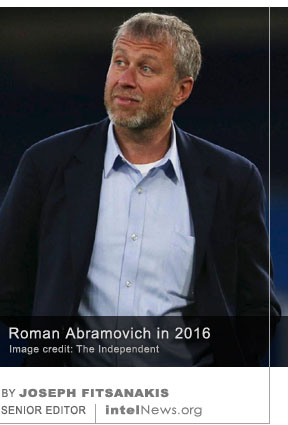
Roman AbramovichPolice in Switzerland cautioned that allowing the Russian billionaire Roman Abramovich to live there would threaten public security and damage the country’s reputation, according to files released this week. The Soviet-born Abramovich took advantage of Russia’s privatization laws in the early 1990s to gain considerable financial and political influence there. His friendship with Russia’s first post-Soviet President, Boris Yeltsin, was instrumental in his business career, and eventually placed him in close proximity to Russia’s current President, Vladimir Putin. Unlike many other oligarchs, Abramovich is believed to have remained close to Putin, despite living mostly in the United Kingdom in the past decade. The Russian oligarch has been staying in a mansion valued at close to $120 million in London’s exclusive suburb of Kensington. His lawyers have been renewing his British residence visa every six months.
However, the attempted assassination of Russian former spy Sergei Skripal earlier this year prompted the British government to intensify its scrutiny of Britain’s sizeable Russian expatriate community. London introduced tighter regulations that require Russian citizens applying to live in the UK to declare the source of their income in a far greater detail than previously. Soon after the new regulations were put in place, Abramovich’s lawyers withdrew his application to renew his British residency visa. Then, in May of this year, the Russian oligarch acquired Israeli citizenship. He has made it clear, however, that he does not intend to live in Israel. Instead, his legal team focused on an application for Swiss residency, which Abramovich first filed in the summer of 2016. In the application papers, Abramovich wrote that he intended to reside full time in Verbier, an Alpine village in the canton of Valais that is a popular holiday destination for celebrities and royalty.

A year later, following resistance and increasingly persistent questioning from the Swiss government, Abramovich’s legal team withdrew his residency application. Last February, when the Swiss press attempted to investigate the reasons behind the Swiss government’s reluctance, Abramovich’s lawyers secured an injunction forbidding the publication of information regarding his application to live in Switzerland. But the injunction was overturned late last week, and on Tuesday the Swiss media conglomerate Tamedia published some of the relevant documents. They include a letter from the Swiss Federal Police that strongly cautions against allowing the Russian-Israeli oligarch to resettle in Switzerland. The letter remarks that Abramovich has been repeatedly implicated in “suspicion of money laundering” and that the billionaire is “presumed [to have] contacts with criminal organizations”. Additionally, the letter states that Abramovich’s “assets are at least in part of illegal origin”. The letter concludes by strongly cautioning against allowing the oligarch to move to Switzerland, and argues that doing so would pose a “threat to public security” and be detrimental to the country’s international reputation.

The letter has raised eyebrows since its publication, because Switzerland is known for being highly welcoming of foreign billionaires while displaying minimal curiosity about the sources of their fortunes. Moreover, there are no known court rulings against Abramovich for money laundering or connections to organized crime. It is therefore presumed that the Swiss police report is based mostly on confidential informants and other informal sources. On Wednesday, Abramovich’s Swiss lawyer, Daniel Glasl, issued a statement saying that the Russian-Israeli magnate has never been charged with involvement in money laundering. He also reminded readers that his client has a blank criminal record.

Author: Joseph Fitsanakis | Date: 28 September 2018 | Permalink

Denmark arrests two for attempting to procure drones for ISIS

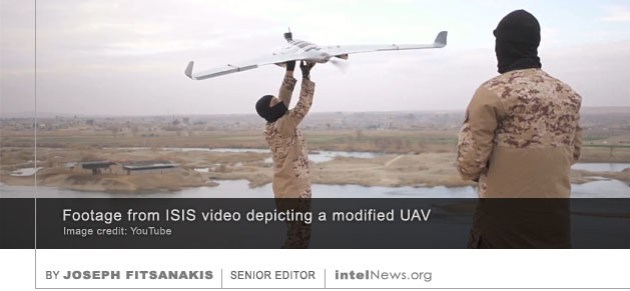
ISIS UAV droneDanish Police have announced the arrest of two men who attempted to procure unmanned aerial vehicles (UAVs) —commonly known as drones— on behalf of the Islamic State in Syria. In a press statement issued on Wednesday, Denmark’s State Police said it worked closely with the Danish Security and Intelligence Service (PET) to arrest the two men, as part of “a long-term investigation” that continues to take place in the Greater Copenhagen area.
According to the press statement, the two men are members of Danish-based Islamist groups and were known to police prior to their arrest this week. They are also believed to be part of a larger network of Islamist activists in the Scandinavian country who support the Islamic State —also known as the Islamic State of Iraq and Syria (ISIS). A police spokesman said on Wednesday that the case involves the “procurement and facilitation” of unmanned aerial vehicle components, “including drones, from Denmark to the Islamic State in Syria and Iraq”. The components were procured with the purpose of being used in reconnaissance and combat operations abroad by the militant group, he added.

This is the second time that Danish authorities have arrested individuals for attempting to procure drones and drone equipment for the Islamic State. A year ago, a 28-year-old man was charged with shipping disassembled drone equipment and infrared cameras to an address in Turkey. The shipped material was collected up by a Turkish couple who were Islamic State members and were arrested following an international police operation. The Islamic State has been using drones [.pdf] since October of 2016, when it deployed a bomb-laden UAV to kill two Kurdish soldiers. In January of last year, the militant group aired propaganda footage showing several cases of dropping bombs on adversary troops and civilians using specially modified drones.

The two men arrested this week are expected to appear in court on Thursday. It is believed that state prosecutors will request a closed-door hearing, since the investigation against the network of ISIS supporters in Denmark is ongoing.

Author: Joseph Fitsanakis | Date: 27 September 2018 | Permalink

CIA to return to traditional espionage against state actors, says new director

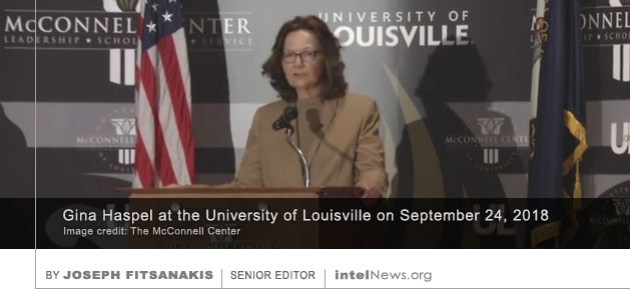
Gina HaspelThe United States Central Intelligence Agency will return to traditional espionage against foreign states and focus less on counterterrorism against non-state actors, said its new director in her first public appearance. Gina Haspel joined the CIA in 1985 as a reports officer and completed several undercover tours overseas before serving as chief of station. She rose through the ranks to become deputy director of the National Clandestine Service and was appointed deputy director of the CIA in 2017. In May of this year, she became the Agency’s first female director, despite some controversy that arose from her role as chief of a CIA undercover facility (so-called “black site”) in Thailand. Critics alleged that Agency personnel under her command practiced enhanced interrogation, including waterboarding, on terrorism detainees.
On Monday, Haspel gave a talk at the University of Louisville, from where she graduated in 1978 with a degree in languages and journalism, having transferred there from the University of Kentucky. It was her first public appearance after being sworn in as CIA director. She told the audience that she intends to steer the Agency back to traditional intelligence collection against “current and potential […] nation-state adversaries” and away from counterterrorism operations against non-state actors. The latter took center stage after the events of September 11, 2001. Filling current “intelligence gaps” on countries like Russia and China will be “a strategic priority” for the CIA, said Haspel, adding that the Agency will seek to “sharpen its focus on nation-state adversaries”. She spoke at length about China, stating that Beijing was “working to diminish US influence” and expand its own authority “beyond their own region, in places like Africa, Latin America, the Pacific islands [and] South Asia”.

The CIA’s hiring priorities will reflect the Agency’s strategic shift, said Haspel. The Agency will seek to expand its foreign footprint by “increasing the number of [its] officers stationed overseas”. Priority for these assignments will be given to foreign-language speakers with skills in Chinese, Arabic and Farsi, among other target languages. Interestingly, the CIA director added Turkish, French and Spanish to the list. She also said that the Agency will “invest more heavily on […] counternarcotics efforts abroad”. Last but not least, Haspel spoke about the need for increased transparency, diversity and inclusion at the CIA, which last year marked its 70th anniversary.

Author: Joseph Fitsanakis | Date: 26 September 2018 | Permalink

Key Hezbollah financier arrested in Brazil after years on the run

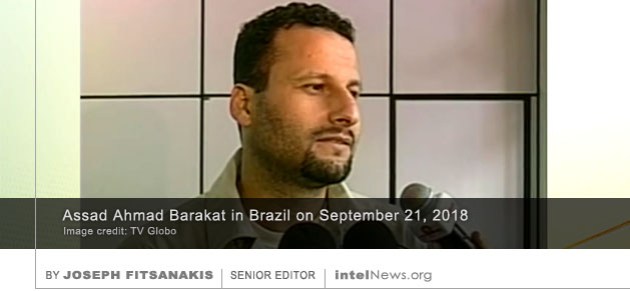
Assad Ahmad BarakatBrazilian police have announced the arrest of Assad Ahmad Barakat, a Lebanese national who is believed to be one of the most prolific international financiers for the Shiite group Hezbollah. Barakat was born in Lebanon but fled to Paraguay in the mid-1980s in the midst of Lebanon’s brutal civil war. He began an import-export business and eventually acquired Paraguayan citizenship. He gradually built a small business empire in Paraguay, which included engineering and construction, as well as transportation firms. Throughout that time, however, Barakat maintained strong connections with Hezbollah, the paramilitary group that has a strong following among Lebanon’s large Shiite Muslim community.
By the mid-1990s, Barakat was one of Hezbollah’s most active representatives in the Americas and operated as the Shiite group’s head of paramilitary and fundraising activities in South America. It is believed that he used his Paraguayan passport to travel to Iran and Lebanon for meetings with Hezbollah’s leadership at least once a year. In 2001, following pressure from the United States, Paraguay charged Barakat in absentia with money-laundering. He was eventually caught in Brazil in 2002 and extradited to Paraguay, where he was tried and sentenced to six years in prison. Upon his release in 2008, Barakat returned to his role as Hezbollah’s fundraiser. Using fake passports, he traveled frequently to Brazil, Chile, Argentina, and other Latin American countries, despite having been described by the US government as “one of the most prominent and influential members of the [Hezbollah] terrorist organization”. He was wanted in Paraguay for identity theft and in Argentina for laundering in excess of $10 million in casinos in the north of the country.

Last Friday, the Brazilian Federal Police announced that Barakat had been arrested in the city of Foz do Iguaçu, which is adjacent to the Paraguayan and Argentinian borders. The city of 250,000 is the largest urban center of the so-called Tri-Border tropical region, known for its tropical climate, spectacular mountain views and casinos. Aside from being a year-round tourism center, the area is a known as a hotbed of money-laundering, forged currency smuggling and drug-trafficking activity. It is now known whether Barakat will face charges in Brazil or whether he will be extradited to Paraguay or Argentina.

Author: Joseph Fitsanakis | Date: 25 September 2018 | Permalink

Russia planned to smuggle Julian Assange from Ecuador’s embassy in London

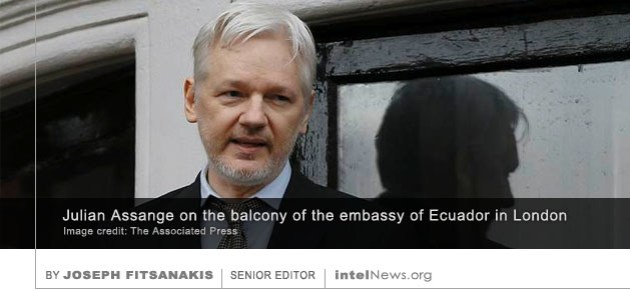
Julian AssangeRussia and Ecuador canceled at the last minute a secret plan to smuggle WikiLeaks founder Julian Assange out of the Ecuadorean embassy in London after it was deemed “too risky”, according to a report. The Australian-born founder of the whistleblower website was granted political asylum by the government of Ecuador in June of 2012, after Swedish authorities charged him with rape. He claims that the charges are part of a multinational plot to extradite him to the United States, where he is wanted for having leaked hundreds of thousands of secret government documents. He has thus refused to leave Ecuador’s embassy in the British capital since June 2012.

Last week, the British newspaper The Guardian said that Russian and Ecuadorean officials devised a complex operation to smuggle the WikiLeaks founder out of the Ecuadorean embassy, which is closely monitored by British security agencies. The London-based paper said it spoke to “four separate sources” who confirmed that a small team of Russians and Ecuadoreans met several times to plan the operation. The Ecuadorean side was allegedly represented by Fidel Narváez, a close friend and supporter of Assange, who previously served as Ecuador’s consul in London and continues to live there with his family. The Kremlin was reportedly represented by an unnamed “Russian businessman”, said The Guardian, who served as an intermediary between the Ecuadoreans and Moscow. The plan consisted of several steps, said the paper. The first step was for Assange to receive Ecuadoran citizenship and then be given diplomatic status by the government of Ecuador. That would give the WikiLeaks founder diplomatic immunity and shield him from British laws. A diplomatic vehicle would then secretly transport Assange from the Ecuadorean embassy to an unknown location. From there he would be transported to Ecuador via ship, or to Russia, where he would serve as a member of staff of the Ecuadorean embassy in Moscow. If British security services managed to intercept Assange during the operation, all they could do was expel him from the country. They would not be able to arrest him because of his diplomatic status.

The plan, said The Guardian, was scheduled for December 24, 2017. On December 15, Rommy Vallejo, the head of Ecuador’s national intelligence agency, Secretaría Nacional de Inteligencia (SENAIN), traveled secretly to London to supervise the operation. Two days later, on December 17, Assange was granted Ecuadorian citizenship as part of the plan. But the plan was aborted at the last moment after the British government refused to recognize Assange’s diplomatic status. According to British law, a foreign diplomat does not receive immunity from British law unless the British government officially accepts his or her diplomatic credentials. Although that is typically a formality, the British government reserves the right to refuse a diplomat’s credentials. That was seen by the Russians as a stumbling block and the operation was called off, said the paper.

Narváez spoke with The Guardian and strongly denied that he had any involvement with a joint Russian-Ecuadorean plan to smuggle Assange out of London. The Ecuadorean government did not return messages with questions about the paper’s allegations. The Russian embassy in the British capital tweeted late last week that The Guardian’s claims were “another example of disinformation and fake news from the British media”.

Author: Joseph Fitsanakis | Date: 24 September 2018 | Permalink

Book alleges 1980s British Labour Party leader was Soviet agent

Michael FootThe leadership of the Labour Party in Britain has reacted with disdain after a new book by a leading author and columnist claimed that Michael Foot, who led the Party in the early 1980s was paid agent of the Soviet KGB. Foot, a staunch and vocal representative of the postwar British left, was a member of parliament for over 40 years, eventually serving as leader of the House of Commons. He rose to the post of deputy leader of the Labour Party and in 1980 succeeded Jim Callahan as head of the Party. But he stepped down in 1983 in the aftermath of Labour’s largest electoral defeat in over half a century.


Two years later, in 1985, Oleg Gordievsky, a colonel in the Soviet KGB, defected to Britain and disclosed that he had been a double spy for the British from 1974 until his defection. In 1995, Gordievsky chronicled his years as a KGB officer and his espionage for Britain in a memoir, entitled Next Stop Execution. The book was abridged and serialized in the London-based Times newspaper. In it, Gordievsky claimed that Foot had been a Soviet “agent of influence” and was codenamed “Agent BOOT” by the KGB. Foot proceeded to sue The Times for libel, after the paper published a leading article headlined “KGB: Michael Foot was our agent”. The Labour Party politician won the lawsuit and was awarded financial restitution from the paper.

This past week, however, the allegations about Foot’s connections with Soviet intelligence resurfaced with the publication of The Spy and the Traitor, a new book chronicling the life and exploits of Gordievsky. In the book, Times columnist and author Ben Macintyre alleges that Gordievsky’s 1995 allegations about Foot were accurate and that Gordievsky passed them on to British intelligence before openly defecting to Britain. According to Macintyre, Gordievsky briefed Baron Armstrong of Ilminster, a senior civil servant and cabinet secretary to British Prime Minister Margaret Thatcher. Lord Armstrong, a well-connected veteran of British politics, in turn communicated the information to the Secret Intelligence Service (MI6) in the summer of 1982, says Macintyre. The Times columnist alleges that MI6 received specific information from Lord Armstrong, according to which Foot had been in contact with the KGB for years and that he had been paid the equivalent of £37,000 ($49,000) in today’s money for his services. The spy agency eventually determined that Foot may not himself have been conscious that the Soviets were using him as an agent of influence. But MI6 officials viewed Gordievsky’s allegations significant enough to justify a warning given to Queen Elizabeth II, in case the Labour Party won the 1983 general election and Foot became Britain’s prime minister.

The latest allegations prompted a barrage of strong condemnations from current and former officials of the Labour Party. Its current leader, Jeremy Corbyn, who like Foot also comes from the left of the Party, denounced Macintyre for “smearing a dead man, who successfully defended himself [against the same allegations] when he was alive”. Labour’s deputy leader, John McDonnell, criticized The Times for “debasing [the] standards of journalism in this country. They used to be called the gutter press. Now they inhabit the sewers”, he said. Neil Kinnock, who succeeded Foot in the leadership of the Labour Party in 1983, said Macintyre’s allegations were “filthy” and described Foot as a “passionate and continual critic of the Soviet Union”.

Author: Joseph Fitsanakis | Date: 21 September 2018 | Permalink

Germany’s ruling coalition in ‘permanent crisis mode’ over far-right spy row

Hans-Georg MaassenGermany’s fragile ruling coalition continues to face strong criticism two days after removing the country’s domestic intelligence chief over concerns that he may harbor far-right sympathies. Hans-Georg Maassen, a career civil servant, led Germany’s Federal Office for the Protection of the Constitution (BfV) from August 2012 until his removal on Thursday of this week. His hasty removal from the BfV was caused by the so-called Chemnitz protests, a series of prolonged anti-immigrant rallies, pogroms and riots that shook the east German city of Chemnitz in the last week of August of this year. They were prompted by news of the death of a German man, reportedly during a fight with two Kurdish immigrants. Videos of the protests surfaced on social media, showing participants throwing Nazi salutes, singing Nazi-era German songs and chasing people perceived to be immigrants in the streets of Chemnitz.

The controversy deepened when Maassen appeared to dispute the authenticity of the videos in an interview. The BfV director warned that the videos may have been faked as part of a disinformation campaign aimed at stirring racial tensions in Germany. The spy chief’s motives were questioned, however, when several investigative reporters, among them a team from the German public broadcaster association ARD, insisted that the videos were genuine and were posted online by people with real —not fake— accounts. Eventually Maassen became the focus of the story, as accusations surfaced that he may have leaked BfV documents to far-right activists and that he may even have coached them on how to evade government surveillance. The claims reignited widespread fears that members of Germany’s security and intelligence agencies may harbor sympathies for the far-right Alternative for Germany (AfD), a coalition of Eurosceptic, anti-immigrant and neo-Nazi groups that has gained prominence since its establishment in 2013. Currently, the AfD is Germany’s third-largest party, having received nearly 13% of the vote in the 2017 federal elections. The AfD is also the country’s main opposition party in the Bundestag, since the two leading parties, the conservative Christian Democratic Union (CDU) and the liberal Social Democratic Party (SPD), are members of the governing coalition.

Following nearly two weeks of controversy, the German Chancellery announced on Thursday that Maassen would be removed from head of the BfV and would serve instead as second in command in the Federal Ministry of the Interior. The decision was seen as a difficult compromise between the three members of the governing coalition —the liberals of the SPD, who wanted Maassen fired, and the conservatives of the CSU and its Bavarian wing, the Christian Social Union in Bavaria, who are in favor of tighter immigration policies. But the controversy surrounding Maassen continues in light of news that the former spy chief will see his income rise in his new post. In a report from Berlin, the Reuters news agency described Maassen’s reassignment as “a clumsy compromise” that highlighted the “dysfunctional relationship” of the three “loveless partners” in Chancellor Angela Merkel’s fragile governing coalition. One critic, SPD Secretary General Lars Klingbeil, told the news agency that the Maassen controversy had caused the government to “slide into a permanent crisis mode”. Meanwhile the name of Maassen’s replacement at the helm of the BfV has not yet been announced.

Author: Joseph Fitsanakis | Date: 20 September 2018 | Permalink

Dead Russian oligarch’s links to UK spy agencies must stay secret, judge rules

Aleksandr PerepilichnyA judge has ruled that the British government has the right to withhold information relating to alleged links between British spy agencies and a Russian millionaire who died in mysterious circumstances in England. Aleksandr Perepilichny was a wealthy and influential investment banker living in Moscow. In 2009, however, he fled Russia saying that his life had been threatened following a business disagreement. He resettled in Surrey, south of London, and began cooperating with Swiss authorities who were investigating a multimillion dollar money-laundering scheme involving senior Russian government officials. Described by some as the biggest tax fraud in Russian history, the scheme is said to have defrauded the Russian Treasury of at least $240 million.

On November 10, 2012, having just returned to his luxury Surrey home from a three-day trip to France, Perepilichny went out to jog. He was found dead later that evening, having collapsed in the middle of a side street near his house. He was 44. A postmortem examination concluded that Perepilichny had died of natural causes and pointed to the strong possibility of a heart attack. However, lawyers representing the late businessman’s family told a pre-inquest hearing that Perepilichny stomach was found to have traces of gelsemium, a shrub-like plant that is a “known weapon of assassination [used] by Chinese and Russian contract killers”.

The case is now being revisited following the failed attempt last March, allegedly by the Kremlin, to assassinate Sergei Skripal, a Russian former spy who defected to England in 2010. For the past several months, submissions have been filed for an inquest into Perepilichny’s mysterious death. But the British government said that it would not reveal any information relating to possible contacts between the late Russian businessman and British intelligence. The question was raised in June by lawyers representing Legal and General, Perepilichny’s life insurance company. They argued that if Perepilichny had close dealings with British intelligence, it would have raised significantly the threat that his life was under. But British Home Secretary Sajid Javid argued that releasing documents implicating the intelligence services with the late Russian businessman would endanger national security.

On Monday the judge leading the inquest into Perepilichny’s death ruled in favor of the British government’s position. The judge, Nicholas Hilliard QC, has security clearance and was therefore able to review the relevant evidence behind closed doors, during a secret session. He then ruled that “publicly releasing intelligence information [relating to Perepilichny] would pose a real risk of serious harm to national security”. Critics argue that the Skripal case has heightened public interest in Russian covert activities on British soil and that the public has the right to know whether the death of Perepilichny was in any way connected to the intelligence realm. The inquest continues this week.

Author: Joseph Fitsanakis | Date: 19 September 2018 | Permalink

US intelligence reevaluates safety of Russian defectors in light of Skripal poisoning

CIAIntelligence officials in the United States are feverishly reassessing the physical safety of dozens of Russian defectors, in light of the case of Russian double spy Sergei Skripal, who was poisoned in England last March. Skripal, a former military intelligence officer who spied for Britain, was resettled in the English town of Salisbury in 2010 by the British Secret Intelligence Service (MI6). But he and his daughter Yulia made international headlines in March, after they were poisoned by a powerful nerve agent that nearly killed them. The attack has been widely blamed on the Russian government, though the Kremlin denies that it had a role in it.

Like MI6, the US Central Intelligence Agency also has a protection program for foreign nationals whose life may be at risk because they spied for the US. The CIA’s protection division, called the National Resettlement Operations Center, helps resettle and sometimes hide and protect dozens of foreign agents, or assets, as they are known in CIA lingo. But following the Skripal case, some CIA resettlement officials have expressed concern that protection levels for some foreign assets may need to be significantly raised. The New York Times, which published the story last week, said that it spoke to “current and former American intelligence officials”, which it did not name. In light of those concerns, US counterintelligence officials have been carrying out what The Times described as “a wide-reaching review” of every Russian asset who has been resettled in the US. The purpose of the review is to assess the ease with which these former assets can be traced through their digital footprint on social media and other publicly available information.

According to the paper, several Russians who defected to the US after working for the CIA and other US intelligence agencies were tracked down by the Kremlin in recent years. In the mid-1990s, says The Times, the CIA actually found an explosive device placed under the car of a Russian defector living in the US. More recently, US intelligence traced the movements of a suspected Russian assassin who visited the neighborhood of a resettled Russian defector in Florida. In the past, Russian CIA assets who have been resettled in the US have voluntarily revealed their whereabouts by reaching out to relatives back in Russia out of homesickness. In some cases, they have left the US in order to meet a lover who may have been planted by the Russian spy services —with sometimes fatal consequences.

In addition to the US, at least one more country has initiated a thorough review of the way it protects former Russian assets living in its territory in light of the Skripal case. As intelNews reported in March, the British secret services tightened the physical security of dozens of Russian defectors living in Britain only a week after the attempted murder of Skripal. Britain’s security services reportedly viewed the attack on Skripal as an intelligence failure and launched a comprehensive review of the risk to British-based Russian double spies and defectors from “unconventional threats”. The latter included attacks with chemical and radiological weapons.

Author: Joseph Fitsanakis | Date: 18 September 2018 | Permalink

Western spy agencies thwarted alleged Russian plot to hack Swiss chemical lab

OPCW HagueWestern intelligence agencies thwarted a plot involving two Russians intending to travel to a Swiss government laboratory that investigates nuclear, biological and chemical weapons, and hack its computer systems. According to two separate reports by Dutch newspaper NRC Handelsblad and Swiss newspaper Tages-Anzeiger, the two were apprehended in The Hague in early 2018. The reports also said that the Russians were found in possession of equipment that could be used to compromise computer networks. They are believed to work for the Main Intelligence Directorate, known as GRU, Russia’s foremost military intelligence agency. The apprehension was the result of cooperation between various European intelligence services, reportedly including the Dutch Military Intelligence and Security Organization (MIVD).

The laboratory, located in the western Swiss city of Spiez, has been commissioned by the Netherlands-based Organization for the Prohibition of Chemical Weapons (OPCW) to carry out investigations related to the poisoning of Russian double agent Sergei Skripal and his daughter Yulia in March of this year. It has also carried out probes on the alleged use of chemical weapons by the Russian-backed government of President Bashar al-Assad in Syria. In the case of the Skripals, the laboratory said it was able to duplicate findings made earlier by a British laboratory.

Switzerland’s Federal Intelligence Service (NDB) reportedly confirmed the arrest and subsequent expulsion of the two Russians. The Swiss agency said it “cooperated actively with Dutch and British partners” and thus “contributed to preventing illegal actions against a sensitive Swiss infrastructure”. The office of the Public Prosecutor in the Swiss capital Bern said that the two Russians had been the subject of a criminal investigation that began as early as March 2017. They were allegedly suspected of hacking the computer network of the regional office of the World Anti-Doping Agency in Lausanne. The Spiez laboratory was a target of hacking attempts earlier this year, according to a laboratory spokesperson. “We defended ourselves against that. No data was lost”, the spokesperson stated.

On April 14, Russian Minister of Foreign Affairs Sergei Lavrov stated that he had obtained the confidential Spiez lab report about the Skripal case “from a confidential source”. That report confirmed earlier findings made by a British laboratory. But the OPCW, of which Russia is a member, states that its protocols do not involve dissemination of scientific reports to OPCW member states. Hence, the question is how Foreign Minister Lavrov got hold of the document.

As intelNews reported in March, in the aftermath of the Skripals’ poisoning the Dutch government expelled two employees of the Russian embassy in The Hague. In a letter [.pdf] sent to the Dutch parliament on March 26 —the day when a large number of countries announced punitive measures against Russia— Holland’s foreign and internal affairs ministers stated that they had decided to expel the two Russian diplomats “in close consultation with allies and partners”. The Russians were ordered to leave the Netherlands within two weeks. It is unknown whether the two expelled Russian diplomats are the same two who were apprehended in The Hague, since none have been publicly named.

A November 2017 parliamentary letter from Dutch minister of internal affairs Kajsa Ollongren, states[4] that Russian intelligence officers are “structurally present” in the Netherlands in various sectors of society to covertly collect intelligence. The letter added that, in addition to traditional human intelligence (HUMINT) methods, Russia deploys digital means to influence decision-making processes and public opinion in Holland.

Author: Matthijs Koot | Date: 17 September 2018 | Permalink

Iran spied on ISIS supporters through fake phone wallpaper app, say researchers

Cell Phone - IASupporters of the Islamic State, most of them Persian speakers, were spied on by the government of Iran after they downloaded a fake smartphone application with wallpaper images, according to an online security firm. Iran is a major adversary of the radical Sunni group Islamic State. The latter considers Shiism (Iran’s state religion) as an abomination. Not surprisingly, therefore, the Islamic State, which is also known as the Islamic State of Iraq and Syria (ISIS), relies largely on supporters from the Arabic-speaking regions of the Levant. But according to estimates, Sunnis constitute about 10 percent of Iran’s population, and ISIS has found some fertile ground among Iran’s 8 million-strong Sunni minority. As a result, the government in Tehran is highly mistrustful of Iranian Sunnis, many of whom are ethnic Kurds, Baluchis, Azeris or Turkomans, and systematically spies on them.

According to the Israeli online security firm Check Point Software Technologies, one way in which Tehran has spied on Persian-speaking ISIS supporters is through fake smartphone applications. In an article published last week, the company said it had uncovered a state-sponsored surveillance operation that it had codenamed “Domestic Kitten”. The Check Point article said that the operation had gone on for more than two years, but had remained undetected “due to the artful deception of its attackers towards their targets”. The surveillance of targeted phones was carried out with the help of an application that featured pro-ISIS-themed wallpapers, which users could download on their devices. Yet another program linked to the same vendor was a fake version of the Firat News Agency mobile phone application. The Firat News Agency is a legitimate Iranian information service featuring news about Iran’s Kurdish minority. But both applications were in fact malware that gave a remote party full access to all text messages sent or received on the compromised phones. They also gave a remote party access to records of phone calls, Internet browser activity and bookmarks, and all files stored on the compromised phones. Additionally, the fake applications gave away the geo-location of compromised devices, and used their built-in cameras and microphones as surveillance devices.

Check Point said that the majority of compromised phones belonged to Persian-speaking members of Iran’s Kurdish and Turkoman minorities. The company stressed that it was not able to confirm the identity of the sponsoring party with absolute accuracy. However, the nature of the fake applications, the infrastructure of the surveillance operation, as well as the identities of those targeted, posed a strong possibility that “Domestic Kitten” was sponsored by the government of Iran, it concluded. Last July, the American cyber security firm Symantec said that it had uncovered a new cyber espionage group called “Leafminer”, which was allegedly sponsored by the Iranian state. The group had reportedly launched attacks on more than 800 agencies and organizations in in countries such as Israel, Egypt, Bahrain, Qatar, Kuwait, the United Arab Emirates, Afghanistan and Azerbaijan.

Author: Ian Allen | Date: 14 September 2018 | Permalink

US sees Russian weapon behind US diplomats’ mystery ailments, say officials

Kirtland Air Force BaseA Russian-made device caused the mystery ailments that affected more than two dozen American diplomats in Cuba and China, according to United States government officials who have been briefed on the matter. Since September of last year, Washington has recalled the majority of its personnel from its embassy in Havana and at least two more diplomats from its consulate in the Chinese city of Guangzhou. The evacuees reported experiencing “unusual acute auditory or sensory phenomena” and “unusual sounds or piercing noises”. Subsequent tests showed that they suffered from sudden and unexplained loss of hearing as well as from various forms of brain injuries. In April of this year the Canadian embassy evacuated all family members of its personnel stationed in the Cuban capital over similar health concerns. More recently, the US issued a travel warning advising its citizens to stay away from the island and accused Cuba of neglecting to ensure the safety of US diplomatic personnel stationed there.

In early September, Douglas H. Smith, who heads the team of scientists tasked by the US government to examine the matter, said that microwave radiation was almost certainly responsible for the diplomats’ ailments. He added that microwaves were considered “a main suspect” and that his team of scientists was now “increasingly sure” that the diplomats had suffered brain injuries caused by microwave radiation. Now the US news network NBC reports that Russia is viewed as the primary culprit behind the mystery ailments that plagued US diplomats. Reporting on Tuesday the news network cited three unnamed officials in the administration of US President Donald Trump, as well as “congressional aides and others briefed on the investigation”. Specifically, NBC reported that the Russian connection was supported by “evidence from communications intercepts” (signals intelligence or SIGINT), though it did not elaborate on their precise nature. It also said that the ongoing investigation into the purported weapon involves the Federal Bureau of Investigation, the Central Intelligence Agency among other US intelligence and security agencies. Another leading actor in the investigation is the US Air Force, said NBC, stating that experts in its directed energy research program at the Kirtland Air Force Base near Albuquerque, New Mexico, are trying to reverse-engineer the alleged weapons based on the symptoms that they cause.

But NBC noted that the evidence remains relatively inconclusive and is not yet sufficient to allow Washington to openly accuse Moscow of having masterminded the alleged microwave attacks on the US diplomats. The news network said it reached out to the Office of the Director of National Intelligence but received no response. A spokeswoman from the US Department of State said that the investigation into the diplomats’ ailments was ongoing and that the Department had made “no determination of who or what is responsible for the health attacks” on its personnel.

Author: Joseph Fitsanakis | Date: 13 September 2018 | Permalink

Pro-Soviet radicals planned to kill Gorbachev in East Germany, book claims

Mikhail GorbachevA group of German radicals planned to assassinate Soviet Premier Mikhail Gorbachev in East Germany in 1989, thus triggering a Soviet military invasion of the country, according to a new book written by a former British spy. The book is entitled Pilgrim Spy: My Secret War Against Putin, the KGB and the Stasi (Hodder & Stoughton publishers) and is written by “Tom Shore”, the nom de guerre of a former officer in the British Secret Intelligence Service (MI6). The book chronicles the work of its author, who claims that in 1989 he was sent by MI6 to operate inside communist East Germany without an official cover. That means that he was not a member of the British diplomatic community in East Germany and thus had no diplomatic immunity while engaging in espionage. His mission was to uncover details of what MI6 thought was a Soviet military operation against the West that would be launched from East Germany.

In his book, Shore says that he did not collect any actionable intelligence on the suspected Soviet military operation. He did, however, manage to develop sources from within the growing reform movement in East Germany. The leaders of that movement later spearheaded the widespread popular uprising that led to the collapse of the German Democratic Republic and its eventual unification with West Germany. While finding his way around the pro-democracy movement, Shore says that he discovered a number of self-described activists who had been planted there by the East German government or the Soviet secret services. Among them, he says, were members of the so-called Red Army Faction (RAF). Known also as the Baader Meinhoff Gang or the Baader-Meinhof Group, the RAF was a pro-Soviet guerrilla group that operated in several Western European countries, including Germany, Belgium and Holland. Its members participated in dozens of violent actions from 1971 to 1993, in which over 30 people were killed. Among other attacks, the group tried to kill the supreme allied commander of the North Atlantic Treaty Organization and launched a sniper attack on the US embassy in Bonn. The group is known to have received material, logistical and operational support from a host of Eastern Bloc countries, including East Germany, Poland and Yugoslavia.

According to Shore, the RAF members who had infiltrated the East German reform movement were planning to assassinate Soviet Premier Mikhail Gorbachev during his official visit to East Germany on October 7, 1989. The visit was planned to coincide with the 40th anniversary celebrations of the formation of the German Democratic Republic in 1949, following the collapse of the Third Reich. Shore says he discovered that the assassination plot had been sponsored by hardline members of the Soviet Politburo, the communist country’s highest policy-making body, and by senior officials of the KGB. The plan involved an all-out military takeover of East Germany by Warsaw Pact troops, similar to that of Czechoslovakia in 1968. But Shore claims that he was able to prevent the RAF’s plan with the assistance of members of the East German reform movement. He says, however, that at least two of the RAF members who planned to kill Gorbachev remain on the run to this day. The RAF was officially dissolved in 1998, when its leaders sent an official communiqué to the Reuters news agency announcing the immediate cessation of all RAF activities. However, three former RAF members remain at large. They are Ernst-Volker Staub, Burkhard Garweg and Daniela Klette, all of them German citizens, who are believed to be behind a series of bank robberies in Italy, Spain and France in recent years.

Author: Joseph Fitsanakis | Date: 11 September 2018 | Permalink

Trump officials ‘discussed secret coup plans’ with Venezuelan army officers

Nicolas MaduroUnited States President Donald Trump authorized American officials to attend secret meetings held by Venezuelan military officers who conspired to launch a military coup against President Nicolás Maduro. The claim was made on Saturday by The New York Times, which cited “interviews with 11 current and former American officials” and information from an unnamed Venezuelan former military commander. The former commander claims to have attended the secret talks, which allegedly were held over several meetings during the past year.

According to The Times, the meetings were sparked by a comment made by President Trump in August of 2017, that he did not rule out a “military option” to “restore calm” in Venezuela. That comment reportedly prompted at least three groups of Venezuelan military officers opposed to the rule of President Maduro to reach out to the White House. One of these groups, said The Times, had one of its representatives contact American diplomats in an unnamed European country. That outreach led to “a series of covert meetings abroad”, according to The Times, the first of which took place in the fall of 2017. The meetings continued until recently, and were held with a number of Venezuelan military officers who claimed to represent the views of several hundred members of the National Bolivarian Armed Forces. The rebellious officers allegedly told the US government’s representative that they planned to launch a military coup aimed at deposing President Maduro and installing a transitional government that would guarantee peaceful elections. They reportedly asked the White House representative to supply them with secure communications equipment, which they could use to coordinate their operations.

However, the White House eventually decided that backing a military coup in Venezuela would be too risky due to the potential for spiraling bloodshed. It thus distanced itself from the plan. Additionally, some US government officials were alarmed by the composition of the rebel officers: at least one of them was a serious violator of human rights who had previously been accused by the US of involvement of participating in drugs smuggling and having close links with the Revolutionary Armed Forces of Colombia, which is on Washington’s official list of foreign terrorist organizations. Eventually the plotters canceled their plans for a coup, having assessed it would be met by fierce resistance by pro-Maduro forces.

The Times reached out to the White House, which rejected the paper’s report, saying it was important to “dialogue with all Venezuelans who demonstrate a desire for democracy”. But it refused to respond to specific questions about the allegations of a possible coup in Venezueal with Washington’s backing. President Maduro has already blamed the US for two attempts to assassinate him in the past 18 months, with the most recent one involving the use of an exploding drone. In 2002, Maduro’s predecessor, the late Venezuelan President Hugo Chávez, was briefly deposed by a military putsch. Chávez was able to beat back the rebels with the help of his civilian and military supporters, and then accused Washington of having had direct involvement with the attempt to remove him from power. The US has strongly denied Chávez’s charges.

Author: Joseph Fitsanakis | Date: 10 September 2018 | Permalink

Poisoned Russian spy advised Spanish intelligence, say officials

Sergei SkripalSergei Skripal, the Russian double agent who was poisoned with a military-grade nerve agent in England earlier this year, worked with Spanish intelligence after his defection to the United Kingdom, according to sources. Skripal, a former military intelligence officer who spied for Britain in the early 2000s, had kept a low profile while living in the English town of Salisbury. He was resettled there in 2010 by the British Secret Intelligence Service (MI6), after he was released from a Russian prison. But he and his daughter Yulia made international headlines in March, after they were poisoned by a powerful nerve agent that nearly killed them. The attack has been widely blamed on the Russian government, but the Kremlin denies that it had a role in it.

The attempt to kill Skripal surprised some intelligence observers due to the fact that the Russian government had officially pardoned the double agent prior to exchanging him with Russian spies who had been caught in the West. As intelNews wrote in May, “typically a spy who has been pardoned as part of an authorized spy-swap will not need to worry about being targeted by the agency that he betrayed. If it indeed tried to kill Skripal, the Russian government may therefore have broken the unwritten rules of the espionage game”. Eventually, however, it was revealed that, instead of retiring after his defection to the UK, Skripal traveled extensively in Eastern Europe, where he advised local intelligence agencies on how to defend against Russian espionage. The double agent participated in MI6-sponsored events in which he briefed intelligence practitioners in at least two countries, Estonia and the Czech Republic. These activities may have convinced the Kremlin that Skripal had broken the unwritten conditions of his release, namely that he would not participate in any intelligence-related activities against Russia.

Now The New York Times has claimed that, in addition to consulting for Czech and Estonian spies, Skripal also visited Spain, where he met with officers from the country’s National Intelligence Center (CNI). Citing an unnamed Spanish former police chief and Fernando Rueda, a Spanish intelligence expert, The Times said that Skripal advised the CNI about the activities of Russian organized crime in Spain and the alleged connections between Russian mobsters and the Kremlin. When he traveled to Spain under MI6 protection, said the paper, Skripal was effectively returning to the place where he had been initially recruited to spy for the British. Skripal spent several years in Spain, said The Times, serving as a military attaché at the Russian embassy in Madrid. It was there that he began to work secretly for MI6. However, the precise timing of Skripal’s return trips to Spain after 2010, as well as the content of his discussions with Spanish intelligence officials, remain unknown, according to The Times.

Author: Joseph Fitsanakis | Date: 07 September 2018 | Permalink