Book alleges 1980s British Labour Party leader was Soviet agent
September 21, 2018 1 Comment
 The leadership of the Labour Party in Britain has reacted with disdain after a new book by a leading author and columnist claimed that Michael Foot, who led the Party in the early 1980s was paid agent of the Soviet KGB. Foot, a staunch and vocal representative of the postwar British left, was a member of parliament for over 40 years, eventually serving as leader of the House of Commons. He rose to the post of deputy leader of the Labour Party and in 1980 succeeded Jim Callahan as head of the Party. But he stepped down in 1983 in the aftermath of Labour’s largest electoral defeat in over half a century.
Two years later, in 1985, Oleg Gordievsky, a colonel in the Soviet KGB, defected to Britain and disclosed that he had been a double spy for the British from 1974 until his defection. In 1995, Gordievsky chronicled his years as a KGB officer and his espionage for Britain in a memoir, entitled Next Stop Execution. The book was abridged and serialized in the London-based Times newspaper. In it, Gordievsky claimed that Foot had been a Soviet “agent of influence” and was codenamed “Agent BOOT” by the KGB. Foot proceeded to sue The Times for libel, after the paper published a leading article headlined “KGB: Michael Foot was our agent”. The Labour Party politician won the lawsuit and was awarded financial restitution from the paper.
This past week, however, the allegations about Foot’s connections with Soviet intelligence resurfaced with the publication of The Spy and the Traitor, a new book chronicling the life and exploits of Gordievsky. In the book, Times columnist and author Ben Macintyre alleges that Gordievsky’s 1995 allegations about Foot were accurate and that Gordievsky passed them on to British intelligence before openly defecting to Britain. According to Macintyre, Gordievsky briefed Baron Armstrong of Ilminster, a senior civil servant and cabinet secretary to British Prime Minister Margaret Thatcher. Lord Armstrong, a well-connected veteran of British politics, in turn communicated the information to the Secret Intelligence Service (MI6) in the summer of 1982, says Macintyre. The Times columnist alleges that MI6 received specific information from Lord Armstrong, according to which Foot had been in contact with the KGB for years and that he had been paid the equivalent of £37,000 ($49,000) in today’s money for his services. The spy agency eventually determined that Foot may not himself have been conscious that the Soviets were using him as an agent of influence. But MI6 officials viewed Gordievsky’s allegations significant enough to justify a warning given to Queen Elizabeth II, in case the Labour Party won the 1983 general election and Foot became Britain’s prime minister.
The latest allegations prompted a barrage of strong condemnations from current and former officials of the Labour Party. Its current leader, Jeremy Corbyn, who like Foot also comes from the left of the Party, denounced Macintyre for “smearing a dead man, who successfully defended himself [against the same allegations] when he was alive”. Labour’s deputy leader, John McDonnell, criticized The Times for “debasing [the] standards of journalism in this country. They used to be called the gutter press. Now they inhabit the sewers”, he said. Neil Kinnock, who succeeded Foot in the leadership of the Labour Party in 1983, said Macintyre’s allegations were “filthy” and described Foot as a “passionate and continual critic of the Soviet Union”.
► Author: Joseph Fitsanakis | Date: 21 September 2018 | Permalink
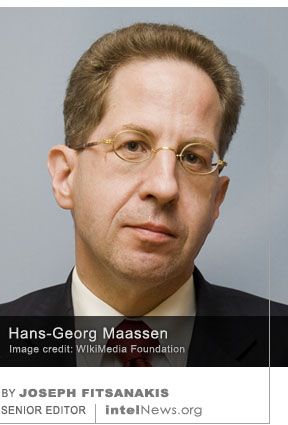 Germany’s fragile ruling coalition continues to face strong criticism two days after removing the country’s domestic intelligence chief over concerns that he may harbor far-right sympathies. Hans-Georg Maassen, a career civil servant, led Germany’s Federal Office for the Protection of the Constitution (BfV) from August 2012 until his removal on Thursday of this week. His hasty removal from the BfV was caused by the so-called
 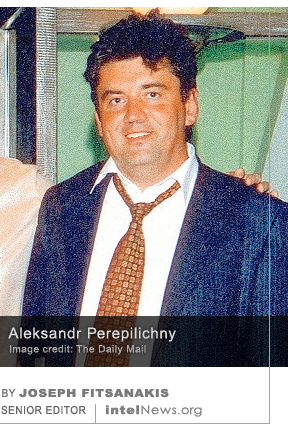 A judge has ruled that the British government has the right to withhold information relating to alleged links between British spy agencies and a Russian millionaire who died in mysterious circumstances in England. Aleksandr Perepilichny was a wealthy and influential investment banker living in Moscow. In 2009, however, he fled Russia saying that his life had been threatened following a business disagreement. He resettled in Surrey, south of London, and began cooperating with Swiss authorities who were investigating a multimillion dollar money-laundering scheme involving senior Russian government officials. Described by some as the biggest tax fraud in Russian history, the scheme is said to have defrauded the Russian Treasury of at least $240 million.
 Intelligence officials in the United States are feverishly reassessing the physical safety of dozens of Russian defectors, in light of the case of Russian double spy Sergei Skripal, who was poisoned in England last March. Skripal, a former military intelligence officer who spied for Britain, was resettled in the English town of Salisbury in 2010 by the British Secret Intelligence Service (MI6). But he and his daughter Yulia made international headlines in March, after they were
  Western intelligence agencies thwarted a plot involving two Russians intending to travel to a Swiss government laboratory that investigates nuclear, biological and chemical weapons, and hack its computer systems. According to two separate reports by Dutch newspaper
  Supporters of the Islamic State, most of them Persian speakers, were spied on by the government of Iran after they downloaded a fake smartphone application with wallpaper images, according to an online security firm. Iran is a major adversary of the radical Sunni group Islamic State. The latter considers Shiism (Iran’s state religion) as an abomination. Not surprisingly, therefore, the Islamic State, which is also known as the Islamic State of Iraq and Syria (ISIS), relies largely on supporters from the Arabic-speaking regions of the Levant. But according to estimates, Sunnis constitute about 10 percent of Iran’s population, and ISIS has found some fertile ground among Iran’s 8 million-strong Sunni minority. As a result, the government in Tehran is highly mistrustful of Iranian Sunnis, many of whom are ethnic Kurds, Baluchis, Azeris or Turkomans, and systematically spies on them.
 A Russian-made device caused the mystery ailments that affected more than two dozen American diplomats in Cuba and China, according to United States government officials who have been briefed on the matter. Since September of last year, Washington has recalled the majority of its personnel from its embassy in Havana and at least
 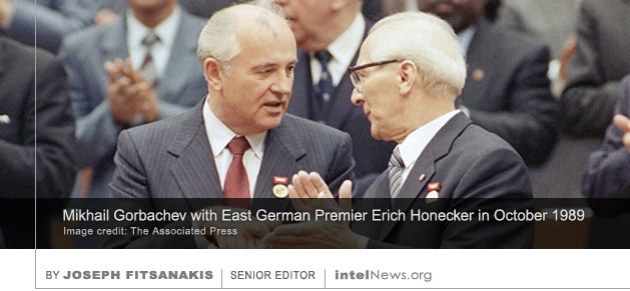 A group of German radicals planned to assassinate Soviet Premier Mikhail Gorbachev in East Germany in 1989, thus triggering a Soviet military invasion of the country, according to a new book written by a former British spy. The
 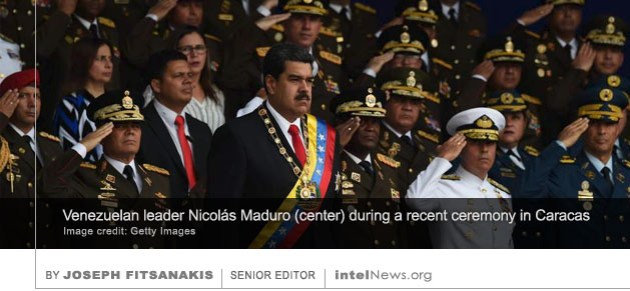 United States President Donald Trump authorized American officials to attend secret meetings held by Venezuelan military officers who conspired to launch a military coup against President Nicolás Maduro. The claim was made on Saturday by The New York Times, which
  Sergei Skripal, the Russian double agent who was poisoned with a military-grade nerve agent in England earlier this year, worked with Spanish intelligence after his defection to the United Kingdom, according to sources. Skripal, a former military intelligence officer who spied for Britain in the early 2000s, had kept a low profile while living in the English town of Salisbury. He was resettled there in 2010 by the British Secret Intelligence Service (MI6), after he was released from a Russian prison. But he and his daughter Yulia made international headlines in March, after they were
 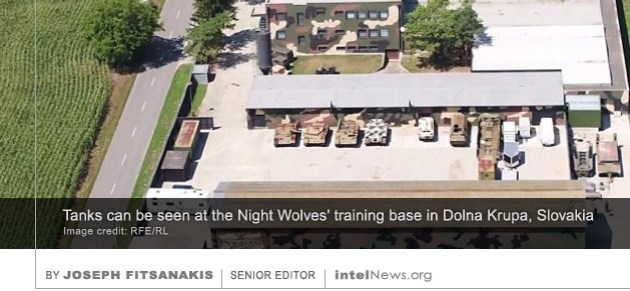 Security agencies in Eastern Europe have voiced concern about the rise of far-right paramilitary groups whose members have access to heavy weaponry, including in some cases armored vehicles and tanks. The most recent warning came on Sunday, when the Czech daily newspaper Mlada Fronta Dnes published excerpts of a leaked security report on the subject. The report was authored by analysts in the Security Information Service (BIS), the country’s primary domestic intelligence agency. It detailed the recent activities of a group calling itself the National Home Guard, a far-right, anti-immigrant militia that
 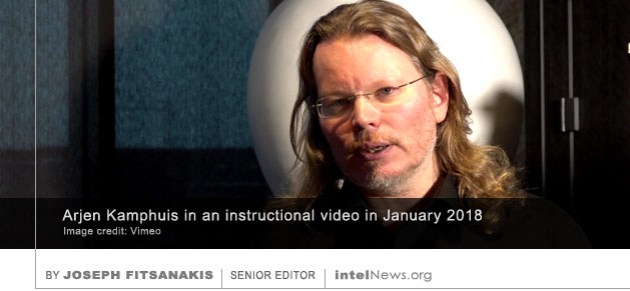 Police in Norway and Holland have opened formal investigations into the whereabouts of a Dutch cybersecurity expert and senior associate of WikiLeaks, who disappeared without trace on August 20. Arjen Kamphuis, a 47-year-old online privacy specialist, is known for his book Information Security for Journalists, which offers advice on investigative reporters working on national security and intelligence matters. Additionally, Kamphuis, who has Dutch citizenship, is a close associate of Julian Assange, founder of the international whistleblower website WikiLeaks.
 Germany has dropped a criminal case against the second-in-command of Switzerland’s intelligence agency, who was accused by Berlin of authorizing an espionage operation against the German tax collection service. A year ago, Germany launched an
  Advanced weapons that emit microwave radiation were most likely responsible for the ailments of American diplomats in Cuba and China, according to the scientist leading the investigations into the matter. In September of 2017, Washington recalled the majority of its personnel from its embassy in Havana and issued a






 intelNews.org
Russia planned to smuggle Julian Assange from Ecuador’s embassy in London
September 24, 2018 by Joseph Fitsanakis 2 Comments
Last week, the British newspaper The Guardian said that Russian and Ecuadorean officials devised a complex operation to smuggle the WikiLeaks founder out of the Ecuadorean embassy, which is closely monitored by British security agencies. The London-based paper said it spoke to “four separate sources” who confirmed that a small team of Russians and Ecuadoreans met several times to plan the operation. The Ecuadorean side was allegedly represented by Fidel Narváez, a close friend and supporter of Assange, who previously served as Ecuador’s consul in London and continues to live there with his family. The Kremlin was reportedly represented by an unnamed “Russian businessman”, said The Guardian, who served as an intermediary between the Ecuadoreans and Moscow. The plan consisted of several steps, said the paper. The first step was for Assange to receive Ecuadoran citizenship and then be given diplomatic status by the government of Ecuador. That would give the WikiLeaks founder diplomatic immunity and shield him from British laws. A diplomatic vehicle would then secretly transport Assange from the Ecuadorean embassy to an unknown location. From there he would be transported to Ecuador via ship, or to Russia, where he would serve as a member of staff of the Ecuadorean embassy in Moscow. If British security services managed to intercept Assange during the operation, all they could do was expel him from the country. They would not be able to arrest him because of his diplomatic status.
The plan, said The Guardian, was scheduled for December 24, 2017. On December 15, Rommy Vallejo, the head of Ecuador’s national intelligence agency, Secretaría Nacional de Inteligencia (SENAIN), traveled secretly to London to supervise the operation. Two days later, on December 17, Assange was granted Ecuadorian citizenship as part of the plan. But the plan was aborted at the last moment after the British government refused to recognize Assange’s diplomatic status. According to British law, a foreign diplomat does not receive immunity from British law unless the British government officially accepts his or her diplomatic credentials. Although that is typically a formality, the British government reserves the right to refuse a diplomat’s credentials. That was seen by the Russians as a stumbling block and the operation was called off, said the paper.
Narváez spoke with The Guardian and strongly denied that he had any involvement with a joint Russian-Ecuadorean plan to smuggle Assange out of London. The Ecuadorean government did not return messages with questions about the paper’s allegations. The Russian embassy in the British capital tweeted late last week that The Guardian’s claims were “another example of disinformation and fake news from the British media”.
► Author: Joseph Fitsanakis | Date: 24 September 2018 | Permalink
Filed under Expert news and commentary on intelligence, espionage, spies and spying Tagged with Ecuador, Ecuadorean embassy in the UK, Fidel Narváez, Julian Assange, News, Russia, Secretaría Nacional de Inteligencia (Ecuador), UK, Wikileaks