US alerts its diplomatic staff in China over ‘abnormal sounds and symptoms’
May 23, 2018 Leave a comment
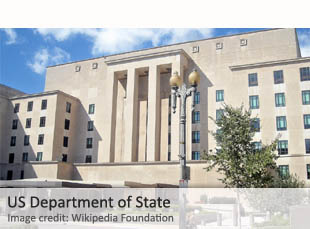 The United States Department of State has warned its personnel stationed in China of the danger of experiencing “unusual acute auditory or sensory phenomena accompanied by unusual sounds or piercing noises”. The warning, issued on May 23, has prompted comparisons to similar phenomena that were reported by US diplomatic personnel in Cuba in 2016. Last September, Washington recalled the majority of its personnel from its embassy in Havana and issued a travel warning advising its citizens to stay away from the island. These actions were taken in response to allegations made by the United States that at least 21 of its diplomatic and support staff stationed in Cuba suffered from sudden and unexplained loss of hearings, causing them to be diagnosed with brain injuries. In April, the Canadian embassy evacuated all family members of its personnel stationed in Havana, over similar health concerns.
Now a similar warning has been issued by the US Department of State for its staff stationed in China. In a statement, the Department said that a member of staff at its consulate in the Chinese city of Guangzhou reported experiencing “subtle and vague, but abnormal, sensations of sound and pressure”. The unnamed individual reportedly suffered these physical symptoms between late 2017 and April 2018, said the statement. At that time, the individual was flown back to the US where they eventually were diagnosed with “mild traumatic brain injury”. The statement went on to state that the cause of these symptoms remains unknown, and that the US government has no information about other such incidents affecting Americans in China.
Late on Wednesday, however, speaking before the Committee on Foreign Affairs of the US House of Representatives, US Secretary of State Mike Pompeo said that the incident in China was “medically similar” to the 2016 incidents in Cuba. Some US government sources have blamed these medical symptoms on unspecified “sonic weapon attacks” from a foreign country, aimed at US diplomatic facilities. But Washington has so far refrained from accusing China of having a role in such attacks, either in Cuba or in China itself. Pompeo said on Wednesday that Washington had dispatched a medical team to Guangzhou to inspect American diplomats stationed there. The Chinese government said yesterday that it was probing the incident “in a very responsible manner” and “would protect the lawful rights and interest of foreigners in China”. However, China’s Minister of Foreign Affairs, Wang Yi, warned that the case in Guangzhou should not be “magnified, complicated or even politicized” by Washington.
► Author: Joseph Fitsanakis | Date: 23 May 2018 | Research credit: Nikki P. | Permalink
 The Pakistani military is suspected of having orchestrated a lucrative intelligence collection campaign using mobile phones, which targeted diplomats from India, Israel and Australia, as well as from North Atlantic Treaty Organization (NATO) member countries such as the United States and Britain. Others targeted in the operation include officials from Iraq, Iran and the United Arab Emirates. News of the alleged spy operation was published earlier this month by Lookout Mobile Security, a security software company based in the United States.
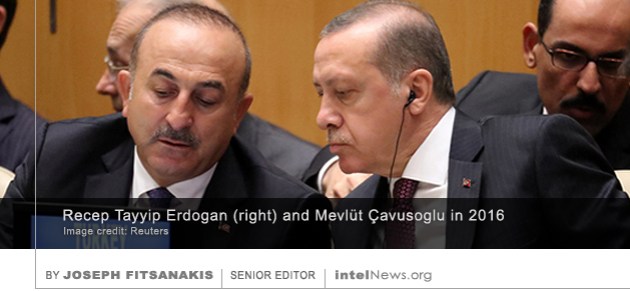 A number of European intelligence agencies have reportedly warned the Turkish government of a possible assassination attempt against the country’s president, Recep Tayyip Erdoğan, during an official state visit to Bosnia and Herzegovina. On Sunday the Turkish leader embarked on a week-long visit to the Balkans, beginning with Bosnia, which along with Albania is seen as Turkey’s strongest political ally in Europe. During his visit to Bosnia, Mr. Erdoğan is scheduled to meet with Bakir Izetbegovic, one of the country’s three presidents. He is also scheduled to address a rally of expatriate Turks in the Bosnian capital Sarajevo, held in support of his ruling Justice and Development Party.
 Some North Atlantic Treaty Organization (NATO) member states obtained access to the Soviet Union’s so-called ‘Novichok’ nerve agents in the 1990s, through an informant recruited by German intelligence, according to reports. NATO countries refer to ‘Novichok-class’ nerve agents to describe a series of weaponized substances that were developed by the Soviet Union and post-Soviet Russia from the early 1970s to at least 1993. They are believed to be the deadliest nerve agents ever produced, but Moscow denies their very existence. A type of Novichok agent, described by British scientists as A234, is said to have been used in March of this year by the person or persons who
 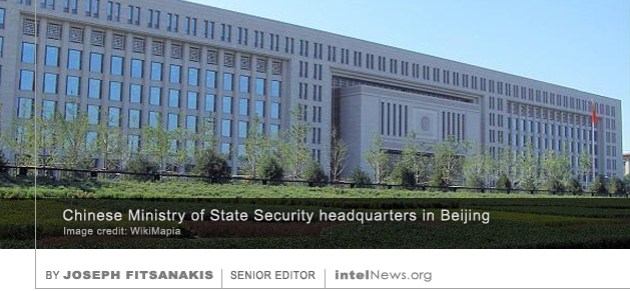 Chinese intelligence operatives gave a former officer of the United States Central Intelligence Agency “hundreds of thousands of dollars in cash” in exchange for carrying out espionage, according to court papers. The Federal Bureau of Investigation
 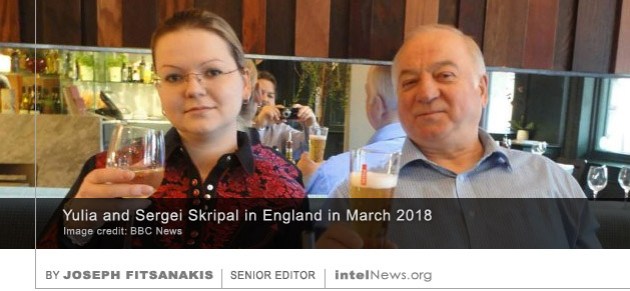 Russia may have made the decision to kill former double spy Sergei Skripal because he continued to provide counterintelligence assistance to Eastern European governments, according to media reports from Prague. Skripal, 66, a veteran military intelligence operative who spied for Britain in the early 2000s, has been living in England since 2010. He was recently released from hospital after he was
 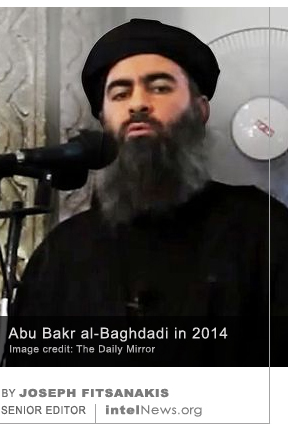 An joint operation conducted by American and Iraqi intelligence officers employed a popular messaging app on the phone of a captured Islamic State commander to apprehend four very senior figures in the organization, according to reports. The Reuters news agency
  A case officer in the United States Central Intelligence Agency, who was arrested in January of this year for violating the Espionage Act, shared classified information with China, according to an official indictment. The Federal Bureau of Investigation
 The international advocacy group Human Rights Watch has joined calls for information on the whereabouts of Sheikha Latifa, a member of the royal family of the United Arab Emirates, who some say was abducted in international waters by Emirati and Indian special forces. Princess Latifa, 32, is the daughter of Sheikh Mohammed bin Rashid Al Maktoum, ruler of the Emirate of Dubai and Prime Minister of the UAE. But she has fallen out with the royal family and has repeatedly issued public calls for democratic reforms and more rights for women. In 2002, when she was just 18, she attempted to leave the UAE but was forcibly repatriated by her father’s bodyguards. In recent years, Princess Latifa has continued to vocalize her opposition to her father’s rule, whom she has accused of deploying “death squads” to suppress dissent within the UAE royal family.
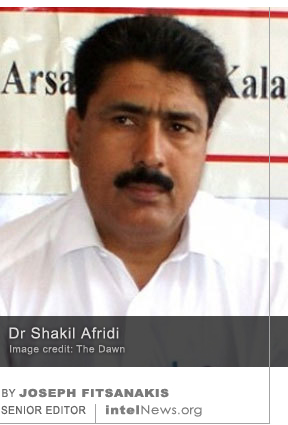 Authorities in Pakistan have dismissed rumors that a medical doctor who helped the United States Central Intelligence Agency find and kill al-Qaeda founder Osama bin Laden in 2011 is to be released from prison. Dr. Shakil Afridi was
  One of North Korea’s most senior intelligence officials, who played a major role in building Pyongyang’s nuclear weapons program, has disappeared and is believed to have defected to France or Britain, according to sources. South Korean media identified the missing official as “Mr. Kang”, and said he is a colonel in North Korea’s State Security Department (SSD), also known as Ministry of State Security. Mr. Kang, who is in his mid-50s, enjoyed a life of privilege in North Korea, because he is related to Kang Pan-sok (1892-1932), a leading North Korean communist activist and mother to the country’s late founder, Kim Il-sung.
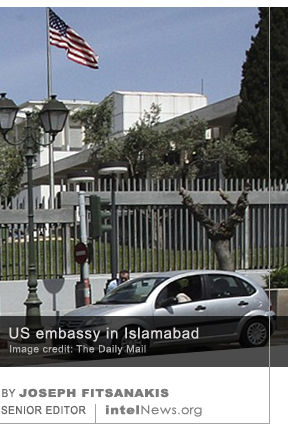 Another American diplomat was detained in Pakistan last week, following the second serious traffic accident involving United States diplomatic personnel in Islamabad in less than a month. The incidents are said to be contributing to ongoing diplomatic tensions between the United States and Pakistan. Many in the South Asian country remain angry about a controversial episode in 2011, when a Central Intelligence Agency officer serving at the US consulate in Lahore killed two men by shooting them in the head with a Glock pistol. The CIA officer,
 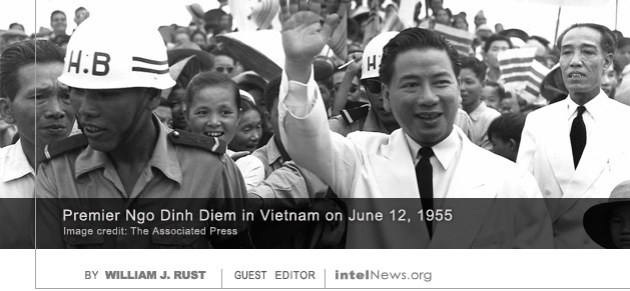 A newly declassified report by the Inspector General of the United States Central Intelligence Agency reveals that the South Vietnamese generals who overthrew President Ngo Dinh Diem in 1963 used CIA money “to reward opposition military who joined the coup”. Acknowledging that “the passing of these funds is obviously a very sensitive matter”, the CIA Inspector General’s report contradicts the sworn testimony of Lucien E. Conein, the CIA liaison with the South Vietnamese generals. In 1975, Conein told a United States Senate committee that the agency funds, approximately $70,000 or 3 million piasters, were used for food, medical supplies, and “death benefits” for the families of South Vietnamese soldiers killed in the coup.








High-level MI6 spy inside al-Qaeda writes book detailing his work
May 25, 2018 by Ian Allen 1 Comment
Aimen Dean, a.k.a. Ramzi
A Saudi-born man, who some refer to as the most valuable British-run spy inside al-Qaeda, has authored a soon-to-be-published book about his experiences. Aimen Dean, known in al-Qaeda circles simply as ‘Ramzi’, became radicalized in the first half of the 1990s in response to the Bosnian War. At that time, he traveled from his home country of Saudi Arabia to Bosnia, where he joined large numbers of foreign Muslim fighters who fought in support of Bosnian-Muslim forces. In subsequent interviews, Dean has said that he continues to view his participation in the Bosnian War as an “ethical and moral” act in defense of a “defenseless population”. Following the end of the Bosnian War, Dean joined many foreign-born fighters who followed al-Qaeda co-founder Osama bin Laden to Afghanistan. While there, he pledged allegiance to bin Laden and gained his trust.
Dean’s task in Afghanistan was to train new al-Qaeda recruits in Islamic theology and history. But he was also tasked with combat duties, which included bomb-making. He witnessed the drastic shift in al-Qaeda’s raison d’être from a group ostensibly fighting to defend Muslims under attack, to a center of a violent campaign against the West. Dean has stated that during his first period in Afghanistan, he sincerely believed that the West was involved in a systematic campaign to destroy Islam and Muslims. Gradually, however, Dean’s views began to conflict with those of al-Qaeda’s leaders. He especially objected to the use of suicide bombers and the deliberate targeting of civilians by al-Qaeda fighters. His disillusionment with al-Qaeda peaked in August of 1998, when the organization targeted the United States embassies in Kenya and Tanzania in coordinated strikes.
During a leave of absence from al-Qaeda’s Afghanistan stronghold, Dean was approached by the United Kingdom’s Secret Intelligence Service, more commonly known as MI6. He says that he quickly agreed to work as a spy for the British agency and did so from 1998 until 2007, when he claims that his cover was blown. Dean has now written a book, co-authored with two CNN reporters, Paul Cruickshank and Tim Lister. Entitled Nine Lives: My Time As MI6’s Top Spy Inside al-Qaeda, the book is due to appear in stores on June 7.
► Author: Ian Allen | Date: 25 May 2018 | Permalink
Filed under Expert news and commentary on intelligence, espionage, spies and spying Tagged with Aimen Dean, al-Qaeda, book news and reviews, espionage, MI6, News, UK, War on Terrorism