Opinion: Amidst war with Iran, Netanyahu tries to subjugate Israel Security Agency

David ZiniTHE GOVERNMENT OF ISRAEL recently appointed a new acting chief at the Israel Security Agency (ISA, also known as Shabak or Shin Bet). Identified only by their first initial, “S.”, this individual is one of the deputies of the outgoing ISA chief, Ronen Bar, and has reportedly served in the ISA for nearly 30 years. For the first time in ISA’s history, the organization is now being led by someone without a permanent appointment, marking a significant departure from usual practice.

This temporary appointment arises from Israeli Prime Minister Benjamin Netanyahu’s insistence on nominating Major General (ret.) David Zini for the position. However, Zini’s nomination has been met with legal challenges. The Supreme Court of Israel has ruled that Netanyahu cannot appoint the chief of the ISA, due to a conflict of interest. This is because the ISA is currently conducting a comprehensive investigation into the connections of Netanyahu’s close advisors with Qatar—a case popularly referred to as Qatargate.

Yet, even amidst Israel’s war with Iran, Netanyahu finds time to advocate for Zini’s appointment as ISA chief, arguing that the ongoing war creates an urgent need for a permanent ISA chief. The matter is once again pending a Supreme Court decision. Nevertheless, it seems that, given the unique circumstances that Israel is currently facing, Zini is likely to be appointed head of the ISA.

It is important to note that Zini lacks experience in intelligence operations. Following the failure of the ISA to provide a warning before the Hamas attack on October 7, 2023, the ISA chief has been expected to have extensive experience in intelligence operations, and to be well-versed in Arab affairs, which are central to ISA’s operations.

The issues surrounding the appointment of Major General Zini are complex. There is concern about the fact that Zini is being nominated personally by the prime minister, who is also requesting that the ISA head relinquish their autonomy and comply with the Prime Minister’s directives. Thus, the ISA could be used as a tool by the Netanyahu administration to advance the prime minister’s own political agenda.

What are the potential immediate risks if Zini is appointed to the role of ISA chief?

  1. Zini will likely respond to Netanyahu’s request and impose secret surveillance on political activists who have long opposed the prime minister. Netanyahu demanded that the former ISA head, Ronen Bar, take similar action. However, Bar refused, asserting that political protest in Israel was legitimate and that political motives, rather than state interests, drove the prime minister’s request.

Read more of this post

Austrian intelligence service report draws international attention over Iran nuke claims

Direktion Staatsschutz und NachrichtendienstON MAY 26, THE Austrian domestic intelligence service, Direktion Staatsschutz und Nachrichtendienst (DSN) in Vienna officially presented its annual report: the Verfassungschutzbericht (VSB) [Constitution Protection Report].  The document can be downloaded [PDF] via the official homepage of the DSN.
First published in 1997 by the predecessor of the DSN and then titled Staatsschutzbericht [State Protection Report], these reports offer rare official insights into the work of Austria’s domestic intelligence service. While their form and scope have varied over the nearly 30 years of the service’s existence, their aim and structure have roughly stayed the same: the VSB informs the public about the duties of the service, and about recent developments in the fields it is tasked with, monitoring and policing, during the calendar year prior to its publication.

Featured chapters nearly always include political extremism, terrorism, espionage, proliferation of weapons of mass destruction, protection of critical infrastructure and, since their emergence, sometimes also cyber threats. Often—thought not always—the reports feature anonymized cases from the year before and specialized essays about certain relevant topics. Traditionally the media and public give most attention to those parts of the report that deal with extremism and terrorism of all kinds inside Austria.
VSB 2024 Receives International Attention

This year, however, several paragraphs in the chapter titled “International Illicit Arms Trade and Proliferation” [“Internationaler Illegaler Waffenhandel und Proliferation”] have drawn international attention. The proliferation section—starting on page 154 of the report—deals with a number of states that can be described as partly or fully antagonistic to “the West”. In addition to Russia, China, Pakistan and North Korea, the Islamic Republic of Iran and its activities are described in the chapter. Regarding the Shia theocracy and its nuclear program, the report states (translated by the author with assistance by DeepL):

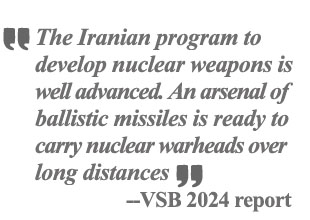
In order to assert and enforce its political claims to regional power, the Islamic Republic of Iran is striving for comprehensive armament. Nuclear weapons are intended to make the regime untouchable and to expand and consolidate its dominance in the Middle East and beyond. The Iranian program to develop nuclear weapons is well advanced. An arsenal of ballistic missiles is ready to carry nuclear warheads over long distances. [Emphasis added]

All efforts to prevent Iran’s armament with sanctions and agreements have so far proved ineffective. On the contrary: the Islamic Republic of Iran is producing weapons and weapons delivery systems on a large scale—and not just for its own use. [p.158]

Iranian intelligence services are entrusted with the development and implementation of circumvention structures for the procurement of armaments, proliferation-relevant technologies, and materials for weapons of mass destruction. They use front companies and networks inside and outside the Islamic Republic of Iran for this purpose. In particular, the [Islamic] Revolutionary Guards Corps’ widely ramified and difficult to oversee company empire serves proliferation purposes. [p.159]

The report clearly describes a program by Iran to develop nuclear weapons as a fact. It does not only suggest that it might be well advanced, but states this as a given. The report furthermore establishes that transport systems to deploy nuclear weapons—once finalized—are in place and could reach long-distance targets.

Fox News Picks Up VSB 2024

The VSB was picked up by the American media giant Fox News. The network reported on it under the title “Explosive new intelligence report reveals Iran’s nuclear weapons program still active” on May 28. The Fox News report begins by pointing out that “[t]he startling intelligence gathering of Austrian officials contradicts the assessment of the US Office of the Director of National Intelligence (ODNI)”. It goes on to note that “[t]he Austrian intelligence findings could be an unwanted wrench in President [Donald] Trump’s negotiation process to resolve the atomic crisis with Iran’s rulers because the data outlined in the report suggests the regime will not abandon its drive to secure a nuclear weapon.”

Fox News quotes David Albright, a physicist and founder/president of the Institute for Science and International Security in Washington, DC, as saying: “[t]he ODNI report is stuck in the past, a remnant of the fallacious unclassified 2007 NIE [National Intelligence Estimate]. The Austrian report in general is similar to German and British assessments. Both governments, by the way, made clear to [the] US IC [Intelligence Community] in 2007 that they thought the US assessment was wrong that the Iranian nuclear weapons program ended in 2003.”

The Fox News report also states that “[t]he danger of the Islamic Republic of Iran as a state sponsor of terrorism [and its illegal atomic weapons program] was cited 99 times in the 211-page report that covers pressing threats to Austria’s democracy.” All in all, Fox News’ reporting paints a picture that the small European state’s intelligence service has information that contradicts the assessment of the much larger American IC and insinuates that the American assessment—and by implication the political approach to dealing with Iran—is wrong. Read more of this post

Before resigning, Israeli security official accuses Netanyahu of serious misconduct

Israel Supreme CourtVETERAN ISRAELI INTELLIGENCE OFFICER Ronen Bar, who has led the Israeli Security Agency (ISA, more widely known as the Shin Bet) since 2021, has submitted an affidavit to Israel’s Supreme Court, accusing Prime Minister Benjamin Netanyahu of serious misconduct. Netanyahu fired Bar in March, but the Supreme Court later suspended Bar’s firing.
Now Bar has submitted an open affidavit alongside a confidential one, alleging serious misconduct by Netanyahu, accusing him of attempting to use the ISA’s investigative powers against protestors and activists. He links this accusation to a number of conspiracies that are circulating in Israel, blaming the ISA for the October 7 intelligence failure. The veteran security official concludes his open affidavit by stating that he “will soon announce the date on which I will end my duties”. Last week, Bar said he would resign in June.

The ISA director also repeats earlier claims regarding the reasons behind Netanyahu’s statement that he “distrusts” him. Among other things, Bar claims that Netanyahu “expressed himself to me more than once in a way that sought to substantiate his expectation that the ISA should act against citizens involved in legal protest activities and demonstrations against the government”. Thus, Bar was asked to provide details about the identities of Israeli citizens, mostly protesting activists, because, according to Netanyahu, they were “following security targets”.
Furthermore, Bar claims he was asked to use the investigatory powers of the ISA to “monitor protest financiers”. He adds he was told during a conversation on the topic that, in the event of a constitutional crisis, he, as the head of the ISA, was required to take his orders from prime minister, and not from the High Court of Justice —another name for the Israeli Supreme Court. Bar notes that the full details of the matter will be provided to the Supreme Court in his confidential affidavit.

In his open affidavit, Bar clarifies that he established several criteria to address the question of whether the ISA should exercise its investigative powers without violating the constitutional right to protest. The criteria were largely based on the legal definition of subversion, defined as illegal activity involving clandestine aspects and has the potential for violence. According to Bar, actions that fail to meet this criterion are not a matter the ISA; rather, if any monitoring is warranted, the police should intervene in the interests of public order. “In borderline cases we consulted with the government’s legal counsel to ensure that the ISA’s broad powers would only be exercised within its designated framework and functions”, states Bar. He adds that “[t]he prime minister’s requests to act contrary to these criteria were refused. In quite a few cases, [Netanyahu] asked to discuss issues related to these issues at the end of working meetings, and after asking the military secretary and the typist, who operates the recording device, to leave the room with the clear goal that the exchange of words would not be recorded”. Read more of this post

Analysis: Assad’s collapse in Syria was a strategic surprise to Israel

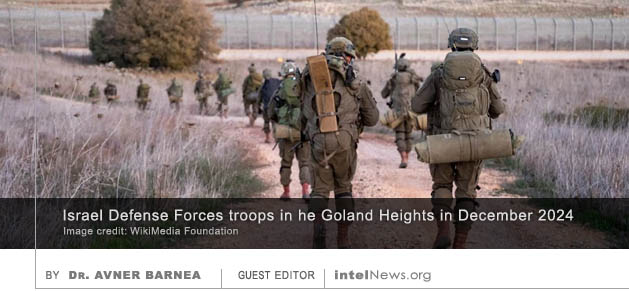
Syria IsraelTHE COLLAPSE OF THE regime of Syrian President Bashar al-Assad on December 8 caught the Israel Defense Forces (IDF) and Israel’s intelligence community —mainly Israel Military Intelligence (IMI) and the Mossad— by surprise. Assad’s collapse occurred much faster than Israel had estimated. Israel did not expect that the Syrian Arab Army would disintegrate so resoundingly, within 48 hours of the attack by the Syrian rebels.
Israeli intelligence assessed that, despite the shocks it had suffered in recent months, the so-called Axis of Resistance against Israel —mainly Hezbollah, Syria, and Iran— was stable. A scenario of rapid collapse of the government in Syria had not been assessed as a possibility, or even given a low probability tag. That was primarily because the Assad family had governed Syria for almost 60 years.

Following the Assad regime’s collapse, the focus of Israel’s intelligence is on analyzing the intentions of the major rebel organization, Hayat Tahrir al-Sham, and understanding how —if at all— it will lead the new administration in Syria. Israel is also examining developments in southern Syria, as well as what is happening at the Syrian and Russian military bases in Latakia and Tartus. Moreover, the IDF is monitoring the activities of Iranian elements in Syria, including on the border with Lebanon, to prevent the possibility of military equipment being transferred from Syria to Hezbollah.
It is clear to Israel that Turkey stands behind the Hayat Tahrir al-Sham organization and that Ankara armed and supported the group for a significant period. What is less clear is whether and how Turkey’s involvement in Syria could threaten Israel’s interests, given that Israel’s relations with Turkey have deteriorated dramatically in recent years.

Assad was a key member of the pro-Iranian Axis of Resistance. Following his fall from power, Iran and Hezbollah could lose their main logistical hub for producing, transferring, and storing weapons, as well as training their forces and militias. Additionally, Syria under Assad constantly posed the threat of turning into yet another battlefront against Israel. Without Assad, Russia could lose its grip on Syria —the only country in the Middle East where Russian influence dominates that of the United States. The Russians could also lose access to their military bases in Syria, which offered the Russian Navy access to the waters of the Mediterranean.

Despite the fall of the bitter enemy that was Assad’s Syria, and the deep shock suffered by the Iranian-led Axis of Resistance camp that has been dominant in the Middle East in recent decades, Israeli intelligence is not optimistic about the emerging situation in post-Assad Syria. Syria is a collection of minorities —Druze, Kurds, Alawites, and Christians— that have been artificially joined together despite carrying bitter, bloody scores. The latter may erupt sharply, especially against the Alawites. Concepts such as liberal politics, civil society, or a cohesive nation-state, have never existed inside Syria.

It follows that Israel is very concerned about the emerging uncertainty in Syria. Immediately after the fall of Assad, the IDF strengthened its defenses on the Golan Heights border to ensure that the chaos in Syria did not spill over into Israel. Meanwhile, Israel is in contact —both directly and through intermediaries— with several Syrian rebel groups, including Hayat Tahrir al-Sham. The Israeli message at this stage is a demand that the rebels not approach the border, along with a warning that, if they violate the separation of forces agreement, Israel will respond with force.

And a final note: assessments in relation to the Syrian regime’s collapse continue to emerge in the IDF and the Israeli intelligence community. These assessments concern the extent to which the lessons of October 7 have been sufficiently analyzed and assimilated within Israel. Specifically, there are questions about whether this new intelligence surprise in Syria may stem from the fact that an in-depth investigation into the lessons of October 7 has yet to be carried out during the 14 months of the war with Hamas.

Author: Avner Barnea* | Date: 20 December 2024 | Permalink

Dr. Avner Barnea is research fellow at the National Security Studies Center of the University of Haifa in Israel. He served as a senior officer in the Israel Security Agency (ISA). He is the author of We Never Expected That: A Comparative Study of Failures in National and Business Intelligence (Lexington Books, 2021).

Analysis: The fate of Russia’s military bases in Syria seems highly uncertain

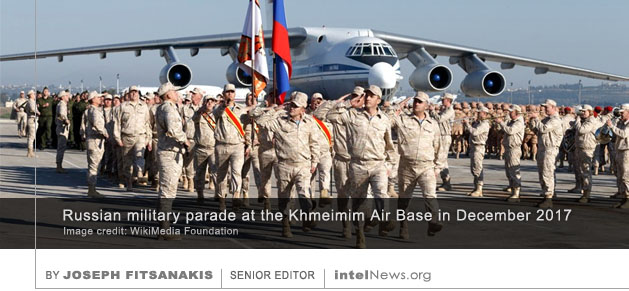
Khmeimim Air Base SyriaTHERE ARE CONFLICTING REPORTS about the fate of Russia’s military bases in Syria, following the complete collapse of the 54-year-long Assad dynasty. Late on Sunday it was announced on Russian state media that the Kremlin had extended Bashar al-Assad and his family political asylum “on humanitarian grounds”. Attention quickly turned to the fate of the Russian embassy in the capital Damascus and the Russian military facilities in Tartous and Khmeimim.
It is difficult to overstate the strategic significance of the Russian military facilities in Syria, some of which date as far back as 1971, when Hafez al-Assad, Bashar al-Assad’s father, assumed power in the country. The Russian naval base in Tartous is currently the only Russian military facility outside of the former Soviet Union. Furthermore, it constitutes the sole warm-port fueling and repair facility that is exclusively available to the Russian Navy. It is home to the Russian naval group in Syria, which consists of a submarine and five warships.

Likewise, the Khmeimim Air Base in Syria’s Latakia province is home to dozens of Russian fighter jets, which have been stationed there since 2015, ostensibly in order to protect the Syrian government from the Islamic State. However, Russia regularly uses the Khmeimim Air Base to transport troops and war materiel to Africa, and to project air power in the Mediterranean, through the presence of several bomber aircraft. The latter can be found, not only in the Khmeimim Air Base, but also in the Syrian military airports of Homs and Palmyra.

But these two military airports are now in the hands of the Hayʼat Tahrir al-Sham (HTS) forces that have captured much of Syria in the past two weeks. It is doubtful that the Russian Aerospace Forces will be able to use them from now on. Moreover, there are reports that Moscow will be forced to engage in a strategic withdrawal of the entirety of its military forces from Syria within hours, if not days.

On Sunday, the Russian Ministry of Foreign Affairs issued a dismissive statement claiming that, although Russian troops in Syria had been placed on high alert, “no serious threat to their security” had been detected. According to the Reuters news agency, the Russian government had been in communication with the leadership of the HTS leadership for several days. As a result of this communication, an agreement had allegedly been struck, which guaranteed “the safety of Russian military bases and diplomatic institutions in Syria”. Read more of this post

Spy’s release by higher court shows Austria is unable to find its intelligence footing

Egisto OttON JUNE 26, THE longwinded case of Austria’s counter intelligence failure regarding a possible inside threat took yet another —quite surprising— turn: the state court of Vienna (Landesgericht Wien) released from pre-trial detention (Untersuchungshaft) Egisto Ott, a former member of the Federal Office for the Protection of the Constitution and Counterterrorism (BVT) —Austria’s now-dissolved domestic intelligence agency. Ott, who was accused of spying against Austria, had been arrested (again) at the end of March on suspicion of obtaining classified information for which he could provide no reason, as well as for presumably selling it. Among the suspected recipients of the classified information were Russian assets and —more or less directly— Russian intelligence.
However, the three-judge panel called to decide on the detention complaint came to the conclusion that, while there remains a strong suspicion (dringender Tatverdacht) against Ott, the reasons for his further detention were not sufficiently given. In the judges’ view, all activities that could carry a pre-trial detention were committed before Ott was arrested and released for the first time in 2021. Back then, Ott had also been released after a short detention, following a decision by the same court. Briefly summarized, in 2021 the Landesgericht concluded that Ott could no longer spy against Austria as he did not have access to classified information, having been removed from the domestic intelligence agency years earlier. Additionally, since the BVT was in the process of reorganization and reformation at that point, the judges deemed the possibility of further criminal behavior by Ott to be unrealistic.

The recent assessment that Ott did not conduct additional punishable offences following his first release is surprising, since the prosecutor alleged —with a certain undertone directed against the initial decision to release Ott, which can be noted in the arrest warrant— that Ott had resumed his information-gathering and handling activities immediately upon being set free in 2021. Specifically, Ott is accused of having unlawfully retrieved data from the Central Register of Residents (Zentrales Melderegister) on March 24 of that year and then passing it on. The information accessed by Ott concerned the Bulgarian investigative journalist Christo Grozev, who was living in Austria at the time. Consequently, Grozev had to leave Vienna, since his life was deemed to be in severe danger. Today, whenever Grozev returns to Austria to visit members of his family who remain there, he has to do so under heavy protection by the Austrian authorities.

Between June and November 2022, when Ott had been released from his first pre-trial detention, there was also an alleged transfer to Russia of three mobile phones, or their data, as well as a highly-encrypted SINA-workstation laptop. However, the judges of the Landesgericht concluded that, while information or intelligence provided to foreign services does not have to be secret to constitute criminal espionage against Austria, “concrete and vital interests of Austria” have to be violated by such a transfer. The judges did not deem that the evidence furnished by the prosecutor met their criteria. Die Presse, Austria’s ‘newspaper of record’, published a detailed explanation of the court decision. Read more of this post

Analysis: Secret Service failed Trump because it can’t keep up with the growing threat

Trump 2016THE UNITED STATES SECRET Service is among the world’s most prestigious law enforcement agencies. Its institutional experience in protecting US presidents and presidential candidates dates to 1901. Given its high-stakes protective mission —safeguarding the executive leadership of the world’s most powerful nation— the agency has historically placed emphasis on flawlessness: it simply can’t afford to fail.
Yet it did just that on Saturday in Butler, Pennsylvania. Presidential candidate Donald Trump did not survive the attempted assassination because his Secret Service detail neutralized the threat to his safety in time. Instead he survived because the shooter, 20-year-old Thomas Matthew Crooks, from the small suburb of Bethel Park in Pittsburgh, missed. How are we to explain this abject failure by one of the world’s most venerated law enforcement agencies?

POLICING IN A DEMOCRACY

Unlike tyrannical regimes, where law enforcement is nearly omnipresent, policing functions in democratic societies are relatively limited. They rely on what can be essentially described as a numbers game. Under this model, the effectiveness of policing functions inherently rests on the assumption that the vast majority of the population will comply with legal norms voluntarily, and that it will do so most of the time.

Thus, the sustainability of law and order in democratic societies hinges, not just on the capabilities of the enforcement agencies, but significantly on the general populace’s commitment to uphold the rule of law. This tacit social contract allows law enforcement agencies to operate with a relatively small logistical footprint. It also allows police forces to focus their efforts on a relatively small number of individuals, or groups, who do not adhere to the law.

WIDESPREAD BREAKDOWN

The US has relied on this model of policing since the Civil War. However, this model tends to falter once a substantial segment of the population refuses to voluntarily adhere to legal conventions. In such a scenario, the sheer number of non-compliant individuals can overwhelm the policing system, leading to a widespread breakdown in law and order.

The US has witnessed such incidents with alarming intensity in recent years. Examples include the 2014 Bundy standoff and the 2016 occupation of the Malheur National Wildlife Refuge by armed groups of anti-government extremists. It also witnessed the —often gratuitously violent— George Floyd protests, as well as the armed occupation of the Capitol Hill neighborhood of Seattle, Washington, in 2020.

Most notably, America witnessed widespread civil disobedience on January 6, 2021, when thousands of frenzied Trump supporters stormed the US Capitol and attempted to bring an end to the Constitutional order in one of the world’s oldest democracies. In addition to exposing the fragility of American democracy, the January 6 attack drew attention to the ineffectiveness of the state’s policing functions, thus further-eroding public trust and compliance.

AMERICANS ARE EMBRACING VIOLENCE

There is no denying that Americans are viewing violence as an element of national politics with an alarming rate. Last summer, a survey conducted by the University of Chicago’s Project on Security and Threats revealed that 4.4 percent of the adult population of the US —12 million Americans— believed that violence was justified to restore Donald Trump to power. Granted, very few of those survey responders would actually be willing to act on such extreme beliefs. But even a mere 1 percent of those 12 million people who appear to endorse violence in support of Trump amounts to 120,000 individuals. That’s an enormously large number of radicalized Americans. Read more of this post

Notes on the assassination of Iranian IRGC Commander Hassan Mahdawi

IRGC - ABTHE TARGETED KILLING OF Hassan Mahdawi, a high-ranking member of Iran’s Islamic Revolutionary Guards Corps (IRGC) and the commander of the Quds Force in Syria and Lebanon, was carried out by Israel on April 1, 2024. The actual assassination was based on precise operational intelligence, while Israel’s assessment of Iran’s response was wrong.

On the day of the attack, a building adjacent to the Iranian Embassy in the Syrian capital of Damascus was attacked with rockets. The attack killed seven IRGC members: General Muhammad Reza Zahedi, also known as Hassan Mahdawi, his deputy, and five additional officers. Mahdawi is the most senior Iranian commander to be killed since the assassination of IRGC Quds Force Commander Qasem Soleimani by the United States in 2020.

Mahdawi had close ties with Hezbollah. He maintained a close relationship with Hezbollah Secretary-General Hassan Nasrallah and was perceived by Israel to be directly coordinating the military attacks on Israel from Lebanon and Syria. In Tehran’s collective memory, Israel’s history of attacks against it includes numerous strikes on Iranian nuclear sites, assassinations of scientists within Iran, and actions against Iranian proxies in Syria, Lebanon, Iraq, and Yemen. Traditionally, these attacks have been invariably met with attacks by Iran’s proxies in the region.

This time, it was different. Iran recognized Mahdawi’s assassination as a direct attack on Iran that it could not tolerate, and had to respond to differently. Just days following Mahdawi’s assassination, Iran attacked Israel. According to the Israel Defense Forces, 99 percent of the more than 330 weapons fired at Israel (including at least 185 drones and 110 surface-to-surface missiles) were intercepted, mostly over the territory of countries adjacent to Israel. Iran’s attack on Israel was unprecedented. It was launched directly from Iranian territory in contrast to prior cases, when Iran has used its proxies, supposedly leaving its hands clean.

Israel could not tolerate such a blatant infringement on its sovereignty. After Israeli officials vowed a response to the Iranian attack, the Jewish State counter-attacked, causing minor damage to the Eighth Shekari Air Base in northwest Esfahan, a dozen kilometers from the Natanz nuclear facility. It was a calculated response designed to deliver a message to Iran that Israel could and would respond to an attack. Following Israel’s counterattack, the tensions between Iran and Israel have subsided for the time being.

While the attack on General Mahdawi was based on excellent operational intelligence, it became evident that the Israeli assessment regarding a possible Iranian response was erroneous. The Israeli assessment was that the Iranian response would be similar to what occurred in the past —namely limited attacks by Hezbollah on northern Israel and attacks on the Golan heights by Iranian proxies in Syria. Israel simply did not anticipate a direct Iranian attack on Israel from Iranian territory.

It seems that Israeli senior analysts were entangled in a conception of Iran’s past behavior and anticipated that Tehran’s response would be similar to prior cases, namely utilizing Iran’s proxies. Israel did not pay enough attention to the difference between Mahdawi’s assassination and previous attacks against Iran. This time, the attack targeted the Iranian embassy in Damascus and the target was a very senior official, who was close to Iran’s Supreme Leader Ali Khamenei.

It appears that Israel’s assessment of the Iranian response to Mahdawi’s assassination was a strategic failure. It appears more likely that the Israeli War Cabinet was provided with an incorrect assessment by the nation’s intelligence community, and less likely that it was provided with an incorrect assessment, which it then decided to ignore. There is concern in Israel that the intelligence assessment was once again wrong, after the colossal failure to anticipate the October 7 attack on Israel by Hamas.

Author: Avner Barnea | Date: 26 April 2024 | Permalink

Dr. Avner Barnea is research fellow at the National Security Studies Center of the University of Haifa in Israel. He served as a senior officer in the Israel Security Agency (ISA). He is the author of We Never Expected That: A Comparative Study of Failures in National and Business Intelligence (Lexington Books, 2021).

Austria: Arrest raises broader questions about counterintelligence capabilities

BVT AustriaON GOOD FRIDAY, MARCH 29, Egisto Ott, a former member of Austria’s now-dissolved domestic intelligence agency, the Federal Office for the Protection of the Constitution and Counterterrorism (BVT), was arrested in his house in Carinthia, Austria’s southernmost state. Ott had frequently been at the center of media attention in the past year, in connection with the network surrounding the fugitive financier and alleged spy Jan Maršálek, as well as alleged misconduct relating to carrying out illegal investigations of persons. Ott also seems to have been involved in an alleged attempt to create an intelligence unit, or even an entire shadow intelligence service, embedded inside Austria’s foreign ministry. Now the veteran police and intelligence officer stands accused by the state attorney of abusing his authority and of being part of an “intelligence activity to the disadvantage of Austria” —the only form of spying that is illegal under § 256 of the Austrian criminal code.
Ott’s arrest came several years after intelligence was first shared with Austria by Western partner services —allegedly the Central Intelligence Agency— that reportedly date from as early as November 2017. Back then, Ott allegedly received classified material from his service’s email address to his personal Gmail account. However, Peter Gridling, director of the BVT from 2008 until its dissolution in 2021, stated in a recent interview that the ensuing investigations did not yield actionable results that could be used in criminal proceedings. This statement is highly interesting, as Gridling filed accusations about Ott with the State Prosecutor’s Office himself, and would hardly have done unless he had access to hard evidence. Ott was consequently removed from the BVT and placed in Police Academy Austria (SIAK), which is responsible for training police officers and conducts research related to police and domestic security.

Nevertheless, according to media reporting, Ott seems to have kept and illegally used certain forms of identification that presented him as a police officer. He is also alleged to have maintained access to several police databases and to have retained his network of trusted informants that provided him with intelligence. These included contacts in friendly foreign police services, whom Ott knew from his time as a liaison officer in Italy and Turkey. According to Gridling, these contacts were unaware that Ott had been removed from the BVT under suspicion of being unreliable and potentially even working for Russia. They therefore continued to help him when asked. Ott allegedly deceived his contacts by claiming that he needed information on cases relating to different kinds of extremism. As it turned out, according to the leaked arrest warrant, several of the individuals referred to by Ott as “suspects” in terrorism investigations were in fact Russian dissidents or intelligence defectors who were living as protected persons in Austria and elsewhere outside Russia.

It appears highly probable that Ott also had people inside the Austrian bureaucracy, including former colleagues in the BVT, who continued to provide him with information and assistance, even after the first allegations against him arose in 2017. As of now, at least one other officer from LVT Vienna (the state unit of the BVT) has been found to have illegally provided Ott with Information. It is likely, given the publicly available descriptions of Ott’s activities, that other individuals may be implicated. It also remains to be seen whether individuals involved in this case were able to join the BVT’s successor agency, the new Directorate of State Protection and Intelligence (DSN). Read more of this post

Analysis: Israel underestimated Hamas while overestimating its own capabilities

IDF IsraelTHE OCTOBER 7 ATTACK on Israel was a total surprise. There was no warning. There were very few signs of a possible attack. Israeli intelligence evaluated these signs as elements of a routine military exercise by Hamas, and even assessed them as parts of an imaginary scenario. It therefore gave no warning to those Israeli Defense Forces (IDF) units that were stationed on the border with Gaza. Meanwhile, what we know about the intelligence failure of October 7 will likely pale before what the commission of inquiry will reveal once it is established. That was precisely what happened in the case of the Agranat Commission of Inquiry, which made significant revelations while investigating the intelligence failings of the IDF in the run up to the 1973 Yom Kippur War.

In the eyes of the Israeli generation of the Yom Kippur War, the possibility of such a failure happening again was unthinkable. Yet there is a significant difference between the events of 1973 and the events of last October 7. In 1973 the intelligence failed, but the IDF reacted quickly and acted efficiently. This Q Quotetime, in the first two days of the conflict the IDF was confused and acted without direction, in the apparent absence of relevant action plans for what to do in the event of a massive invasion. The IDF was clearly not ready for such a scenario.

Recently, another important piece of information about the intelligence failure of October 7 was revealed. It was reported that, two months before the surprise attack by Hamas, information was received from an agent handled by the Israel Security Agency (ISA) in Gaza, with a “very high” reliability level. The agent allegedly reported that Hamas was planning “a major move in the week after Yom Kippur”. Yet that warning was not marked as significant; the assumption was that, if the warning materialized, it would be corroborated with additional intelligence. It was thus kept from higher levels of command and from Israeli Military Intelligence (IMI). The ISA did not deny the report, saying instead in a statement: “Focusing on one specific piece of news or another does not reflect the intelligence picture at the time”.

Given the high number of casualties and the horrendous destruction that resulted from the October 7 attack, many Israelis, including some in the security establishment, feel that it is far too long to wait until a commission of inquiry is established and publishes its conclusions. It will likely take at least two years Q Quotefor those conclusions to become public. What is to be done in the meantime? There is public pressure to launch the inquiry soon.

Recently the State Comptroller of Israel, Matanyahu Engelman, announced that he has begun to investigate the intelligence failure. This is an appropriate move. However, with all due respect to the state comptroller’s inquiries, we know from previous experience that his findings have no teeth. For instance, in the context of Hamas, the state comptroller’s review of Operation TZUK EITAN (the 2014 Gaza War) was published in early 2017. It revealed serious instances of misconduct in the intelligence community dating several years prior to the operation. Yet this severe criticism passed below the public’s radar and was practically ignored, while no actions were taken against IDF and ISA security personnel that were shown to have acted irresponsibly.

I would like to point to a number of stronger factors that led to the tragic complacency of October 7, drawn from the field of psychology. It relates to how a country (mainly through its intelligence analysts) perceives its enemies and how this affects the evaluations of said enemies. We know that there was a conception on the Israeli side that Hamas had no interest in attacking Israel at this stage. It seems that the State of Israel underestimated Hamas and its leader, Yahya Sinwar, based on the available evidence of Hamas and Sinwar. Read more of this post

Analysis: Killing of Hamas leader in Lebanon marks a new phase in Israel’s war

Dahiyeh BeirutMIDDLE EAST OBSERVERS WERE hardly surprised by yesterday’s news of the apparent assassination of Hamas leader Saleh al-Arouri in Lebanon. Not only was al-Arouri a senior Hamas official, but he also headed the militant group’s contact team with Lebanese Hezbollah and its Iranian patrons. He was likely at the top of Israel’s permanent assassination list even prior to Hamas’ bloody assault on Israel last October 7. Yet, within the explosive content of the ongoing Israel-Hamas war, Tuesday’s assassination signals the opening of a new and highly unpredictable phase in an already uncertain conflict.
The vague statements issued by Israeli officials in response to the news of al-Arouri’s assassination did little to dispel the broadly accepted view that Israel’s intelligence services were behind the killing. Headed by its external intelligence agency, the Mossad, Israel’s intelligence services have a long history of extrajudicial assassinations. In his seminal book Rise and Kill First, the Israeli investigative journalist Ronen Bergman discusses in detail the history of these assassinations, which predate the postwar establishment of the state of Israel. Bergman’s data-rich research reveals that the Israeli intelligence services have performed approximately 2,700 extrajudicial assassinations in their history —more than any Western state.

Given such a prolific history of targeted killings, al-Arouri’s assassination in Beirut can be described as both expected and unremarkable. Indeed, Israeli officials have stated repeatedly since October 7 that Hamas’ senior leadership will be targeted worldwide. In a leaked recording that emerged last month, Ronen Bar, director of the Israeli Security Agency, was heard announcing to members of Israel’s Knesset that Hamas’ senior leadership would be targeted “in Gaza, in the West Bank, in Lebanon, in Turkey, in Qatar, everywhere”.

At the time the recorded conversation leaked, nobody thought that Bar, a seasoned intelligence officer, was bluffing. Indeed, the operational capabilities and reach of the Mossad are well understood by everyone in the Middle East. That al-Arouri was assassinated in southern Beirut’s Dahiyeh suburb is significant. An undisputed Hezbollah stronghold, Dahiyeh is tightly controlled by the Shiite militant group, which prides itself on ensuring the safety of its residents. Yesterday’s assassination at the very heart of Hezbollah’s lair was nothing short of a demonstration of the Mossad’s competency in special operations.


If Israel is truly intent on neutralizing the leadership of Hamas, Mossad’s competency will be increasingly tested in the coming months, as the Jewish state will have to strike repeatedly beyond its borders. This is because, unlike the beleaguered Gazans, who are currently experiencing the most destructive bombing campaign of the 21st century, most leaders of Hamas live in relative luxury in Doha, Ankara, Beirut, Damascus, and other Middle Eastern metropolitan centers. It is there, and not in the razed neighborhoods of Khan Yunis and Jabalia, that Israeli assassination teams will need to operate with increasing dexterity. Read more of this post

A senior American diplomat spied for Cuba for 42 years. How serious is this case?

Victor Manuel RochaLAST WEEK THE UNITED States Department of Justice announced the arrest of Victor Manuel Rocha, 73, a former senior American diplomat, whose career included stints as ambassador and advisor to the National Security Council and the United States Southern Command. Cuban intelligence allegedly recruited Rocha when he was a student in the 1970s and inspired him to spend his entire professional life in search of opportunities to supply intelligence to Cuba —and possibly Russia and China. United States Attorney General Merrick Garland said Rocha’s case was “one of the highest-reaching and longest-lasting infiltrations” of the US government by a foreign agent. This may be an understatement.

A STORIED CAREER IN GOVERNMENT

Rocha was born in Colombia in 1950, but grew up in New York City after his mother emigrated to the United States. In 1965, the studious Rocha earned a full-ride scholarship to a prestigious boarding school in Connecticut. This enabled him to earn an undergraduate degree from Yale University in 1973, before completing master’s degrees in public administration and foreign affairs from Harvard University and Georgetown University.

After receiving his security clearance from the Department of State, Rocha relied on his advanced social skills and native command of the Spanish language to quickly rise through the ranks of the diplomatic corps. Within a decade he had served prestigious assignments in Argentina, Honduras, Italy, Mexico, and the Dominican Republic, where he held the post of deputy chief of mission. In the mid-1990s, Rocha served as deputy principal officer in the United States Interests Section in Cuba —effectively the second-in-command in Washington’s de facto embassy in Havana.

Rocha’s diplomatic career culminated with the post of ambassador to Bolivia, from which he abruptly resigned in 2002. He did so reportedly in order to pursue employment in the private sector and raise funds for his children’s college education. Prior to the end of his State Department career, however, Rocha had managed to hold posts as a Latin America adviser to the National Security Council, which is the highest executive decision-making body of the United States government. He had also served as an adviser to the United States Southern Command (USSOUTHCOM), which oversees all activities of the Department of Defense in Central and South America, including the Caribbean.

FORMING REVOLUTIONARY LEFTIST IDEALS

By 1978, when he became a United States citizen, the young Rocha had spent time in Chile. While there, he witnessed first-hand the turbulence of Chilean politics in the lead-up to the military coup of 1973, which cut short the presidency of leftist icon Salvador Allende. Washington’s role in the coup, and in the ensuing junta of General Augusto Pinochet, appears to have steered Rocha’s politics decisively to the left. It was in fact in Chile where, according to the Federal Bureau of Investigation (FBI), Rocha was recruited by the Dirección de Inteligencia (DI, also referred to by its former acronym, DGI). Read more of this post

The OSINT factor in Hamas’ operational success and Israel’s intelligence failure

Hamas GazaIT HAS BECOME CLEAR that Hamas had up-to-date intelligence on Israeli targets prior to the attack on October 7, 2023, the largest and most devastating terrorist attack in Israel’s history. Hamas did not have access to clandestine information sources but rather relied on open-source intelligence (OSINT) to understand the structure and weaknesses of Israel’s defense system along the border fence. In addition to publicly available maps, Hamas meticulously gathered online intelligence about specific sites within the Israeli communities near the Gaza Strip.

It is also possible that some of the intelligence came from human intelligence (HUMINT) sources, largely through Gazan workers who were employed in Israel. Moreover, Hamas had access to constant Israeli media broadcasts, which supplied them with invaluable intelligence on the border communities and adjacent military facilities, as well as on communities that were located further to the north and east. Although the Israeli state exercises censorship in the Q Quoteinterests of national security, the public’s ‘right to know’ purview is substantial. Thus, significant amounts of information are available online.

In assessing the behavior of Hamas in recent years, one can observe that it did not act as a terrorist group for quite some time. Rather, it operated as a government organization, while monitoring its enemy and waiting patiently for an opportune moment to attack. Simultaneously, Hamas utilized disinformation tools to conceal its attack plans. It trained its fighters within commando units that employed information effectively and relied on actionable intelligence, rather than chance. This can be observed from interrogations of Hamas members who were detained by Israeli authorities after October 7. In one example, Hamas used detailed maps of Israeli communities near the Gaza border, which are available on Google Earth, to plan its attacks of October 7. Printouts of these maps were found among the belongings of Hamas assailants that were killed during the attacks.

Some in Israel are now advocating for increased protection of OSINT, particularly for Israeli sites related to security, including civilian first-response units, defense systems guarding settlements, and civil technological assets. However, implementing such measures within the current framework of Israel’s open society seems challenging. Despite the known importance of OSINT to Hamas and its potential risk to Israel’s security, significant changes in this regard may not occur, as they could impact the country’s democratic values. However, it is still possible to improve the quality of security censorship regarding sensitive civilian information that can be used by adversaries. Such moves would include protecting databases, limiting information relating to the addresses of senior officials, or putting in place stricter policies on the movement of Gazan workers in Israel.

Contrary to Hamas’, Israel’s OSINT systems underperformed in the run-up to the October 7 attacks. That was so especially after the central OSINT unit of the Israeli Military Intelligence was dissolved, for reasons that remain to be investigated. CNN was among many news outlets that have revealed how Hamas advertised its military drills on social media, but somehow Israeli intelligence failed to pay attention to them.

When Hamas openly declared its intention to attack communities near the Gaza border, and trained its units for that purpose, the Israeli intelligence community, including the IMI and the Israel Security Agency (ISA), underestimated its real attack capabilities based on OSINT materials. This miscalculation stemmed from incorrectly assessing Hamas’s capabilities and overestimating the Israel Defense Forces’ ability to swiftly respond and prevent the attack on civil and military targets. Unfortunately, this assessment proved to be a significant mistake.

The effective use of OSINT lies at the heart of Hamas’ operational plan to attack simultaneously several Israeli targets and to cause extensive damage. It appears that Hamas was able to utilize the OSINT factor to its maximum extent, thus adding significant value to the success of the attack.

► Author: Dr. Avner Barnea | Date: 05 December 2023 | Permalink

Dr. Avner Barnea is research fellow at the National Security Studies Center of the University of Haifa in Israel. He served as a senior officer in the Israel Security Agency (ISA). He is the author of We Never Expected That: A Comparative Study of Failures in National and Business Intelligence (Lexington Books, 2021).

Analysis: Israel’s misjudgment of Hamas caused the October 7 intelligence failure

Gaza StripSINCE OCTOBER 7, WHEN Hamas launched its surprise attack on Israel, many more details about the intelligence failure have emerged. It appears that Israeli intelligence officials have warned for years about military exercises held by Hamas in the Gaza Strip, which have included practice raids on cities deep inside Israel. However, the Israel Military Intelligence (IMI) did not heed to the warnings, because it considered Hamas operationally incapable of carrying out such raids. Instead, the IMI estimated that the Hamas leadership aimed to arrive at a settlement with Israel. That seems like the result of a highly successful disinformation operation, which added significantly to the effectiveness of the sudden attack on Israel on October 7.

It now appears that several months after the Israel Defense Forces (IDF) Operation Guardian of the Walls, which targeted Hamas in the Gaza Strip in May of 2021, Hamas began to train for a large-scale operation against Israel. However, the IMI estimated that Hamas was not capable of attacking aQ Quote large number of settlements simultaneously. It also believed that such an operation would go against the spirit of Hamas leadership’s spirit intention to settle with Israel.

As early as 2022, the IMI had analyzed videos of Hamas’ military exercises, which Hamas itself had made available on social media networks. Meanwhile, the intelligence information that emerged from the Gaza Strip showed that the professionalization of Hamas’ military arm, the Izz ad-Din al-Qassam Brigades, was improving. However, IMI officials rejected the need to build an operative response to the mass-attack scenario that these exercises pointed to, because they saw them simply as exercises.

Israeli intelligence also analyzed the communications discourse between the commanders of Hamas, which it had acquired through intercepts. It purportedly indicated that Hamas intended to carry out raids on Israeli communities located near the fence between Israel and Gaza, but also on targets located deeper inside Israel. The communications discourse also indicated that such attacks could occur, not only using tunnels, but with incursions above ground and even through aerial methods.

One of the methods that Hamas trained on, and one that was known to Israeli intelligence, focused on disabling the highly sophisticated observation posts, sensors and remote-controlled machine guns, which Israel has installed along the border fence with the Gaza Strip. The purpose of these exercises was to enable an attack on the fence and overtake it these sophisticated tools with Hamas operatives, thus effectively blinding the Israeli forces. However, Israeli authorities made no effort to prepare for such a scenario by protecting these installations.

The broad picture that is emerging raises serious questions about why the IDF did not take a reasonable course of action against Hamas’ operational plan —and why it failed to do so despite being aware of the intensity of the Hamas exercises, and despite being aware of the group’s stated intentions. Q QuoteIndeed, a preventive course of action should have been in place even in the absence of specific intelligence warnings —if only to enable the IDF to repel a surprise attack by Hamas. There was no need to estimate what Hamas would do in order to prepare for a surprise attack.

Yet it is now patently obvious that there was ample intelligence about Hamas’ intentions. The latter were both apparent and known. Even without the wisdom of hindsight, it is clear there was enough intelligence to enable Israel to act in a timely manner against Hamas’ plan. Yet Israel severely misjudged Hamas’ intentions. In retrospect, it appears that ample intelligence about Hamas’ intentions had been gathered, that the IMI and Shin Bet were severely underprepared for a surprise attack, that the precise details of Hamas’ attack were missed, and that Hamas’ intentions were misjudged. These are the reasons why Israel was caught unprepared and suffered a catastrophic surprise on October 7.

Author: Dr. Avner Barnea | Date: 10 November 2023 | Permalink

Dr. Avner Barnea is research fellow at the National Security Studies Center of the University of Haifa in Israel. He served as a senior officer in the Israel Security Agency (ISA). He is the author of We Never Expected That: A Comparative Study of Failures in National and Business Intelligence (Lexington Books, 2021).

In entering Gaza, the IDF will be facing not just Hamas, but Iran’s ‘Axis of Resistance’

Hamas GazaARGUABLY NO COUNTRY BENEFITED more from the American invasion of Iraq than the Islamic Republic of Iran. In a war that lasted over a decade, Washington spent over $2 trillion of its own funds to eliminate one of Iran’s most powerful regional adversaries. In the process, the invasion facilitated the rise of Iraq’s militant Shia movement, which today forms the core of the Iraq’s Popular Mobilization Forces (PMF). Although it is technically an auxiliary branch of the Iraqi security forces, the PMF regularly looks to Tehran for guidance.

The PMF belongs to what Iranian leaders refer to as the ‘Axis of Resistance’ (mehvar–e moqâvemat in Farsi), a term that denotes the extraordinary expansion of Iran’s influence in the Middle East and Central Asia in recent years. In addition to the PMF in Iraq, the Axis of Resistance incorporates an international coalition of dozens of armed groups, militant factions, Shia tribes, and political parties. They range from the Houthis in Yemen and the Hezbollah in Lebanon, to entire branches of the Syrian Armed Forces, and even Shia militias in Afghanistan, Azerbaijan, and Bahrain. The coalition also includes a complex mosaic of armed Palestinian groups, such as Palestinian Islamic Jihad and —increasingly after 2018— Hamas.

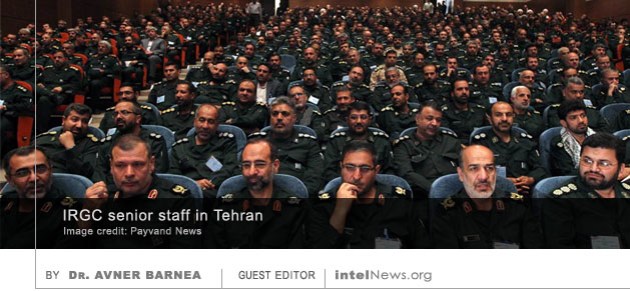
These actors are certainly disparate, and often contrast with each other. For instance, relations between Hamas and the Syrians have been strained for years. All of them, however, are united in their common anti-Western stance and contempt for pro-Western states in the Middle East, including Saudi Arabia and Israel. Moreover, their ties under the Axis of Resistance umbrella remain informal and relatively loose. However, they all receive support —including funding and training— from Iran’s Islamic Revolutionary Guards Corps (IRGC), a branch of the Iranian Armed Forces that protects and promotes the ideological inheritance of the 1979 Islamic Revolution.

Since 2011, the IRGC has viewed the Axis of Resistance as a vital element of its asymmetric military strategy. Its purpose is to help Iran successfully confront its much stronger adversaries, two of which —the United States and Israel— are nuclear-armed. That is precisely why Tehran has invested nothing short of a fortune to transform Hezbollah into what experts describe as “a force multiplier” that can give Israel a run for its money. In 2014, Tehran launched a similar effort in the Gaza Strip, initially with Palestinian Islamic Jihad —a group that, very much like Hamas, emerged out of the Egyptian Islamic Brotherhood in the 1980s.

The financial arrangement between Palestinian Islamic Jihad and Iran alarmed Hamas, which has controlled Gaza since 2008. Over time, however, Hamas too began to flirt with Iran’s Axis of Resistance, enticed by the lucrative funding and training opportunities offered by Tehran. By 2020, Hamas was actively engaging with the IRGC under the Axis of Resistance umbrella. To a significant extent, the operational sophistication of the October 7 attack on Israel, which was jointly led by Hamas and Palestinian Islamic Jihad, provided clear evidence of Iran’s patronage of these two militant groups. Because of Iran, the Palestinian armed factions in Gaza are today better-armed and better-trained than at any time in the past. They will likely demonstrate that in the coming days or weeks, as the Israel Defense Forces (IDF) begin their ground offensive on Gaza.

The big question, however, is how the other components of the Axis of Resistance will respond to the impending IDF attack. Read more of this post