News you may have missed #596

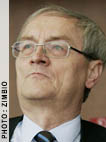
August Hanning

August Hanning

►►Analysis: China’s growing spy threat. Extensive and well-research analysis by Alex Newman in The Dipomat magazine. The article contains input by –among others– Charles Viar, of the Center for Intelligence Studies, Larry Wortzel, formerly of the US-China Economic and Security Review Commission, and intelNews’ own Joseph Fitsanakis.
►►Dutch court orders compensation for Indonesian massacre widows. The Dutch state is responsible for executions committed by colonial troops at an Indonesian village in 1947 and relatives of victims should be compensated, a Dutch court has ruled. Eight widows and one survivor from the town of Rawagedeh, east of Jakarta, took the Dutch state to court in 2008 to claim compensation for the execution of men and boys on December 9, 1947 by Dutch colonial troops.
►►Bush official says Germany partly responsible for Iraq War fiasco. A few weeks ago, August Hanning, the former Director of Germany’s foreign intelligence service, the BND, accused the Bush administration of consciously falsifying intelligence supplied by Germany in order to justify going to war in Iraq. Hanning’s charges related to ‘Curveball’, an Iraqi defector to Germany who supplied the CIA with false information about Iraq’s alleged weapons of mass destruction, in order to justify his political asylum. But now the American side is fighting back. Larry Wilkerson, Colin Powell’s former chief of staff has told German newspaper Die Welt that the Germans were “at least partly responsible” for the war (article in German).

Analysis: CIA retains special operations role in post-9/11 era

CIA HQ

CIA HQ

By JOSEPH FITSANAKIS | intelNews.org |
Despite its ‘shoot ’em-up’ image in popular culture, the Central Intelligence Agency is predominantly responsible for collecting and analyzing intelligence for the benefit of US policymakers. The Agency’s paramilitary tasks —also known as ‘special operations’— form a somewhat smaller part of its overall mission. The CIA is America’s only government agency that can legally authorized by the President to perform special operations. The question is, should it? One of the 9/11 Commission Report’s chief recommendations was that the CIA should be stripped of its special operations function, and that the latter should be surrendered to the Department of Defense, in the form of the Joint Special Operations Command (JSOC). Clearly, JSOC has played an important role in post-9/11 counterterrorist operations. Yet it is equally clear that, not only has the CIA not been stripped of its paramilitary tasks, but the latter have actually been drastically augmented by the Obama administration —not least through the continuing unmanned drone program in Afghanistan and Pakistan. A well-written analysis by Politico’s Josh Gerstein correctly notes that recommendations to eliminate the CIA’s paramilitary role and transfer it to the Pentagon “remain unpopular in the highest echelons”. The article quotes Philip Zelikow, a University of Virginia professor and former executive director of the 9/11 Commission, who is one of the few intelligence planners that favor transferring special operations from the CIA to the Department of Defense. He says that military functions “ought to be performed by trained military organizations […]. Do you want the CIA operating a combatant command responsible for fighting our twilight wars, especially in a world when twilight wars are the wars we mainly fight?”. The argument seems to be that, as special operations become increasingly central in America’s ‘war on terrorism’, they should be commanded by a military, rather than a civilian, agency. An unnamed former CIA official puts forward the Agency’s view in the article: what do you do “if you have a [host] country that wants to deny a program”? In other words, how do you exercise plausible deniability through the Department of Defense? “[T]he CIA is going to [have to] move to the front of the queue”, he answers. Read more of this post

Why Are Armed Groups Storming Foreign Embassies in Tripoli?

The new Libyan flag

New Libyan flag

By JOSEPH FITSANAKIS | intelNews.org |
It is perhaps understandable that fighters of the National Transitional Council, Libya’s rebel umbrella group, have stormed locations in Tripoli that are associated with the regime of deposed Libyan leader Muammar al-Gaddafi. Strategic sites such as  Bab al-Aziziya, Gaddafi’s compound, government ministries, or even houses belonging to Gaddafi’s large and powerful family, may be deemed legitimate targets. But why are the rebels also selectively attacking foreign embassies in the Libyan capital? According to Yonhap, South Korea’s state-run news agency, the South Korean embassy in Tripoli was “attacked […] by an armed gang” of about 30 people late on Tuesday. The report, which could not be immediately confirmed by the Republic’s Ministry of Foreign Affairs, cited anonymous sources, who said that embassy staff were “threatened at gunpoint”. At roughly the same period, another group of “armed persons” stormed the building of the Bulgarian embassy, according to the Bulgarian Ministry of Foreign Affairs, which said that it had yet to clarify “the circumstances around the incident”. On Wednesday, Venezuelan President Hugo Chavez said that armed groups had “assaulted and totally looted” the Venezuelan embassy. A few hours later, the Venezuelan Ambassador to Libya, Afif Tajeldine, clarified that the attack took place at his official residence, which is located about 9 miles from the Venezuelan embassy. He told El Universal that armed groups broke into the ambassadorial residence and “searched the house asking for me”. They then “ransacked the house completely” and “left nothing in the house”. Read more of this post

News you may have missed #573 (analysis edition)

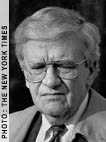
Clair E. George

Clair E. George

►►New report details gaps in US spy collaboration. Nearly 10 years after the 9/11 attacks, US intelligence agencies are still struggling to strengthen the information sharing networks that broke down in 2001, according to the latest report by the US Congressional Research Service. Among other things, the 33-page report (pdf) points out that “agencies that obtain highly sensitive information are reluctant to share it throughout the intelligence community out of a determination to protect their sources”.
►►CIA Iran-Contra figure Clair George dies. Clair E. George, a consummate spymaster who was convicted of lying to Congress about the Iran-Contra affair, has died. George was known for operating in what spies call the “night soil circuit” –the less desirable posts of the world. He worked in Africa, Asia, Europe and the Middle East. He was the CIA’s station chief in Beirut when civil war erupted there in 1975. He then volunteered to replace the CIA’s Athens station chief, who had just been assassinated by November 17 Revolutionary Organization.
►►Here’s why CIA ‘mind control’ lawsuit was thrown out. A very good and succinct analysis of why a federal lawsuit against the CIA by the Vietnam Veterans of America, for allegedly subjecting US military personnel to chemical, biological and mind control experiments, was thrown out of court earlier this month. It includes the CIA’s court filing in a pdf link, here.

News you may have missed #552

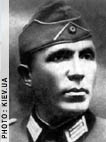
Nikolai Kuznetsov

Nikolai Kuznetsov

►►This just in: South Korea arrests five for spying for North. South Korean prosecutors have arrested five people on charges of “setting up an underground communist group on the instructions of an espionage unit of North Korea’s ruling Workers Party”, a report from South Korea’s Yonhap news agency said on Friday. According to the report, South Korean authorities are “investigating about 20 other people including union activists and opposition party members”. We will publish more information as it comes in.
►►Some US intel analysts believe al-Qaeda near collapse. Citing classified intelligence reports and closed-door Capitol Hill briefings from the CIA, the National Counterterrorism Center and other agencies, some US officials are telling The Washington Post that bin Laden’s death has “pushed al-Qaida to the brink of collapse”. One official told the paper that al-Qaeda is now “largely incapable” of mass-casualty attacks against the United States. Could the ‘Leon Panetta Legacy Committee’ be the source of this report?
►►Russia and Ukraine commemorate legendary Soviet spy. Russia and Ukraine are celebrating 100 years from the birth of legendary Soviet spy Nikolai Kuznetsov. Kuznetsov, who operated in Nazi-occupied Ukraine, uncovered Read more of this post

News you may have missed #524 (analysis edition)

  • US intelligence shift shows change in Afghan war aims. American military intelligence officers were scrambling a year ago to collect and analyze the social, economic and tribal ins and outs of each valley and hamlet in Afghanistan. But the gradual scaling back of US operations (and ambitions) in Afghanistan is driving a shift away from that labor-intensive attention to detail. Now targeting insurgent leaders and their close support networks is seen as an important part of the US exit strategy (some would call this settling old scores before the US leaves the area).
  • Ex-CIA officer questions West’s motives in Syria. The European and American intervention in Syria is designed to harm Iran and to protect Israel and Lebanese Christians, not Syrian people, according to Robert Baer, a retired CIA officer with direct experience in the region.
  • Will new CIA director rein in the drone war? When General David Petraeus takes heads to the CIA, he’ll put “relentless pressure” against al-Qaida, he told senators last week. But in a rare public discussion of the CIA’s drone war in Afghanistan and Pakistan, Petraeus suggested it may not be his first counterterrorism option.

Chinese telecoms manufacturer denies spying claims (again)

Huawei HQ

Huawei HQ

By IAN ALLEN| intelNews.org |
Huawei Technologies is one of China’s fastest-rising corporations. Founded in 1988 to import Western office telephone systems to China, the company today has become one of the country’s leading exporters, producing all kinds of hi-tech communications hardware equipment, ranging from routers to cell towers and undersea cables. But, as intelNews has indicated on several instances, Huawei’s export growth has been hampered in recent years by widely circulated suspicions that the company maintains close ties to the Chinese military and intelligence establishments. In 2009, the Australian Security Intelligence Organisation (ASIO) investigated one of Huawei’s Australian-based subsidiaries for links to Chinese intelligence operations. In the following year, the Indian government barred the company from operating in India, citing its allegedly “strong links with the Chinese military”. In August of 2010, several American senators called for an investigation into a proposed collaboration between Huawei and US-based Sprint-Nextel, arguing that the Chinese hardware manufacturer is “effectively controlled by China’s civilian and military intelligence establishment”. Further controversy erupted in the United States in February of this year, when another group of American Congress members accused Huawei of having supplied telecommunications equipment to Iran and the Afghan Taliban. The controversy around Huawei, which currently employs over 110,000 people in China and beyond, centers partly on its founder and chief executive owner, Ren Zhengfei. A former Director of the People’s Liberation Army’s Engineering Corps, Zhengfei founded Huawei a few years after retiring from his government job. His critics claim that he never truly retired from the PLA, and that he maintains routine links with the Communist Party of China, of which he is a member, as well as Chinese military intelligence. Read more of this post

Analysis: Arab revolutions cause blind spot for US spies

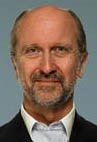
Christopher Dickey

Dickey

By JOSEPH FITSANAKIS | intelNews.org
An unusually blunt piece published in Newsweek magazine describes the Arab democratic revolutions in Egypt, Tunisia, Libya and elsewhere as serious detriments to US intelligence collection in the Muslim world. Written by Newsweek’s Middle East Regional Editor Christopher Dickey, the lengthy article argues that the ongoing political changes in several Arab countries make US counterterrorism professionals long for the days “when thuggish tyrants, however ugly, were at least predictable”. It even quotes an unnamed senior intelligence officer who denounces the celebration of democracy in the Arab world as “just bullshit”, and sees “disaster […] lurking” in the region. The reason for such vehement reaction is plain: US intelligence professionals are witnessing an elaborate network of informants across the Arab world, which they painstakingly built and cultivated since the late 1960s, crumble before their very eyes. These informants, who had senior government positions in secularist Arab dictatorships, “are either gone or going”, says Christopher Boucek, of the Carnegie Endowment for International Peace. Read more of this post

Comment: Bin Laden’s Alleged ‘Magazine Stash’ May be CIA PsyOp

Osama bin Laden

Osama bin Laden

By IAN ALLEN| intelNews.org |
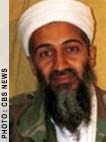
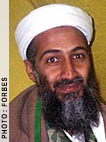
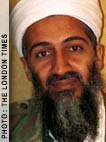
Rumors of an alleged discovery of “a stash of pornography” in Osama bin Laden’s hideout in Pakistan have spread like wildfire since Friday, when Reuters published an “exclusive” report on the subject. The report, written by Mark Hosenball and Tabassum Zakaria, cites “current and former US officials […] who discussed the discovery […] on condition of anonymity”. According to the allegations, “[t]he pornography recovered in bin Laden’s compound in Abbottabad, Pakistan, consists of modern, electronically recorded video and is fairly extensive”. The report was almost immediately picked up by several news outlets, including The New York Times, which notes that the disclosure “will be welcomed by counter-terrorism officials because it could tarnish [the al-Qaeda founder’s] legacy and erode [his] appeal”. Indeed. It appears that only Danger Room‘s Spencer Ackerman thought it wise to air a brief disclaimer to the effect that the “welcomed disclosure” may in fact be “a CIA information operation”. He has a point. Read more of this post

Comment: Was the Killing of Osama bin Laden Legal?

Osama bin Laden

Osama bin Laden

By IAN ALLEN* | intelNews.org |
The reaction of Americans to news of the assassination of Osama bin Laden has been overwhelmingly jubilant. Many will say that the killing of al-Qaeda’s founder was justified. But was it legal? Responding to news of the killing, famed linguist and political commentator Noam Chomsky suggested that “we might ask ourselves how we would be reacting if Iraqi commandos landed at George W. Bush’s compound, assassinated him, and dumped his body in the Atlantic”. Commenting from a different viewpoint, CNN legal analyst Jeffrey Toobin argues that the legal complications of arresting bin Laden would have been immense, and would have perhaps signaled “the most complex and wrenching legal proceeding in American history”.  We could would add to this that the White House was probably concerned about a prolonged state of heightened security for American embassies and civilian or military installations around the world, which could have lasted for as long as bin Laden’s hypothetical trial continued —which could have been years. Read more of this post

Comment: Five Surprising Truths About the Killing of Bin Laden

Osama bin Laden

Osama bin Laden

By JOSEPH FITSANAKIS* | intelNews.org |
For intelligence and terrorism experts, the frustrating part of Osama bin Laden’s assassination is not the lack of details on the operation, nor the diplomatic ping-pong currently taking place between America and Pakistan. Rather it is the media spectacle that has unfolded around the story ever since it first made headlines. The cacophony of conjecture that has hijacked the global news agenda is maintained by an army of talking heads, who rely on rumor and speculation to satisfy sensationalist media editors. The outcome is a sterile media circus, devoid of substance, which leaves news consumers confused and uninformed. To counter this trend, intelNews lists here five truths of critical importance about Osama bin Laden’s assassination. In summary: One, America does not have to prove it killed bin Laden. Two, bin Laden’s assassination is not a victory against terrorism. Three, it likely will not reduce —and may even increase— terrorism. Four, it will not have the slightest effect on the Taliban or the war in Afghanistan. Five, even if the Pakistani government consciously shielded bin Laden, there is not much the US can do about it. More specifically:

Read more of this post

Analysis: Myths and Questions on bin Laden’s Assassination

Osama bin Laden

Osama bin Laden

By J. FITSANAKIS and I. ALLEN | intelNews.org |
The assassination of al-Qaeda leader, Osama bin Laden, has helped dispel several myths about him and the organization he founded in 1988 in Soviet-occupied Afghanistan. Among them is the idea that the Saudi-born militant was leading a primitive existence in some remote hillside in Waziristan, sheltered by mountainous tribes that were supposedly loyal to him. Nothing could be further from the truth. Despite his reputation as a hardened mujahedeen, bin Laden had chosen to spend his days in the unmatched comfort of a sprawling luxury compound located only an hour’s drive from Pakistan’s capital, Islamabad. The compound is located in a relatively wealthy suburb of the city of Abbottabad, which is also home to the Kakul Military Academy, Pakistan’s elite army training school. More importantly, the descriptions of bin Laden’s luxurious hideout fly in the face of the predominant view of al-Qaeda as an organization that knows how to blend in with its surroundings. Not only did the compound stand out, but, according to one American official, it was “eight times larger than the other homes in the town”. It featured 3,000 feet of living space, to house bin Laden, his four wives, and several advisors and guards. It appears to have been custom-built to bin Laden’s specifications in 2005, which would explain the existence of numerous built-in security features, including at least two heavily fortified security gates, seven-foot-high perimeter walls, and even solid blast-proof enclosures on all balconies. Continue reading →

Comment: Some early remarks on bin Laden’s assassination

Osama bin Laden

Osama bin Laden

By JOSEPH FITSANAKIS* | intelNews.org |
It is tempting to consider the impact of Osama bin Laden’s assassination on al-Qaeda-inspired groups and, more broadly, on America’s “global war on terrorism”. Yet any such endeavor at this point would be inevitably speculative. The truth is, nobody has the slightest idea of the possible strategic spillover of bin Laden’s killing, and this includes the White House, the CIA and NATO. There are, however, some general remarks, mostly of operational nature, that can safely be made on the basis of the limited factual information that has been made available. To begin with, it appears that the assassination of al-Qaeda’s senior figurehead was conducted by ground forces, and not remotely, as has been the case with the vast majority of US assassination operations carried out in Afghanistan and Pakistan during the past several years. This potentially strengthens the argument, made frequently by Western and Pakistani officials, that significant achievements in the field of counterterrorism can only be conducted by surgical-type ground operations, based on accurate and actionable intelligence.

Read more of this post

CIA losing scores of officers to private sector, report finds

CIA HQ

CIA HQ

By IAN ALLEN | intelNews.org |
An extensive report on intelligence outsourcing in the United States has revealed that dozens of senior CIA officials have migrated to the private sector in the years since 9/11, usually taking with them decades of experience and training, paid for by the US taxpayer. Most of these upper-level officials, which number nearly 100 since 2001, have assumed lucrative posts in private intelligence firms and security consultants, often making significantly more than they could ever make working at the CIA. According to The Washington Post, which compiled the report, the decision to leave the CIA for the private sector is usually based on strictly financial grounds. But private contractors view these officials as invaluable intermediaries in their effort to gain access to government contracts, which have increased exponentially in number and monetary value in recent times. As a result, three CIA Directors, four Deputy Directors for Operations, three Counterterrorism Center Directors, as well as all five of the CIA’s Division Heads have been lured by private sector intelligence contractors since 9/11. Read more of this post

News you may have missed #496

  • US secretly collaborating with Chinese spies on North Korea. Leaked records of highly sensitive US-China defense consultations reveal that the CIA, the US Office of the Director of National Intelligence, and the US Defense Department, have all held secret discussions on North Korea with Chinese military intelligence.
  • Cuba denounces acquittal of ex-CIA agent. Cuba has denounced as a ‘farce’ the acquittal in the United States of Luis Posada Carriles, a former CIA agent who Havana says participated in terrorist attacks against the island. Carriles was accused of lying to US immigration officials.
  • Analysis: US spy agencies struggling to adjust to Middle East changes. With popular protests toppling rulers in Tunisia and Egypt and threatening leaders in Yemen and elsewhere, US intelligence agencies are struggling to adjust to a radically changed landscape, US officials, former intelligence officers and experts say.