In entering Gaza, the IDF will be facing not just Hamas, but Iran’s ‘Axis of Resistance’

Hamas GazaARGUABLY NO COUNTRY BENEFITED more from the American invasion of Iraq than the Islamic Republic of Iran. In a war that lasted over a decade, Washington spent over $2 trillion of its own funds to eliminate one of Iran’s most powerful regional adversaries. In the process, the invasion facilitated the rise of Iraq’s militant Shia movement, which today forms the core of the Iraq’s Popular Mobilization Forces (PMF). Although it is technically an auxiliary branch of the Iraqi security forces, the PMF regularly looks to Tehran for guidance.

The PMF belongs to what Iranian leaders refer to as the ‘Axis of Resistance’ (mehvar–e moqâvemat in Farsi), a term that denotes the extraordinary expansion of Iran’s influence in the Middle East and Central Asia in recent years. In addition to the PMF in Iraq, the Axis of Resistance incorporates an international coalition of dozens of armed groups, militant factions, Shia tribes, and political parties. They range from the Houthis in Yemen and the Hezbollah in Lebanon, to entire branches of the Syrian Armed Forces, and even Shia militias in Afghanistan, Azerbaijan, and Bahrain. The coalition also includes a complex mosaic of armed Palestinian groups, such as Palestinian Islamic Jihad and —increasingly after 2018— Hamas.

These actors are certainly disparate, and often contrast with each other. For instance, relations between Hamas and the Syrians have been strained for years. All of them, however, are united in their common anti-Western stance and contempt for pro-Western states in the Middle East, including Saudi Arabia and Israel. Moreover, their ties under the Axis of Resistance umbrella remain informal and relatively loose. However, they all receive support —including funding and training— from Iran’s Islamic Revolutionary Guards Corps (IRGC), a branch of the Iranian Armed Forces that protects and promotes the ideological inheritance of the 1979 Islamic Revolution.

Since 2011, the IRGC has viewed the Axis of Resistance as a vital element of its asymmetric military strategy. Its purpose is to help Iran successfully confront its much stronger adversaries, two of which —the United States and Israel— are nuclear-armed. That is precisely why Tehran has invested nothing short of a fortune to transform Hezbollah into what experts describe as “a force multiplier” that can give Israel a run for its money. In 2014, Tehran launched a similar effort in the Gaza Strip, initially with Palestinian Islamic Jihad —a group that, very much like Hamas, emerged out of the Egyptian Islamic Brotherhood in the 1980s.

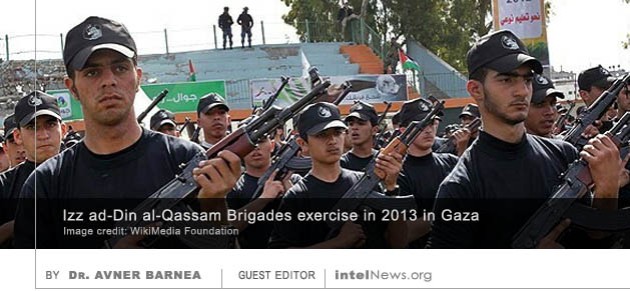
The financial arrangement between Palestinian Islamic Jihad and Iran alarmed Hamas, which has controlled Gaza since 2008. Over time, however, Hamas too began to flirt with Iran’s Axis of Resistance, enticed by the lucrative funding and training opportunities offered by Tehran. By 2020, Hamas was actively engaging with the IRGC under the Axis of Resistance umbrella. To a significant extent, the operational sophistication of the October 7 attack on Israel, which was jointly led by Hamas and Palestinian Islamic Jihad, provided clear evidence of Iran’s patronage of these two militant groups. Because of Iran, the Palestinian armed factions in Gaza are today better-armed and better-trained than at any time in the past. They will likely demonstrate that in the coming days or weeks, as the Israel Defense Forces (IDF) begin their ground offensive on Gaza.

The big question, however, is how the other components of the Axis of Resistance will respond to the impending IDF attack. Read more of this post

Analysis: How Israeli Intelligence Failed to Anticipate the Hamas Attack

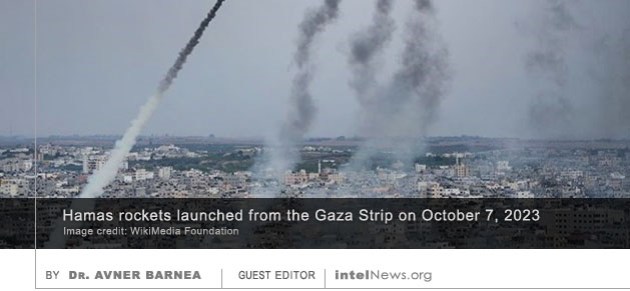
Hamas GazaSEVERAL DAYS HAVE PASSED since October 7, the day when Hamas stunned Israel with a surprise attack against several settlements near the Gaza border. It is now clear that Israeli intelligence was in possession of warning indicators about the attack, and that these indicators were misjudged.

The IMI and ISA Assessment

It is important to note that the intelligence division of the Israel Defense Forces (IDF), known as Israeli Military Intelligence (IMI), and the  Israel Security Agency (ISA), have been monitoring Hamas for years. These two agencies are believed to have conducted a situation assessment approximately two weeks before the October 7 attack. The assessment concluded that Hamas was deterred and had no interest in changing the status quo by attacking Israel in the short run. This assessment was communicated to Prime Minister Benjamin Netanyahu and Minister of Defense Yoav Gallant.

It appears that this assessment was not supported by concrete intelligence. The agencies that produced it relied primarily on monitoring the recent behavior of Hamas, including the fact that it was allowing Palestinians living in Gaza to work inside Israel. Additionally, the assessment noted the fact that Hamas was receiving funds from Qatar to help the poverty-stricken residents of Gaza. In retrospect, this assessment appears to have been based on wishful thinking.

The Egyptian Warning

It is now known that Abbas Kamel, Director of the Egyptian General Intelligence Directorate, sent a warning to Israel a few days before Hamas’ attack. Kamel allegedly warned of “something unusual, a terrible operation”, which was about to take place from the direction of Gaza. The warning was forwarded to Prime Minister Netanyahu’s office. The Israeli newspaper that published this report, Yedioth Ahronot, is known for its serious reputation and quality sources inside the Egyptian establishment. According to the report, Kamel was told by the Israelis that they were focused on preventing terrorist attacks in the West Bank.

Yet, in a speech that Netanyahu delivered immediately after the October 7 attack broke out, he denied claims about the Egyptian warning and claimed that they were fake news. However, American Congressman Michael McCaul, Chairman of the House Foreign Affairs Committee, said on October 11: “We know that Egypt […] warned the Israelis three days prior that an event like this could happen”. Speaking to reporters following a closed-door intelligence briefing on the crisis for American lawmakers, McCaul added: “I don’t want to get too much into classified [details], but a warning was given”. An Egyptian government source also asserted that Egyptian intelligence officials warned their Israeli counterparts that Hamas was planning “something big” ahead of the October 7 surprise onslaught. But this intelligence appears to have been ignored. Read more of this post

Analysis : Attack on Israel Points to Systemic Failure at All Levels

Hamas Israel - BarneaTHE COMPARISON BETWEEN THE October 2023 attack on Israel and the Yom Kippur War is reasonable. We still have an obscured perspective on what happened on October 7. But even this partial picture makes it possible to draw a preliminary comparison. Undoubtedly, there is no precedent for such a monumental failure in the history of Israeli intelligence.

The most striking difference between the two case studies is that in 1973 the system as a whole did not fail. The failure was personal, on the part of several key people, who did not perform according to expectations. The events of 2023 point to a systemic failure at all levels, not personal mistakes. The failure is at the level of intelligence warning, the military response to the attack, and even the actions of Israel’s political leadership.

An Intelligence and Military Failure

In 1973, the intelligence-gathering system was working well, and Egypt’s war intentions were known. Thousands of reports from observations along the Suez Canal spoke of the Egyptian preparations. The wireless transmissions that were issued testified to preparation for war in the Egyptian army. All this did not translate into a warning of war, due to the failed performance of some senior officers in the Israeli Military Intelligence (IMI), who stuck to their preconceived notions until the last moment.

In 2023, the failure is systemic. It involves both the level of collection and at the level of assessment. It relates both to the IMI and the Israel Security Agency (ISA). It has already become clear that the intelligence collection mechanisms failed to detect large-scale preparations for an all-out attack from the Gaza Strip. A massive intelligence system failed to detect the preparatory actions of the assailing forces.

When the perceived enemy is Palestinian civilians and when Israel Defense Forces (IDF) soldiers spend their time guarding settlements and worshipers, instead of engaging in hard training, the result is catastrophic. On October 7, we witnessed the operations of an army whose main mission is occupation. Given what we saw on that day, namely more than 1,000 civilian and military casualties and approximately 150 kidnapped Israelis, it is not clear how this army will be able to face the upcoming challenges in this war. The need for the professionalism and resilience of the IDF, which was there in 1973, continues to exist.

A Political Failure

The comparison between the political leadership of 1973 and 2023 is also discouraging. Back then, the root of the failure was that the intelligence information the leadership received from Eli Zeira, the director of IMI, who was the nation’s most senior intelligence officer, was distorted and false. It is now understood that the IMI’s assessments were based on the concept of reassuring the political leadership. Yet, Prime Minister Golda Meir and Minister of Defense Moshe Dayan were challenged after the war, and were eventually removed from their positions. However, they acted responsibly.

In contrast, there is not much to say about Israel’s current political leadership. It suffices to look at the composition of the Security Cabinet and the first leaks that have already begun to emanate from it, or at the surge of slander that members of the governing coalition have begun to heap on the finest of the IDF’s officers. It is nothing short of a disgrace and a disaster.

This war has just begun. It is still too early to draw conclusions. But we can examine the conclusions from the Yom Kippur War and assess their relevance to today. When Israeli Prime Minister Benjamin Netanyahu talks about revenge, it is advisable to remember those lessons. The conflict with the Palestinians is long and bitter. They will not give up their ambition for their state. It is now time to comprehend the full cost of the continuation of the conflict.

► Author: Avner Barnea | Date: 11 October 2023 | Permalink

Dr. Avner Barnea is research fellow at the National Security Studies Center of the University of Haifa in Israel. He served as a senior officer in the Israel Security Agency (ISA). He is the author of We Never Expected That: A Comparative Study of Failures in National and Business Intelligence (Lexington Books, 2021).

How Did Israel Miss This Attack? Some Likely Explanations

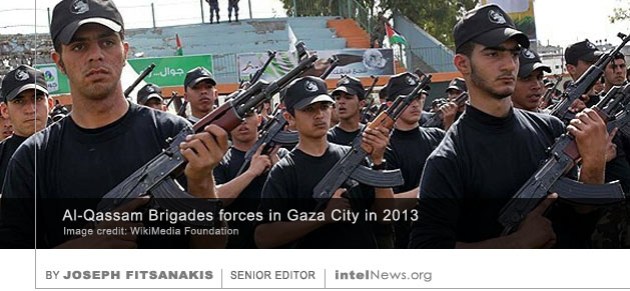
Gaza HamasTHE HAMAS-LED OPERATION al-Aqsa Flood, which began on October 7, marked the first large-scale conflict within the borders of Israel since the 1948 Arab-Israeli War. However, unlike the coalition of Arab armies it faced in 1948, Israel now confronts an alliance of sub-state groups. Led by Hamas’ military wing, the al-Qassam Brigades, this alliance includes the Syrian- and Iranian-backed Palestinian Islamic Jihad and a number of secular groups, such as the Fatah-aligned al-Aqsa Martyrs’ Brigades, the Popular Front for the Liberation of Palestine (PFLP) and the Democratic Front for the Liberation of Palestine (DFLP).
Such groups are lesser-known than Hamas; however, they often bring with them expertise in niche areas, such as handling networks of informants inside Israel, building sophisticated explosives, employing unmanned combat drones, or procuring specialized weaponry. They are therefore likely to have contributed greatly to the outcome of Operation al-Aqsa Flood. Their participation also enabled Hamas to launch what essentially amounted to a combined arms assault on Israel. The latter included coordinated land, sea and air elements, which were purposefully low-tech. That may explain why the assailants were able to short-circuit and overwhelm the purportedly impregnable security perimeter that Israel maintains around the Gaza Strip.

Iranian and Lebanese Coaching

Putting aside the individual low-tech elements of the operation, its overall level of tactical organization almost certainly points to considerable support from actors beyond the Gaza Strip. Such actors likely include networks of informants within Israel, as well as possibly Iran and its Lebanese proxy, Hezbollah. Both are well-versed in hybrid warfare and have studied Israeli defense systems more extensively than any other regional actor. Additionally, Iran’s Islamic Revolutionary Guard Corps (IRGC) and Hezbollah’s Lebanese Resistance Brigades are seasoned practitioners of deception operations. They likely coached Hamas, not only on how to carry out Operation al-Aqsa Flood, but more importantly on how to prevent Israel and its allies from gathering intelligence about it.

There is no question that an operation of such a magnitude must have taken months —possibly even years— to conceive, develop and organize. Such a complex process would have taken place under the watchful eyes and ears of Israeli and Egyptian intelligence agencies, who have historically faced little resistance in penetrating Palestinian militant groups, including Hamas. Yet none seem to have collected enough intelligence to anticipate the attack. It is equally stunning that the meticulous planning of Operation al-Aqsa Flood appears to have escaped the attention of American intelligence agencies, whose presence in the Middle East is significant. How was that even possible? Read more of this post

Analysis: Prigozhin’s goal was to survive, not to remove Putin from power

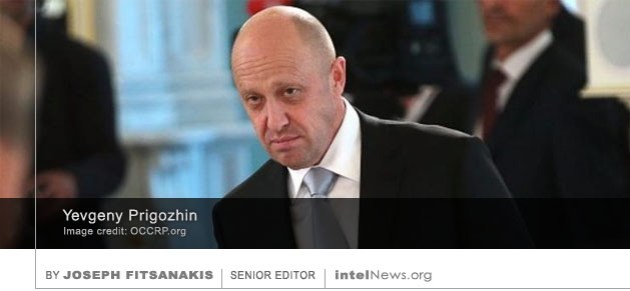
Yevgeny PrigozhinIN THE EARLY HOURS of June 23, PMC Wagner leader Yevgeny Prigozhin declared the launch of an armed campaign against the Ministry of Defense of the Russian Federation. Within hours, several thousand soldiers belonging to Wagner, one of the world’s largest private military companies, had abandoned their positions in eastern Ukraine and were en route to Moscow. Their mission, according to Prigozhin, was to arrest Minister of Defense Sergei Shoigu and Chief of the General Staff Valery Gerasimov, and try them for mismanagement and corruption.
In the ensuing hours, National Guard units along the M-4, a 1,100-mile-long expressway that connects the northeastern shores of the Black Sea to Moscow, began blocking or destroying critical junctures across that vast road network, in an attempt to obstruct the Wagner convoy. In a televised nationwide address, a visibly shaken Vladimir Putin accused Prigozhin of leading an armed insurrection, and warned those who followed him that they would be treated as traitors. Meanwhile, tickets on flights from Moscow to several visa-free international destinations were sold out within hours, as Muscovites braced for the outbreak of civil war.

Yet, within fewer than 24 hours, Prigozhin, who had repeatedly vowed to reach Moscow or die trying, was on his way to Belarus. He had seemingly accepted a deal to abandon his loyal troops in exchange for amnesty and a life in exile. Prigozhin’s sudden about-face surprised many observers, who had expected to see firefights between Spetsnaz units and Wagner forces in Moscow’s southern districts by Sunday afternoon. Even some of Prigozhin’s own troops took to social media to openly accuse their former leader of betrayal, and vow revenge.

PRIGOZHIN: A RATIONAL AND CALCULATED ACTOR

How are we to explain this unexpected turn of events? The difficulty of such a task is amplified by the lack of reliable reporting from Russia, along with the inherent chaos of war and the rapidly changing nature of events. It must be stressed, however, that Prigozhin is neither impulsive nor irrational. His maneuvers over the past week were calculated and almost certainly pre-planned and choreographed —most likely long in advance. His ultimate decision to seek political asylum in Belarus —one of the few countries in the world that is unlikely to turn him over to the United States— makes sense under one premise: that the motive behind his “justice march” to Moscow was not to challenge Putin, but to save his life.

To begin with, the bitter feud between Prigozhin and the Russian Ministry of Defense is not new. It has been raging for years. It both precedes and exceeds Russia’s ongoing military campaign in Ukraine. The Wagner leader has repeatedly expressed his dismay at being viewed as an outsider by the Ministry of Defense, which it views as an elitist and incompetent bureaucracy. His experience in Ukraine, where Wagner’s forces faced stiff resistance from the local population and the Ukrainian military alike, added fuel to his rage against a host of Russian defense officials. Prigozhin has been voicing his denunciations of the way these officials have managed the war since March of 2022, just two weeks into the invasion of Ukraine.

PRIGOZHIN’S DISILLUSIONMENT

The disastrous Russian military campaign in Ukraine only served to sharpen Prigozhin’s criticism of his country’s defense establishment. One can observe this in the evolution of his critiques over time. In recent months, the Wagner leader has not only criticized the Ministry of Defense, accusing his leadership of corruption, but he has increasingly directed his ire against broad segments of Russian society. In his video tirades, he often decries what he describes as “the Russian elite” and the “oligarchy”, whom it accuses of living in luxury, while Russia’s working class fights and dies in Ukraine, Syria, Libya, and elsewhere. Read more of this post

Still unanswered: Trump’s motive for withholding classified documents

Trump 2016THE 49-PAGE GRAND JURY indictment, filed last week in Florida by the United States Department of Justice, contains 37 criminal charges against former president Donald Trump. The charges can be summarized into a two-fold accusation: Trump is alleged to have stolen more than 300 classified documents upon leaving the White House in January 2021. Moreover, he allegedly schemed with a group of advisors and aides in order to obstruct efforts by the government to retrieve the stolen documents. Both accusations are spelled out in stark detail in the pages of the indictment.
What remains unanswered, however, is the motive. Why did Trump allegedly take several hundred classified documents from the White House? Did he select specific documents to purloin? And, if so, why these specific documents? Lastly, why did the former president go to such pains to frustrate the government’s efforts to recover the documents? There has been intense public speculation about the answers to these questions. Yet the grand jury indictment does not appear to attempt to establish the possible motive behind the alleged crime. Nor Q Quotedoes it need to. Establishing a motive is not required in order to demonstrate the need for a trial, or indeed a conviction. Given the high stakes of this case, however, establishing a motive can provide much-needed clarity in the public sphere.
Accidental or Malicious?

It is important to clarify with precision what the grand jury indictment does not state: its pages do not contain any suggestion that Trump took possession of the classified documents in order to share them with specific individuals or entities, American or foreign. Nor does the indictment suggest that the former president intended to use the classified information in his possession for personal financial gain —for instance to promote his investment ventures at home or abroad, or to gain leverage and win over potential business partners.

So, why did Trump do it? As The New York Times explained on Sunday, the indictment does offer some hints of motives, if one reads between the lines. One possible explanation stems from Trump’s time in the White House, during which he learned to associate his access to classified information as a paramount perk that came with being president of the United States. It follows that, retaining access to classified information was a way for him to maintain control over the office of the presidency. That strong need intensified even more after January 2021, as Trump was clearly “not ready to let go of the perks of holding the highest office in the country”. Indeed, the indictment describes several examples that reveal the strong sense of ownership that the former president felt about the classified documents he kept at his private residence at Mar-a-Lago, as well as his determination to keep them in close proximity to his office and sleeping quarters.
Tertiary Motives

A plausible tertiary motive for Trump’s alleged crimes is the leverage and status that access to secrets can bestow upon an individual. It is possible that Trump viewed the classified documents as the apogee of the long list of his material prizes and trophies —as an important physical legacy of the zenith of his career. That would also explain why he allegedly fought so determinedly to keep the documents in his possession, even after he was told in no uncertain terms by the government that they did not belong to him. Moreover, as The Times notes, the former president may view his classified document collection as a way to insure his legacy —for instance as a means of rebutting critics of his policies and decisions while he was in office, or even as potential “payback against perceived enemies”.

But these motives are probably less prominent in Trump’s mind. A strong and deeply held sense of ownership of government information, no matter their classification grade, is likely the driving motive behind the alleged crimes. As The Washington Post noted in an insightful article in 2022, aides to the former president said that he appeared sincere and genuine about his conviction that the classified documents “were his, not the government’s”. When he was advised otherwise by his own aides, he noticeably “gravitated toward lawyers and advisers who indulged his more pugilistic desires”, according to the paper. His attitude was not a show. It was sincere. Moreover, there is no reason to believe that it has subsided since his indictment.
A Genuine Conviction of Ownership

Trump’s latest legal woes are rooted in his genuine belief that access to classified information is something he is owed —not simply because he served as president of the United States, but because, in his mind, he should still be in the Oval Office. These deeply entrenched beliefs are unlikely to be abandoned by the former president, regardless of the cost. More importantly, these same beliefs are passionately shared by millions of his supporters. The latter are sufficient in number to wreak havoc in the Republican Party and radically reshape American politics for years to come. If Trump avoids trial or a prison sentence, his support base will view such an outcome as a form of noble victory against the “deep state”. It is therefore likely to be energized, possibly like never before. Should Trump be jailed or seek political asylum abroad in order to evade incarceration, the American political landscape will undergo a major earthquake. Regardless of the outcome of this unprecedented saga, stormy waters seem to lie ahead.

Author: Joseph Fitsanakis | Date: 12 June 2023 | Permalink

Russia’s spy networks in Europe see greatest post-Cold War setback, experts claim

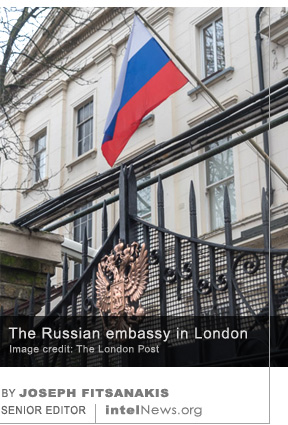
Russian embassy LondonRUSSIA’S ABILITY TO CONDUCT human intelligence operations in Europe has suffered greater damage in recent years than at any time since 1991, according to some experts. These setbacks have partly been caused by what The Washington Post refers to in a recent article as “a campaign to cripple Russian spy networks”, which is taking place across the continent. This Europe-wide campaign has grown in momentum since the Russian invasion of Ukraine and supplements boarder efforts to arm Ukraine in its war against the Kremlin.
The initial blow against the Kremlin’s spy network was delivered last year, when a wave of mass expulsions of Russian diplomats resulted in more than 400 suspected Russian intelligence officers being ordered to leave various European capitals. According to observes, the expelled Russian diplomats were in reality intelligence officers, who were active across Europe under diplomatic cover. Since that time, European counterintelligence agencies have launched a series of “precision strikes” against what remains of Russia’s human intelligence network across the continent.

The recent wave of expulsions of Russian intelligence personnel was not unprecedented. But it does suggest a degree of collaboration between Europe’s counterintelligence agencies that is difficult to match with historical examples. An interesting element in this collaboration is what The Washington Post describes as a “post-Ukraine shift in mind-set” in countries that had previously taken a softer approach toward the Kremlin. These include Germany, as well as Britain, which since 2018 has “refused on national security grounds over 100 Russian diplomatic visa applications”.

Russia’s response has been noticeably muted, and may mean that Moscow was caught off-guard by this Europe-wide counterintelligence campaign. The Post quotes Antti Pelttari, director of the Finnish Security and Intelligence Service (SUPO), who claims that the Russian capability to conduct human intelligence operations in Europe “has been degraded considerably”. This would imply that the Kremlin’s ability to carry out covert political action, such as political influence campaigns and related psychological operations, has been curtailed. Moreover, it is likely that the Russian intelligence services are unable to adequately assist the Kremlin’s decision-making capabilities with actionable information. Read more of this post

Espionage allegations prompt sharp exchanges between ex-CIA officials

CIAA BOOK BY A former Central Intelligence Agency (CIA) case officer, which alleges that a senior Agency official sabotaged American counterintelligence efforts on orders from Moscow, has prompted a series of fiery exchanges by retired CIA personnel. The primary figures in the dispute are the book’s author, Robert Baer, and Paul J. Redmond, who served as the CIA’s Associate Deputy Director of Operations for Counterintelligence.
Baer’s book, The Fourth Man: The Hunt for a KGB Spy at the Top of the CIA and the Rise of Putin’s Russia (Hachette Books, May 2022), focuses on the period following the arrests of three American intelligence insiders, who were found to have spied for the Kremlin: Federal Bureau of Investigation (FBI) agent Robert Hanssen, and CIA officers Aldrich Ames and Edward Lee Howard. By 2002, Hanssen and Ames were serving life sentences for espionage, while Howard had died in Russia where he had fled while under investigation by the FBI. Collectively, these three had been responsible for some of the CIA’s gravest operational setbacks against the Soviet KGB and its Russian successor agencies.

Some in the CIA, however, remained convinced that not all of the CIA’s failures in the 1980s and 1990s could be explained away in this fashion. They held on to the suspicion that Moscow had been able to recruit a senior CIA executive, who —among other things— had sabotaged numerous probes by some of the Agency’s most committed spy-hunters. Baer’s book discusses how, in the mid-1990s, the CIA’s Directorate of Operations actively pursued those suspicions, by setting up a Special Investigations Unit (SIU). This new unit was led by one of the CIA’s most talented counterintelligence officers, Paul Redmond.

CONTROVERSY

This is precisely the point at which Baer’s book turns wildly controversial: it alleges that the missing spy, whom Baer refers to as “the fourth man”, is none other than Redmond himself. The retired CIA case officer further alleges that even the SIU eventually concluded that Redmond —i.e. its leading member— was a spy for Moscow. The author claims that the SIU presented those findings at a briefing with Redmond among the audience. The presentation prompted Redmond to storm out of the meeting, Baer alleges.

Importantly, Baer describes his case as “inconclusive”, and claims that he relies on information from some of his former CIA colleagues. He also admits that the very idea of a “fourth man” may be nothing more than a chimera. Nevertheless, the SIU probe did occur. It also appears that the FBI opened an investigation into the matter in 2006. Baer claims to have received a visit by two FBI agents in 2021, in which he was asked about what he knew about Raymond. This, he says, left him with the impression that some sort of counterintelligence effort to find the “fourth man” was “ongoing then and is continuing” now. Moreover, according to Baer, this counterintelligence investigation is no longer confined in-house at CIA; the FBI has now taken the lead.

REDMOND’S SIDE RESPONDS

Remarkably, Baer appears to have spoken to Redmond at least twice while preparing his book. On each occasion, the retired CIA senior executive fiercely rejected Baer’s claims that he was a spy for Moscow. In recent months, Redmond voiced his dismay at Baer’s claims publicly. As SpyTalk reports, the first time Redmond spoke publicly about Baer’s book was in November of last year, during an event held by the Association of Former Intelligence Officers. Read more of this post

Comment: Is Germany’s external spy agency a liability for Europe?

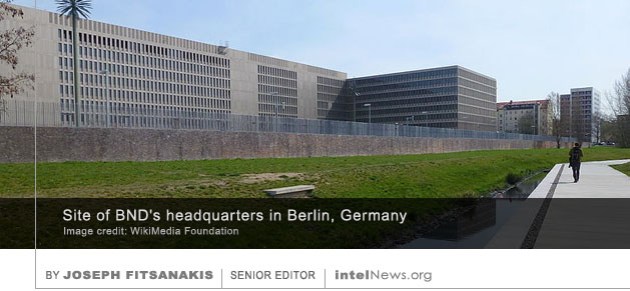
BND GermanyGERMANY’S EXTERNAL INTELLIGENCE AGENCY, the Federal Intelligence Service (BND), constitutes a liability for Europe’s security and is in desperate need of a drastic and immediate overhaul. That is the conclusion of a blunt editorial penned last week by James Crisp, the Brussels-based Europe editor of Britain’s Daily Telegraph newspaper.
Founded in the early stages of the Cold War under American tutelage, the BND operated for several decades on the frontlines of the existential clash between the United States and the Soviet Union. Deservedly, the agency received strong criticism about the Nazi past of some of its senior officials in the early days. Yet, like West Germany as a whole, by the 1970s it had largely managed to democratize its institutional structure and practices.

Crisp argues, however, that the BND, once one of Europe’s most important intelligence agencies, has been “hollowed out since the Cold War” and is today viewed by its European counterparts as “complacent and arrogant”. Consequently, the string of embarrassments that the BND has suffered lately, culminating in the discovery of an alleged Russian spy in its ranks, is hardly coincidental, according to Crisp. Even this recent discovery appears to have occurred only after the BND was tipped off by an allied intelligence agency.

The German spy agency has not fared much better in the American-led war in Afghanistan, or during the latest phase of the Russo-Ukrainian war. Unlike the American intelligence agencies, the BND did not subscribe to the view that Moscow would invade its neighbor to the west. Bruno Kahl, the agency’s president, was actually in Ukraine for consultations when Russian tanks began to head toward Kyiv. In what has rightly been described as a humiliation, Kahl was trapped inside Ukraine and had to be smuggled out of the country by a German special forces unit, just as Russian bombs began falling on the Ukrainian capital.

How does one account for the current state of the BND? To some extent, the spy agency’s culture has been shaped by that of the broader postwar German state, which has gone out of its way to reconcile with Russia. Successive German administrations have viewed their rapprochement with Moscow as a cornerstone of Europe’s security trajectory. Consequently, it can be said that Berlin has a history of underestimating the security threat posed by Russia. Read more of this post

Analysis: A murky assassination that could radically alter Turkish politics

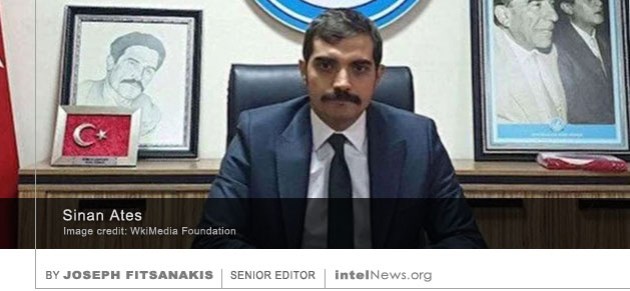
Sinan Ates Turkey Grey WolvesON FRIDAY, DECEMBER 30, 2022, an assailant on a motorcycle opened fire on Sinan Ateş, the leader of Turkey’s most feared paramilitary force, known as the Grey Wolves. By that evening, the 38-year-old Ateş had expired in an Ankara hospital, prompting analysts to forewarn that Turkish politics had entered new and unchartered territory. Indeed, some observers claim that Ateş’ assassination may impact Turkey’s upcoming presidential elections in unpredictable ways. The leading political figures in this strategically important NATO member-state, including its authoritarian leader, Recep Tayyip Erdoğan, are paying close attention.
Turkey’s Far-Right Shock Troops

Known officially as the Idealist Clubs Educational and Cultural Foundation, the Grey Wolves organization is the paramilitary arm of the Nationalist Movement Party (MHP), a militant political force that occupies most of the far-right space of Turkish politics. The MHP espouses authoritarian and anti-Western views and is violently opposed to negotiations with Turkey’s ethnic minorities, including the Kurds. Its politics appeal to ultra-conservative voters, who are usually male and over the age of 35. The Grey Wolves operate as the MHP’s shock troops, often engaging in bloody street fights against Kurds, leftists, and other popular forces that stand in opposition to the Turkish far-right. Known for their machismo and violent bravado, the Grey Wolves appeal to working-class men in their teens and twenties. In essence, therefore, the MHP and the Grey Wolves are two sides of the same coin.

In 2015, the MHP formed an electoral pact with President Erdoğan’s Justice and Development Party (AKP). The formation of this pact, known as the People’s Alliance, marked the culmination of a long process of informal cooperation between the two sides, which had been going on since at least 2007. The People’s Alliance has been instrumental in preserving the AKP’s domination of Turkish political life in recent years, despite the loss of popularity that President Erdoğan has been experiencing. Currently the AKP relies directly on the MHP’s parliamentary support to rule Turkey with a minority government. The Grey Wolves, which tend to be more unruly than their parent organization, are nominally in support of Erdoğan, but tend to see him as too mellow and not sufficiently authoritarian.

The Fragmentation of the MHP

The MPH likes to project itself as a unified militant organization. In reality, it has always been the product of an uneasy alliance between disparate far-right groups. Its membership ranges from social conservatives to ultranationalists, Hanafi (Sunni) puritans and even neo-fascists. In 2017, when the MHP and the AKP formed the People’s Alliance, several of these groups voiced serious misgivings about aligning themselves with Erdoğan. Eventually, a vocal faction of pro-Western and secularist conservatives left the party over concerns that the MHP would be completely absorbed by the pro-Islamist and anti-Western AKP. Read more of this post

Separate investigations focus on ex-FBI special agent’s Russian and Albanian ties

FBIAUTHORITIES IN THE UNITED States have launched at least two separate investigations into the business dealings of Charles McGonigal, the highest-ranking former employee of the Federal Bureau of Investigation (FBI) to face criminal charges in recent times. Much has been written about McGonigal’s alleged connection with Kremlin-linked Russian billionaire Oleg Deripaska. On the contrary, relatively little is known about his purported dealings with Albanian and other Balkan officials and middlemen, some of whom appear to have intelligence links. There is also the question of whether the criminal charges against McGonigal and his alleged co-conspirator, former Soviet and Russian diplomat Sergey Shestakov, are strictly financial in nature, or may eventually expand to include an espionage angle.
McGonigal, 54, retired in 2018 after a 22-year career at the FBI, during which he served as head of counterintelligence in New York, home of one of the Bureau’s largest field offices. He was arrested on Saturday in New York, upon returning to the United States from a trip to Sri Lanka. He faces charges of conspiring with Shestakov, a naturalized US citizen, to provide under-the-table services to Deripaska. The latter is among a long list of Kremlin-linked oligarchs, who have been subject to strict US sanctions since 2018. In working for Deripaska, McGonigal is accused in the state of New York of violating US government sanctions and engaging in money laundering, among five other charges.

However, the former FBI special agent is facing nine more charges in Washington, which involve illicit activities that he allegedly engaged in while still serving in the FBI. This is in contrast with his business relationship with Deripaska, which he is believed to have entered after his retirement from the Bureau. According to the indictment, McGonigal received in excess of $225,000 from an Albanian-born American businessman, who is also a former employee of Albanian intelligence. In return, McGonigal allegedly helped promote the businessman’s interests in the US and abroad. Throughout that time, McGonigal reportedly failed to disclose his alleged financial links with the businessman, as is required of all FBI employees. Read more of this post

Female targets of QAnon conspiracy attacked up to 10 times more, study finds

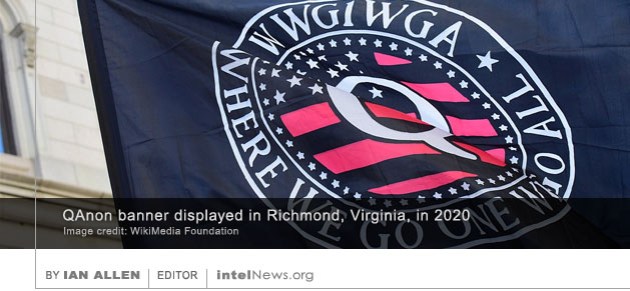
QAnon - IAFEMALE TARGETS OF CONSPIRACY theories propagated by QAnon adherents face up to 10 times more online harassment and abuse than male targets, a behavioral study of pro-QAnon online users has found. QAnon refers to an American-rooted conspiracy theory that views former United States President Donald Trump as a central figure in a behind-the-scenes battle against a sinister cabal of enemies, known as the “deep state”. According to QAnon adherents, “deep state” elites (politicians, entertainment figures and other celebrities) consist of Satan-worshiping cannibals who traffic children for sex. QAnon adherents also believe that these elites will be routed during “The Storm”, a final reckoning between Trump and the “deep state”, which will result in the arrest and physical extermination of all elites.


But in a new study published last month by the London-based Institute for Strategic Dialogue (ISD), a team of researchers posits that not all victims of QAnon adherents are targeted with equal intensity by the conspiracy theorists. Concordia University PhD candidates Marc-André Argentino and Adnan Raja, and ISD analyst Aoife Gallagher, used online data collected in 2020 and early 2021. They categorized the data according to six case studies involving celebrity figures, ranging from Tom Hanks and Anderson Cooper to Ellen DeGeneres and Oprah Winfrey, all of whom have been prominent targets of QAnon conspiracy theories.

The researchers found that, in each case, online attacks proliferated quickly once individual targets were “labelled and perception [was] hardened in narratives about their alleged role in pedophilia and/or sex trafficking”. What followed was coordinated hate and harassment campaigns that included “forms of high-volume brigading” —a coordinated attack by groups of users united by belonging to the same antagonistic subreddit. In each case, negative sentiments were amplified through the multiplication of coordinated hateful —and often violent— content.

The study shows that “[g]ender-based, racist and anti-LGBTQ+ hate and rhetoric” was present throughout the dataset. However, of all factors —gender, race or sexual orientation— relating to the identities of targets, gender was by far the most determining. According to the data analysis, female targets of QAnon brigading were subjected to volumes of hate and harassment that were as many as ten times higher than those of their male counterparts. The study also shows that this gender-based variation was true in every platform used, such as Facebook (primarily), Instagram and Twitter.

Author: Ian Allen | Date: 21 November 2022 | Permalink

Spy agencies must regulate ethics of manipulation in HUMINT, researcher argues

HUMINTIT IS DIFFICULT TO argue against the widely shared view that clandestine human intelligence (HUMINT) is replete with ethical dilemmas. These are inherent in the process of gathering intelligence via the use of human sources or covert agents. Yet it is possible —indeed desirable— for intelligence agencies to implement well-regulated ethical approaches to clandestine HUMINT, according to Dr. Stephan Lau, a junior professor of psychology and member of the Faculty of Intelligence at the Federal University of Administrative Sciences in Berlin, Germany.

In an article entitled “The Good, the Bad, and the Tradecraft: HUMINT and the Ethics of Psychological Manipulation”, which was published last month in the peer-reviewed journal Intelligence and National Security, Lau argues that the concept of manipulation, which is often central in HUMINT, is nothing new. In fact, he explains, manipulation is a type of social influence that occurs naturally in human interactions, and may even have positive outcomes, depending on the case. Indeed, researchers have analyzed manipulation as a form of beneficial influence, which can help further commonly established social goals and norms. If anything, therefore, argumentative —also known as persuasive— forms of influence are normative aspects of interpersonal negotiation between humans.

COERCIVE INFLUENCE AND MANIPULATION

There is, however, a darker side, Lau explains, which relates to coercive influence —i.e. using threats or force to modify a person’s behavior. The subject becomes even more complicated when manipulation is instrumentalized as “a piece in the toolbox of HUMINT tradecraft”. The author goes on to suggest that manipulative influence in HUMINT can be distinguished between legitimate (harmless) and illegitimate (harmful). It follows that it is possible to attach a degree of ethical responsibility to the actions of case officers, or other covert operators, who engage in clandestine HUMINT activities as part of their work. Read more of this post

New paper sheds light on Russian and Chinese influence in Italy

Russia Italy Putin ConteA NEW PAPER, PUBLISHED by the United Kingdom’s Royal United Services Institute (RUSI) for Defence and Security Studies, sheds light the complex relationship between Italy and the West’s two principal adversaries, Russia and China. Italy is a major global economic power. It is a prominent member of the Group of Seven (G7), which collectively account for more than 50 percent of global net wealth. It is also a member of the North Atlantic Treaty Organization (NATO) and the European Union (EU).

Despite —or perhaps because of— its central place in the Western alliance, Italy has long been a leading advocate for cooperation and dialogue between the West and Russia. In 2019, it became the first G7 member and the first major European Union power to sign a Memorandum of Understanding with China on Beijing’s Belt and Road Initiative. Additionally, the Italian private sector has been far more hesitant than those of other Western countries to abandon Russia following its invasion of Ukraine, with only a single Italian company having completely exited the Russian market since February of this year.

According to two Italian researchers, RUSI Senior Associate Fellow Raffaello Pantucci, and Eleonora Tafuro Ambrosetti, of the Italian Institute for International Political Studies (ISPI), Italy’s cooperative attitude toward China and Russia has led some to accuse Rome of being a “Trojan horse in Europe”. But in their research paper published by RUSI earlier this week, Pantucci and Ambrosetti argue that the reality is far more complex, especially in the case of Italian-Russian relations. They point out that Italy has, in fact, been a leading voice in favor of the imposition of harsh sanctions on Moscow in response to its invasion of Ukraine. Currently the Italian state is actively seeking to disengage its energy-import sector from Russia.

Strategy of Engagement

The research paper, entitled “Russian and Chinese Influence in Italy”, argues that Italy’s tendency to “hedge between its close transatlantic ties and its longstanding connections with Moscow and Beijing” is not new. In fact it reflects a longstanding Italian strategy, which tends to remain relatively constant and “does not change according to the political color of the government in charge” in Rome. As a result, Italy’s relations with Russia and China “show a roughly consistent pattern” in the post-Cold War era, as Rome is largely oriented “toward engagement” with both Moscow and Beijing. Read more of this post

CIA-JSOC convergence impedes covert action oversight, researcher warns

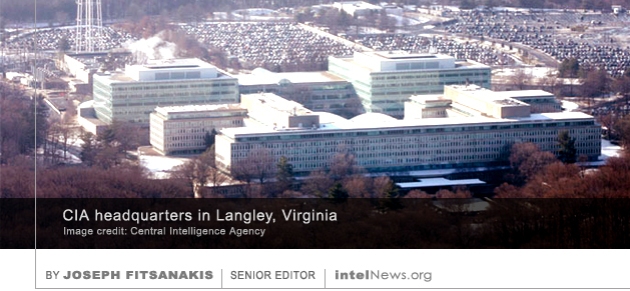
US Capitol CongressA GROWING CONVERGENCE BETWEEN the Central Intelligence Agency (CIA) and the United States military has been one of the most notable changes in American intelligence after 9/11. Some argue that the resulting overlap between the CIA and the military, in both capabilities and operations, has altered their character —perhaps permanently. The CIA has become more involved than ever before in lethal operations, while the military has embraced intelligence work with unprecedented intensity.

Today, more than two decades after 9/11, joint activities between the CIA and the Joint Special Operations Command (JSOC) have become customary. JSOC was founded in the aftermath of operation EAGLE CLAW —the failed attempt to free US diplomatic personnel held in Tehran during the Iran hostage crisis. Its mission is to bring together the Special Operations Forces (SOF) elements across the US military. In addition to ensuring inter-operability and standardization between these elements, JSOC oversees the operations of elite joint SOF units that perform highly classified activities around the world.

Increasingly since 9/11, the CIA and JSOC have been launching combined counter-terrorism operations and have learned to compete less and collaborate more —though turf wars between them are not uncommon. Today it is not unusual for CIA civilians to gather intelligence on a particular target before hand it over to JSOC, which in turn tasks its military personnel to use lethal force against the target. This type of collaboration may bear fruits in the counter-terrorism domain, but also makes it difficult for the US political leadership, primarily Congress, to exercise appropriate oversight over covert action.

Partial Oversight

In an article published on Sunday, Dr. Jennifer Kibbe, Professor of Government at Franklin and Marshall College, and a specialist on the oversight of intelligence operations, explores the effects of the CIA-JSOC convergence on democratic accountability. The article, “CIA/SOF Convergence and Congressional Oversight”, appears in the peer-reviewed journal Intelligence and National Security. If features statements from interviews by current and former Congressional staffers with experience in working for the intelligence committees of the US Congress. Read more of this post