Analysis: A murky assassination that could radically alter Turkish politics
January 30, 2023 1 Comment
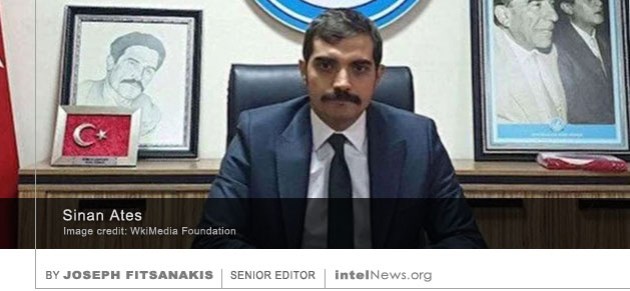 ON FRIDAY, DECEMBER 30, 2022, an assailant on a motorcycle opened fire on Sinan Ateş, the leader of Turkey’s most feared paramilitary force, known as the Grey Wolves. By that evening, the 38-year-old Ateş had expired in an Ankara hospital, prompting analysts to forewarn that Turkish politics had entered new and unchartered territory. Indeed, some observers claim that Ateş’ assassination may impact Turkey’s upcoming presidential elections in unpredictable ways. The leading political figures in this strategically important NATO member-state, including its authoritarian leader, Recep Tayyip Erdoğan, are paying close attention.
Turkey’s Far-Right Shock Troops
Known officially as the Idealist Clubs Educational and Cultural Foundation, the Grey Wolves organization is the paramilitary arm of the Nationalist Movement Party (MHP), a militant political force that occupies most of the far-right space of Turkish politics. The MHP espouses authoritarian and anti-Western views and is violently opposed to negotiations with Turkey’s ethnic minorities, including the Kurds. Its politics appeal to ultra-conservative voters, who are usually male and over the age of 35. The Grey Wolves operate as the MHP’s shock troops, often engaging in bloody street fights against Kurds, leftists, and other popular forces that stand in opposition to the Turkish far-right. Known for their machismo and violent bravado, the Grey Wolves appeal to working-class men in their teens and twenties. In essence, therefore, the MHP and the Grey Wolves are two sides of the same coin.
In 2015, the MHP formed an electoral pact with President Erdoğan’s Justice and Development Party (AKP). The formation of this pact, known as the People’s Alliance, marked the culmination of a long process of informal cooperation between the two sides, which had been going on since at least 2007. The People’s Alliance has been instrumental in preserving the AKP’s domination of Turkish political life in recent years, despite the loss of popularity that President Erdoğan has been experiencing. Currently the AKP relies directly on the MHP’s parliamentary support to rule Turkey with a minority government. The Grey Wolves, which tend to be more unruly than their parent organization, are nominally in support of Erdoğan, but tend to see him as too mellow and not sufficiently authoritarian.
The Fragmentation of the MHP
The MPH likes to project itself as a unified militant organization. In reality, it has always been the product of an uneasy alliance between disparate far-right groups. Its membership ranges from social conservatives to ultranationalists, Hanafi (Sunni) puritans and even neo-fascists. In 2017, when the MHP and the AKP formed the People’s Alliance, several of these groups voiced serious misgivings about aligning themselves with Erdoğan. Eventually, a vocal faction of pro-Western and secularist conservatives left the party over concerns that the MHP would be completely absorbed by the pro-Islamist and anti-Western AKP. Read more of this post
 AUTHORITIES IN THE UNITED States have launched at least two separate investigations into the business dealings of Charles McGonigal, the highest-ranking former employee of the Federal Bureau of Investigation (FBI) to face criminal charges in recent times. Much has been written about McGonigal’s
 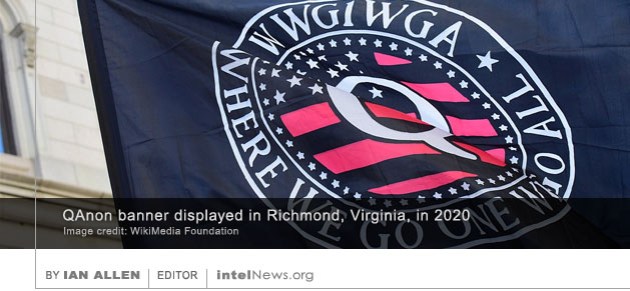 FEMALE TARGETS OF CONSPIRACY theories propagated by QAnon adherents face up to 10 times more online harassment and abuse than male targets, a behavioral study of pro-QAnon online users has found. QAnon refers to an American-rooted conspiracy theory that views former United States President Donald Trump as a central figure in a behind-the-scenes battle against a sinister cabal of enemies, known as the “deep state”. According to QAnon adherents, “deep state” elites (politicians, entertainment figures and other celebrities) consist of Satan-worshiping cannibals who traffic children for sex. QAnon adherents also believe that these elites will be routed during “The Storm”, a final reckoning between Trump and the “deep state”, which will result in the arrest and physical extermination of all elites.
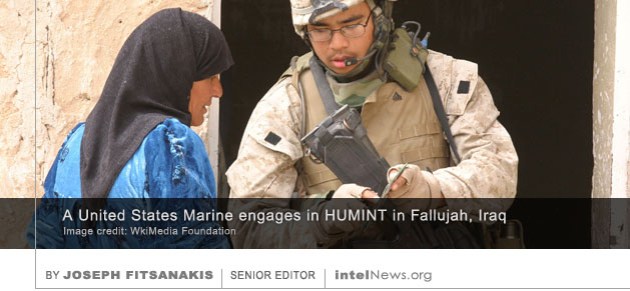 IT IS DIFFICULT TO argue against the widely shared view that clandestine human intelligence (HUMINT) is replete with ethical dilemmas. These are inherent in the process of gathering intelligence via the use of human sources or covert agents. Yet it is possible —indeed desirable— for intelligence agencies to implement well-regulated ethical approaches to clandestine HUMINT, according to Dr. Stephan Lau, a junior professor of psychology and member of the Faculty of Intelligence at the Federal University of Administrative Sciences in Berlin, Germany.
 A NEW PAPER, PUBLISHED by the United Kingdom’s Royal United Services Institute (RUSI) for Defence and Security Studies, sheds light the complex relationship between Italy and the West’s two principal adversaries, Russia and China. Italy is a major global economic power. It is a prominent member of the Group of Seven (G7), which collectively account for more than 50 percent of global net wealth. It is also a member of the North Atlantic Treaty Organization (NATO) and the European Union (EU).
 A GROWING CONVERGENCE BETWEEN the Central Intelligence Agency (CIA) and the United States military has been one of the most notable changes in American intelligence after 9/11.
  THE NORTHERN IRISH CONFLICT was a 30-year irregular war involving the government of the United Kingdom and an assortment of paramilitary groups. By the mid-1990s, when most of these groups had declared ceasefire, over 3,600 people had been killed and over 40,000 injured. The major paramilitary groups that participated in the conflict were the separatist Provisional Irish Republican Army (IRA) and Irish National Liberation Army (INLA), and the pro-UK, or ‘loyalist’, Ulster Volunteer Force (UVF) and Ulster Defence Association (UDA).
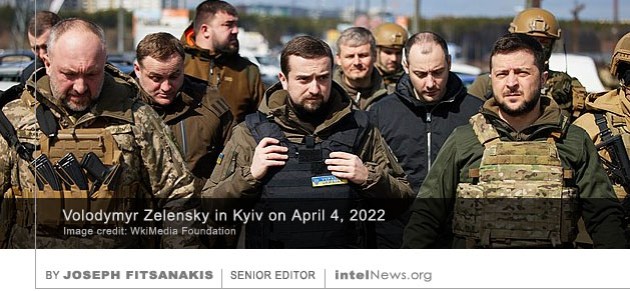 ON SUNDAY, JULY 17, the Ukrainian administration of President Volodymyr Zelenskiy announced the most extensive shake-up of the nation’s security leadership since the Russian military invasion. Two key members of Zelenskiy’s inner circle, Ukraine’s Prosecutor General Iryna Venediktova and domestic security chief Ivan Bakanov, were
  invariably, no. In fact, even the Ukrainians themselves are not in a position to trust their own intelligence services.
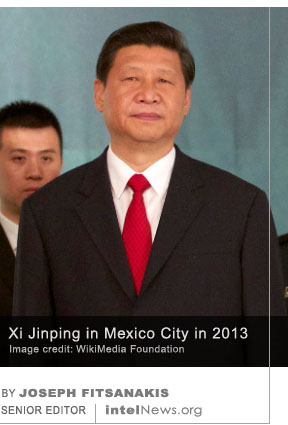 INTELLIGENCE OBSERVERS OFTEN REFER to the Communist Party of China (CPC) as “the world’s largest secret society”. Barring brief periods of relative openness in the late 1990s and early 2000s, the closed decision-making system of the CPC has presented Western intelligence analysts with cascading intractable enigmas for over half a century. This problem has become even more pressing under the decade-long leadership of Xi Jinping, during which the imposition of rigorous counterintelligence measures have turned China into a text-book hard intelligence target.
 social media, to social-science-based quantitative studies. Sverdrup-Thygeson and Stenslie explain that the two extremes of Beijingology are invariably disconnected from what is actually happening on the ground in China, and are thus of limited value.
 MORE THAN HALF OF all terrorist groups fail within a year, while 95 percent of them are extinct within a decade. Yet al-Shabaab, Somalia’s al-Qaeda-affiliated terrorist outfit, has been projecting strength in the Horn of Africa for over 15 years, despite having faced much stronger opponents. Today, with an operational presence in both Somalia and Kenya, the group maintains a force of between 5,000 and 10,000 full-time fighters. Pointing to its longevity, some observers view it as the most successful terrorist group of the 21st century.
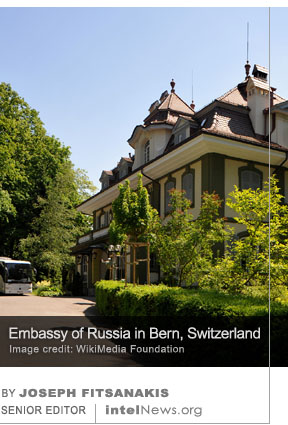 SINCE LATE FEBRUARY, WHEN Russian troops invaded Ukraine, over 500 Russian diplomats have been expelled from Western countries. Even former Russian allies have contributed to the growing list of expulsions —most recently Bulgaria, which
  IN THE OPENING STAGES of the Russian invasion of Ukraine, there was a widespread
  related legislation” with Western standards, as well as aligning them with NATO standards, so that Ukrainian cyber-warfare units can make use of advanced technologies and systems. Could it be, therefore, that Ukraine has improved its cyber-security posture enough to be able to defend itself against relentless Russian cyber-attacks?
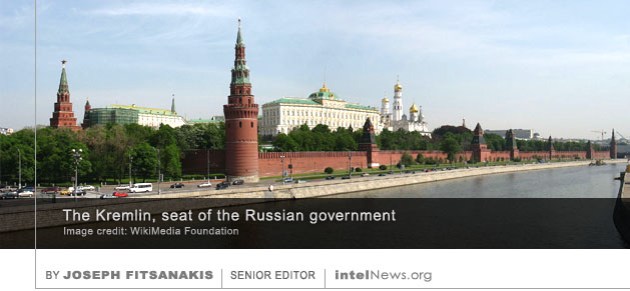 RUSSIANS ARE AWARE OF the phrase “there is no such thing as a former chekist”. The term “chekist” dates from the Bolshevik-era All-Russian Extraordinary Commission (VChK, pronounced “cheka”), which was formed in 1917 as the first Soviet-era state security agency. By the 1940s, intelligence posts had come to be seen as life-long relationships between chekists and the Soviet government, which continued even after one’s retirement. In
  with reference to three Russian intelligence agencies, all of which trace their origins to the Soviet-era Cheka —namely the Foreign Intelligence Service (SVR), the Federal Security Service (FSB), and the Federal Protective Service (FSO).
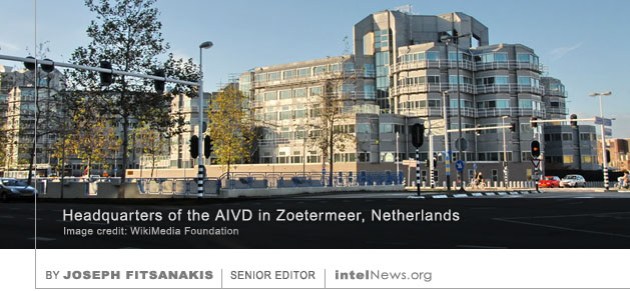 AT A TIME WHEN dozens of countries are routinely expelling
 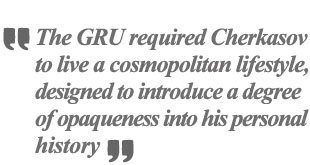 Naturalization Service, which detained Cherkasov upon his arrival at Amsterdam’s Schiphol International Airport. The Dutch government declared the alleged GRU officer persona non grata and promptly expelled him back to Brazil “on the first flight out”.








Comment: Is Germany’s external spy agency a liability for Europe?
February 6, 2023 by Joseph Fitsanakis 3 Comments
Founded in the early stages of the Cold War under American tutelage, the BND operated for several decades on the frontlines of the existential clash between the United States and the Soviet Union. Deservedly, the agency received strong criticism about the Nazi past of some of its senior officials in the early days. Yet, like West Germany as a whole, by the 1970s it had largely managed to democratize its institutional structure and practices.
Crisp argues, however, that the BND, once one of Europe’s most important intelligence agencies, has been “hollowed out since the Cold War” and is today viewed by its European counterparts as “complacent and arrogant”. Consequently, the string of embarrassments that the BND has suffered lately, culminating in the discovery of an alleged Russian spy in its ranks, is hardly coincidental, according to Crisp. Even this recent discovery appears to have occurred only after the BND was tipped off by an allied intelligence agency.
The German spy agency has not fared much better in the American-led war in Afghanistan, or during the latest phase of the Russo-Ukrainian war. Unlike the American intelligence agencies, the BND did not subscribe to the view that Moscow would invade its neighbor to the west. Bruno Kahl, the agency’s president, was actually in Ukraine for consultations when Russian tanks began to head toward Kyiv. In what has rightly been described as a humiliation, Kahl was trapped inside Ukraine and had to be smuggled out of the country by a German special forces unit, just as Russian bombs began falling on the Ukrainian capital.
How does one account for the current state of the BND? To some extent, the spy agency’s culture has been shaped by that of the broader postwar German state, which has gone out of its way to reconcile with Russia. Successive German administrations have viewed their rapprochement with Moscow as a cornerstone of Europe’s security trajectory. Consequently, it can be said that Berlin has a history of underestimating the security threat posed by Russia. Read more of this post
Filed under Expert news and commentary on intelligence, espionage, spies and spying Tagged with Analysis, BND, Germany, Joseph Fitsanakis, Newstex, Russia