News you may have missed #493 (MI6 edition)

  • MI6 scientist’s death questioned by close friend. A close friend of MI6 worker Gareth Williams, whose body was found in a locked bag in a London apartment, has questioned suggestions that his death was linked to his private sex life.
  • Who killed MI6 agent Lionel Crabb? A relative of MI6 agent Lionel Crabb wants to know who killed him. Crabb is thought to have disappeared in a 1956 botched CIA/MI6 attempt to sabotage a Soviet warship docked at Portsmouth harbor. In 2007, Eduard Koltsov, a retired Russian military diver, said he killed a man he thinks was Crabb, as he was “trying to place a mine” on the Soviet ship.
  • Analysis: Libya gives spies a chance to shine. British officers of the Secret Intelligence Service, better known as MI6, are actively operating in Libya. Among their tasks is encouraging senior Libyan officials to defect to the West.

News you may have missed #491

News you may have missed #484

  • Analysis: CIA may face reduced role in Pakistan after murder row. People familiar with the views of the Pakistani government say that, as part of the deal for the freeing of CIA operative Raymond Davis, the CIA agreed to give Pakistan more credit for its role in counter-terrorism efforts in Afghanistan, to cut back on US spying in Pakistan and to keep Pakistani authorities better informed of CIA activities.
  • Lebanese Army dismantles Israeli spying device. The Lebanese Army has dismantled an Israeli electronic spy device after receiving a tip-off from members of Hezbollah, according to reports from south Lebanon. This is not the first such reported incident. More pictures of the device are posted here.
  • Exhibition commemorates Soviet spy legend. An exhibition, dedicated to the 100th birth anniversary of legendary Soviet intelligence agent Nikolai Kuznetsov has opened in the Russian city of Yekaterinburg. Kuznetsov uncovered German plans to launch a massive tank attack in Ukraine’s Kursk region, as well as an operation to assassinate Stalin, Roosevelt and Churchill in Tehran in 1943.

News you may have missed #480 (CIA edition)

  • Cuban-American exile leader funded ex-CIA agent on trial. Oscar De Rojas, the bookkeeper for New Jersey business mogul Arnoldo Monzon, who was once a director of the powerful Cuban American National Foundation, testified Thursday that he wired as much as $9,600 in 1997 to Ramon Medina, one of the aliases used by Luis Posada Carriles, an ex-CIA operative currently on trial for perjury and immigration fraud.
  • Ex-CIA station chief sentenced for sexual abuse. Former senior CIA officer Andrew Warren has been sentenced by a US court to more than five years in prison for sexually abusing a woman in Algeria, while he was the CIA station chief in that country.
  • Analysis: What should the CIA be doing in Libya? US President Barack Obama said on Thursday that he had “instructed […] all those who are involved in international affairs to examine a full range of options” on Libya, which presumably includes the CIA and other special operations assets. But what should the CIA be doing in Libya, if anything at all?

Analysis: Spy Agencies Failed to Predict Egypt Uprising

Egypt uprising

Egypt uprising

By JOSEPH FITSANAKIS| intelNews.org |
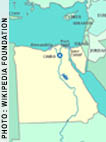
It is becoming increasingly clear that the ongoing popular uprising in Egypt represents the most important geopolitical development in the Middle East since the 1979 Islamic Revolution in Iran. In light of this, it is remarkable how unprepared foreign intelligence agencies have proven in forecasting the crisis. Even the Israelis were caught completely unaware: on January 25, the day when massive protests first erupted across Egypt, Major General Aviv Kochavi, newly appointed head of Israel’s Military Intelligence Directorate, told a Knesset committee that “there are no doubts about the stability of the regime in Egypt” and that “the Muslim Brotherhood is not organized enough to take over”. Instead, Kochavi focused on political volatility in Lebanon; ironically, the latter now seems like an oasis of tranquility compared to the explosive state of Egyptian politics. If the Israelis, whose very concept of national security is inextricably linked with developments in Cairo, were so unsuspecting of the popular wave of anger against the thirty-year dictatorship of President Hosni Mubarak, one can only imagine Washington’s surprise at the protests. Click here to read my article in Intelligent-Intelligence.com, a specialist publication edited by Kyle Cunliffe. Continue reading →

Analysis: What is the CIA doing in Egypt?

Egypt

Egypt

By JOSEPH FITSANAKIS | intelNews.org |
Every time there is a popular uprising anywhere in the Muslim world, the minds of American intelligence planners go immediately to 1979, when the Iranian Revolution tore down almost overnight one of Washington closest allies in the Middle East. By ignoring the immense unpopularity of the Shah’s brutal regime, and by limiting its Iranian contacts among the pro-Shah elites in the country, the CIA was caught completely in the dark as the Islamic revolution unfolded. Could the same be happening now in Egypt? Hopefully not, says The Washington Post’s veteran intelligence correspondent Jeff Stein. As in the case of Iran under the Shah, the US has stood by the 33-year dictatorship of Hosni Mubarak, choosing to abide by the simplistic dogma of ‘either secular repression or anti-American Islamism’. But, unlike 1970s Iran, one would hope that US intelligence agencies have been able to develop useful contacts across the fragmented but dynamic and energized Egyptian opposition community, says Stein, quoting former US Defense Intelligence Agency official Jeffrey White. It is unlikely that the CIA and other agencies have fully embraced persistent calls, such as those by Emile Nakhleh, former head of the CIA’s program on political Islam, to develop trustworthy contacts inside the Egyptian Islamic Brotherhood, as well as groups close to it, such as Hamas and Hezbollah. Read more of this post

News you may have missed #471 (ex-spy edition)

  • Interview with ex-CIA analyst David Kanin. Interesting extended discussion with Dr. Kanin, who was a CIA analyst for 31 years, who suggests the US is currently on the retreat, both politically and economically.
  • New book by ex-CIA agent Everett. Watergate uncovered many high-level secrets, including the identity of CIA agent James A. Everett, whose cover was blown in Congressional hearings during the White House scandal and its fallout. Now Everett shares his story of recruitment and training by the CIA in his book The Making and Breaking of an American Spy.
  • Ex-MI5 officer questions UK spying priorities. The cascade of revelations in the UK about undercover police officers spying on environmental groups, suggest Britain needs a sense of perspective on threats to the nation, argues former MI5 intelligence officer Annie Machon.

New clues in extensive recount of al-Mabhouh assassination

Ronen Bergman

Ronen Bergman

By JOSEPH FITSANAKIS | intelNews.org |
The current issue of US-based magazine GQ contains what must be the most extensive account in English of the 2010 assassination of Mahmoud al-Mabhouh by Israeli intelligence agency Mossad. Written by Israeli investigative journalist Ronen Bergman (author of The Secret War with Iran), the piece contains several new clues about the targeted killing of al-Mabhouh, a senior Hamas official, in a luxury hotel in Dubai last January. One new element that stands out in Bergman’s account is that, two months prior to his assassination, al-Mabhouh survived a poisoning attempt by the same team of Israeli operatives, again in Dubai. The Hamas official fell ill, but recovered fully. Bergman also claims that the operation to target al-Mabhouh, which must have lasted several months or even years, involved the use of an elaborate Trojan horse virus that was implanted on al-Mabhouh’s computer, and allowed Mossad operatives to monitor his email correspondence. It was through this method that the Israelis became aware of al-Mabhouh’s itinerary during his fatal trip to Dubai. Read more of this post

Analysis: Understanding WikiLeaks

WikiLeaks

WikiLeaks

By JOSEPH FITSANAKIS| intelNews.org |
The WikiLeaks cablegate revelations appear to be subsiding in the new year, and so is the public debate about their meaning and consequences. And yet, as calmer moods prevail, now is the appropriate time to probe the WikiLeaks phenomenon. To do so constructively, it is necessary to move beyond a mere political assessment of WikiLeaks. The question of whether the website, its founder, and its hundreds of volunteers, are criminals, heroes, terrorists, or dissidents, cannot even begin to be answered until WikiLeaks is understood, first and foremost. By ‘understood’, I don’t mean empathize. I mean comprehending WikiLeaks as an ideological paradigm, a technological vehicle reflective of the personal philosophies of its members, but also representative of a much wider sociotechnical trend. Click here to read my analysis brief published today by the Research Institute for European and American Studies.

News you may have missed #435 (cyberwarfare edition)

  • Analysis: Cyber attacks test US Pentagon. US military and civilian networks are probed thousands of times a day, and the systems of the North Atlantic Treaty Organization headquarters are attacked at least 100 times a day. Meanwhile, more than 100 countries are currently trying to break into US defense networks.
  • US should be able to shut Internet, ex-CIA chief says. Cyberterrorism is such a threat that the US President should have the authority to shut down the Internet in the event of an attack, Former CIA Director Michael Hayden has said.
  • Iran battling alleged ‘spy virus’. Iranian officials have confirmed reports that a malicious computer code, called Stuxnet, was spreading throughout the nation’s nuclear infrastructure. But they have given differing accounts of the damage, said to be capable of taking over computers that operate huge facilities, including nuclear energy reactors. Did someone say ‘Israel‘?

Analysis: How the CIA bedded down in Burma

Burma

Burma

By JOSEPH FITSANAKIS | intelNews.org |
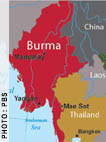
It is a story that was largely ignored when it surfaced last year: since 1994, US Drug Enforcement Agency (DEA) officer Richard A. Horn had been claiming that CIA agents illegally wiretapped his conversations while he was stationed in Burma. It appears that, at the time, the US diplomatic representation in Burma and the CIA station in Rangoon were at loggerheads with the DEA. The latter, represented by special agent Horn, had a policy of publicly commending the Burmese government for its significant efforts to end the vastly lucrative illegal drug trade in the country. But the diplomatic leadership at the US embassy in Rangoon, supported by the CIA, felt that their inroads with the Burmese military junta, which has controlled the country since 1990, were being obstructed by the DEA. Read more of this post

Analysis: Russian-Czech spy scandals show new direction in Russian espionage

ÚZSI seal

ÚZSI seal

By JOSEPH FITSANAKIS | intelNews.org |
Last July saw the resignations of three Czech Generals, including the head of the president’s military office and the country’s representative to NATO, following revelations that one of their senior staffers had a relationship with a Russian spy.  Intelligence observers have become accustomed to frequent reports of Russian-Czech spy scandals in recent years. But, according to reports from Prague, recent Russian intelligence activity in the Czech Republic may indicate a change of direction by Moscow. Some say that Russia’s new espionage doctrine focuses less on military intelligence in the post-US-missile-shield strategic environment, and more on political and economic espionage. To be sure, Russia’s intelligence presence in the Czech capital remains substantial: Czech counterintelligence sources estimate that at least 60 –that is, one in three– Russian diplomats in Prague are engaged in intelligence-related activities. But the intensity of Russian espionage in Prague is not unique. Read more of this post

News you may have missed #409

  • Probe unearths secrets of Bulgaria’s assassination bureau. Previously unknown details on Service 7, Bulgaria’s Cold War-era assassination bureau, have been unearthed by one of Bulgaria’s leading newspapers, following a probe into 5,000 pages of declassified archives from the country’s former communist intelligence service, the First Directorate of the Committee on State Security.
  • US Pentagon bars troops from reading WikiLeaks. Any citizen, any foreign spy, any member of the Taliban, and any terrorist can go to the WikiLeaks web site, and download detailed information. Members of that same military, however, are now banned from looking at those internal military documents, because “doing so would introduce potentially classified information on unclassified networks”.
  • Analysis: Chasing Wikileaks. “[W]hatever the imperfections of WikiLeaks as a startup, its emergence points to a real shortcoming within our intelligence community. Secrets can be kept by deterrence –that is, by hunting down the people who leak them […]. But there are other methods: keep far fewer secrets, manage them better –and, perhaps, along the way, become a bit more like WikiLeaks. An official government Web site that would make the implementation of FOIA quicker and more uniform, comprehensive, and accessible”.

Bookmark and Share

News you may have missed #399

  • Alleged Lebanese spy for Israel flees to Germany, says Lebanon. Lebanese media claim that Rasan al-Jud, who Lebanese authorities accuse of having aided Israel with the help of employees at Alfa, Lebanon’s state-owned cellular telecommunications provider, has fled Lebanon and is currently in Frankfurt, Germany. But a German Foreign Ministry spokesman has said that “the Foreign Ministry does not have any particular knowledge about the news item”.
  • Japan defends costly visit by Korean spy. Japan’s government has defended a costly four-day visit by Kim Hyun-Hee,  a former North Korean spy, who blew up a South Korean jet in 1987, killing 115 people. Despite the high expectations, the former spy produced little news about Japanese nationals kidnapped decades ago by Pyongyang.
  • Analysis: Slaying the US intelligence behemoth. Commenting on the recent Washington Post investigative series on the US intelligence complex, author Philip Smucker comments that there is an essential disconnect at work. Namely, Islamic perceptions are not understood to be ‘hard intelligence’. The US is still trying to fit a square peg into a round hole, or to apply conventional intelligence to an asymmetrical world.

Bookmark and Share

News you may have missed #383 (Russian spy ring edition IV)

  • Analysis: Why Russia and the US still spy. The sensationalist media coverage of the FBI’s recent bust of a Russian spy ring in the US has failed to examine this development in light of the post-Cold War relations between Russia and the United States. The fact is that espionage will continue, even as the United States and Russia work out a new post-Cold War modus vivendi, says Peter Earnest, a 35-year CIA veteran.
  • Analysis: The lure of the SVR. For most Russians, getting a job in the country’s vast bureaucracy is a happy career step. Even more glamorous is the FSB, Russia’s ubiquitous domestic intelligence service. But the most prestigious agency of all is still the SVR, Russia’s equivalent of MI6, which is responsible for all foreign intelligence operations abroad, including the long-term, deep cover espionage ring just busted by the FBI. The Cold War may be over, but the SVR still offers a globe-trotting career for a small, elite group of ambitious graduates with the right connections.
  • Analysis: Was the Russian spy operation worth the trouble? The FBI has alleged no espionage or loss of classified materials as a result of the operations of the 11-member Russian spy ring. Indeed, much of what it maintains the Russians were seeking could be gleaned from a Google search. So the wider ramifications of the spy arrests may turn out to be primarily political rather than cloak-and-dagger.

Bookmark and Share