Analysis: What we know about the Russian spy ring case

SVR seal

SVR seal

By JOSEPH FITSANAKIS | intelNews.org |
If you are frustrated with the increasingly idiotic and sex-obsessed media coverage of the Russian spy ring recently busted by the FBI, you are not alone. Less than a week since news of the arrests in the US of ten alleged deep-cover agents of Russia’s SVR intelligence agency emerged, sensationalist media hacks have left no stone unturned. Thankfully, Stratfor Global Intelligence has produced an excellent early summary of this developing story, complete with a useful diagram of the known members of the SVR spy ring. The summary correctly points out some of the critical issues in the espionage case, including the fact that the 11 suspects appeared to be primarily run out of the SVR residence at the Russian mission to the United Nations in New York, and not out of the Russian Embassy in Washington DC. Read more of this post

News you may have missed #376

  • Dubai plans more cameras after Mossad operation. Dubai will beef up its surveillance capability by installing more cameras around the city-state after the Israeli hit squad that murdered a senior Hamas operative was caught on a hotel video. As intelNews has reported before, Mossad has really helped the Gulf surveillance industry.
  • Iran hangs ‘spy’ with alleged US connections. Iran hanged Sunni militant leader Abdolmalek Rigi last weekend for allegedly having connections with foreign secret services, including “intelligence officers of the US and Israel working under the cover of NATO and certain Arab countries” as well as “anti-revolutionary expatriate groups such as the MEK”, the People’s Mujahedeen Organization of Iran.
  • Analysis: FBI use of Muslim informers now part of daily life. Gathering information on people in Muslim communities in the United States has become part of daily life. After 9/11, all data is considered useful. But, Stephan Salisbury of The Philadelphia Inquirer asks, is that how America should be?

Bookmark and Share

News you may have missed #375 (analysis edition)

  • Analysis: Israel worried by new Turkey spy chief’s defense of Iran. Israel’s defense establishment, which maintains ties with Turkey’s national intelligence organization (MİT), is concerned over the recent appointment of Hakan Fidan as head of that organization, and the implications of that appointment vis-a-vis Turkish relations with Israel and Iran.
  • Analysis: How the CIA bolstered radical Islam during Cold War. The CIA’s battle with communism during the Cold War allowed radical Islamists to gain a foothold in Europe, according to a new book by Pulitzer Prize-winning author Ian Johnson, entitled A Mosque in Munich: Nazis, the CIA and the Rise of the Muslim Brotherhood in the West.

Bookmark and Share

News you may have missed #372

Bookmark and Share

Comment: Aussie ex-spies comment on Israeli forged passports affair

Australian passport

Australia passport

By JOSEPH FITSANAKIS | intelNews.org |
Regular IntelNews readers are aware of the current crisis in Israeli-Australian relations, which broke out as a result of the use of several forged Australian passports by the Israeli intelligence services. The passports were among several Western identity documents employed by Israeli Mossad agents in targeting Hamas official Mahmoud al-Mabhouh, who was assassinated in a luxury Dubai hotel last January. The revelation prompted Canberra to announce the expulsion of Israel’s senior Mossad representative in the country. The dust has yet to settle, and the recent shooting of an Australian citizen onboard the Gaza Freedom Flotilla during last Monday’s bloody raid by the Israeli Defense Forces has the potential to worsen Australian-Israeli relations even further. What is the view of all this from Australia? IntelNews asked two Australian former intelligence officers, who offered their input on an anonymous basis. Read more of this post

News you may have missed #369

  • UN official criticizes US over drone attacks. The use of targeted killings by the CIA, with weapons like drone aircraft, poses a growing challenge to the international rule of law, according to Philip Alston, United Nations special rapporteur on extrajudicial killings.
  • Russian spies less active during Obama administration. The Czech Republic’s Military Intelligence Service said in its annual report on Tuesday that Russian agents have reduced their activities in the country since US President Barack Obama abandoned Bush-era plans for missile defense systems in Eastern Europe.
  • Analysis: A look back at US intelligence reform. The 2004 US Intelligence Reform and Terrorism Prevention Act was supposed to “address institutional obstacles that had complicated the intelligence community’s struggle to adapt to new technologies and a changing national security environment”. But five years later, many of those original obstacles remain in place.

Bookmark and Share

News you may have missed #366 (Gaza flotilla edition III)

  • Israel insists Hezbollah members were on flotilla. Israeli officials are privately saying that they had intelligence that Hezbollah operatives were hidden among the crew and passengers of several Gaza Freedom Flotilla ships. The plan, they say, was to board all the ships, bring the flotilla to Ashdod, and then deal separately with the Gaza activists and alleged Hezbollah members.
  • Analysis: Flotillas and the wars of public opinion. In the aftermath of the Gaza Freedom Flotilla massacre, “[t]he Israeli threats against Iran will be seen in a different context, and Israeli portrayal of Iran will hold less sway over the world”, says StratFor.
  • Turkey compares flotilla massacre to 9-11. Turkish Foreign Minister Ahmet Davutoglu drew a parallel between the Israeli raid on the Gaza Freedom Flotilla and September 11, 2001. “Psychologically this attack is like 9/11 for Turkey,” he said. Meanwhile, as two more aid ships are approaching Gaza, an anonymous senior Israeli Navy commander told The Jerusalem Post that Israel will “use more force next time”.

Bookmark and Share

Analysis: Axing of US DNI points to structural issues

Dennis Blair

Dennis Blair

By IAN ALLEN | intelNews.org |
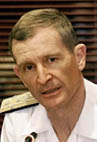
Although few American intelligence observers were astonished by last week’s involuntary resignation of the Director of National Intelligence (DNI), the silence by the White House on the subject has raised quite a few eyebrows in Washington. Admiral Dennis C. Blair, who became DNI in January of 2009, announced his resignation on Friday. Blair’s announcement came after a prolonged period of controversy, which included bitter infighting with the CIA, and culminated with the recent partial publication of a report by the Senate Select Committee on Intelligence, which blamed “systemic failures across the Intelligence Community” for the so-called Christmas bomb plot of last December. The problem is that Admiral Blair’s replacement will be the fourth DNI in five years, after John Negroponte, Mike McConnell and Blair himself. Read more of this post

Analysis: A detailed look into Taiwanese espionage on mainland China

Lin Yi-lin

Lin Yi-lin

By JOSEPH FITSANAKIS | intelNews.org |
Japanese newspaper The Asahi Shimbun has published the first part of a captivating two-part examination into Taiwanese espionage activities in China, authored by Tsuyoshi Nojima, the paper’s former Taipei bureau chief. In the article, Nojima highlights the cases of a number of former civilian agents of Taiwan’s Military Information Bureau (MIB), including that of Lin Yi-lin. The MIB recruited Lin in the late 1980s, during what has been called the modern heyday of Taiwanese intelligence activities in China. Taiwan spies had been active on the Chinese mainland for decades following the Chinese Civil War, but a nationwide counterintelligence crackdown by Beijing in the late 1970s virtually decimated Taiwan’s espionage networks inside China. It took nearly a decade for the MIB to reestablish its informant architecture on the mainland. By that time, the rapprochement between the two rival countries was beginning, with commercial ties rapidly accelerating. Read more of this post

Analysis: Europe Offers Different Counterterrorism Approach

Counterterrorism

Counterterrorism

By JOSEPH FITSANAKIS | intelNews.org |
I have in the past posed the intriguing question of whether US intelligence agencies should learn from the French approach to counterterrorism. This issue has now come up again in an interesting Washington Post essay, which examines the different approaches to Islamic militancy by American and European intelligence organizations. Some of these differences are undoubtedly contextual: there are no First Amendment rights in Europe, and European law enforcement and intelligence organizations enjoy a somewhat wider legal latitude in which to operate domestically. Moreover, the Europeans, especially the French and the British, have a longer experience than the Americans in dealing with armed insurgencies. But there are also critical differences in tactics. Importantly, the European approach to Islamic militancy has not only been more pro-active than the American, but also a lot more discreet and clandestine. Read more of this post

News you may have missed #343

  • Taliban leader H. Mehsud reportedly not dead. Last February US and Pakistani officials claimed a CIA airstrike had killed Hakimullah Mehsud, the leader of the largest faction of the Pakistani Taliban. But it now appears that Mehsud is alive and well.
  • Analysis: Operation MINCEMEAT and the ethics of spying. The New Yorker‘s Malcolm Gladwell on operation MINCEMEAT, a World War II British deception plan, which helped convince the German high command that the Allies planned to invade Greece and Sardinia in 1943, instead of Sicily.
  • US DoJ announces FISA court appointment. Judge Martin L.C. Feldman, of the Eastern District of Louisiana, has been appointed to a seven-year term on the Foreign Intelligence Surveillance (FISA) Court, which reviews (and invariably approves) government applications for counterintelligence surveillance and physical search under the Foreign Intelligence Surveillance Act.

Bookmark and Share

Analysis: Experts question legality of CIA drone strikes

Predator drone

Predator drone

By IAN ALLEN | intelNews.org |
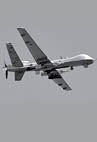
A number of prominent American legal scholars have voiced concerns about the legality of the targeted killings by the CIA of suspected Taliban leaders in Afghanistan and Pakistan. Speaking last week before the National Security and Foreign Affairs subcommittee of the US House Committee on Oversight and Government Reform, some of the experts warned that the killings may constitute war crimes. Among them was Loyola Law School Professor David Glazier, who reminded subcommittee members that the CIA remotely navigated drone pilots are not legally considered combatants, and thus employing them to carry out armed attacks “fall[s] outside the scope of permissible conduct”. He also warned that “under the legal theories adopted by our government in prosecuting Guantánamo detainees, these CIA officers as well as any higher-level government officials who have authorized or directed their attacks are committing war crimes”. Read more of this post

News you may have missed #334

  • Analysis: Split up the CIA, says veteran officer. A 15-year CIA veteran, who goes by the pseudonym Ishmael Jones, reveals in a new book that the Agency now has only “a handful” of non-official-cover officers, i.e. spies not affiliated with a US diplomatic mission abroad. In The Human Factor: Inside the CIA’s Dysfunctional Intelligence Culture, Jones argues the CIA should be broken up and its pieces absorbed by other US intelligence agencies.
  • Turkey appoints new intelligence director. It is expected that Turkey’s National Intelligence Organization (MİT) will soon be headed by Dr. Hakan Fidan, who will replace Emre Taner. MİT’s reputation has recently been severely hit by the involvement of some of its personnel in the notorious Ergenekon affair.

Bookmark and Share

Analysis: Inside the US-Israeli intelligence relationship

US embassy in Tel Aviv, Israel

US embassy, Israel

By JOSEPH FITSANAKIS | intelNews.org |
Yossi Melman and Dan Raviv, authors of Friends in Deed: Inside the US-Israel Alliance, have produced a lengthy, well-researched and up-to-date essay on US-Israeli intelligence relations. The essay, which appears in the latest issue of Tablet, carefully examines the highly complex subject of the CIA’s associations with the Mossad and Shin Bet. The fact is that, despite their unquestionable alliance Israel and the US have for years been among each other’s primary intelligence targets. Melman and Raviv correctly remind us that, by as early as 1954, US officials at the US embassy in Tel Aviv had already discovered several microphones in the office of the ambassador. Two years later, US counter-surveillance experts uncovered electronic bugs at the Tel Aviv residence of a US military attaché. Since then, the use of bribes and even women by the Shin Bet to lure US embassy guards has been frequent –and mostly unsuccessful. Read more of this post

News you may have missed #328 (breaking)

  • Breaking: Real IRA admits NI MI5 base bomb. The Real IRA has admitted it was behind a car bomb which exploded shortly after midnight local hour, outside the Palace Barracks army base, in Holywood, County Down, which houses MI5’s Northern Ireland headquarters. Police said no warning was given.
  • Venezuela releases 4 of 8 alleged spies. Four of the eight Colombians arrested by Venezuela on espionage charges last week have been released, after a judge found there was not enough evidence to take them to trial. Meanwhile Venezuelan president Hugo Chávez has said that the alleged spy ring used “secret or semi-secret codes”.
  • Analysis: Security services will determine fate of Kyrgyz uprising. Unlike the 2005 so-called Tulip Revolution, this time the anti-government protesters in Kyrgyzstan are armed. But the real question may be whether they have the support of (and control over) the Internal Security Services and the military.

Bookmark and Share