Analysis: Interim report on Obama’s intelligence reforms

Melvin A. Goodman

M.A. Goodman

By IAN ALLEN | intelNews.org |
It has been nearly a year since US President Barack Obama initiated his plan to reform the CIA and its tattered relations with the rest of the US intelligence community. How is he doing so far? Not great, says Melvin Goodman, a former CIA analyst, in a well-argued article on the subject. On the one hand, Obama has been successful and “deserves high grades” for addressing the CIA’s renditions, detentions and interrogations programs, argues Goodman. On the other hand, the President has avoided taking a strong leadership role in addressing the major problems of the CIA, including “appoint[ing] leaders willing to address the culture of cover-up that exists at the CIA and to make the necessary strategic changes”. Read more of this post

News you may have missed #0191

  • Peru-Chile spy dispute deepens. Not only was senior Peruvian Air Force officer Victor Ariza Mendoza, who was arrested in Lima last Saturday, a spy for Chile, but there were six other individuals involved in the ring, according to Peruvian authorities. Peru has even asked Interpol to get involved in the affair.
  • UN-Iran in secret nuclear negotiations, says paper. The London Times has alleged that the UN’s International Atomic Energy Agency is secretly negotiating a deal to persuade world powers to lift sanctions against Iran and allow Tehran to retain the bulk of its nuclear energy program, in return for co-operation with UN inspectors.
  • Analysis: The real spy war between CIA and DNI. For months, the CIA and the office of the Director of National Intelligence fought an intense and acrimonious turf battle over covert action oversight and access to White House officials. Now new details are emerging about deeper and more sensitive conflicts between the two agencies, including which agency is responsible for oversight of the CIA’s controversial and classified Predator drone program.

Bookmark and Share

News you may have missed #0181

Bookmark and Share

News you may have missed #0173

  • Russia, Georgia, in secret border reopening talks. Russia and Georgia, whose borders have been shut since the 2006 South Ossetia War, are in secret negotiations to reopen their only common border checkpoint, according to Russia’s Kommersant newspaper.
  • Why Shin Bet is taking over Israeli domestic investigations. Israel’s Shin Bet, the country’s domestic intelligence service, is overtaking the role of the police forces in solving criminal cases. The reasons are primarily political.
  • Interview with Bruce Schneier. A Q&A session with the cryptography legend, author of Secrets and Lies and Beyond Fear. Interesting quote: “[W]e now know that the NSA vacuums up all sorts of electronic communications, e-mail included. So maybe it would be a good idea for all of us to routinely encrypt our e-mail”.

Bookmark and Share

News you may have missed #0165

  • UK demands Russians deliver spy assassin. David Miliband, Britain’s foreign secretary pressed Russia during a visit to Moscow on Monday to turn over Andrey Lugovoi, the main suspect in the 2006 killing in London of Russian former KGB agent Alexander Litvinenko. But, as before, Russia rejected the demand on legal grounds.
  • Analysis: Confusion in US intelligence secrecy policy. The decision last week by the Director of National Intelligence to declassify the FY2009 budget for the National Intelligence Program is inconsistent with other ODNI classification actions and highlights the confusion over the proper scope of national security secrecy that prevails in the US intelligence community today.
  • Equatorial Guinea pardons Western coup plotters. Four whites jailed for leading an alleged 2004 coup attempt in oil-rich Equatorial Guinea have been unexpectedly pardoned. They include Simon Mann, a British former Special Forces officer, and Nick du Toit, a South African mercenary. The Guinean government cited…”Jesus Christ” in making the decision to pardon the coup plotters.

Bookmark and Share

News you may have missed #0162

  • South Korean 1967 spy case was “trumped up”, report finds. A national truth commission set up by South Korea’s primary intelligence organization, the National Intelligence Service, has concluded that the so-called Tongbaengnim spy ring case was “grossly trumped up”. The case culminated in a public show-trial of 194 South Korean academics, artists and students, accused of spying for North Korea.
  • CIA torture sparked rift with FBI. The Associated Press is reporting what intelNews readers have known since July 20; namely that the CIA’s use of “harsh interrogation techniques” against captured terror suspects made FBI interrogators wary of the legality of the methods. As a result, FBI agents were barred from the interrogations.
  • Analysis: Friendship is no bar to espionage. As relations between Taiwan and China improve, would it be reasonable to expect that China will temper espionage activity against Taiwan, and vice-versa?

Bookmark and Share

Analysis: Is US supporting suicide terrorists in Iran?

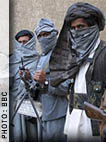
Jundullah men

Jundullah men

By JOSEPH FITSANAKIS | intelNews.org |
Jundullah, a militant anti-regime Sunni group in Iran, claimed responsibility last week for an October 18 suicide attack that killed 42 people, including five senior members of the Islamic Republic’s Revolutionary Guards corps. Tehran blamed the attack, which is part of a wider low-intensity guerilla war in the country’s southeastern Sistan-Baluchistan province, on the work of covert American, British and Pakistani operatives. Should the Iranian allegations be taken seriously? IntelNews has written before about Washington’s complex relationship with Jundullah and the Mujahedeen-e Khalq (MEK), two of several armed groups officially deemed terrorist by the US State Department. In 2007, ABC News went so far as to claim that Jundullah “has been secretly encouraged and advised by American officials since 2005″.   Read more of this post

Analysis: NSA emerging as the world’s most powerful spy agency

James Bamford

James Bamford

By JOSEPH FITSANAKIS | intelNews.org |
Regular readers of this blog know that the US National Security Agency is in the process of renovating its soon-to-be-unveiled Texas Cryptology Center, a 470,000-square-foot facility that will cost “upwards of $130 million” and be used primarily to store intercepted communications data. They also know that the gigantic Agency, which is tasked with worldwide communications surveillance, as well as communications security, is also building a 1 million square foot data center at Utah’s Camp Williams. Finally, as we reported last August, the NSA is currently laying out a 20-year plan to construct 5.8 million square feet of new working and storage space on its Fort George G. Meade headquarters in Maryland, and staff it with 11,000 people. What does all this mean? Read more of this post

Analysis: Major spy overhaul underway in South Africa

Moe Shaik

Moe Shaik

By IAN ALLEN | intelNews.org |
In July, Laurie Nathan, a former member of South Africa’s ministerial Review Commission on Intelligence, warned that a steadily declining culture of accountability in South Africa’s spy services was threatening the country’s constitutional order. Last week, based on the Commission’s findings and policy suggestions, the country’s minster for state security, Siyabonga Cwele, announced a “major restructuring” of South Africa’s security services. Already, the first generation of pro-ANC intelligence agents, who staffed the post-apartheid South African intelligence apparatus, is on its way out. The departures of Manana Manzini, who until recently directed the National Intelligence Agency (NIA), Loyiso Jafta, of the National Communications Centre, and Taki Netshitenzhe of the Electronic Communications Security, were accentuated by the retirement of ANC “superspy” Hilton Tim Dennis, who headed for many years the NIA’s Counter Espionage unit. Read more of this post

News you may have missed #0139

  • Pakistan tells US diplomat to be quiet. Perturbed by the recent remarks of US Deputy Chief of Mission in Islamabad, Gerald Feierstein, that top al-Qaeda and Taliban leaders are presently hiding in Quetta, Pakistan has summoned the US diplomat and demanded that he stops discussing intelligence issues in media. The move follows a closed-door meeting last week between the director of Pakistan’s Inter-Services Intelligence (ISI), Ahmed Shuja Pasha, and CIA director Leon Panetta.
  • Analysis: HUMINT worries al-Qaeda more than drone assassinations. The CIA-operated drone strikes in Afghanistan and Pakistan get all the headlines. But what’s really worrying al Qaeda are the agents in their midst, says Adam Rawnsley of Wired magazine’s Danger Room blog.
  • Chinese spymaster complains about US news leak. It has emerged that Major General Yang Hui, China’s most senior military intelligence official, recently made a secret visit to the US and complained to the Pentagon over the US press leak on the Chinese submarine that secretly shadowed the USS Kitty Hawk aircraft carrier in 2006. He said senior Chinese leaders suspect the Pentagon deliberately disclosed the encounter as part of an effort to send a “tough” message to China’s military.

Bookmark and Share

News you may have missed #0126

  • Cyber spying increasing in the US, says new report. The Office of the US National Counterintelligence Executive’s annual report says that cyber attacks against US government and business targets “proliferated in fiscal year 2008”. The report also states that Blackberries and iPhones belonging to government and business personnel are becoming major targets by foreign cyber spies.
  • Analysis: The case for a US National Declassification Center. There is no argument about the fact that the US government’s declassification system simply doesn’t work. The way around the problem is to establish a centralized National Declassification Center, according to a National Archives and Records Administration white paper.
  • New Colombian spy agency forbidden from conducting wiretaps. Technically, the scandal-prone Administrative Department of Security (DAS) is no more in Colombia. The new agency, which is expected to replace DAS, will not be allowed to tap telephones, a function that will be solely entrusted to the police force. We’ll have to wait and see about that.

Bookmark and Share

Analysis: Is Afghanistan really important in the “war on terrorism”?

Paul P. Pillar

Paul P. Pillar

By JOSEPH FITSANAKIS | intelNews.org |
The Deputy Chief of the CIA’s Counterterrorism Center from 1997 to 1999, Paul Pillar, has authored an interesting editorial in which he asks “how important are physical havens to terrorist groups, such as al-Qaeda?”. The answer: not very. Writing in The Washington Post, Pillar points out that the main unstated assumption behind the US invasion of Afghanistan, namely that the country must not be allowed to again become a haven for terrorist groups, is incompatible with what we know about how such groups organize. If they are offered a haven, groups such as al-Qaeda will use it for basic training of recruits, says Pillar. But operations planning and training does not require such a base, nor is such a center crucial for successful execution of operations. Read more of this post

Analysis: Bush focus on Daily Brief skewed policy decisions

Lieberthal

Lieberthal

By JOSEPH FITSANAKIS | intelNews.org |
A study by a Brookings Institution analyst says the “unprecedented” level of importance given to the President’s Daily Brief (PDB) by George W. Bush skewed his administration’s policy decisions after 9/11 and had negative consequences for the US intelligence community. The PDB arrives at the US President’s desk every morning with highly classified summaries of the latest findings from America’s intelligence community. The importance given to the PDB, whose contents are often highly speculative or unprocessed, varies with Presidents. But Kenneth Lieberthal, former National Security Council staffer in the Bill Clinton administration and senior fellow at Brookings, says the Bush cabinet overwhelmingly relied on the PDB to make policy decisions, which were often based on information that lacked substantial analysis. Read more of this post

Does Norway engage in international espionage?

NIS HQ

NIS HQ

By IAN ALLEN | intelNews.org |
The death sentences handed down earlier this week by a Congolese military court to two alleged Norwegian spies, prompted Brian Palmer, of Slate magazine, to ask: do small countries like Norway engage in international espionage? The answer, of course, is yes. Palmer explains that intelligence agencies of smaller countries tend to be extremely focused on bordering nations. As a result, when it comes to their immediate geographical neighborhood, their intelligence knowledge and capabilities often surpass those of larger intelligence powers. Norway is a good example of this. Read more of this post

Analysis: Assessing the record of Russian espionage

R. Kupchinsky

R. Kupchinsky

By JOSEPH FITSANAKIS | intelNews.org |
Roman Kupchinsky has penned an article for The Prague Post, in which he examines the recent expulsion of two Russian spies from the Czech Republic as part of a broader decline in Russian intelligence operations. The Jamestown Foundation analyst explains that Vladimir Putin’s campaign to rebuild the Russian espionage activities abroad to their former glory has not borne fruits. Rather, the gradual decay in Russia’s global intelligence presence, which began in the early 1980s, continues to mire the country’s Foreign Intelligence Service (SVR). The SVR is the successor to the KGB’s First Chief Directorate (PGU), which was responsible for foreign operations and intelligence collection. Although Kupchinsky’s view is shared by a many Western intelligence observers, some remain skeptical. Read more of this post