News you may have missed #642

Predator drone

Predator drone

►►Australia concerned China using civilian satellites to spy. Concerns that China may use civilian satellite tracking stations to monitor Australian military operations have been dismissed by the Swedish Space Corporation. The company owns and operates two satellite tracking stations 400 km north of the West Australian capital, Perth. One was used by the China Satellite Launch Company last month in China’s first space docking operation.
►►Did Iran capture US stealth drone intact? For the second time this year, the Iranian government is claiming it forced down a stealthy US Air Force spy drone. Only this time, it says it bagged the RQ-170 “with little damage” by jamming its control signal —a potentially worrying development for American forces heavily reliant on remote-controlled aircraft. A US official, who asked not to be named, told Reuters that “there is absolutely no indication up to this point that Iranians shot down this drone”.
►►Canadian Mounties spied on native protest groups. Canada’s federal government created a vast surveillance network in early 2007 to monitor protests by First Nations, including those that would attract national attention or target “critical infrastructure” like highways, railways and pipelines, according to RCMP documents. The RCMP intelligence unit reported weekly to approximately 450 recipients in law enforcement, government, and unnamed “industry partners” in the energy and private sector. The news follows revelations last month of the RCMP’s largest-ever domestic intelligence operation, aimed against G8 and G20 protesters.

News you may have missed #631

Tommy Douglas

Tommy Douglas

►►Some spy files on Canadian prominent politician released. Newly declassified records from the early 1960s show that the Royal Canadian Mounted Police spied on Saskatchewan Premier Tommy Douglas (pictured), suspecting him of communist sympathies. Douglas, a popular leftwing politician, led the first social democratic government in North America.
►►Aussie diplomats urged to welcome defectors in 1980s. The Australian government urged its spies and diplomats to encourage foreign officials to defect to Australia and welcome intelligence they might bring with them, according to internal documents from the 1980s, released this week. The directives noted that applications from defectors were not expected to be numerous “but failure on our part to handle them deftly could result in the loss of intelligence relevant to Australia’s security and other interests”. One observer notes that the 1980s policy towards defectors still applies today in Australia’s diplomatic community.
►►Iran arrests two Kuwaitis on suspicion of espionage. Iran’s semiofficial Fars news agency says Iranian security has detained two Kuwaiti citizens in southwestern Iran for suspected espionage activities. Fars quoted Bahram Ilkhaszadeh, governor of Abadan, a town close to Kuwait, as saying that Iran’s security agents detained the two on possession of “spying equipment”. Kuwait has denied the charges.
News you may have missed #623

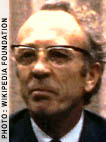
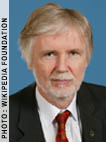
Erkki Tuomioja,

Erkki Tuomioja,

►►Finnish FM washes hands of CIA flights. Erkki Tuomioja, the Finnish foreign minister, said last week that Finnish officials had no means to investigate allegations that a number of CIA prisoner flights touched down in Finland during the so-called war on terrorism. Tuomioja urged human rights groups to take action instead.
►►Australian defense documents stolen by foreign intelligence. A report has revealed that secret documents of Major-General John Cantwell, Australia’s most senior commander in the Middle East, were stolen by a foreign intelligence service last year. The documents were apparently in an encrypted drive stored in an aide’s backpack –contrary to protocol– and was thought lost when a large amount of luggage went missing for several days from Islamabad airport.
►►US soldier arrested by FBI counterintelligence. William Colton Millay, of Owensboro, Ky., was arrested last week at Joint Base Elmendorf-Richardson in Anchorage in an investigation conducted by the US Army and FBI. For now, both agencies are withholding information about the spy case. But an Army spokesman said that Millay did not leak or send information using the Internet and did not harm US security.

News you may have missed #619 (WikiLeaks edition)

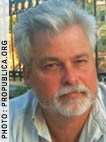
Peter Van Buren

Peter Van Buren

►►US suspends diplomat for linking blog to WikiLeaks. The State Department has suspended Peter Van Buren (pictured), a 23-year veteran foreign service officer, for writing a book critical of US policy in Iraq and blog posts that included a link to a WikiLeaks cable. Van Buren, who worked in human relations, said he was escorted out of the State Department on Monday and barred from returning for two days while officials there decide what to do next with him. They had stripped him of his top secret security clearance a few days earlier, he said.
►►Solomon Islands minister was CIA source. Classified US diplomatic cables from 2006, recently published by WikiLeaks, have revealed that the Solomon Islands’ former Foreign Affairs Minister and businessman Laurie Chan has acted as a reliable source of US and Australian intelligence in the Pacific island country.
►►Diplomatic cable sheds light on suicides of Bulgarian spies. A diplomatic following cable, sent by John Beyrle, US Ambassador to Bulgaria before going to Moscow, dated January 25, 2007, has been released by WikiLeaks. The cable sheds light on reshuffles in the leadership of the country’s intelligence services and the suicides of two high-ranking intelligence employees.

News you may have missed #610

Charles S. Faddis

Charles S. Faddis

►►Australian agency warns spy cells ‘lie in wait’. In its annual report, Australia’s intelligence service, the ASIO, warns that foreign powers may be recruiting sleeper agents in Australia to carry out sabotage in future conflicts. The report further notes that, despite the rise of cyberespionage, there has not been a marked reduction in the intensity of more traditional forms of espionage.
►►US frees convicted Cuban spy but debate rages on. Few topics illustrate the gulf in perception between the governments of Cuba and the United States like the case of the Cuban Five. The five Cuban agents were arrested in Florida in the 1990s and convicted on espionage charges. US federal prosecutors said the men were trying to spy on military installations. But Cuba’s government has long maintained the men were trying to monitor Miami-based exile groups that were planning attacks on the island nation.
►►Analysis: It’s time for the Pakistanis to pick a side. Former CIA operations officer Charles Faddis (pictured) argues that the US government needs to immediately designate Pakistan’s proxy army, the Haqqani network, as a terrorist organization. It has avoided taking that action for far too long and only because of crass political concerns, says Faddis, but the time has come to change course.

News you may have missed #597

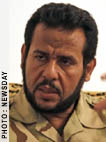
Abdel Hakim Belhaj

Abdel Belhaj

►►Inside the CIA’s secret Thai prison. The United States Central Intelligence Agency appears to have used Bangkok’s former Don Muang International Airport as a secret prison to torture Abdel Hakim Belhaj, who is now the commander of rebel Libyan military forces in Tripoli. If true, Belhaj’s allegations are the first public descriptions of a CIA black site in Thailand. Bangkok-based journalist Richard S Ehrlich investigates.
►►How is the US government using security contractors? “Mark Lowenthal, who was a high-ranking CIA official before joining the contractor work force, told the [US House Homeland Security and Governmental Affairs Committee] that during his time as assistant director of Central Intelligence for Analysis and Production, half of his staff was made up of contractors”.
►►Leaked cables show Australia nuclear power push. In 2008, John Carlson, head of the Australian Safeguards and Non-proliferation Office, which acts as the country’s nuclear safeguard authority, advised the then prime minister Kevin Rudd that no scheme to limit carbon emissions would succeed without the building of civilian nuclear power stations, according to leaked US diplomatic cables. When contacted by the media, Carlson refused to confirm or deny the accuracy of the revelations.

US spy Pollard tried to spy for Australia before spying for Israel

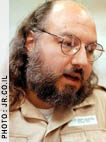
Jonathan Pollard

Jonathan Pollard

By JOSEPH FITSANAKIS | intelNews.org |
Lobbyists campaigning for the release of jailed spy Jonathan Pollard portray him as a genuine Jewish patriot, who risked his freedom to spy on the United States for Israel. But in her first-ever public interview, Pollard’s FBI interrogator has revealed that he also spied for South Africa and tried to spy for Australia, before working as an agent for Israel. Lydia Jechorek was the FBI agent assigned to the case of Jonathan Pollard, after the United States Navy analyst was arrested for spying against his country, by handing countless classified documents over to his Israeli handlers. She spent countless hours with Pollard, interrogating him in jails in Washington, DC, and Lewisburg, PA. On Monday, Jechorek, who has never publicly commented about her role in the Pollard case, spoke to Newsmax, after having received clearance from the FBI to do so. She told the website that, during his FBI interrogation sessions, Pollard said that, before spying for Israel, he had attempted to spy on the United States for a “friendly country”. Jechorek did not mention the “friendly country” by name. But John L. Martin, who supervised the Pollard case on behalf of the Counterespionage Division of the United States Department of Justice, told Newsmax that the “friendly country” was Australia. It appears that Pollard approached Australian officials in the United States and offered to provide them with classified US government documents. It was only after they rejected his offer that Pollard accosted Israeli intelligence officers and began spying for Tel Aviv. Read more of this post

News you may have missed #594

David Irvine

David Irvine

►►Egypt extends detention of alleged Israel spy. An Egyptian court has extended the detention of alleged Israeli spy Ilan Grapel by 45 days, the Egyptian Al-Ahram newspaper reported on Wednesday. Grapel was arrested in Cairo in June.
►►Australian spy chief raises cyberespionage concerns. The advent of cyberespionage is serving only to reinvigorate the craft of espionage, making such spying easier than ever, the Australian Security Intelligence Organization chief, David Irvine, has told a conference in Canberra. Espionage, which has taken a back seat to terrorism since the attacks of September 11, 2001, is alive and well, said Irvine.
►►US intel official says al-Qaeda operations could end in two years. Michael G. Vickers, the US undersecretary of defense for intelligence, said at a defense conference that if the current pace of US operations continues, “within 18 to 24 months, core al-Qaeda’s cohesion and operational capabilities could be degraded to the point that the group could fragment”. Vickers’s remark represents the first time that a senior US official has offered a time frame for achieving the collapse of the organization responsible for the 9/11 attacks.

News you may have missed #591

David Irvine

David Irvine

►►UK Prime Minister criticizes Russia over murdered spy. British Prime Minister David Cameron criticized Russia on Monday over its refusal to hand over Andrei Lugovoy, a former KGB agent suspected in the 2006 poisoning death of former Russian spy Alexander Litvinenko in London. He also rejected a call from Russia for the restoration of links between the two countries’ intelligence agencies. But the two sides did “set aside their political differences […] to sign multi-million dollar business deals”. Oh, well.
►►Aussie spy agency investigating more terror threats than ever. The Australian Security Intelligence Organization has trebled in size over the past decade and now has unprecedented powers. In a rare interview, ASIO Director General David Irvine says he is worried about the potential of an attack similar to the recent shootings and bombings in Norway.
►►‘Cuban Five’ spy member seeks return home after prison. Rene Gonzalez, a former Cuban intelligence officer convicted of spying in the US, wants a federal judge to permit his return to Cuba after his release from prison next month. But US government prosecutors say Gonzalez never showed remorse for his crimes and that there’s no justification for him to go to Cuba.

News you may have missed #556

David Irvine

David Irvine

►►Australian computer networks spied ‘massively’. Cyberespionage is being used against Australia on a “massive scale” and some foreign spies are using Australian government networks to penetrate the cyberdefenses of allies such as the United States. This according to the Director of the Australian Security Intelligence Organisation (ASIO) David Irvine. Speaking at a business forum, Mr. Irvine said that “it seems the more rocks we turn over in cyberspace, the more [cyberespionage] we find”.
►►US to give Iraq wiretapping system. The US will give the government of Iraq a wiretapping system that will allow it to monitor and store voice calls, data transmissions and text messages from up to 5,000 devices simultaneously. The system is to be installed with the acquiescence of the three current cellular communications providers in Iraq, according to the US Air Force. A similar system was set up by a US contractor three years ago in Afghanistan.
►►Judge says NSA whistleblower faced ‘tyrannical’ US government. This blog has kept an eye on the case of Thoma Drake, a former US National Security Agency employee  who was taken to court for leaking secrets about the agency to a journalist. But the judge in his case, Richard D. Bennett, refused Read more of this post

News you may have missed #527

  • Has Microsoft broken Skype’s encryption? The US Congress has finally discovered Skype. But the timing may be bad, since there are rumors that Microsoft has found a way to break the encryption behind Skype communications, rendering all Skype calls potentially open to surveillance by governments. The company (Microsoft) has even filed a related patent application. Communications interception experts have been trying for some time to achieve this.
  • Ex-CIA agent loses legal battle over ‘unauthorized’ book. A former CIA deep-cover operative, who goes by the pseudonym ‘Ishmael Jones’, may have to financially compensate the Agency for publishing a book without the CIA’s approval, after a US judge ruled against him. Jones maintains that the CIA is bullying him because of his public criticism of its practices.
  • Family of accused Australian spy seeks support. The family of Australian-Jordanian citizen Eyad Abuarga, who has been charged with being a technical spy for Hamas, have called on the Australian government to do more to help him, with less than a month before he is due to face trial in Israel.

News you may have missed #525

  • Hacker group LulzSec to disband after attacks on CIA. The publicity-seeking hacker group that has left a trail of sabotaged websites over the last two months, including attacks on law enforcement and releases of private data, said unexpectedly on Saturday it is dissolving itself.
  • NSA veteran publishes book on secretive listening base. Good book review of Inside Pine Gap: The Spy Who Came in From the Desert, written by 23-year US National Security Agency veteran David Rosenberg, who worked for 18 years at the joint US-Australian intelligence facility at Pine Gap, a small technical encampment outside Alice Springs in the Australian outback.
  • Aussie spy agencies feeling budget cuts effect. Australia’s Federal Government has been urged, in a report by the Parliamentary Joint Committee on Intelligence and Security, to review the effects of its cost-saving drive on the country’s intelligence community.

Chinese telecoms manufacturer denies spying claims (again)

Huawei HQ

Huawei HQ

By IAN ALLEN| intelNews.org |
Huawei Technologies is one of China’s fastest-rising corporations. Founded in 1988 to import Western office telephone systems to China, the company today has become one of the country’s leading exporters, producing all kinds of hi-tech communications hardware equipment, ranging from routers to cell towers and undersea cables. But, as intelNews has indicated on several instances, Huawei’s export growth has been hampered in recent years by widely circulated suspicions that the company maintains close ties to the Chinese military and intelligence establishments. In 2009, the Australian Security Intelligence Organisation (ASIO) investigated one of Huawei’s Australian-based subsidiaries for links to Chinese intelligence operations. In the following year, the Indian government barred the company from operating in India, citing its allegedly “strong links with the Chinese military”. In August of 2010, several American senators called for an investigation into a proposed collaboration between Huawei and US-based Sprint-Nextel, arguing that the Chinese hardware manufacturer is “effectively controlled by China’s civilian and military intelligence establishment”. Further controversy erupted in the United States in February of this year, when another group of American Congress members accused Huawei of having supplied telecommunications equipment to Iran and the Afghan Taliban. The controversy around Huawei, which currently employs over 110,000 people in China and beyond, centers partly on its founder and chief executive owner, Ren Zhengfei. A former Director of the People’s Liberation Army’s Engineering Corps, Zhengfei founded Huawei a few years after retiring from his government job. His critics claim that he never truly retired from the PLA, and that he maintains routine links with the Communist Party of China, of which he is a member, as well as Chinese military intelligence. Read more of this post

News you may have missed #519

  • Australian ex-spy wins right to compensation. The former spy, known only as FXWZ, worked for the Australian Security Intelligence Organisation for almost 15 years before leaving it in 1979. Now at 67, he has won the right to compensation claiming that his work for ASIO induced a mental disorder.
  • Eritrea releases UK citizens detained for espionage. The four British men, two of whom are former Royal Marines, were arrested in Eritrea last December on suspicion of espionage, after they were caught in possession of arms including 18 different types of snipers, ammunition and night vision equipment. They have been released after a months-long diplomatic row between Eritrea and Britain.
  • Pakistan to deport US national suspected of spying. Twenty-seven year-old Matthew Craig Barrett has been arrested for allegedly scouting nuclear facilities near the Pakistani capital Islamabad, and is expected to be deported soon.

News you may have missed #515

  • US spies tracked suspected terrorists in Sweden. US intelligence agents have staked out suspected terrorists in Sweden without the authorization of the government there, Svenska Daglbadet newspaper has reported. Last November, Norway, Sweden and Denmark launched official investigations into reports that US embassies there operated illegal intelligence-gathering networks.
  • Aussie spy agency reported on WikiLeaks. Australian Prime Minister Julia Gillard’s department has revealed that WikiLeaks and its founder, Julian Assange, were the subject of Australian intelligence reporting last year, as the government anticipated the whistleblower website would spill “highly sensitive and politically embarrassing” secrets.
  • Former Taiwanese general accused of spying. Taiwanese government prosecutors are seeking a life sentence for Major General Lo Hsien-che, the most senior Taiwanese official to be arrested on espionage charges in the country since the early 1960s.