News you may have missed #828

Abdullah ÖcalanBy IAN ALLEN | intelNews.org |
Chinese researcher charged with stealing US drug. Chinese cancer researcher Huajun Zhao, 42, who has been working in the United States since 2006, has been charged with stealing data and an experimental compound from the Medical College of Wisconsin. The federal complaint accuses Zhao of stealing the compound, C-25, which could potentially assist in killing cancer cells without damaging normal cells. An FBI investigation turned up evidence that Zhao hoped to claim credit in China for discovering C-25. He had already claimed on a research website that he had discovered an unnamed compound he hoped to take to China.
Turkish intelligence to ‘oversee PKK retreat’. Turkey’s National Intelligence Agency, MİT, will oversee the withdrawal of Kurdistan Workers Party (PKK) militants, according to Turkey’s Deputy Prime Minister, Bülent Arınç. Last month, Abdullah Öcalan, the leader of the armed Kurdish group that has battled Turkey for 30 years, proclaimed an immediate ceasefire in PKK’s conflict with the Turkish state, which has claimed about 35,000 lives. Speaking on Turkey’s state-run broadcaster, TRT, Arınç said no legislation would be introduced to facilitate the withdrawal, but “certainly MİT will oversee it; security forces will take part in it, too”, he added.
Analysis: Controversial Bush programs continue under Obama. During the George W. Bush years, two of the most controversial elements of what was then called the Global War on Terrorism were the CIA’s rendition, detention and interrogation (RDI) program and the creation of the prison camps at Guantanamo Bay. Guantanamo Bay and the RDI program are both back in the news now, each for their own unsavory reasons. The Pentagon is requesting nearly $200 million for Guantanamo Bay infrastructure upgrades, including $49 million for a new unit for ‘special’ prisoners. Meanwhile, participation in the CIA’s controversial RDI program has resulted —for at least one person— not in prosecution or professional sanctions, but rather in a promotion.

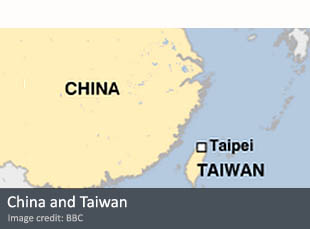
Analysis: The Current State of the China-Taiwan Spy War

China and TaiwanBy JOSEPH FITSANAKIS | intelNews.org |
Last week I spoke about the current state of the espionage war between China and Taiwan with Tim Daiss, a Southeast Asia-based American journalist who has been covering the Asia-Pacific region for over a decade. Our discussion formed the basis of a comprehensive piece on the subject, published in British newspaper The Independent, in two parts (part one and part two). I told Daiss that the Ministry of State Security —China’s primary national intelligence agency— is not known for its technological prowess. However, the sheer size of Beijing’s intelligence apparatus is proving a good match for the more advanced automated systems used by its less populous regional rivals, including Taiwan. When it comes to traditional human intelligence, the Chinese have been known to employ time-tested methods such as sexual entrapment or blackmail, as was confirmed most recently in the case of Taiwanese Major-General Lo Hsien-che. Lo, who headed the Taiwanese military’s Office of Communications and Information, was convicted of sharing classified top-secret information with a female Chinese operative in her early 30s, who held an Australian passport. During his trial, which marked the culmination of Taiwan’s biggest spy scandal in over half a century, Lo admitted that the Chinese female spy “cajoled him with sex and money”. In addition to honey-trap techniques, Chinese spies collect intelligence by way of bribery, as do many of their foreign colleagues. In the case of China, however, a notable change in recent years has been the accumulation of unprecedented amounts of foreign currency, which make it easier for Chinese intelligence operatives to entice foreign assets, such as disgruntled or near-bankrupt state employees, to sell classified data. Read more of this post

German intelligence report sees US leading global energy contest

The Tengiz oil refinery in KazakhstanBy JOSEPH FITSANAKIS | intelNews.org |
A leaked geopolitical study authored by German intelligence sees the United States as the primary beneficiary of the world’s drastically changing energy balance. The report, which was produced by the German Federal Intelligence Service (Bundesnach- richtendienst, or BND) was leaked to the Reuters news agency and accessed by Germany’s Frankfurter Allgemeine Zeitung. It sides with other recent estimates, notably by the International Energy Agency, which suggest that the domestic oil production of the United States might exceed that of Russia and Saudi Arabia by the year 2020. The BND estimates that, through the technique popularly known as fracking (using pressurized fluid to cause horizontal fractures on underground rock layers), the US will be able to exploit oil and natural gas reserves on its territory that were previously considered inaccessible. This could transform the US from the world’s largest energy importer of energy to a net exporter of both oil and natural gas. According to the report, such a massive transformation of the global energy import-export balance could have “particularly dramatic consequences” in the realm of international relations. Most crucially, it could transform the existing balance of power between the US and China. Specifically, German intelligence analysts forecast that, as the US becomes increasingly self-sufficient in energy, it will limit its import of oil and natural gas to its neighboring countries, namely Canada and Mexico. This could potentially lead the US to gradually disengage from the Middle East, allowing Washington’s foreign policy “increased freedom of action” vis-à-vis energy-rich Arab nations and Israel. At the same time, more Middle Eastern oil will find its way to China, as the Far-Eastern country will emerge as the world’s largest importer of energy. Read more of this post

Freed Russian scientist convicted for spying maintains innocence

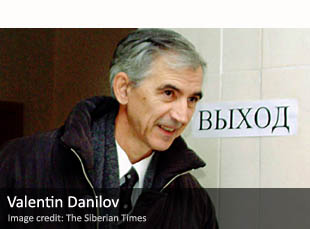
Valentin DanilovBy JOSEPH FITSANAKIS | intelNews.org |
A Russian scientist who was pardoned last week, after spending nearly a decade behind bars for allegedly spying for China, has dismissed the charges against him as “pure fantasy”. Physicist Valentin Danilov was arrested by the FSB, the Russian Federal Security Service, in February of 2001 and charged with conducting espionage in the service of the Chinese space program. At the time of his arrest, Danilov headed the Thermo-Physics Center at Russia’s Krasnoyarsk State Technical University (KSTU), located in Siberia’s third largest city. For several years leading up to his arrest, he conducted research on the impact of solar activity on the condition and performance of space satellites. During his lengthy trial, Danilov admitted selling to the Chinese information on satellite technology belonging to the Russian government. But his defense team argued that the information in question had already been declassified and available in public sources since the early 1990s. Eventually, in November of 2004, a Russian Federal court found Danilov guilty of treason and sentenced him to 14 years in prison. He was supposed to be released in 2017. Earlier this month, however, a court in Krasnoyarsk found that, since Danilov had served most of his prison sentence in good behavior, and since his health was weak, he would be released early. In his first public interview since his release, Danilov, 66, has said he intends to take his case against the Russian government to the European Court of Human Rights. Speaking to reporters as soon as he emerged from prison, the Russian scientist said: “I would truly appreciate it if someone finally told me what state secret I sold”. He went on to comment directly on Russian President Vladimir Putin: “Everybody would be the same as him in his place, because it is the court that makes the czar”, he said, employing a traditional Russian proverb. Read more of this post

Russian court paroles scientist convicted of spying for China

Valentin DanilovBy JOSEPH FITSANAKIS | intelNews.org |
A court in Siberia has issued a rare verdict to parole a Russian academic who was convicted in 2004 of conducting espionage on behalf of China. Russian physicist Valentin Danilov headed the Thermo-Physics Center at Russia’s Krasnoyarsk State Technical University (KSTU), which is located in Siberia’s third largest city. For several years prior to his arrest, he conducted research on the impact of solar activity on the condition and performance of space satellites. In 1999, Danilov was among the signatories of a lucrative contract between KSTU and the state-owned China Aerospace Science and Technology Corporation, which is the main contractor for the Chinese government’s space program. The contract stipulated that KSTU was to help China Aerospace evaluate the performance of artificial satellites in real-life space conditions. Less than two years later, in February of 2001, Danilov was arrested by the FSB, the Russian Federal Security Service, and charged with conducting espionage in the service of the Chinese space program. In his trial, which took place in 2003, Danilov admitted selling to the Chinese information on satellite technology belonging to the Russian government. But his defense team argued that the information in question had already been declassified and available in public sources since the early 1990s. Largely due to this argument, the jury acquitted Danilov of all charges at the end of 2003. However, by the middle of June of next year, the physicist had been arrested again, after the Russian Supreme Court overturned his earlier acquittal. In November of 2004, another court found Danilov guilty of treason and sentenced him to 14 years in prison. Read more of this post

Murdered British businessman ‘was MI6 operative’ (we told you so)

Neil HeywoodBy JOSEPH FITSANAKIS | intelNews.org |

An investigation by The Wall Street Journal has concluded that Neil Heywood, the British businessman who was murdered in China last November, was an active informant for British intelligence at the time of his death. The news appears to confirm intelNews’ assessment of April 2012 that Heywood was in fact connected with British intelligence. A highly successful financial consultant and fluent Chinese speaker who had lived in China for over a decade, Heywood was found dead on November 14, 2011, in his room at the Nanshan Lijing Holiday Hotel in Chongqing. His death led to the dramatic downfall of Bo Xilai and Gu Kailai, a husband-and-wife team of political celebrities who were found guilty in a Chinese court of killing the British businessman. Immediately after Heywood’s death, there was widespread speculation that he may have been a spy for MI6, Britain’s external intelligence service. On April 27, 2012, I argued that I was not aware of anyone “with serious knowledge of intelligence issues who was not completely certain, or did not deeply suspect, that Heywood had indeed collaborated with British intelligence at some stage during the past decade”. I wrote this in the face of an official denial by British Foreign Secretary William Hague, who had said earlier in the week that “Heywood was not an employee of the British government in any capacity”. Now an extensive investigation by The Wall Street Journal has concluded that the dead British businessman had been an MI6 operative “for more than a year” prior to his death. Read more of this post

News you may have missed #805 (analysis edition)

US consulate in Benghazi, LibyaBy IAN ALLEN | intelNews.org |
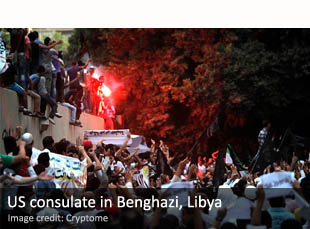
►►Should the US be wary of Huawei? Regular readers of intelNews know that this blog has been covering the subject of Chinese telecommunications hardware manufacturer Huawei for several years now. During the past few weeks, the United States Congress has flagged the company as being too closely associated with the Chinese intelligence establishment. Other countries have done so as well. But not everyone agrees. New York-based newspaper The Wall Street Journal said recently that “bashing Chinese companies on national security grounds seems like a risk-free strategy” for US politicians and added that, unlike Congress, American governors and mayors are eager to promote investment by Chinese companies. Moreover, Wired‘s Marcus Wohlsenemail suggests that, spies or no spies, US telecommunications companies should fear Huwaei, which is here to stay.
►►Should CIA share some of the blame for Benghazi? For the last month, the US media and Congress have been grilling the State Department for the security failures during the deadly assault on a US compound in Benghazi, Libya. But what if the State Department is the wrong target of scrutiny? According to a counter-theory advanced recently by The Washington Post‘s Dana Milbank, the CIA, not the State Department, bears some responsibility for the security lapse that led to the death of Ambassador Chris Stevens and three other Americans, but is flying under the radar due to the classified nature of its activities in Libya.
►►Could unmanned drones go rogue? Unmanned aerial vehicles, commonly known as drones, have been in the news a lot lately: the US Congress has given the green light for their use by state and local law enforcement, academic researchers, and the private sector. UAVs are rapidly becoming a new tool in patrolling US borders and in NATO military operations in Afghanistan and Pakistan. But non-state actors, including organized criminal gangs and drug cartels, may also be seeing the benefits of UAVs before too long. Read an interesting analysis piece that includes comments by intelNews‘ own Joseph Fitsanakis.

Taiwan arrests eight military officers for spying for China

China and TaiwanBy IAN ALLEN | intelNews.org |
Authorities in Taiwan have announced the arrest at least eight current and former military officers on suspicion of conducting espionage on behalf of China. The eight are accused of leaking Taiwanese military secrets to Beijing, in a case that some Taiwanese legislators described yesterday as one of the most serious instances of espionage in the island’s history. According to official statements issued yesterday, the person in charge of the alleged spy ring appears to be Lieutenant Colonel Chang Chin-hsin, who until his retirement earlier this year was charge of political warfare at the Naval Meteorology and Oceanography (METOC) Office. Based outside of Taipei, METOC is in charge of producing mapping data for use by Taiwan’s naval forces, including cartographic manuals used by Taiwanese warships and submarines guarding the Taiwanese coastline. Taiwanese authorities allege that Chang “initiated contacts” with Chinese mainland officials while still serving in the Taiwanese Navy. Following his recruitment, Chang gradually enlisted several other members of the Taiwanese military by offering hefty monetary bribes in exchange for military secrets. Taipei authorities claim that they found out about Chang’s espionage activities in March of this year, and that Taiwan’s Military Prosecutors Office gathered evidence against him before he was able to seriously compromise national security. Read more of this post

White House review ‘found no evidence’ of Huawei spying for China

Huawei TechnologiesBy JOSEPH FITSANAKIS | intelNews.org |

A review commissioned by the government of the United States has reportedly found no evidence that Chinese telecommunications hardware manufacturer Huawei Technologies spied for the Chinese government. The 18-month-long review, which was ordered directly by the White House, examined the question of security vulnerabilities posed by telecommunications hardware suppliers, which could theoretically harm US service providers and pose a danger to US national security. The report, which was allegedly aided by several US intelligence agencies and other federal government departments, was based on detailed interviews with nearly 1,000 telecommunications equipment consumers across the United States. It was concluded at the start of 2012, but remains largely classified. However, Reuters news agency cites “two people familiar with the probe”, who claim that the probe contains “no clear evidence” that Huawei spied for the government of China. At the same time, however, the probe concluded that Huawei telecommunications hardware contains numerous structural vulnerabilities which could help hackers exploit telecommunications networks supported by the Chinese company. According to one source quoted by Reuters, the White House report found that the telecommunications hardware sold by Huawei was “riddled with holes”. Read more of this post

Situation Report: China’s Huawei Going Mobile? (Exclusive)

Huawei TechnologiesBy TIMOTHY W. COLEMAN | intelNews.org |
The Chinese firm, Huawei Technologies, a provider of information and communications technology, has been constantly under fire in the United States and around for the world for its supposed deep ties to China’s military and intelligence establishment. It is not without some justifiable concern either. Prior to starting Huawei Technologies, the company’s founder and CEO, Ren Zhengfei, served for more than 10-years in China’s People’s Liberation Army’s engineering corps. This reality, rightly or wrongly, has added fodder for concerns that Chinese government interests are intertwined with those of Huawei. On September 13, Huawei Technologies and another Chinese firm, ZTE, were the subject of a Congressional hearing titled “Investigation of the Security Threat Posed by Chinese Telecommunications Companies Huawei and ZTE”. The purpose of the hearing, as explained by the US House Permanent Select Committee on Intelligence, was to assess the potential danger of “telecommunications equipment manufactured by companies with believed ties to the Chinese government”. Read more of this post

News you may have missed #791

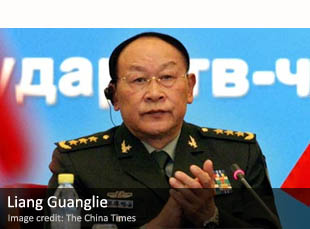
Liang GuanglieBy IAN ALLEN | intelNews.org |
►►India sees espionage behind Chinese cash payments to Indian pilots. According to Indian government sources, Chinese Defense Minister General Liang Guanglie gave two envelopes to the two Indian pilots, both wing commanders, who had flown him in a special Indian Air Force aircraft to New Delhi from Mumbai. After seeing off Liang, the pilots opened the sealed envelopes and found cash gifts inside. They immediately reported this to their superiors, who, in turn, informed the Indian Defense Ministry. India is now planning to lodge a protest with China over the incident.
►►NSA says foreign cyberattacks increasingly reckless. Debora Plunkett, of the secretive National Security Agency, whose responsibilities include protecting US government computer networks, has said that other nations are increasingly employing cyberattacks without “any sense of restraint”, citing “reckless” behaviors that neither the United States nor the Soviet Union would have dared at the height of Cold War tensions. She also predicted that Congress would pass long-stalled cybersecurity legislation within the next year. One wonders whether the Stuxnet incident is included in such “reckless” cyberattacks?
►►Taliban ‘using Facebook to lure Australian soldiers’. According to a review of social media by the Australian federal government, Australian soldiers are being warned by their commanders that enemies are creating fake Facebook profiles to spy on them. The report says that Taliban insurgents in Afghanistan are posing as “attractive women” on Facebook to befriend coalition soldiers and gather intelligence about operations. It adds that family and friends of soldiers are inadvertently jeopardizing missions by sharing confidential information online. This is not the first such warning in recent years.

News you may have missed #790

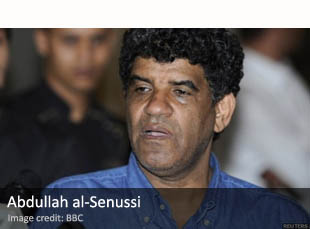
Abdullah al-SenussiBy IAN ALLEN | intelNews.org |
►►New report reopens CIA torture allegations. A report from Human Rights Watch, which was released last week, said that Libyan fighters opposed to Muammar Gaddafi’s regime were subjected to harsh interrogation techniques while in US custody overseas, during the administration of George W. Bush. The accusations, if substantiated, would suggest wider use of waterboarding than US officials have previously acknowledged. The report, which is based on documents and interviews in Libya after the fall of Gaddafi, includes a detailed description of what appears to be a previously unknown instance of waterboarding by the CIA in Afghanistan nine years ago.
►►Analysis: What does Gaddafi’s ex-spy chief know about Lockerbie? Abdullah al-Senussi became a hate-figure in his home country as head of an intelligence machinery responsible for the mistreatment of thousands of opponents of the regime of Muammar Gaddafi, his brother-in-law. He is nicknamed the “butcher” and known as Gaddafi’s “black box” because of the secrets he supposedly holds. The new Libyan regime had been negotiating for months with Mauritania where al-Senussi had fled following the fall of the Gaddafi regime last September. But now that al-Senussi has been flown back to Libya by private jet, he may at last be able to face questions by British police about Lockerbie.
►►Chinese hardware manufacturer denies spying allegations. The Chinese hardware-manufacturing firm Huawei has released a 24-page report, written by John Suffolk, a former British government chief information officer who has now turned Huawei’s global security officer, which states that protecting the network security of its worldwide customers is one of company’s “fundamental interests”. The report follows allegations in the United States, Australia, India, and elsewhere, that the company maintains close operational ties to China’s intelligence establishment.

News you may have missed #788

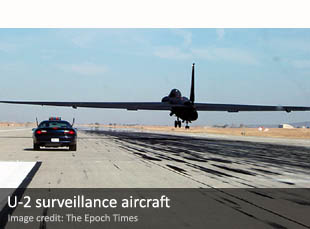
U-2 surveillance aircraftBy IAN ALLEN | intelNews.org |
►►US spy planes violated Israeli airspace in 1950s. American U-2 espionage planes repeatedly entered Israeli airspace in the 1950s for a series of secret spy missions, according to new information to be published by the Israel Air Force magazine next week, bringing to an end a decades-long mystery. At the time, Israel’s defense establishment was baffled by the entrance of high-flying crafts. For years, officials in IAF command disagreed on the identity of the mystery crafts, with some claiming that they were British Vickers-Valiants, and others saying they were American Vought F-8 Crusader planes, that had been stationed on a US aircraft carrier. According to documents to be published next week, it was the USSR that aided Israeli officials to expose the identity of the mystery planes, after a US U-2 espionage plane was shot down over Soviet soil.
►►US guard pleads guilty to espionage. A civilian guard at a new US consulate in China pleaded guilty on Thursday to attempting to sell Chinese security officials photographs and access to the compound so they could plant listening devices. According to a court proffer, Bryan Underwood had lost a significant amount of money in the stock market and hoped to make between $3 million and $5 million by supplying classified photos and information to China’s Ministry of State Security. Underwood, 32, appeared in federal court in Washington and pleaded guilty to one count of attempting to communicate national defense information to a foreign government.
►►CIA torture probe ends without any charges. The US Department of Justice has ended its investigation into the CIA’s interrogation program for terror detainees, without bringing charges. Attorney General Eric Holder said there was not enough evidence to “sustain a conviction beyond a reasonable doubt”. Jameel Jaffer, deputy legal director of the American Civil Liberties Union, said the investigation’s conclusions were a “nothing short of a scandal”. But CIA officials welcomed the decision. CIA Director David Petraeus thanked his staff for co-operating with the investigation. “As intelligence officers, our inclination is to look ahead to the challenges of the future rather than backwards at those of the past”, he said. No surprises here, surely.

Canadian reporter says Chinese news agency asked him to spy

Mark BourrieBy JOSEPH FITSANAKIS | intelNews.org |

A longtime Canadian journalist says he resigned his post at China’s state-run news agency after he was asked to use his press-pass privileges to spy on a prominent Tibetan separatist leader. Mark Bourrie, an Ottawa-based reporter and author of several books, told The Canadian Press news agency that he was first approached by Chinese state-run news agency Xinhua in 2009. The veteran journalist was allegedly told by Xinhua officials that the agency planned to expand its news coverage of Canada and wished to compete with other international news services active in North America. Bourrie said that, upon joining Xinhua, he began to cover “routine political subjects”; gradually, however, his superiors started making “some unusual requests”. In one characteristic case, he was asked to report on the identities and contact information of political activists who had participated in legal protests against the visit to Canada of Chinese President Hu Jintao in 2010. Bourrie says he rebuffed such requests, because they did not seem to him to have journalistic value. In April of this year, Xinhua’s bureau chief in Ottawa, Dacheng Zhang, allegedly asked Bourrie to attend a keynote speech by the 14th Dalai Lama at the Sixth World Parliamentarians’ Convention on Tibet, which was held at the Ottawa Conference Center. Based in India, the Dalai Lama is the most prominent international figure of the movement for the independence of the Tibet Autonomous Region, which has been ruled by the People’s Republic of China since 1951. Read more of this post

News you may have missed #776

Alexei NavalnyBy I. ALLEN and T.W. COLEMAN | intelNews.org |
►►US Army critiques its own intel collection system. An intelligence gathering system, known as the Distributed Common Ground System (DCGS), widely used by the US Army in Afghanistan to detect roadside bombs and predict insurgent activity, has severe limitations and is “not suitable”. This is according to a memo sent on August 1 by the Army’s senior equipment tester, General Genaro J. Dellarocco, to the Army’s chief of staff, General Raymond Odierno. The memo hammers the DCGS system for its “poor reliability” and “significant limitations” during operational testing and evaluation earlier this year.
►►Russian lawyer exposes wiretap find on Tweeter. Russian lawyer and political activist Alexei Navalny, who discovered a wiretapping device at his workplace, allegedly installed by the Russian government, has used YouTube and Tweeter to publicize his discovery. The wiretap was allegedly found attached to a set of wires hidden inside the wall molding of Navalny’s office at the Moscow-based organization Anti-Corruption Fund. It was reportedly discovered with the help of a bug detector. The same wires seem to also be attached to a hidden camera.
►►Volkswagen victim of Chinese industrial espionage? A recent article by Agence France Presse claims that German-based Volkswagen has become a victim of industrial espionage. While operating under a joint partnership agreement with the Chinese automobile company First Automobile Works, to build and manufacture cars for China’s burgeoning domestic market, designs and technical specifications for Volkswagen engines were apparently stolen. An unnamed Volkswagen manager stated that the loss was “quite simply a catastrophe”. It’s worth noting, however, that a similar accusation leveled against China in 2011 by French automaker Renault, turned out to be a criminal hoax.