CIA slowly opens up about botched 1952 mission in China

CIA HQ

CIA HQ

By JOSEPH FITSANAKIS | intelNews.org |
The CIA has produced an hour-long documentary about a failed 1952 covert mission inside China, which resulted in the death of two American pilots and the capture of two CIA paramilitary officers, who spent a total of 40 years in Chinese prisons. The documentary, which premiered last week on a restricted basis at the Agency’s Langley, Virginia, headquarters, is based on internal CIA accounts of the operation, some of which were released in 2006. The premiere was reportedly attended by John Downey and Richard Fecteau, two CIA paramilitary officers on their first mission, who were captured by Chinese People’s Liberation Army (PLA) units inside Chinese territory, after the CIA-operated C-47 Skytrain airplane that was carrying them deep inside Chinese airspace was shot down in a Chinese ambush. Read more of this post

News you may have missed #355

Bookmark and Share

Analysis: A detailed look into Taiwanese espionage on mainland China

Lin Yi-lin

Lin Yi-lin

By JOSEPH FITSANAKIS | intelNews.org |
Japanese newspaper The Asahi Shimbun has published the first part of a captivating two-part examination into Taiwanese espionage activities in China, authored by Tsuyoshi Nojima, the paper’s former Taipei bureau chief. In the article, Nojima highlights the cases of a number of former civilian agents of Taiwan’s Military Information Bureau (MIB), including that of Lin Yi-lin. The MIB recruited Lin in the late 1980s, during what has been called the modern heyday of Taiwanese intelligence activities in China. Taiwan spies had been active on the Chinese mainland for decades following the Chinese Civil War, but a nationwide counterintelligence crackdown by Beijing in the late 1970s virtually decimated Taiwan’s espionage networks inside China. It took nearly a decade for the MIB to reestablish its informant architecture on the mainland. By that time, the rapprochement between the two rival countries was beginning, with commercial ties rapidly accelerating. Read more of this post

India blacklists Chinese phone companies over spying concerns

Huawei HQ

By IAN ALLEN | intelNews.org |
The government of India has officially barred a number of Chinese telephone equipment providers from operating in India, citing their strong links with the Chinese military. At the center of the move is Huawei Technologies, one of China’s largest telephone equipment manufacturers. Several intelligence insiders see the company, based in Shenzen, China, as a covert arm of the intelligence wing of the Chinese People’s Liberation Army. The company, which has business concerns in several countries around the world, has attracted the attention of American, British and Australian counterintelligence agencies, among others. In early 2008, the US government prohibited Huawei’s purchase of a significant amount of shares in US network security equipment maker 3Com, which supplies telecommunications hardware to the US Department of Defense. Read more of this post

Analysis: An Economic Security Role for European Spy Agencies?

Economic espionage

Economic spying

By JOSEPH FITSANAKIS | intelNews.org |
Last February, Spain’s intelligence service began investigating alleged suspicious efforts by foreign financial speculators to destabilize the Spanish economy. According to newspaper El País, the Spanish government asked the country’s Centro Nacional de Inteligencia (CNI) to probe links between speculative moves in world financial markets and a series of damaging editorials “in the Anglo-Saxon media”. There are indications that the National Intelligence Service of Greece (EYP) is following in the CNI’s footsteps. In February, when Athens and Brussels began to realize the magnitude of the financial crisis threatening the European common currency, several news outlets suggested that the EYP was cooperating with Spanish, Irish and Portuguese intelligence services in investigating a series of coordinated speculative attacks on money markets, most of which allegedly originated from London and Washington. Read more of this post

US asked for Egypt’s spy help on Algerian nuclear reactor

Document cover page

Cover page

By IAN ALLEN | intelNews.org |
A US consular document, acquired by a leading Algerian newspaper, reveals that Washington asked Egypt’s help in collecting intelligence on the Algerian nuclear energy program. The document, which dates from May 1991, was drafted by officials in the US embassy in Cairo, Egypt; it is not known how it came to the possession of Algerian daily Ennahar, which published it on Tuesday. It contains a summary of a May 1991 meeting in Cairo between Richard Clarke, who was then the US Department of State’s deputy secretary for political and military affairs, and a senior Egyptian official whose name is in redacted in the document, but appears to have been Amr Moussa, Egypt’s minister of foreign affairs at the time. The document, which is classified ‘top secret’, reports that the US delegation asked the Egyptians to help them gather information on Algeria’s Es Salam nuclear reactor, located in the city of Ain Oussera, in the province of Djelfa, in north-central Algeria. Read more of this post

New book on Canada’s mysterious Agent 235

Johann Heinrich Amadeus de Graaf

De Graaf

By IAN ALLEN | intelNews.org |
A new book published by the Pennsylvania State University Press sheds new light into the life and work of mysterious Agent 235, Canada’s mysterious mid-20th-century spy known as ‘Johnny’. In Johnny: A Spy’s Life, R.S. Rose and Gordon Scott present the outcome of 14 years of research on ‘Johnny’, whose real name was Johann Heinrich Amadeus de Graaf. De Graaf was born in Germany in 1894, but later moved to Britain, and at the start of World War II worked as an informant for MI6. Although he conducted some of his operations in Germany, most of them took place in the UK, where he unmasked a number of native pro-Nazi sympathizers and agents of the Gestapo. Read more of this post

News you may have missed #327

  • Cyberspies eyed Canadian visa applications. Personal information about Canadians applying for visas was swiped by cyberspies who hacked into Indian embassy computers in Afghanistan. The data theft was part of a wider cyberespionage operation launched by the underground hacking community in China and aimed primarily at political targets, according to academic researchers.
  • Israeli Arab jailed for spying on top general. Rawi Sultani, who is accused of informing Hezbollah of his membership in the same fitness club as Lieutenant-General Gabi Ashkenazi, as well as of methods of accessing the club, has been sentenced to nearly six years’ imprisonment.
  • CIA places American on assassination list. US-born al-Qaeda recruiter Anwar al-Aulaqi, who now lives in Yemen, has become the first US citizen to be placed on a CIA “targeted killing” list, which requires “special approval from the White House”.

Bookmark and Share

Analysis: Canada becoming a heaven for spies claims ex-CSIS agent

Michel Juneau-Katsuya

Juneau-Katsuya

By IAN ALLEN | intelNews.org |
Canada is today one of the world’s safest and most attractive environments for international spies, according to a former officer in the Canadian Security Intelligence Service (CSIS). Michel Juneau-Katsuya, who last September co-authored Nest of Spies with Montreal-based journalist Fabrice de Pierrebourg, says that Canada is doing little to combat increasing espionage activity within its borders by agents of friendly and adversary nations alike, including China, Iran, Israel, the United States, and France. Juneau-Katsuya suggests that international spying within Canada is encouraged by the country’s prosperity, its multicultural urban environment, advanced telecommunications infrastructure, as well as by its political or geographical proximity to major world powers, such as Russia and the United States. Read more of this post

Study points to Chinese city as ‘world capital’ of cyberespionage

Shaoxing

Shaoxing

By IAN ALLEN| intelNews.org |
A major traffic analysis of cyberespionage attacks has identified a provincial urban center in southeast China as ‘the world capital’ of cyberespionage. The survey, conducted by cybersecurity firm Symantec, studied the origination points and targets of 12 billion malicious emails. It concluded that nearly one third of all email-based cyberespionage attacks originate from the People’s Republic of China –a percentage far larger than previously thought. It also traced most Chinese cyberespionage attacks to Shaoxing, a city of over four million residents in China’s southeaster Zhejiang province. The Symantec study said that large-scale Chinese cyberespionage attacks appear to be systematic and concentrate on carefully selected targets, such as defense policy experts and human rights activists. Read more of this post

News you may have missed #307

Bookmark and Share

News you may have missed #306

  • Sweden jails Chinese man for spying on Uighurs. Sweden has jailed Babur Maihesuti, a.k.a. Babur Mehsut, a dual Chinese-Swedish national who was caught monitoring the political activities of Sweden’s Uighur community on behalf of Beijing. The latter has denied any connection with the alleged spy.
  • Pakistan follows US directive on ISI chief. The director of Pakistan’s Inter-Services Intelligence directorate, Lt. Gen. Ahmad Shuja Pasha, will remain in his post for another year, the Pakistani government has announced. Even though Pasha had a row with CIA director Leon Panetta last November, the US pressured Pakistan to keep him, as the White House has “come to believe that keeping Pasha in place will facilitate efforts to flush out Taliban safe havens from Pakistan”.
  • Dubai tells spies to…leave. Laughable publicity stunt by Dubai Police, who have asked all spies “currently present in the Gulf” to leave the region within a week. “If not, then we will cross that bridge when we come to it”, warned Lieutenant General Dahi Khalfan.

Bookmark and Share

News you may have missed #294

  • Tensions mount in Turkey over alleged coup plot. Simmering tensions between Turkey’s government and judicial elite erupted into open confrontation Thursday, over the handling of a probe into the Ergenekon network, an alleged military-intelligence plot to topple the Islamist-rooted government.
  • CIA recruiting Chinese-Americans. The CIA is posting recruitment advertisements in Southern California’s Chinese language media during the Lunar New Year, in an attempt to hire Chinese Americans. This is part of a wider effort by the Agency to increase numbers of ethnic minority employees by 22 to 30 percent by 2012.
  • Two alleged Israeli spies sentenced to death in Lebanon. Retired police officer Mahmoud Qassem Rafeh, who was arrested by Lebanese authorities in 2006, has been given a death conviction for “collaboration and espionage on behalf of the Israeli enemy”. Another defendant, Palestinian Hussein Khattab, has been convicted in absentia for his alleged involvement in the murders of members of Hezbollah and Islamic Jihad.

Bookmark and Share

Analysis: Google-NSA partnership part of broader trend

Google

Google

By IAN ALLEN | intelNews.org |
We reported last week the apparent alliance between the Google Corporation and the US National Security Agency, which is the main US government organization tasked with communications interception, as well as communications security. The partnership, which began soon after Google’s decision to close down its venture business in China, where its operations came repeatedly under cyber-attack, has caused considerable controversy among civil liberties advocates. But an op-ed in the US-based Federal News Radio website describes it as the beginning of a new trend, which is likely to intensify. Read more of this post

How many government informants are there in China?

Kailu County

Kailu County

By JOSEPH FITSANAKIS | intelNews.org |
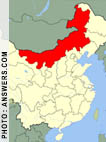
The interest of intelligence observers was stirred last week by a rare revelation made by a Chinese regional police official, who said that his bureau employs one in every 33 local residents as an informant. Speaking to Xinhua News Agency, Liu Xingchen, deputy public security bureau director for Inner Mongolia’s Kailu County, said his force employed 12,093 informants out of approximately 400,000 inhabitants. The informants’ task, he said, was to provide government with intelligence, to weed out “non-harmonious elements”, and to uncover “all sorts of information that might destabilize society”. Some reports note that, when applied nationwide, these statistics point to the possible existence of “at least 39 million informants”, a number that represents 3 per cent of China’s population and “lays bare the enormous scale of China’s surveillance network”. Such extrapolations, however, are risky for a number of reasons. Read more of this post