CIA spies consider Mossad ‘most unfriendly’ agency

Mossad seal

Mossad seal

By JOSEPH FITSANAKIS | intelNews.org |
This blog frequently considers the issue of US-Israeli intelligence relations, said to be undergoing a turbulent period in recent times. Indeed, the change of guard at the White House, the rearrangement of Washington’s policy priorities following the economic crash, as well as the dramatic rightwing shift in Israeli politics have rapidly altered the political playing field between the two nations. To this extent, it is worth noting that Meir Dagan, director of Israeli intelligence agency Mossad, told a Knesset committee last July that “Israel is gradually turning from an asset to the United States to a burden”. How is this evident in intelligence relations between Washington and Tel Aviv? The Washington Post’s security correspondent Jeff Stein may be able to help fill in the picture. He wrote a few days ago that an internal poll, which was recently administered to CIA operatives, found that Israeli intelligence agencies are considered the world’s least friendly and most uncooperative with their US counterparts. Read more of this post

News you may have missed #425 (US edition)

  • US Pentagon considering pre-emptive cyber-strikes? This is what The Washington Post is reporting, noting that military officials are “still wrestling with how to pursue the strategy legally”. If anyone in the DoD discovers a legal method of launching pre-emptive aggression, we’d sure like to know.
  • More changes in US FISA court. After a recent change of leadership, the US Foreign Intelligence Surveillance Act (FISA) court is considering new compliance rules for handling surveillance requests by US counterspy agencies. The court authorizes requests by agencies for surveillance of foreign suspects operating inside the US.
  • Why do US officials want to deport Chinese defector? Washington wants to deport Li Fengzhi, a Chinese ex-intelligence agent who defected to the US in 2004, back to China, where he could be executed for treason. There are rumors that Li may have “oversold” himself to the FBI and the CIA.


News you may have missed #418

  • US military pays for intel widely available online. Experts say that the vast majority of the ‘intelligence’ needed by the United States is freely available on the Internet. But that has not stopped a company called Military Periscope from selling its subscription services to the US government, on things such as updates on foreign militaries, peacekeeping missions, weapons databases and terrorist organizations “via monthly CD-ROM delivery”.
  • Son of Russian spies could return to US for school. Tim Foley, the elder son of Donald Howard Heathfield and Tracey Lee Ann Foley, the two deported US residents who were living a double life as Russian spies, may be trying to return to study in the United States, but his younger brother plans to stay in Moscow.
  • German spy chief notes cyberattack surge. Cyberattacks against German corporate and government computers have been on the rise since 2005, according to Heinz Fromm, Director of Germany’s Federal Office for the Protection of the Constitution. He said the attacks “come mainly from Asia, often from China”, and that often “state agencies are involved”.

News you may have missed #405

  • Democracy Now on Google-CIA partnership. Democracy Now has aired an interview with John Simpson, director of Consumer Watchdog’s Inside Google project, and Noah Shachtman, of Wired magazine’s Danger Room blog, who broke the story of the Google-CIA investment partnership.
  • Ex-CIA chief downplays cyberwar with China. Retired CIA chief Michael Hayden downplayed the notion that the US is in a raging “cyberwar” with China during a speech on Thursday at the Black Hat Technical Security Conference in Las Vegas.
  • Men held over parcel bomb sent to MI6. Two men have been arrested in north Wales, after parcel bombs were sent to the offices of the British government executive at 10 Downing Street, and the headquarters of MI6, Britain’s external intelligence agency. The two men, aged 52 and 21, are believed to be related and of Pakistani origin.

Bookmark and Share

Canadian politicians work for foreign powers, says Canada spy chief

Richard Fadden

Richard Fadden

By IAN ALLEN | intelNews.org |
The Canadian state’s senior intelligence executive caused an uproar last weekend after he claimed that several Canadian politicians were under the control of foreign governments. In an interview for an investigative program on state-owned CBC television, Richard Fadden, Director of the Canadian Security Intelligence Services (CSIS), said that his intelligence officers are aware of “some political figures who have developed quite an attachment to foreign countries”. He also claimed that CSIS investigators were aware of at least two cabinet ministers in two Canadian provinces, who were “agents of influence”, as well as other public officials that were secretly representing “foreign interests”.  Read more of this post

CIA slowly opens up about botched 1952 mission in China

CIA HQ

CIA HQ

By JOSEPH FITSANAKIS | intelNews.org |
The CIA has produced an hour-long documentary about a failed 1952 covert mission inside China, which resulted in the death of two American pilots and the capture of two CIA paramilitary officers, who spent a total of 40 years in Chinese prisons. The documentary, which premiered last week on a restricted basis at the Agency’s Langley, Virginia, headquarters, is based on internal CIA accounts of the operation, some of which were released in 2006. The premiere was reportedly attended by John Downey and Richard Fecteau, two CIA paramilitary officers on their first mission, who were captured by Chinese People’s Liberation Army (PLA) units inside Chinese territory, after the CIA-operated C-47 Skytrain airplane that was carrying them deep inside Chinese airspace was shot down in a Chinese ambush. Read more of this post

News you may have missed #355

Bookmark and Share

Analysis: A detailed look into Taiwanese espionage on mainland China

Lin Yi-lin

Lin Yi-lin

By JOSEPH FITSANAKIS | intelNews.org |
Japanese newspaper The Asahi Shimbun has published the first part of a captivating two-part examination into Taiwanese espionage activities in China, authored by Tsuyoshi Nojima, the paper’s former Taipei bureau chief. In the article, Nojima highlights the cases of a number of former civilian agents of Taiwan’s Military Information Bureau (MIB), including that of Lin Yi-lin. The MIB recruited Lin in the late 1980s, during what has been called the modern heyday of Taiwanese intelligence activities in China. Taiwan spies had been active on the Chinese mainland for decades following the Chinese Civil War, but a nationwide counterintelligence crackdown by Beijing in the late 1970s virtually decimated Taiwan’s espionage networks inside China. It took nearly a decade for the MIB to reestablish its informant architecture on the mainland. By that time, the rapprochement between the two rival countries was beginning, with commercial ties rapidly accelerating. Read more of this post

India blacklists Chinese phone companies over spying concerns

Huawei HQ

By IAN ALLEN | intelNews.org |
The government of India has officially barred a number of Chinese telephone equipment providers from operating in India, citing their strong links with the Chinese military. At the center of the move is Huawei Technologies, one of China’s largest telephone equipment manufacturers. Several intelligence insiders see the company, based in Shenzen, China, as a covert arm of the intelligence wing of the Chinese People’s Liberation Army. The company, which has business concerns in several countries around the world, has attracted the attention of American, British and Australian counterintelligence agencies, among others. In early 2008, the US government prohibited Huawei’s purchase of a significant amount of shares in US network security equipment maker 3Com, which supplies telecommunications hardware to the US Department of Defense. Read more of this post

Analysis: An Economic Security Role for European Spy Agencies?

Economic espionage

Economic spying

By JOSEPH FITSANAKIS | intelNews.org |
Last February, Spain’s intelligence service began investigating alleged suspicious efforts by foreign financial speculators to destabilize the Spanish economy. According to newspaper El País, the Spanish government asked the country’s Centro Nacional de Inteligencia (CNI) to probe links between speculative moves in world financial markets and a series of damaging editorials “in the Anglo-Saxon media”. There are indications that the National Intelligence Service of Greece (EYP) is following in the CNI’s footsteps. In February, when Athens and Brussels began to realize the magnitude of the financial crisis threatening the European common currency, several news outlets suggested that the EYP was cooperating with Spanish, Irish and Portuguese intelligence services in investigating a series of coordinated speculative attacks on money markets, most of which allegedly originated from London and Washington. Read more of this post

US asked for Egypt’s spy help on Algerian nuclear reactor

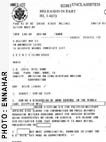
Document cover page

Cover page

By IAN ALLEN | intelNews.org |
A US consular document, acquired by a leading Algerian newspaper, reveals that Washington asked Egypt’s help in collecting intelligence on the Algerian nuclear energy program. The document, which dates from May 1991, was drafted by officials in the US embassy in Cairo, Egypt; it is not known how it came to the possession of Algerian daily Ennahar, which published it on Tuesday. It contains a summary of a May 1991 meeting in Cairo between Richard Clarke, who was then the US Department of State’s deputy secretary for political and military affairs, and a senior Egyptian official whose name is in redacted in the document, but appears to have been Amr Moussa, Egypt’s minister of foreign affairs at the time. The document, which is classified ‘top secret’, reports that the US delegation asked the Egyptians to help them gather information on Algeria’s Es Salam nuclear reactor, located in the city of Ain Oussera, in the province of Djelfa, in north-central Algeria. Read more of this post

New book on Canada’s mysterious Agent 235

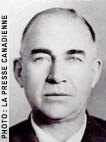
Johann Heinrich Amadeus de Graaf

De Graaf

By IAN ALLEN | intelNews.org |
A new book published by the Pennsylvania State University Press sheds new light into the life and work of mysterious Agent 235, Canada’s mysterious mid-20th-century spy known as ‘Johnny’. In Johnny: A Spy’s Life, R.S. Rose and Gordon Scott present the outcome of 14 years of research on ‘Johnny’, whose real name was Johann Heinrich Amadeus de Graaf. De Graaf was born in Germany in 1894, but later moved to Britain, and at the start of World War II worked as an informant for MI6. Although he conducted some of his operations in Germany, most of them took place in the UK, where he unmasked a number of native pro-Nazi sympathizers and agents of the Gestapo. Read more of this post

News you may have missed #327

  • Cyberspies eyed Canadian visa applications. Personal information about Canadians applying for visas was swiped by cyberspies who hacked into Indian embassy computers in Afghanistan. The data theft was part of a wider cyberespionage operation launched by the underground hacking community in China and aimed primarily at political targets, according to academic researchers.
  • Israeli Arab jailed for spying on top general. Rawi Sultani, who is accused of informing Hezbollah of his membership in the same fitness club as Lieutenant-General Gabi Ashkenazi, as well as of methods of accessing the club, has been sentenced to nearly six years’ imprisonment.
  • CIA places American on assassination list. US-born al-Qaeda recruiter Anwar al-Aulaqi, who now lives in Yemen, has become the first US citizen to be placed on a CIA “targeted killing” list, which requires “special approval from the White House”.

Bookmark and Share

Analysis: Canada becoming a heaven for spies claims ex-CSIS agent

Michel Juneau-Katsuya

Juneau-Katsuya

By IAN ALLEN | intelNews.org |
Canada is today one of the world’s safest and most attractive environments for international spies, according to a former officer in the Canadian Security Intelligence Service (CSIS). Michel Juneau-Katsuya, who last September co-authored Nest of Spies with Montreal-based journalist Fabrice de Pierrebourg, says that Canada is doing little to combat increasing espionage activity within its borders by agents of friendly and adversary nations alike, including China, Iran, Israel, the United States, and France. Juneau-Katsuya suggests that international spying within Canada is encouraged by the country’s prosperity, its multicultural urban environment, advanced telecommunications infrastructure, as well as by its political or geographical proximity to major world powers, such as Russia and the United States. Read more of this post

Study points to Chinese city as ‘world capital’ of cyberespionage

Shaoxing

Shaoxing

By IAN ALLEN| intelNews.org |
A major traffic analysis of cyberespionage attacks has identified a provincial urban center in southeast China as ‘the world capital’ of cyberespionage. The survey, conducted by cybersecurity firm Symantec, studied the origination points and targets of 12 billion malicious emails. It concluded that nearly one third of all email-based cyberespionage attacks originate from the People’s Republic of China –a percentage far larger than previously thought. It also traced most Chinese cyberespionage attacks to Shaoxing, a city of over four million residents in China’s southeaster Zhejiang province. The Symantec study said that large-scale Chinese cyberespionage attacks appear to be systematic and concentrate on carefully selected targets, such as defense policy experts and human rights activists. Read more of this post