News you may have missed #636
November 26, 2011 2 Comments
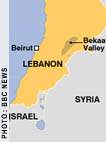
Lebanon
►►Careless codeword may have cost CIA its Lebanon network. Hezbollah have reportedly just rolled up the CIA’s network of spies in Lebanon. If so, it’s because of one of the stupidest, least secure code words in history. According to ABC News, Hezbollah operatives figured out that CIA informants, who had infiltrated the Iranian proxy group, were meeting with their agency handlers at a Beirut Pizza Hut. How could Hezbollah deduce that location? “The CIA used the codeword ‘PIZZA’ when discussing where to meet with the agents,” ABC reports.
►►UK spy chiefs to be publicly questioned for first time. The heads of British intelligence agencies are set to be questioned for the first time in public, under plans to make spies more accountable. The directors of MI5, MI6 and GCHQ will face Parliamentarians on the Intelligence and Security Committee. Although, they have recently begun to make rare public appearances, and deliver speeches, it will be the first time the intelligence agency heads will face public cross-examination over their activities.
►►Documents reveal largest domestic spy operation in Canadian history. Police organizations across Canada co-operated to spy on community organizations and activists in what the Royal Canadian Mounted Police called one of the largest domestic intelligence operations in Canadian history, documents reveal. Information about the extensive police surveillance in advance of last year’s G8 and G20 meetings in southern Ontario comes from evidence presented in the case of 17 people accused of orchestrating street turmoil during the summits.


















 intelNews.org
Analysis: Cloud computing causes ‘cosmic shift’ in US spy community
November 28, 2011 by Joseph Fitsanakis Leave a comment
Cloud computing
By JOSEPH FITSANAKIS | intelNews.org |
While many are focusing on recent reports of arrests of CIA operatives in Lebanon and Iran, American intelligence planners have other things on their minds: the latest buzzword is ‘cloud’; specifically, ‘cloud computing’. The term means storing information and software on a network, which can then be shared on demand by users of interconnected electronic devices. The US intelligence community’s interest in this form of data organizing has been known for quite some time. But according to specialist publication Federal Computer Week, cloud computing is rapidly becoming a reality, as one after the other, US intelligence agencies are “moving their classified, sensitive information off their own servers and into the cloud”. Such a change “might have sounded crazy five years ago”, says FCW, and the fact that it is happening marks nothing less than a “cosmic shift” for American intelligence. The migration unto the cloud was spearheaded two years ago by the National Security Agency; the NSA was later joined by the Defense Intelligence Agency, the National Geospatial-Intelligence Agency, and the super-secretive National Reconnaissance Office. Soon the CIA wanted in: in 2009, Jill Tummler Singer, the CIA’s deputy Chief Intelligence Officer, told ComputerWorld that the CIA was becoming one of the US government’s strongest advocates for cloud computing, even though “the term really didn’t hit our vocabulary until a year ago”. Not everyone is super-excited about the cloud. Last year, Brian Snow, the NSA’s former Technical Director, said at a conference that he didn’t trust cloud services, mostly because of the existence of countless unpatched software vulnerabilities. But the move is heavily supported by two of America’s most senior intelligence officials: Keith Alexander, commander of US Cyber Command and director of NSA —America’s largest intelligence agency— and Director of National Intelligence James Clapper. Read more of this post
Filed under Expert news and commentary on intelligence, espionage, spies and spying Tagged with Analysis, Brian Snow, CIA, CIA Information Assurance Group, cloud computing, cybersecurity, James R. Clapper, Keith Alexander, NRO, NSA, Robert Bigman, United States, US National Geospatial Intelligence Agency