White House considering covert operations against Iran

Iran

Iran

By JOSEPH FITSANAKIS | intelNews.org |
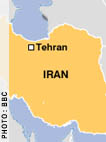
One of the major strategic objections to the US invasion of Iraq in 2003 was the near-certain prospect that removing the Sunni-dominated Ba’ath Party from power would increase Iranian-Shiite influence in the country. As the US military exit strategy gradually unfolds in Iraq, the administration of US President Barack Obama is faced with precisely this prospect. While US troops are leaving Iraq, Iran is doing what any logical regional power would do: namely strengthening its clandestine footprint inside Iraq and preparing Tehran-allied Iraqi groups for the impending showdown with Sunni power centers. An article that appeared in today’s Wall Street Journal notes that “growing concern [about regional] influence from Iran” has prompted the Obama administration to explore covert ways of countering it. According to the article, US intelligence agencies have detected “increased arms smuggling [by Iran] to its allies” in Iraq, Bahrain and Syria (and, one would suppose, Lebanon, though this is not mentioned in the piece). The administration has therefore “pushed the military and intelligence communities to develop proposals to counter Tehran”, says the Journal. The push has prompted American intelligence and military planners to request “greater authority to conduct covert operations to thwart Iranian influence in neighboring Iraq”. This essentially implies an appeal for a Presidential “finding”, a secret executive authorization that —under the National Security Act— would provide the required legal basis for covert operations conducted abroad. Read more of this post
News you may have missed #585 [updated]

GCHQ

GCHQ

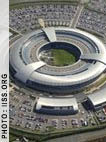
►►GCHQ recovers £300m worth of stolen information. Details stolen from more than a million credit cards across Europe, worth an estimated £300 million, have been recovered by Britain’s GCHQ signals intelligence spy agency, according to The Daily Telegraph.
►►Kuwait arrests alleged Iraqi spy. Kuwait security forces have arrested a man of Iraqi origin for alleged intelligence links with Iraq, a Kuwaiti daily said on Sunday. The man, who was arrested on Friday, and is referred to by the media as “Abu Ahmad”, was staying illegally in the country and allegedly provided Iraq with sensitive information about vital facilities in Kuwait. This is the third time in recent months that the government of Kuwait has pressed espionage charges against a spy suspect. [Update: Kuwait denies reports of spy’s arrest]
►►Hackers steal CIA and Mossad SSL certificates. The tally of digital certificates stolen from a Dutch company in July has exploded to more than 500, including ones for intelligence services like the CIA, the UK’s MI6, and Israel’s Mossad, a Mozilla developer said Sunday. According to some sources, the hackers were Iranian.

CIA Helped Gaddafi Torture Libyan Dissidents, Documents Show

Abdel Hakim Belhaj

Abdel Belhaj

By JOSEPH FITSANAKIS | intelNews.org |
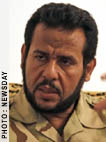
Back in February, when Libyan leader Muammar al-Gaddafi blamed the popular revolt against him on al-Qaeda, he was ridiculed in the international media. But documents discovered at an abandoned Libyan government office complex show that the Libyan rebels’ supreme military commander was abducted in 2004 by the CIA, which suspected him of links to al-Qaeda. Abdel Hakim Belhaj, also known as Abdullah al-Sadiq, was snatched by a CIA team in Malaysia, and secretly transported to Thailand, where he says he was “directly tortured by CIA agents”. The CIA then renditioned him to Libya, where he says he was tortured routinely until his release from prison, in 2010. In the 1980s, Belhaj was a member of the foreign Mujahedeen summoned by Osama bin Laden’s al-Qaeda to fight the Russians in Afghanistan. Upon returning to Libya in the early 1990s, he led the Libyan Islamic Fighting Group, an al-Qaeda-inspired armed organization that unsuccessfully sought to assassinate Colonel Gaddafi. Ironically, Belhaj is now the Tripoli-based military commander of the Libyan National Transitional Council, and says that he wants a full apology from the United States and Britain “for the way he was transported to prison in Libya in 2004”. But the former Mujahedeen is one of several terrorism suspects delivered to Libya by Western intelligence agencies in the years after 9/11, according to Libyan government documents discovered by Human Rights Watch (HRW) workers at the office of Libyan former intelligence chief and foreign minister Moussa Koussa. The documents show that Libya’s External Security Organization maintained extremely close relations with German, Canadian, British, and American intelligence services. Read more of this post

News you may have missed #584

Nicky Hager

Nicky Hager

►►Billing dispute reveals details of secret CIA flights. On August 12, 2003, a conracted Gulfstream IV aircraft carrying six passengers took off from Dulles International Airport for Bangkok. When it returned four days later, it carried Indonesian terrorist Riduan Isamuddin, who had been captured in Thailand and would spend the next three years in various secret CIA prisons. The Gulfstream IV’s itinerary, as well as the $339,228 price tag for the journey, are among the details of shadowy CIA flights that have emerged in a New York courthouse, in a billing dispute between contractors. Incidentally, even the airplanes’ owners didn’t always know that the CIA was using them.
►►French admit secret service spied on reporter. French interior minister Claude Guéant has admitted that the secret service spied on investigative reporter Gérard Davet, from the newspaper Le Monde, in order to trace the source of a leak about the so-called “Bettencourt party funding scandal“, which has been a source of embarrassment for President Nicolas Sarkozy’s party.
►►NZ let Israeli spies go free in return for passports. Another revelation from Nicky Hager’s book Other People’s Wars (see previous intelNews coverage here). The investigative reporter claims that New Zealand’s Security Intelligence Service released captured Mossad spies Eli Cara and Uriel Zoshe Kelman, in return for Read more of this post

News you may have missed #582

John Yoo

John Yoo

►►US government conceals Bush surveillance memos. The Justice Department is refusing to release legal memos by lawyer John Yoo, which the George W. Bush administration used to justify its warrantless surveillance program, one of the most contentious civil liberties issues during the Republican president’s time in office.
►►Ex-CIA bin Laden Unit boss wants rendition back. Michael Scheuer, a former insider and vocal critic of the US intelligence establishment, has described the Arab revolutions as “an intelligence disaster for the US and for Britain, and other European services”. Speaking from Scotland, he also urged for a return to the Bush administration’s rendition program, in order to gather new intelligence on Middle Eastern and North African groups.
►►French firm helped Gaddafi spy on opposition. We have written before about technical intelligence support provided by Western firms to some of the world’s most brutal regimes, including Iran and Bahrain. We can no add Libya to the long list. The Wall Street Journal reports that Amesys, a subsidiary of French telecommunications firm Bull helped the Gaddafi regime spy on the emails and chat messages of its opponents.

News you may have missed #581

Jin Yinan

Jin Yinan

►►CIA wants to censor book by ex-FBI agent. The agent, Ali H. Soufan, argues in the book that the CIA missed a chance to derail the 9/11 plot by withholding from the FBI information about two future 9/11 hijackers living in San Diego. He also says that torture interrogation methods against terrorism detainees were unnecessary and, ultimately, counterproductive. Both these things are known and have been publicly discussed. As The Independent correctly notes, the CIA’s objections are “less for national security reasons than out of a desire to avoid re-airing incidents that show the Agency in an unflattering light”.
►►New scandal at India’s SIGINT agency. The Indian government founded the National Technical Research Organisation (NTRO) in 2004, as a potential communications nerve center for all of India’s intelligence agencies. But the SIGINT agency has been involved in one financial scandal after the other, most recently relating to an elaborate procurement scam.
►►China silent about spy lecture leak. China has remained quiet as a recently leaked video of a Chinese general’s candid remarks on sensitive spying cases continued to draw international attention. The ministries of defense and foreign affairs have not responded to media inquiries, and numerous phone calls to National Defense University, where the general, Jin Yinan (pictured), teaches, went unanswered. State media made no mention of the story.

New Zealand base in Afghanistan was secret CIA station, book claims

Nicky Hager

Nicky Hager

By JOSEPH FITSANAKIS | intelNews.org |
A Kiwi “peacekeeping” and “civil reconstruction” base in Afghanistan was a secret station for the US Central Intelligence Agency, according to a new book by New Zealand’s preeminent investigative writer. Nicky Hager first made international headlines in 1996, with his groundbreaking book Secret Power: New Zealand’s Role in the International Spy Network. In it, he revealed the existence of the UK-USA Security Agreement and of ECHELON, a US-managed signals intelligence (SIGINT) collection and analysis platform that serves as an intelligence-sharing mechanism between UK-USA signatories. The publication of his latest book, entitled Other People’s Wars: New Zealand in Afghanistan, Iraq and the War on Terror, is scheduled to coincide with the ten-year anniversary of 9/11. The book focuses on —among other things— the Bamyan Province base in central Afghanistan, which serves as the center of operations for the New Zealand Provincial Reconstruction Team in the Central Asian country. It serves as a symbol of New Zealand’s cautious contribution to the NATO-led war in Afghanistan, by allowing Kiwi forces to participate with boots on the ground, while performing strictly noncombatant functions, officially described as “peacekeeping” and “civil rebuilding”. But Hager’s book alleges that the “noncombatant” mission of the Bamyan base was simply a cover, devised by the New Zealand Defence Forces’ public relations apparatus, and aimed at pacifying the country’s population. The real mission of the Bamyan base, says Hager, was to “help the Americans” by essentially concealing a covert CIA station. The author further alleges that the Kiwi forces at Bamyan were instructed to keep the presence of the CIA team secret. This they did, even as they shared daily meals with American spies in civilian clothes, who refused to disclose even basic details of their mission to their New Zealand guardians. Hager alleges that New Zealand’s defense establishment took the decision to help the CIA as part of a broader strategy of rapprochement between Wellington and Washington. Why rapprochement? It was in 1984, when, under mounting popular pressure, New Zealand’s Labour government of David Lange voted to bar nuclear-powered or nuclear-armed ships from entering New Zealand territorial waters. At the time, the nuclear ban imposed by New Zealand was heralded by the global nuclear disarmament movement as a major victory. But Washington did not see it this way. Read more of this post

News you may have missed #579 (CIA edition)

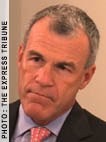
Robert Grenier

Robert Grenier

►►Interview with ex-CIA Islamabad station chief. Robert Grenier, who was the CIA’s Islamabad station chief from 1999 to 2001, tells Pakistan’s Express Tribune newspaper that the US unmanned drone program, which began as “a very surgically employed tool against international terrorists”, has now “become much more of a conventional weapon against militants”. He also rejects allegations that Pakistani government officials were aware of osama bin Laden’s whereabouts, saying that “no one has apparently found any compelling evidence”.
►►Who will guide Petraeus in his new CIA job? Siobhan Gorman, of The Wall Street Journal, opines that, when US General David Petraeus takes the helm at the Central Intelligence Agency next month, it will fall to the Agency’s deputy director Michael J. Morell, a little-known 31-year CIA veteran, to guide the new director.
►►CIA drone kills al-Qaeda deputy. An anonymous US official has told The New York Times that a CIA drone killed al-Qaeda’s second-ranking operative in Pakistan’s northwest province of Waziristan. Atiyah Abd al-Rahman, a Libyan who in the past year had taken over as al-Qaeda’s top operational planner, was killed on August 22, according to the official. Al-Qaeda is still officially led by Ayman al-Zawahiri, who is also believed to be in Pakistan.

US misused our intel to justify Iraq War, says German ex-spy chief

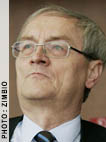
August Hanning

August Hanning

By JOSEPH FITSANAKIS | intelNews.org |
The former Director of Germany’s foreign intelligence service has accused the Bush administration of consciously falsifying intelligence supplied by Germany in order to justify going to war in Iraq. August Hanning, who served as Director of Germany’s Bundesnachrichtendienst (known as BND) from 1998 to 2005, said that the BND had no part in the deception, and that “the responsibility for the war lies solely with the Americans”. In an interview to the Sunday edition of German national newspaper Die Welt, Hanning explained that the administration of US President George W. Bush was especially interested in intelligence collected by the BND from an Iraqi defector codenamed ‘Curveball’. The defector, whose real name is Rafid Ahmed Alwan al-Janabi, arrived in Germany in 1999 and applied for political asylum, saying he had been employed as a senior scientist in Iraq’s biological weapons program. Among other things, he told his BND debriefing team that Saddam Hussein had built a fleet of biological weapons labs on wheels, in order to avoid detection from America and other countries. After consulting with biological weapons experts, the BND expressed serious doubts about Curveball’s reliability, but kept him in Germany nonetheless. Several years later, al-Janabi confirmed the BND’s suspicions, by admitting that he had invented his allegations in order to help bring down the regime of Saddam Hussein. He also admitted that he was in reality a taxi driver from Baghdad, who had used his undergraduate knowledge of engineering to get asylum in Germany. At the time, said Hanning, the BND strongly and repeatedly communicated to the CIA its doubts about Curveball’s claims, something which is known. What is not known, however, is that Hanning personally wrote to then CIA Director George Tenet and urged him to adopt a skeptical approach to the defector’s allegations. The former BND chief told Die Welt that he was “assured by the Americans that our intelligence would not be used in Powell’s speech”. Read more of this post

News you may have missed #578

Syria

Syria

►►CIA agent who helped kill Che wants payout from Cuba. This is from the “news that isn’t” department: Gustavo Villoldo, a Cuban-born CIA operative, who helped track down and kill Che Guevara in Bolivia, has won $2.8 billion in damages from the Cuban government, for confiscating his family property after the 1959 revolution. But he is unlikely to ever collect the money because Cuba does not recognize US court rulings.
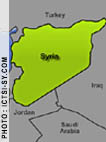
►►Cheney wanted Bush to destroy suspected Syrian nuke site. Former US Vice President Dick Cheney says in a new memoir that he urged President George W. Bush to bomb a suspected Syrian nuclear reactor site in June 2007. But, he wrote, Bush opted for a diplomatic approach expressed misgivings. Eventually Israeli jets bombed the site. Cheney’s account of the discussion appears in his autobiography, In My Time: A Personal and Political Memoir, which is to be published by Simon & Schuster next week.
►►South Korea indicts five for spying for North. Five South Koreans, including a former parliamentary aide, have been indicted for allegedly spying for North Korea, in connection with the Wangjaesan spy ring.

News you may have missed #577

Waihopai base

Waihopai base

►►Interview with Michael Hayden. The former director of the CIA and the NSA gave a lengthy interview in preparation for his keynote speech at the Raleigh Spy Conference. Among other things, he says that he does “not immediately conclude that senior levels of the Pakistani government knew about” Osama bin Laden’s whereabouts.
►►CIA denies helping police spy on NY Muslims. The Central Intelligence Agency is denying a news report that it helped the New York Police Department conduct covert surveillance on Muslims. The agency said suggestions that it engaged in domestic spying were “simply wrong” and that the report “mischaracterized the nature and scope” of the CIA’s support for the New York police.
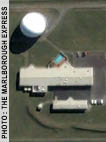
►►Spy base reservoir not a pool after all... A journalist at New Zealand’s Marlborough Express newspaper noticed what looked suspiciously like a swimming pool on a satellite photo (pictured) of the super-secret Waihopai listening base near Blenheim. Do spies go swimming on the base, he asked? It turns out they don’t. According to Government Communications Security Bureau Waihopai station chief Chris Farrow, the landmark is in fact a water reservoir, to be used in case of fire.

News you may have missed #574

CIA documents

CIA documents

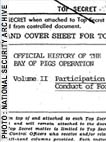
►►CIA told Kennedy Cuba invasion was ‘unachievable’. [Never mind. It turns out that the original article on Foreign Policy has been corrected to state that the meeting was not with Kennedy after all — see reader’s comment below]. More revelations from the newly declassified CIA Official History of the Bay of Pigs Invasion. According to the multi-volume history (pictured), a CIA team told President-Elect John F. Kennedy during a meeting in 1960 that toppling the Cuban government of Fidel Castro would not be feasible, considering the small invasion force that Kennedy insisted upon for the Bay of Pigs operation, in order to maintain plausible deniability.
►►NATO bombs home of Libyan intel chief. A compound in Tripoli destroyed overnight by NATO air strikes was the home of Abdullah Al-Senussi, former head of Libyan intelligence. This information allegedly comes from al-Senussi’s neighbor, oil engineer Omar Masood, who said he has lived across the street for 35 years. Meanwhile, several news outlets report that Abdel Salam Ahmed Jalloud, prime minister of Libya between 1972 and 1977, has defected to Italy.
►►Palestinian attacks took Israeli intel by surprise. The triple attacks, attributed by Israel to a Palestinian splinter group from the Gaza Strip, took Israel’s intelligence and security services by surprise, judging by the ensuing confusion and inaccuracy of initial reports. Between 15 and 20 Arab gunmen, some wearing Egyptian army fatigues, are believed to have taken part in the operation.

News you may have missed #573 (analysis edition)

Clair E. George

Clair E. George

►►New report details gaps in US spy collaboration. Nearly 10 years after the 9/11 attacks, US intelligence agencies are still struggling to strengthen the information sharing networks that broke down in 2001, according to the latest report by the US Congressional Research Service. Among other things, the 33-page report (pdf) points out that “agencies that obtain highly sensitive information are reluctant to share it throughout the intelligence community out of a determination to protect their sources”.
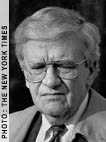
►►CIA Iran-Contra figure Clair George dies. Clair E. George, a consummate spymaster who was convicted of lying to Congress about the Iran-Contra affair, has died. George was known for operating in what spies call the “night soil circuit” –the less desirable posts of the world. He worked in Africa, Asia, Europe and the Middle East. He was the CIA’s station chief in Beirut when civil war erupted there in 1975. He then volunteered to replace the CIA’s Athens station chief, who had just been assassinated by November 17 Revolutionary Organization.
►►Here’s why CIA ‘mind control’ lawsuit was thrown out. A very good and succinct analysis of why a federal lawsuit against the CIA by the Vietnam Veterans of America, for allegedly subjecting US military personnel to chemical, biological and mind control experiments, was thrown out of court earlier this month. It includes the CIA’s court filing in a pdf link, here.

Former Finnish diplomat reveals she worked for the CIA

Marja-Liisa Linkoaho

Linkoaho

By JOSEPH FITSANAKIS | intelNews.org |
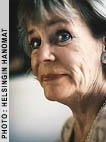
A Finnish diplomat in Cold-War East Germany has revealed how she was recruited by the US Central Intelligence Agency in the 1960s, shortly after the construction of the Berlin Wall. Marja-Liisa Linkoaho spoke to the Sunday edition of Finland’s Helsingin Sanomat newspaper, and admitted that she worked for American intelligence. She did so despite representing Finland, which was notably pro-Soviet during the presidency of ‘neutralist’ Finnish statesman Urho Kekkonen. She told the paper that, in 1961, at age 27, she became an assistant at the Finnish trade mission in East Germany, which at the time served as Finland’s de facto embassy in the communist country. The trade mission was headed by Consul General Olavi Wanne, and was centrally located on Mauerstrasse, within walking distance from the border between East and West Berlin. In August of 1961, less than three months after Linkoaho moved to East Germany, the country’s government, under Walter Ulbricht, took the decision to begin the construction of the Berlin Wall. However, as a foreign diplomat, Linkoaho was able to travel freely between East and West Germany despite the construction in Berlin of the heavily policed partition barrier. Several months later, Linkoaho borrowed a sum of money by one of her Finnish co-workers at the trade commission, which she used to purchase a German-made Volkswagen Beetle, from an American car dealership in West Berlin. However, shortly after she returned to East Berlin with her new car, it was stolen. Interestingly, Linkoaho said that, soon after the theft of her car, she was contacted by the CIA and asked to work for them as an agent, in return for money and a new car. The Finnish former diplomat told the Helsingin Sanomat that she had been contacted by the CIA “a few times before”, but had politely declined the Agency’s offers for work. This time, however, she needed the money, and the car, so she took up the offer. Read more of this post

Exclusive: Interview with ex-CIA officer Charles S. Faddis

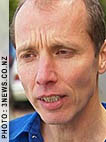
Charles S. Faddis

Charles S. Faddis

By JOSEPH FITSANAKIS | intelNews.org |
Yesterday I reviewed Charles S. Faddis’ new book, Codename Aphrodite (Orion, 2011), a gripping novel about a former CIA case officer’s freelance operation in Athens, Greece, in pursuit of November 17, one of Europe’s most notorious urban guerrilla groups. Today intelNews hosts an exclusive interview with Faddis, a straight-talking ex-CIA clandestine operations officer, who admits that his novel “is based on some very personal experiences” and that many of the book’s characters “are drawn much more from memory than they are from imagination”. Most regular readers of this blog probably know Charles “Sam” Faddis as the former head of the US National Terrorism Center‘s WMD Unit. His 20-year career as a CIA operations officer, with posts in South Asia, Near East and Europe, arguably culminated in 2002, when he led a CIA team into Iraq to help prepare the ground for the US invasion. He documented this in his 2010 book (co-authored with Mike Tucker) Operation Hotel California: The Clandestine War Inside Iraq. Following his 2008 retirement, Faddis, who was CIA Chief of Station in his last overseas tour, frequently comments on intelligence matters, most notably in his 2009 exposé Beyond Repair: The Decline and Fall of the CIA. Faddis’ answers to intelNews‘ questions are below. Read more of this post