News you may have missed #0120

  • Film on America’s most famous whistleblower. A new documentary film, The Most Dangerous Man in America: Daniel Ellsberg and the Pentagon Papers, examines the life of Daniel Ellsberg, a US Pentagon employee who leaked documents to the American public in order to stop the Vietnam War. Ellsberg, 78, is still a pariah in the US defense community. He told the Associated Press that at a RAND (research arm of the Pentagon, where he used to work) reunion several years back, no one would shake his hand.
  • Retired US Air Force officer convicted in China spying case. Retired US Air Force officer James W. Fondren Jr. faces a maximum of 20 years behind bars, after being convicted of selling classified information on US-China military relations to a Chinese agent and lying to the FBI about it. The US Department of Justice accused Fondren, 62, of being part of a spy ring that operated on US soil under the supervision of Chinese government officials, whom Fondren supplied with classified documents for over three years, beginning in 2004.
  • Request to halt CIA probe “nonsense” says former agent. A controversial request by seven former heads of the CIA to end the inquiry into abuse of terrorism suspects held by the Agency is “nonsense”, says Bob Baer, a 20-year CIA caseworker in the Mid-East and former CIA station chief in Iraq. “To say let’s not look further into this because it could upset the agency is like saying let’s not look into Bernie Madoff because it could upset the financial sector”, said Baer.

Bookmark and Share

News you may have missed #0119

  • CIA opens center on climate change. The CIA Center on Climate Change and National Security is a small unit led by senior specialists from the Directorate of Intelligence and the Directorate of Science and Technology. It focuses on “the national security impact of phenomena such as desertification, rising sea levels, population shifts, and heightened competition for natural resources”. Methinks the emphasis will probably be on the latter.
  • Brazilian political figures spied on after dictatorship. Senior Brazilian politicians, religious leaders and activists were spied on illegally for 16 years after the 1964-1985 military regime, according to recent allegations in the country’s press. Major surveillance targets included Brazil’s current President Luiz Inacio Lula da Silva, opposition leader and Sao Paulo Governor Jose Serra, Cardinal Claudio Hummes, and others.
  • New book examines life of Franco-sympathizer British spy. Jimmy Burns has written a biography of his father, Tom Burns, an anti-communist sympathizer of Spanish dictator Francisco Franco, who organized the British intelligence network in Spain during and after World War II.

Bookmark and Share

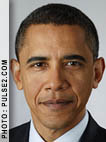
Comment: How did Iran know US planned to reveal nuclear facility?

Barack Obama

Barack Obama

By JOSEPH FITSANAKIS | intelNews.org |
The question may be confusing at first, but it makes perfect sense, considering the series of events. Late last week the US put together a secret plan to reveal to the world that Iran has built a previously undeclared nuclear facility to enrich uranium. However, on the morning of September 25, that is, just hours before US President Barack Obama made the revelation, Iran pre-emptied him with a formal letter to the International Atomic Energy Agency, in which it volunteered the information that it has built a facility inside a mountain near the city of Qum. Now, we know that US and other Western intelligence agencies have known about the existence of that nuclear facility for many years. However, from an intelligence point of view, the revelation of the site is secondary to the issue of how Iran came to know about the US President’s plan to reveal its existence. Read more of this post

News you may have missed #0117

Bookmark and Share

Chechnya President says US, UK spies active in region

Ramzan Kadyrov

Ramzan Kadyrov

By JOSEPH FITSANAKIS | intelNews.org |
The pro-Moscow President of Russia’s Chechen Republic has accused American and British intelligence services of collaborating with Muslim separatists in the region, in order to “split [Russia] apart”. Speaking to conservative newspaper Zavtra, President Ramzan Kadyrov said Russian government forces are “fighting in the mountains [against] the American and English intelligence agencies”. Asked to elaborate, Kadyrov alleged he had personally seen the US driver license of a CIA operative who was shot dead during a security operation he led. Kadyrov’s comments mark the first public allegation by a Russian government official of Western intelligence activity in the Russian Caucasus. Read more of this post

CIA using US consulate in Dubai to recruit Iranian spies: book

Dubai

Dubai

By JOSEPH FITSANAKIS | intelNews.org |
The CIA routinely uses the US consulate in Dubai, United Arab Emirates, to recruit Iranian spies, according to a new book. In Dubai: The World’s Fastest City, author Jim Krane quotes two unnamed American diplomats who say that US consular employees in Dubai issue travel visas to the thousands of Iranians who request them “only in exchange for inside information on the country”. Washington has no formal diplomatic relations with Tehran, and so Iranians use instead the US consular office in Dubai, which is situated right across from Iran in the Persian Gulf. Read more of this post

US moves to shield operatives in CIA abduction case

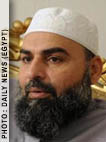
Hassan Nasr

Hassan Nasr

By JOSEPH FITSANAKIS | intelNews.org |
The US government has moved to officially prevent Italian authorities from prosecuting an American Colonel who in 2003 was involved in the illegal kidnapping of a Muslim cleric in Milan. If the Reuters report is accurate, it will be the first time that Washington moves officially to shield its covert operatives from prosecution in the Italian court system. Colonel Joseph Romano is one of 26 Americans, many of them CIA agents, believed to have been involved in the daylight abduction of Hassan Mustafa Osama Nasr from a Milan street. Nasr, who is also known as Abu Omar, says he was brutally tortured and held illegally for years without charge in Egypt, where he was renditioned by his American abductors. Read more of this post

Analysis: Is Afghanistan really important in the “war on terrorism”?

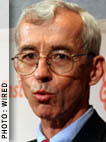
Paul P. Pillar

Paul P. Pillar

By JOSEPH FITSANAKIS | intelNews.org |
The Deputy Chief of the CIA’s Counterterrorism Center from 1997 to 1999, Paul Pillar, has authored an interesting editorial in which he asks “how important are physical havens to terrorist groups, such as al-Qaeda?”. The answer: not very. Writing in The Washington Post, Pillar points out that the main unstated assumption behind the US invasion of Afghanistan, namely that the country must not be allowed to again become a haven for terrorist groups, is incompatible with what we know about how such groups organize. If they are offered a haven, groups such as al-Qaeda will use it for basic training of recruits, says Pillar. But operations planning and training does not require such a base, nor is such a center crucial for successful execution of operations. Read more of this post

News you may have missed #0112

  • Obama refuses to halt CIA probe. Arguing that “nobody’s above the law”, the US President has rejected a request by seven former heads of the CIA to end the inquiry into abuse of suspects held by the Agency.
  • Naval intel agent caught spying on famous Philippine artist. Philippine prizewinning poet, critic and dramatist Bienvenido Lumbera says he will file a complaint against the Philippines armed forces over the apprehension of a Naval Intelligence Security Force agent, who was caught spying outside his home. The country’s government is supposedly concentrating (with US logistical, intelligence and combat assistance) on fighting the Muslim separatist Moro ethnic group (including the Abu Sayyaf Group) in the south, but it is apparently spying on artists and intellectuals on the side.

Bookmark and Share

CIA to deploy in record numbers in Afghanistan

CIA HQ

CIA HQ

By JOSEPH FITSANAKIS | intelNews.org |
The CIA is preparing to deploy record numbers of operatives and analysts to Afghanistan, according to US officials with access to classified documents, who spoke on condition of anonymity to The Los Angeles Times. Some said that once the intelligence surge is over the CIA’s station at the US embassy in Kabul, Afghanistan, which coordinates CIA activity in the country, will be “among the largest in the agency’s history”, rivaling and perhaps even surpassing those in Iraq, and even in Vietnam in the late 1960s. By the end of 2001, the Agency’s presence in Afghanistan was limited to about 150 agents. This number had doubled by 2005, and current estimates place the CIA’s force in the country to about 700, a number which may double again, once the intelligence surge has reached its peak. Read more of this post

Analysis: Bush focus on Daily Brief skewed policy decisions

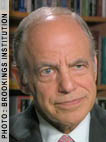
Lieberthal

Lieberthal

By JOSEPH FITSANAKIS | intelNews.org |
A study by a Brookings Institution analyst says the “unprecedented” level of importance given to the President’s Daily Brief (PDB) by George W. Bush skewed his administration’s policy decisions after 9/11 and had negative consequences for the US intelligence community. The PDB arrives at the US President’s desk every morning with highly classified summaries of the latest findings from America’s intelligence community. The importance given to the PDB, whose contents are often highly speculative or unprocessed, varies with Presidents. But Kenneth Lieberthal, former National Security Council staffer in the Bill Clinton administration and senior fellow at Brookings, says the Bush cabinet overwhelmingly relied on the PDB to make policy decisions, which were often based on information that lacked substantial analysis. Read more of this post

News you may have missed #0107

  • CIA invests with low-power Wi-Fi company. The CIA’s investment arm, In-Q-Tel, has announced a strategic investment and technology development agreement with GainSpan. The company makes single-chip wireless sensor networks and other embedded applications, with the aim of enabling portable devices to run for up to 10 years on a single AA battery. In-Q-Tel has invested with more than 140 companies in recent years, including relatively unknown software startups Lingotek and Lucid Imagination.
  • Indian spies released from Pakistani prison seek compensation. Three Indian intelligence agents, who were in recent years released from captivity in Pakistani jails, have said that the Indian government has not honored its commitment to take care of them and their families.

Bookmark and Share

Lawsuit halted in 15-year-old CIA wiretap case

Judge Lamberth

Judge Lamberth

By JOSEPH FITSANAKIS | intelNews.org |
A lawsuit against an alleged illegal wiretap operation by the CIA, which was initially filed 15 years ago, was put on hold late last week by a US federal appeals court. The court imposed the temporary hold in an apparent disagreement with US District Judge Royce Lamberth, who last July said CIA attorneys committed fraud in alleging that US national security would be threatened if details of the lawsuit were openly discussed. Judge Lamberth ruled that the CIA had kept the case secret for years in order to avoid embarrassment. But the appeals court appears to have accepted the CIA’s claim that discussing the case openly will reveal operational secrets and harm US national security. A simultaneous decision by the appeals court to order the government to grant security clearances to lawyers on both sides of the argument probably means that the case, which briefly surfaced last July after Judge Lamberth’s decision to reveal it to the public, will disappear once again under the “state secrets” clause. Read more of this post

Analysis: CIA “cronyism, favoritism” prompts resignations

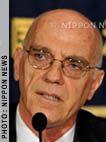
Art Brown

Art Brown

By IAN ALLEN| intelNews.org |
Rumors emerged last week that the leading candidate to head the CIA’s station in Kabul, Afghanistan, has no experience in the Middle East or south Asia, and speaks no local languages. This is despite a bitter bureaucratic turf battle between the CIA leadership and the office the Director of National Intelligence (DNI) to find the best-suited person for the job. Why is it still so hard, after nearly eight years in Afghanistan, for the CIA to find qualified senior managers? Jeff Stein of SpyTalk says it’s because skilled staff are demoralized and frustrated by the Agency’s chronic inefficiencies. He quotes an anonymous former senior counterterrorism officer who claims that escalating “cronyism and favoritism” are coupled by the lack of any serious “effort to address […] massive senior leadership problems”. Read more of this post

News you may have missed #0105

  • Trial of Serb former intelligence chiefs opens today. The trial of Jovica Stanišić, Director of Serbia’s State Security Service from 1990 until 1998, and Stojan Župljanin, commander of the Bosnian Serb police during the Bosnian war, opens today at the International Criminal Tribunal for the former Yugoslavia, in The Hague. As intelNews has reported before, at least two eponymous CIA agents have admitted that Stanišić was a CIA collaborator from 1991 until 1998.
  • Lithuanian Prime Minister was KGB agent, says board. A Lithuanian commission tasked with uncovering pro-Moscow informants and intelligence agents during the country’s communist period, has concluded that Kazimira Danutė Prunskienė, Lithuania’s first Prime Minister after the country’s 1990 declaration of independence from the Soviet Union, secretly collaborated with the Soviet KGB.
  • Congo says it won’t execute Norwegian alleged spies. Norway’s foreign minister says he has been assured that the two Norwegians who were sentenced to death by a Congolese military tribunal last week on spying charges will not be executed.

Bookmark and Share