News you may have missed #682

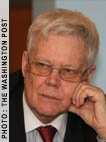
Lieutenant General Ronald BurgessBy IAN ALLEN | intelNews.org |
►►Is there a Mossad base near Iran? The London-based Sunday Times has published an interview with a man claiming to be an Azerbaijan-based agent of Israeli intelligence agency, who confirmed the existence of such a base. The man, identified in the article as “Shimon,” told the paper that there were dozens of Israeli Mossad agents working out of the base. The meeting between the agent and the London Times‘ reporter took place in Baku, near the Israeli Embassy, the report said.
►►Analysis: CIA report on Soviet bioweapons still secret. It has been three decades since the Reagan administration accused the Soviet Union and Vietnam of using chemical weapons known as yellow rain. We still do not know how the US came to this conclusion, but have good reason to believe that it was based on flawed or distorted intelligence. A classified critique of the intelligence behind those charges, written several years ago for the Central Intelligence Agency, could shed light on what happened. Last year, Matthew Meselson, a Harvard expert on chemical and biological weapons, filed a Freedom of Information Act request to get the report released. He was turned down.
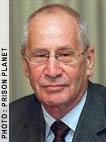
►►US official says Iran unlikely to strike first. Lieutenant General Ronald Burgess, director of the US Defense Intelligence Agency, said the Iranian military is unlikely to intentionally provoke a conflict with the West. He said Iran probably has the ability to “temporarily close the Strait of Hormuz with its naval forces”, as some Iranian officials have threatened to do if attacked or in response to sanctions on its oil exports by the US and European Union. But, he added, “Iran is unlikely to initiate or intentionally provoke a conflict or launch a preemptive attack”.

News you may have missed #677: Analysis edition

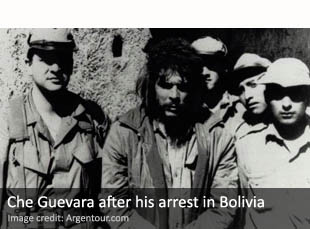
Che Guevara after his arrest in BoliviaBy IAN ALLEN | intelNews.org |
►►New book ties Johnson administration to Che Guevara’s death. Michael Ratner and Michael Steven Smith are the co-authors of a new book about the US role in the killing of Cuban revolutionary Ernesto “Che” Guevara. In their book, Who Killed Che?, Ratner and Smith draw on previously unpublished government documents to argue the CIA played a critical role in the killing. “The line of the [US] government was that the Bolivians did it, we couldn’t do anything about it. That’s not true”, Smith said. “This whole operation was organized out of the White House by Walt Whitman Rostow. And the CIA, by this time, had become a paramilitary organization”.
►►CIA digs in as US withdraws from Iraq and Afghanistan. The CIA is expected to maintain a large clandestine presence in Iraq and Afghanistan long after the departure of conventional US troops as part of a plan by the Obama administration to rely on a combination of spies and Special Operations forces to protect US interests in the two longtime war zones, US officials said. They added that the CIA’s stations in Kabul and Baghdad will probably remain the agency’s largest overseas outposts for years.
►►Indian Army ‘preparing for limited conflict with China’. Noting that India is increasingly getting concerned about China’s posture on its border, James Clapper, US Director of National Intelligence, said this week that the Indian Army is strengthening itself for a “limited conflict” with China. “The Indian Army believes a major Sino-Indian conflict is not imminent, but the Indian military is strengthening its forces in preparation to fight a limited conflict along the disputed border, and is working to balance Chinese power projection in the Indian Ocean,” he said.
News you may have missed #669

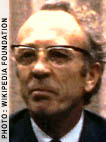
Raoul WallenbergBy IAN ALLEN | intelNews.org |
►►UK admits using fake rock to spy on Russians. Britain has admitted for the first time that it was caught spying when Russia exposed its use of a fake rock in Moscow to conceal electronic equipment. Russia made the allegations in January 2006, but Britain has not publicly accepted the claims until now. Jonathan Powell, then Prime Minister Tony Blair’s chief of staff, told a BBC documentary it was “embarrassing”, but “they had us bang to rights”. He added: “clearly they had known about it for some time”.
►►New book examines forgotten CIA officer Jim Thompson. The CIA’s longtime man in Southeast Asia, Jim Thompson, fought to stop the agency’s progression from a small spy ring to a large paramilitary agency. Now a new book, The Ideal Man: The Tragedy of Jim Thompson and the American Way of War, by Joshua Kurlantzick, examines the life and exploits of the man known as “Silk King” Jim.
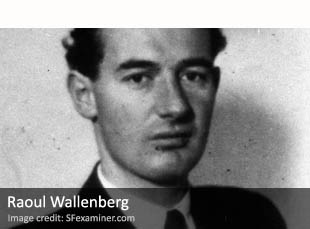
►►Sweden to probe fate of WWII hero Wallenberg. Raoul Wallenberg (pictured) was a shrewd businessman who, in the summer of 1944, was posted as Sweden’s ambassador in Budapest, Hungary. He was also an American intelligence asset, having been recruited by a US spy operating out of the War Refugee Board, an American government outfit with offices throughout Eastern Europe. He was abducted by Soviet intelligence officers in the closing stages of World War II, and his fate is one of the unsolved mysteries of 20th century espionage. Now Sweden says it will open a new probe into his disappearance.

Australian government feared KGB spy scandal, documents show

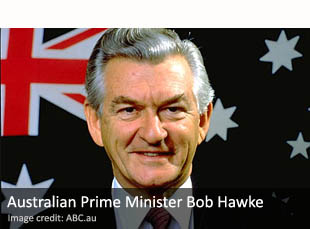
Bob HawkeBy JOSEPH FITSANAKIS | intelNews.org |
Declassified papers from a 1983 Australian Cabinet meeting reveal that the Labor government of the day feared it could be brought down by revelations of spying by a Soviet diplomat in Canberra. The spy was Valeriy Nikolayevich Ivanov, First Secretary at the Soviet embassy in the Australian capital. Suspecting the Soviet diplomat of espionage activities, the Australian Security Intelligence Organisation (ASIO) had bugged his home, and by 1982 had concluded that he was “a professional KGB intelligence officer”. Moreover, ASIO counterintelligence officials believed that Ivanov had been actively cultivating a relationship with an Australian citizen with a possible view to recruitment. Their concern apparently intensified after the Australian citizen began meeting Ivanov at his diplomatic residence, at the Soviet official’s request. On April 20, 1983, ASIO Director General Harvey Barnett met newly installed Australian Prime Minister Bob Hawke, and informed him that the Australian citizen in question was no other than David Combe. A former National Secretary of the Australian Labor Party (ALP) from 1973 to 1981, Combe was also the Prime Minster’s personal friend and close associate. A member of the Australia-USSR Friendship Society, Combe had come to know Ivanov in 1982, when he asked the Soviet embassy in Canberra for assistance in preparing for a business trip to the Soviet Union. Combe had exited politics before the 1983 national election, which had resulted in a landslide victory for the ALP, and he had entered a career as a business consultant and lobbyist. But his close relationship with Hawke alerted senior ALP officials. Meeting minutes of the government’s National and International Security Committee, released last week by the National Archives of Australia, show that Hawke chose to take Director General Barnett and other ASIO officers with him to brief senior cabinet members on April 21, the day after he himself had been briefed about the Ivanov affair. Read more of this post

CIA installed nuclear surveillance device atop Himalayas mountains

Nanda DeviBy JOSEPH FITSANAKIS | intelNews.org |
The United States Central Intelligence Agency tried at least twice to install a nuclear-powered surveillance device atop the Indian Himalayas, in an effort to spy on China. The decision to plant the device was taken in 1964, soon after communist China detonated its first nuclear bomb. In 1965, a team of CIA operatives attempted to climb Nanda Devi in the Garhwal Himalayas, which, at 25,645 feet (7,816 meters), is the highest mountain peak located entirely within Indian territory. But the top-secret mission failed miserably after adverse weather forced the CIA team to give up its effort approximately 2,000 feet below the summit. Battling against a heavy snowstorm, the CIA officers abandoned the 125-pound device, which was eventually swept away (.pdf document) by an avalanche. Incredibly, the team members deserted the surveillance device even though they knew it contained plutonium 238, which can emit radioactivity for over 500 years. In 1966, the same CIA team returned to Nanda Devi, in an effort to recover the complex surveillance instrument, but failed to locate it. In response to the second failed mission, the Agency decided to close the book on Nanda Devi, and instead constructed an identical surveillance device, which was transported and installed on Nanda Kot, a mountain peak located about nine miles (15 km) southeast of Nanda Devi. At 6,861 meters, Nanda Kot is about 3,000 feet shorter and far less steep than Nanda Devi. In 1967, a successful CIA attempt was made to reach the peak of Nakda Kot, where the radioactive surveillance device was installed. It is believed that it served its purpose before being abandoned there in 1968. Ten years later, in 1978, both operations were revealed in an article published in US-based Outside magazine. The revelation caused a major political uproar in India, as many Indians consider the Himalayas ‘sacred’ ground. Now the National Archives of India has released a batch of previously classified internal documents from India’s Ministry of External Affairs. Read more of this post

New book on British double spy Kim Philby published in Russia

Kim Philby

Kim Philby

By JOSEPH FITSANAKIS | intelNews.org |
An important new biography of H.A.R. “Kim” Philby, the British MI6 officer who defected to Russia during the Cold War, has been published in Moscow. It is based on candid interviews with his surviving fourth wife, Rufina Pukhova-Philby, as well as on an array of declassified documents from Russian state archives. The book, titled just Kim Philby, is authored by Nikolai Dolgopolov, editor of Moscow-based daily Rossiiskaya Gazeta, which acts as the official organ of the Russian state. Aside from Pukhova-Philby, the book, whose publication is set to coincide with the 100th anniversary of Kim Philby’s birth, on January 1, enjoyes the official blessing of Russia’s Foreign Intelligence Service (SVR), the successor organization to the KGB’s external intelligence directorate. The SVR allowed Dolgopolov access to previously secret documents on Philby, including a newly declassified Russian translation of the British double spy’s personal account of the events that led to his 1963 defection, as well as a description of his escape to Russia through Lebanon. Dolgopolov’s books describes Philby as “one of the greatest Soviet spies”, thus siding with the mainstream view in intelligence research literature, which recognizes Philby as one of the most successful double spies in history. While working as a senior member of British intelligence, Philby spied on behalf of the Soviet NKVD and its successor, the KGB, from the early 1930s until his 1963 defection. Two years later, he was awarded the Order of the Red Banner. The Soviet authorities buried him with honors when he died in 1988. Read more of this post

News you may have missed #635

Vitaly Shlykov

Vitaly Shlykov

►►UK to support Colombia’s new intelligence agency. The UK has announced that it will provide help and advice on the implementation of Colombia’s new national intelligence agency. Colombian President, Juan Manuel Santos, along with National Security Adviser, Sergio Jaramillo, met with the director of Britain’s secret service MI6 to exchange experiences in intelligence to implement the new National Intelligence Agency of Colombia (ANIC). ANIC is supposed to replace the DAS, Colombia’s disgraced intelligence agency, which has been stigmatized by colluding with paramilitary groups and spying on union leaders, journalists and opposition politicians.
►►US intelligence to train analysts with videogames. The US intelligence community’s research group, the Intelligence Advanced Research Projects Agency (IARPA), has handed over $10.5 million to Raytheon BBN Technologies to start work on the Sirius program. The initiative aims to create a series of so-called “serious games” that would help intelligence analysts improve their objectivity and reasoned judgment when confronted with complex or culturally foreign scenarios.
►►Soviet spy who spent years in Swiss prison dies at 77. Vitaly Shlykov served for 30 years in the Main Intelligence Directorate of the Russian General Staff, known as GRU. During his career, he made frequent trips to the West on a false American passport. One of his duties was to maintain contacts with Dieter Felix Gerhardt, a senior officer of the South African Navy who was working as a Soviet spy. In 1983, Shlykov was arrested in Zurich while carrying about $100,000 in cash to hand over to Gerhardt’s wife. Soviet intelligence was unaware that Gerhardt and his wife had been arrested a few weeks earlier and had told interrogators about the meeting in Switzerland.

News you may have missed #631

Tommy Douglas

Tommy Douglas

►►Some spy files on Canadian prominent politician released. Newly declassified records from the early 1960s show that the Royal Canadian Mounted Police spied on Saskatchewan Premier Tommy Douglas (pictured), suspecting him of communist sympathies. Douglas, a popular leftwing politician, led the first social democratic government in North America.
►►Aussie diplomats urged to welcome defectors in 1980s. The Australian government urged its spies and diplomats to encourage foreign officials to defect to Australia and welcome intelligence they might bring with them, according to internal documents from the 1980s, released this week. The directives noted that applications from defectors were not expected to be numerous “but failure on our part to handle them deftly could result in the loss of intelligence relevant to Australia’s security and other interests”. One observer notes that the 1980s policy towards defectors still applies today in Australia’s diplomatic community.
►►Iran arrests two Kuwaitis on suspicion of espionage. Iran’s semiofficial Fars news agency says Iranian security has detained two Kuwaiti citizens in southwestern Iran for suspected espionage activities. Fars quoted Bahram Ilkhaszadeh, governor of Abadan, a town close to Kuwait, as saying that Iran’s security agents detained the two on possession of “spying equipment”. Kuwait has denied the charges.

Vladimir Putin ‘targeted by German spy agency’ during his KGB days

Vladimir Putin

Vladimir Putin

By JOSEPH FITSANAKIS | intelNews.org |
A German researcher claims that Russian Prime Minister Vladimir Putin was targeted by West German intelligence in the 1980s when he was a KGB operative in East Germany. In the Cold War’s closing stages, Putin and his wife, Ludmila Putina, who were then in their thirties, spent five years in Dresden, German Democratic Republic. As one of four KGB officers in Dresden, Putin was tasked with infiltrating the local university and monitoring the on-campus activities of the children of Soviet and East German notables. But according to new research published last week, an undercover agent of the BND, West Germany’s external intelligence agency, was able to infiltrate the Putin household in Dresden, and pass private information about the couple’s personal life to her spymasters in Bonn and in NATO. The agent, codenamed LENCHEN, a native German, worked as a translator at the KGB station in Dresden. She reportedly befriended Ludmila Putina, eventually becoming her “shoulder to cry on”, according to Erich Schmidt-Eenboom, director of the Weilheim-based Institute for Peace Studies, who has published several books on the history of the BND. Schmidt-Eenboom claims that LENCHEN became Ludmila Putina’s closest confidante in Dresden. The latter told her that Vladimir Putin had been involved in numerous infidelities over the years and that he often beat his wife. LENCHEN reported to her handlers that life in the Putin household was highly dysfunctional, despite an outward appearance of happiness and normality. Schmidt-Eenboom claims he confirmed the report with at least two unconnected sources with knowledge of BND operations during the Cold War. If the story is historically accurate, it will signify only the second known penetration of KGB structures in Europe by the BND. The only other such example, says Schmidt-Eenboom, involved an agent named COLONEL VIKTOR, who also worked as an agent for the BND in the 1980s. Read more of this post

News you may have missed #624

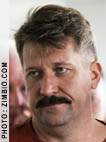
Viktor Bout

Viktor Bout

►►Russia angry at Viktor Bout’s US guilty verdict. Moscow has reacted angrily to the guilty verdict handed down to Russian arms dealer Viktor Bout by a court in the United States. Bout, a former Soviet military intelligence (GRU) officer, was arrested in a sting operation in Bangkok, Thailand, in March of 2008. At the time of his arrest, he and his two collaborators were negotiating a complex weapons deal with two informants posing as representatives of the Revolutionary Armed Forces of Colombia (FARC), Latin America’s largest leftist paramilitary group.
►►Symposium examined Reagan’s use of intelligence. The CIA released more than 200 declassified documents it prepared for US President Ronald Reagan during a symposium last week at the Ronald Reagan Presidential Library in Simi Valley, California. The CIA conference, entitled “Ronald Reagan, Intelligence, and the End of the Cold War“, included a discussion by American and Soviet former spies.
►►Suspected Chinese spy loses bid to rejoin Canada civil service. Haiyan Zhang, worked as a senior communications analyst with the Privy Council Office in Ottawa. She was fired when Canada’s spy agency questioned her “loyalty to Canada” over suspicion she was spying for China. Now she has lost her fight to return to the civil service.

News you may have missed #611

Kalevi Sorsa

Kalevi Sorsa

►►Diplomat says Finland’s ex-prime minister was Stasi agent. Finnish former diplomat Alpo Rusi said last week that Kalevi Sorsa, Finland’s longest serving prime minister, who led the country in the 1970s and 1980s, is on a secret list of 18 high-profile Finns with links to the Stasi, East Germany’s Cold-War security service. West German intelligence handed the file to its Finnish counterpart in 1990, but the Finnish Supreme Court ruled last year that the list would not be made public.
►►Nazi criminal spied for West Germany. A wiretap operation conducted in the early 1960s by the CIA against the BND, West Germany’s foreign intelligence service, revealed that the BND employed a senior Nazi war criminal, Franz Rademacher, to spy for it in Syria, CIA records show.
►►US government aims to build ‘data eye in the sky’. Social scientists are trying to mine the vast resources of the Internet — Web searches and Twitter messages, Facebook and blog posts, the digital location trails generated by billions of cell phones to “predict the future”.

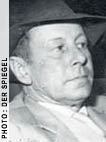
German agency hired ex-Nazi mass murderer to spy on Cuba

Walther Rauff

Walther Rauff

By JOSEPH FITSANAKIS | intelNews.org |
A senior member of the German SS, the Nazi party’s Praetorian Guard, who was wanted for the murder of nearly 100,000 people, was hired by West German intelligence to spy on the communist government of Cuba, according to newly released papers. Colonel Walther Rauff, who held several intelligence-related positions in the Nazi state apparatus during the Third Reich, is mostly known for his work for the Main Office of the Criminal Technical Institute of the Reich. While there, he led the working group that designed the so-called gas vans, which used exhaust fumes to exterminate large groups of prisoners trapped inside a tightly sealed vault at the back, while the vans drove to designated burial sites. Nearly 100,000 people were killed in this way in Germany, Poland and the Ukraine, between 1942 and 1945. Soon after the end of World War II, Rauff escaped from an American internment camp in Rimini, Italy, and eventually managed to escape to Chile with the help of the Catholic Church. According to German newsmagazine Der Spiegel, it was in Chile that Rauff was hired by West Germany’s main foreign intelligence agency, the Bundesnachrichtendienst (BND). The organization approached Rauff in 1958, through Lieutenant Colonel Rudolf Oebsger-Röder, another former SS member, who was working for the BND under the alias O.G. Roeder. Der Spiegel, which accessed the BND’s folder on Rauff, says the former SS member was asked to use his Latin American contacts to infiltrate the communist government of the island of Cuba. At the same time that the BND was recruiting Rauff, he was under investigation by Germany’s Department of Justice, for complicity to mass murder during World War II. In 1962, the German government, which had no idea Rauff was working for the BND, successfully pressured Chilean authorities to arrest the former Nazi official. But he was soon released from prison, because a 15-year statute of limitation made his arrest illegal under Chilean law. Read more of this post

Documents reveal MI5 role in Guyana coup

Cheddi and Janet Jagan

The Jagans

By JOSEPH FITSANAKIS | intelNews.org |
Secret intelligence documents declassified last week reveal that Britain’s Security Service, known as MI5, played a significant role in the lead-up to the 1953 coup that toppled the democratically elected government of British Guiana. The Latin American territory, which borders Suriname, Venezuela and Brazil, was once one of the British Empire’s most lucrative sugar-producing colonies. In 1963, after gaining its independence from Britain, it was officially renamed the Co-Operative Republic of Guyana. Instrumental in the fight for independence was Cheddi Jagan —an ethnic Indian former dentist who is today considered the father of the nation— and his American-born wife Janet (née Rosenberg). In 1950, the couple founded the People’s Progressive Party (PPP), which became the primary pro-independence political vehicle in the British colony. But dozens of folders of classified documents that were released last Friday by Britain’s National Archives show that MI5 was suspicious of the Jagans, and believed that Janet had been a member of the Communist Party of the United States in the 1940s. Several MI5 reports from the 1950s express concern that the PPP intended to establish close proximity between a newly independent Guyana and the Soviet Union. The declassified MI5 archives contain countless transcribed telephone conversations between the Jagans and their political allies, as well as copies of intercepted correspondence and reports of physical surveillance by MI5 informants. They reveal that British intelligence closely monitored the Jagans for at least a decade. Even though MI5 concluded that the PPP had no close contacts with Soviet agents or agencies, and that the party was “not receiving any financial support from any Communist organization outside the country”, it continued to describe Janet Jagan as “a committed communist” and remained apprehensive of the couple’s “disruptive antics”. The British government of Winston Churchill decided to take aggressive action in 1953, after a landslide election victory for the PPP in British Guiana elections. Read more of this post

News you may have missed #574

CIA documents

CIA documents

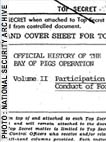
►►CIA told Kennedy Cuba invasion was ‘unachievable’. [Never mind. It turns out that the original article on Foreign Policy has been corrected to state that the meeting was not with Kennedy after all — see reader’s comment below]. More revelations from the newly declassified CIA Official History of the Bay of Pigs Invasion. According to the multi-volume history (pictured), a CIA team told President-Elect John F. Kennedy during a meeting in 1960 that toppling the Cuban government of Fidel Castro would not be feasible, considering the small invasion force that Kennedy insisted upon for the Bay of Pigs operation, in order to maintain plausible deniability.
►►NATO bombs home of Libyan intel chief. A compound in Tripoli destroyed overnight by NATO air strikes was the home of Abdullah Al-Senussi, former head of Libyan intelligence. This information allegedly comes from al-Senussi’s neighbor, oil engineer Omar Masood, who said he has lived across the street for 35 years. Meanwhile, several news outlets report that Abdel Salam Ahmed Jalloud, prime minister of Libya between 1972 and 1977, has defected to Italy.
►►Palestinian attacks took Israeli intel by surprise. The triple attacks, attributed by Israel to a Palestinian splinter group from the Gaza Strip, took Israel’s intelligence and security services by surprise, judging by the ensuing confusion and inaccuracy of initial reports. Between 15 and 20 Arab gunmen, some wearing Egyptian army fatigues, are believed to have taken part in the operation.

News you may have missed #571 [updated]

Markus Wolf

Markus Wolf

►►East German spymaster’s widow loses pension battle. Andrea Wolf, The widow of Markus Wolf, the shadowy spymaster of communist East Germany, lost a court battle on Monday to reclaim his honorary pension. Dubbed “The Man Without a Face” because Western intelligence services long lacked even a photograph of him, Wolf directed the General Intelligence Administration, the foreign intelligence division of East Germany’s Stasi. He died in 2006, at the age of 83.
►►Dominica government officials deny spying accusations. Dominican officials have strongly denied accusations that the government of the former British colony, through the National Joint Intelligence Committee (NJIC), has been spying on the activities and actions of political activists over the last few months. According to the allegations, in one case, in April 2009, a member of the Dominica Police Force was sent to Brooklyn, New York, to spy on a conference on the political situation in Dominica, on orders from the country’s Prime Minister. But Dominica’s Police Commissioner, Cyril Carrette, denied the existence of NJIC, and called the accusations unfounded.
►►British spy agency called in to crack BlackBerry encryption. The British intelligence service, MI5, has been drafted in to assist its sister service, GCHQ, in cracking the BlackBerry encryption code, in order to find those responsible for Read more of this post