News you may have missed #481

  • Who brought down the CIA website last Thursday? US Federal officials as of Monday afternoon were still investigating the cause of a Thursday cyber incident that knocked offline the public website of the CIA and its unclassified e-mail system. The interference was isolated to CIA networks. Some cyber experts say the disruption may have been caused by a denial of service attack perpetrated by pranksters to show off their skills, rather than an act committed by a foreign government.
  • Israeli cabinet minister to visit jailed spy in US. Israel’s Communications Minister Moshe Kahlon is to make a visit next week to see Jonathan Pollard, an American serving a life term in a US jail for spying on the US for Israel. Israeli media claim that Kahlon will give Pollard a “verbal message” from Israel’s Prime Minister Benjamin Netanyahu.
  • Egypt’s spies dragged from shadows. New evidence of spying and torture by Egypt’s General Intelligence Services (GIS) has piled pressure on the country’s military rulers to abolish the agency. After breaking into the GIS Cairo headquarters and ransacking archives, activists posted videos showing a torture chamber with a bloodstained floor and equipped with chains.

New clues in extensive recount of al-Mabhouh assassination

Ronen Bergman

Ronen Bergman

By JOSEPH FITSANAKIS | intelNews.org |
The current issue of US-based magazine GQ contains what must be the most extensive account in English of the 2010 assassination of Mahmoud al-Mabhouh by Israeli intelligence agency Mossad. Written by Israeli investigative journalist Ronen Bergman (author of The Secret War with Iran), the piece contains several new clues about the targeted killing of al-Mabhouh, a senior Hamas official, in a luxury hotel in Dubai last January. One new element that stands out in Bergman’s account is that, two months prior to his assassination, al-Mabhouh survived a poisoning attempt by the same team of Israeli operatives, again in Dubai. The Hamas official fell ill, but recovered fully. Bergman also claims that the operation to target al-Mabhouh, which must have lasted several months or even years, involved the use of an elaborate Trojan horse virus that was implanted on al-Mabhouh’s computer, and allowed Mossad operatives to monitor his email correspondence. It was through this method that the Israelis became aware of al-Mabhouh’s itinerary during his fatal trip to Dubai. Read more of this post

Analysis: Understanding WikiLeaks

WikiLeaks

WikiLeaks

By JOSEPH FITSANAKIS| intelNews.org |
The WikiLeaks cablegate revelations appear to be subsiding in the new year, and so is the public debate about their meaning and consequences. And yet, as calmer moods prevail, now is the appropriate time to probe the WikiLeaks phenomenon. To do so constructively, it is necessary to move beyond a mere political assessment of WikiLeaks. The question of whether the website, its founder, and its hundreds of volunteers, are criminals, heroes, terrorists, or dissidents, cannot even begin to be answered until WikiLeaks is understood, first and foremost. By ‘understood’, I don’t mean empathize. I mean comprehending WikiLeaks as an ideological paradigm, a technological vehicle reflective of the personal philosophies of its members, but also representative of a much wider sociotechnical trend. Click here to read my analysis brief published today by the Research Institute for European and American Studies.

News you may have missed #463

  • Iranian spy minister admits hacking emails. Iran’s Intelligence Minister Heydar Moslehi has publicly admitted that the Iranian government has hacked into the emails of Iranian opposition members. He claimed the hacking, conducted by Iran’s Intelligence Ministry, revealed messages exchanged between “foreigners and their elements inside Iran”.
  • Details on CIA officer killed in Afghanistan. An interesting article in The Washingtonian offers an interesting background story on Jennifer Matthews, a CIA officer who was killed nearly a year ago in Afghanistan in a suicide bombing by Taliban double-agent Humam Khalil Abu-Mulal al-Balawi.
  • China jails South Korean alleged spy. China is getting tougher with South Korean spies caught on Chinese soil collecting intelligence on North Korea, and has jailed one of them for more than a year, despite pleas from Seoul, according to news reports.

Iran announces arrests of alleged nuclear spies

Heidar Moslehi

Heidar Moslehi

By IAN ALLEN | intelNews.org |
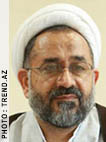
The Iranian government has announced the arrest of an unspecified number of alleged nuclear spies, reportedly in connection with a sophisticated virus that infected computers used in Iran’s nuclear energy program. The arrests were publicized on Sunday by Heidar Moslehi, Iran’s Minister of Intelligence, who said those arrested had helped facilitate the spread of the so-called Stuxnet virus last June. The malicious program, which appears to have been designed to sabotage sensitive hardware components found specifically in nuclear centrifuges, has infected at least 100,000 computer systems worldwide, most of which are located in Iran. Speaking to Iranian media, Moslehi accused Israel and the United States of trying to sabotage the Iranian nuclear energy program, but noted that Iran’s intelligence services have resumed “complete supervision of cyberspace” and will successfully prevent “any leak or destruction” of the Islamic Republic’s nuclear research and development program by outside forces. But elsewhere in Tehran, Hamid Alipour, an Iranian government Senior Information and Technology official, admitted that technical experts are still working on containing the virus, which appears to be mutating. Read more of this post

News you may have missed #435 (cyberwarfare edition)

  • Analysis: Cyber attacks test US Pentagon. US military and civilian networks are probed thousands of times a day, and the systems of the North Atlantic Treaty Organization headquarters are attacked at least 100 times a day. Meanwhile, more than 100 countries are currently trying to break into US defense networks.
  • US should be able to shut Internet, ex-CIA chief says. Cyberterrorism is such a threat that the US President should have the authority to shut down the Internet in the event of an attack, Former CIA Director Michael Hayden has said.
  • Iran battling alleged ‘spy virus’. Iranian officials have confirmed reports that a malicious computer code, called Stuxnet, was spreading throughout the nation’s nuclear infrastructure. But they have given differing accounts of the damage, said to be capable of taking over computers that operate huge facilities, including nuclear energy reactors. Did someone say ‘Israel‘?

News you may have missed #421 (‘not news’ edition)

  • Not news: Senior Afghan officials on CIA payroll. The New York Times‘ Mark Mazzetti and Dexter Filkins are right to air this story, but the real news here is the media industry’s collective gasp of fake shock and horror. Really?
  • Not news: Pentagon breached by foreign hacker. US Deputy Defense Secretary William Lynn has disclosed that an undisclosed foreign spy agency carried out a serious cyberattack on US military networks with the help of a tainted flash drive that was inserted into a laptop in the Middle East. Ah, the old memory-stick gift trick
  • Not news: Sex-obsessed coverage of Russian espionage continues. Russian and US media keep avoiding serious analysis of post-Cold-War Russian intelligence operations by focusing on Anna Chapman. This is no surprise, since pursuing the real story behind Russian deep-cover espionage in the United States takes hard work.>response to Le Carre’s comments.

Comment: What Can the US Do To Stop WikiLeaks?

Julian Assange

Julian Assange

By JOSEPH FITSANAKIS | intelNews.org |
Ever since whistleblower site WikiLeaks published 77,000 classified US military documents on the war in Afghanistan, several pundits have urged US government agencies, including the Pentagon, to take action. Late last week, former George W. Bush speechwriter Marc Thiessen urged the Pentagon to unleash its “cyber capabilities to prevent WikiLeaks from disseminating those materials”. Some columnists have even suggested that US intelligence services should “come up with an up-to-date photo of [WikiLeaks founder Julian] Assange and distribute it to […] SEAL sharpshooters”. Pentagon representatives have also stepped up their rhetoric, warning that “[i]f doing the right thing isn’t good enough for [WikiLeaks], we will figure out what alternatives we have to compel them to do the right thing”.

Read more of this post

News you may have missed #368 (Gaza flotilla edition V)

  • Israelis sabotaged flotilla ships before departure. Israel gave strong indications today that its forces had secretly sabotaged some of the ships bound for Gaza as part of the Gaza Freedom Flotilla. Comments to that effect by Israeli deputy defense minister Matan Vilnai appeared to dovetail with reports that two of the vessels malfunctioned at the same time and in the same way.
  • Activist website downed before Israeli attack on flotilla. The online home of the Humanitarian Aid Foundation (İHH), one of the organizers of a convoy of six aid vessels bound for the Gaza Strip, was hit by a denial-of-service (DoS) attack moments before the Israel military brutally attacked the convoy in international waters on Monday.

Bookmark and Share

Study points to Chinese city as ‘world capital’ of cyberespionage

Shaoxing

Shaoxing

By IAN ALLEN| intelNews.org |
A major traffic analysis of cyberespionage attacks has identified a provincial urban center in southeast China as ‘the world capital’ of cyberespionage. The survey, conducted by cybersecurity firm Symantec, studied the origination points and targets of 12 billion malicious emails. It concluded that nearly one third of all email-based cyberespionage attacks originate from the People’s Republic of China –a percentage far larger than previously thought. It also traced most Chinese cyberespionage attacks to Shaoxing, a city of over four million residents in China’s southeaster Zhejiang province. The Symantec study said that large-scale Chinese cyberespionage attacks appear to be systematic and concentrate on carefully selected targets, such as defense policy experts and human rights activists. Read more of this post

News you may have missed #295

  • US spies want super-sensitive human lie detectors. IARPA, the research unit of the US intelligence community is soliciting proposals for a five-year, three-phased overhaul of current deception-detection technology, which will include research on what is called “pre-conscious human assessment of trustworthiness”.
  • UK may purchase IP monitoring system from CIA-linked company. A security startup with close links to the CIA is touting a system to the UK government that monitors every IP address on the internet for malware, as part of its declared aim of improving cyber war capabilities. The firm has built a massive database of security breaches across the globe and is currently monitoring about 250 million compromised machines.
  • No Americans on CIA’s assassination list. The Washington Post has corrected an earlier report, flagged by intelNews earlier this month, which claimed that the US President has authorized the CIA to kill Americans abroad. According to new information, there are no Americans currently on the CIA hit list, but there are four on the list of the Joint Special Operations Command (JSOC). It is worth noting that JSOC, which some say is gradually taking over the CIA’s paramilitary mission, lacks the CIA’s mandatory Congressional oversight and has a history of being run directly out of the White House.

Bookmark and Share

Analysis: Google-NSA partnership part of broader trend

Google

Google

By IAN ALLEN | intelNews.org |
We reported last week the apparent alliance between the Google Corporation and the US National Security Agency, which is the main US government organization tasked with communications interception, as well as communications security. The partnership, which began soon after Google’s decision to close down its venture business in China, where its operations came repeatedly under cyber-attack, has caused considerable controversy among civil liberties advocates. But an op-ed in the US-based Federal News Radio website describes it as the beginning of a new trend, which is likely to intensify. Read more of this post

News you may have missed #0286 (Internet edition)

  • Email trojan targeted at US .gov, .mil accounts. A Trojan-containing email, which is spoofed so that it appears to have been sent by the US National Intelligence Council, appears to have been directed solely at US government and military email accounts.
  • Analysis: Smuggling secret information through VOIP. Voice over Internet Protocol (VOIP) systems use a series of protocols to essentially create an open, unmediated link between two computers. VOIP applications also provide a way to make sure the packets are ordered quickly and correctly. And that’s a goldmine for anyone trying to send hidden messages.
  • ACLU concerned about Google-NSA partnership. Google corporation has turned to the US National Security Agency for assistance in warding off cyberattacks. But the American Civil Liberties Union is among several organizations that view the partnership as “troubling”.

Bookmark and Share

Leaked MI5 report sees China as ‘most significant’ spy threat

By JOSEPH FITSANAKIS | intelNews.org |
A restricted MI5 report describes China as Britain’s most serious espionage threat, and says British business executives are increasingly targeted by Chinese intelligence operatives. The 14-page document was authored by the Centre for the Protection of National Infrastructure, a unit of MI5, Britain’s primary counterintelligence and security agency. In it, the intelligence agencies of the Chinese People’s Liberation Army, as well as the Ministry of State Security, are identified as leaders in a massive targeting of British corporate executives who regularly make business trips to China. The report warns that most of the hotel rooms where they stay are “likely to be bugged”, that they are regularly “searched while the occupants are out of the[ir] room[s]”, and that hotels are frequented by Chinese female intelligence agents, looking “to exploit vulnerabilities such as sexual relationships and illegal activities”. Read more of this post

News you may have missed #0271 (analysis edition)

  • Analysis: The Women of the CIA. Former CIA agent Valerie Wilson says the recent massacre of CIA agents in Khost, Afghanistan, shows that it is “time to recognize that women play a vital role in ensuring our national security and that they are very much on the frontlines, taking all the same risks but recognized and credited much less than their male counterparts” at the CIA.
  • Analysis: Google and the democratization of espionage. Roland Dobbins, a solutions architect with the Asia Pacific division of Arbor Networks, explains why the recent Google-China hacking affair is a perfect example of how the botnet has enabled what he calls “the democratization of espionage”.

Bookmark and Share