News you may have missed #771

Shawn HenryBy IAN ALLEN | intelNews.org |
►►Analysis: Ex FBI official says foreign spies biggest online threat. Former FBI executive assistant director Shawn Henry has warned that the biggest threat online comes not from terrorists or hackers, but from foreign intelligence organizations looking to steal intellectual property. “The threat from computer attack is the most significant threat we face as a society, other than a weapon of mass destruction”, he said in his opening keynote at the Black Hat 2012 conference in Las Vegas. “Everything we do —R&D, intellectual property, and corporate strategies— is stored or transmitted electronically. The DNA of companies is available to bad guys”.
►►Taiwanese officials jailed for espionage. Two Taiwanese former officials have been sent to prison by the Taiwan High Court for leaking state secrets to China. Presidential Office official Wang Ren-bing was jailed for two years after being found guilty of passing confidential information about President Ma Ying-jeou’s May 2008 inauguration to Chinese intelligence operatives. Chen Pin-jen, a former aide of Chinese Nationalist Party (KMT) Legislator Liao Kuo-tung, was sentenced to eight months in prison for delivering the confidential information Wang gave him to China. The two were arrested in 2009.
►►Germany charges suspected Syrian spy. A spokeswoman for federal prosecutors in Germany said Sunday that they have filed charges against suspected Syrian spy Akram O., one of two men arrested on suspicion of having spied on Syrian opposition activists in Germany for several years. The two were arrested in February during a sting operation involving over 70 German counterintelligence operatives, who searched the suspects’ apartments. The spokeswoman said she could not give further details before an official confirmation is issued that the suspect and the defense team have received the indictment.

Dutch diplomat arrested for spying for Russia

Anna ChapmanBy JOSEPH FITSANAKIS | intelNews.org |
Authorities in Holland have arrested a Dutch diplomat who is said to have worked for the same Russian intelligence unit that handled a group of Russian sleeper agents captured in the United States in 2010. The 60-year-old diplomat, who has been publicly identified only as Raymond P., was arrested over the weekend in The Hague following an extensive investigation by German counterintelligence. According to German newsmagazine Focus, which first aired the story on Saturday, the diplomat is believed to have given nearly 500 classified documents to Andreas and Heidrun Anschlag, two Russian intelligence officers operating in Germany. The Anschlags, who are married to each other, and are believed to be Mexican-born, were arrested in October of 2011 in the university town of Marburg in central Germany. They are thought to have moved to Germany from Mexico in 1990, using false Austrian passports supplied to them by the SVR, the Russian Foreign Intelligence Service. At the time of the Anschlags’ arrest, Russian media claimed that the couple had “effectively retired” from the SVR several years ago and were being utilized mostly as message couriers. It now appears that Raymond P. was one of their informants, and that the three operated as part of the same espionage ring in Germany. Interestingly, the Anschlags were also said to be in frequent contact with Russian intelligence agent Anna Chapman (pictured), who was arrested by the FBI in the US in 2010. Chapman was part of a group of 11 Russian sleeper agents who were arrested on the same day by the FBI, and were later expelled to Russia. Read more of this post

Interview with agent who caught US-Israeli spy Jonathan Pollard

Jonathan PollardBy JOSEPH FITSANAKIS | intelNews.org |
Twenty-six years ago this month, a United States court convicted Jonathan Jay Pollard, a US Navy analyst who had been caught spying on his country for Israel. Pollard, who is still serving his life sentence, enjoys tremendous popularity in Israel as well as among pro-Israeli public figures in the US. His supporters in Israel and elsewhere view him as a hero who is serving an unfairly harsh sentence and they pressure the US government to release him. In light of that, it is worth paying attention to a recent radio interview with the man who caught him spying on America. The interview was conducted by Mike Lanchin, a reporter and producer for BBC radio’s Witness program. Lanchin managed to trace Ron Olive, a retired Assistant Special Agent at US Navy Counterintelligence, who in June 1986 cracked the Pollard case, leading to the spy’s arrest and eventual conviction. Olive, who now runs his own security consultancy firm in Arizona, told Witness that it took him and his fellow investigators over six months to piece together their case against Pollard. He added that, according to his investigation, “Pollard stole so many documents, so highly classified, more so than any other spy in the history of this country, in such a short period of time”. The case, said Olive, was the worst he had ever seen and it “devastated the entire [US] Intelligence Community”. The reason was not only the volume of stolen classified material, but also the fact that Pollard “could have been stopped from the very beginning”. Read more of this post

Russian colonel was ‘most successful CIA spy’ in recent years

Valery Mikhailov, left, with his attorneyBy JOSEPH FITSANAKIS | intelNews.org |
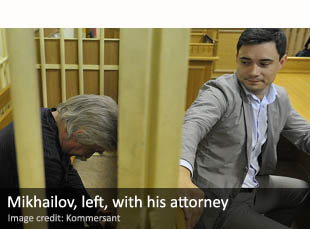
Before the dust could settle from last month’s closed-door trial of Vladimir Lazar, and the arrest of an unnamed missile engineer on charges of espionage, Russia claims to have exposed yet another spy. Valery Mikhailov, a retired Russian counterintelligence officer, has been given an 18-year prison sentence for allegedly spying on behalf of the United States Central Intelligence Agency. In disclosing Mikhailov’s sentence yesterday, Moscow District Military Court officials were deliberately vague about Mikhailov’s alleged espionage activities, and provided limited information on the precise charges against him. But reporters, who were not allowed to attend Mikhailov’s trial, were told that he voluntarily approached CIA officers in Russia in 2001 and offered to spy on his country on behalf of the US, in exchange for regular payments in cash. Russian government prosecutors said that, from 2001 until 2007, when his activities were detected by Russia’s Federal Security Service (FSB), Mikhailov gave his American handlers access to over a thousand copies of secret or top-secret documents. Most of these, according to reports in the Russian media, had been prepared by FSB analysts for top-level Russian government officials, including the President, Prime Minister, and members of the Security Council of the Russian Federation. Russian government prosecutors say that Mikhailov was arrested following an extensive period of surveillance by the FSB, which allegedly resulted in the capture of an American CIA courier. The latter was apprehended while surreptitiously collecting classified documents copied by Mikhailov. Following his arrest, Mikhailov is said to have admitted that he earned over $2 million from his espionage activities. Read more of this post

Japan investigates senior Chinese diplomat for spying

Chinese embassy in TokyoBy IAN ALLEN | intelNews.org |
Japanese authorities are investigating a senior Chinese diplomat for having engaged in “activities in violation of the Vienna Convention on Diplomatic Relations”, which is technical language for espionage. The diplomat, who has been named by the Associated Press as Li Chunguang, and is fluent in Japanese, was posted at the Chinese Embassy in Tokyo in July of 2007 as the Embassy’s Second Secretary in charge of economic affairs. But Japan’s Public Security Intelligence Agency, which serves as the country’s primary counterintelligence organization, secretly monitored Li’s activities almost from the moment he was posted in Tokyo, eventually reaching the conclusion that the Chinese diplomat had ties to “an intelligence division of the Chinese People’s Liberation Army”. Earlier this year, the Agency determined that Li had used fraudulent information and had failed to disclose his diplomatic status while applying for an alien registration certificate from the Japanese government. According to news reports, he used the fraudulent certificate to open a bank account in Tokyo, where he deposited ¥100,000 (about US$ 1,300). According to Japanese investigators, Li he planned to “use [the money] for intelligence activities”. In mid-May of this year, the Japanese Ministry of Foreign Affairs, acting on a tip from Tokyo’s Metropolitan Police Department, requested from the Chinese Embassy that Li turned himself in “for questioning”. However, instead of presenting himself to Japanese authorities, as requested, Li left his Tokyo Embassy post for good on May 23, and is presumed to be Read more of this post

Comment: US helped Canada nab accused spy Jeff Delisle

Jeffrey Paul DelisleBy JOSEPH FITSANAKIS | intelNews.org |
Back in January of this year, when the Jeffrey Delisle spy affair made headlines around the world, I spoke with several journalists from The Globe & Mail, The Canadian Press, and other Canadian news outlets. Most of them were –rightly– curious about the role of the United States in the affair, in which Sub-Lieutenant Delisle, who had been employed at Canada’s ultra-secure TRINITY communications center in Halifax, was accused of spying for a foreign power. I told them that, given that Trinity handled –aside from Canadian– NATO communications, Canada was in fact obligated to notify all of its NATO partners about the suspected penetration. That aside, I said that it could be “safely assumed” that US counterintelligence agencies were “fully involved in the Delisle case, and probably ha[d] been for several months”. By the latter phrase, I implied that US counterintelligence agencies had been closely involved in helping their Canadian counterparts build their case against Delisle. Now a new report in The Globe & Mail suggests that US counterintelligence officials “supplied vital information” to their Canadian colleagues during “the early days of the investigation” into the Delisle affair. The article says that the full extent of what the Americans told Canadian authorities remains unclear; but it quotes “a source familiar with the matter”, who claims that the US “helped Canada build its investigation”, not necessarily by providing a single tipoff clue, but through “an accumulation of information”. The paper adds that Washington’s involvement in the investigation from an early stage “adds a key new detail to [the] story”. Not necessarily, I would argue. Read more of this post

How an ambitious Nazi spy operation in the US ended in failure

Norden bombsightBy IAN ALLEN | intelNews.org |
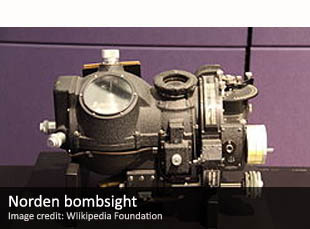
A well-researched article in The Chicago Tribune revisits one of the least known covert action episodes of World War II, which involved an ambitious Nazi espionage operation on US soil. The article, written by Ron Grossman, centers on Herbert Haupt, one of several American citizens and Nazi sympathizers, who were involved in the ruse. The German-born Haupt grew up in Chicago’s North Side and was working in West Garfield Park, at a factory that produced parts used for the Norden bombsight. The Norden bombsight was a sophisticated device that calculated the trajectory of a bomb dropped by an airplane, based on real-time flight conditions; moreover, it was connected to the aircraft’s autopilot, and was thus able to alter bomb trajectories according to changes in the wind, altitude, aircraft speed, or other effects. The Norden bombsight facilitated unprecedented bombing accuracy from high altitudes, and was thus rightly considered one of America’s most highly valued military secrets. In 1941, shortly before the United States entered World War II, Haupt took a leave of absence from his factory job and disappeared from the streets of Chicago’s North Side. It was later revealed that he traveled to Mexico City and presented himself at the German embassy there, offering to conduct espionage work for Nazi Germany. After securing a sum of money from German embassy officials, Haupt sailed to Japan and eventually made his way to Germany. A few months later, he illegally re-entered the US, sailing on a German U-boat that landed secretly in Florida carrying four German agents, all fluent English speakers. A second U-boat, carrying another four German agents, had landed almost simultaneously on Long Island. Haupt’s mission was to reenlist at the Norden bombsight factory in Chicago, so as to provide Nazi Germany with access to the top-secret device. Read more of this post

US revokes Peruvian ex-defense minister’s visa over alleged spy links

Vicky Peláez and  Mikhail VasenkovBy JOSEPH FITSANAKIS| intelNews.org |
The United States has allegedly revoked an entry visa previously issued to the former Deputy Minister of Defense of Peru, over suspicions that he is connected to a major Russian espionage ring found operating in the United States. Fabián Novak had his visa revoked after he was allegedly included on a list drawn by the US Federal Bureau of Investigation, containing names of individuals connected to a Russian illegals program caught operating in the US in 2010. According to El Comercio, Peru’s oldest newspaper, Novak, who served as the country’s Deputy Defense Minster between 2006 and 2008, met repeatedly with two members of the 11-member Russian spy ring, which was busted in a series of coordinated raids across several US states in July of 2010. The Lima-based daily quotes an anonymous “high-level [US] government source” who claims that Novak directly contacted two of the 11 Russian spies, who entered the United States from Peru, using Uruguayan and Peruvian travel documentation. The two, Vicky Peláez, who posed as a journalist, and her husband Mikhail Anatolyevich Vasenkov (alias Juan Lazaro), an adjunct professor, were among nearly a dozen Russian illegals swapped less than two weeks after their arrests by the FBI with several CIA spies held in Russian prisons. The El Comercio source claimed that, according to the FBI, Novak met with two officials from the Russian embassy in Lima at least twice, in 2001 and 2006, to discuss the activities of Peláez and Vasenkov in the US. Read more of this post

News you may have missed #678

Hakan FidanBy IAN ALLEN | intelNews.org |
►►Russia ‘exposed 199 spies’ last year. Outgoing Russian President Dmitry Medvedev said Tuesday that Russian counterintelligence had exposed 199 spies working for foreign powers last year. He was speaking at a meeting of the Federal Security Service. He also urged the FSB to “take extra measures to protect Russian interests” and reinforce the country’s borders in the Arctic.
►►Germany expels four Syrian diplomats. As tensions mount between Western nations and Syria, the German authorities said Thursday that they had ordered the expulsion of four Syrian diplomats after arresting two men accused separately of spying on opponents of President Bashar al-Assad. The four diplomats —three men and a woman who were not identified by name— have been given three days to leave Germany.
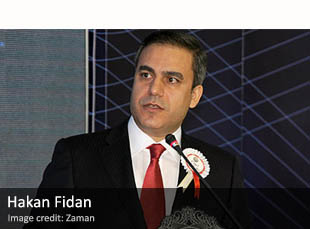
►►Turkey summons spy chief over talks with Kurds. Prosecutors have summoned Hakan Fidan, head of Turkey’s National Intelligence Agency (MİT), as well as his predecessor, Emre Taner, for questioning, over reports of secret peace talks in Norway between Turkish intelligence agents and Kurdish militant leaders. Predictably, MİT has appealed the move.

Germany summons Syrian ambassador following spy arrests

Ferhad AhmaBy JOSEPH FITSANAKIS | intelNews.org |
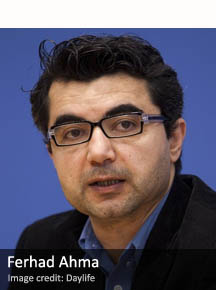
The government of Germany has summoned the Syrian ambassador to Berlin after German counterintelligence officers arrested two Syrian nationals on espionage charges. The two men, believed to be employees of Syrian intelligence, have been identified as 34-year-old Akram O., a Syrian national, and Mahmoud El A., a German citizen of Lebanese descent. Both were arrested early on Tuesday morning, during a sting operation involving over 70 German counterintelligence operatives, who searched the suspects’ apartments. According to a statement by the German Federal Prosecutor’s Office, the two men are “strongly suspected” of having engaged “for years” in systematic surveillance against Syrian political figures in Germany, with particular focus on expatriate groups critical of the government of Syrian President Bashar al-Assad. The statement added that German authorities are investigating the apartments of six alleged accomplices, suspected of assisting the two alleged spies. According to media reports, the counterintelligence operation was authorized after Ferhad Ahma, a Syrian-born elected official of the Green Party, was severely beaten at his apartment on December 26, by two men posing as German police officers. The Green Party launched a complaint with German police, suspecting that the two thugs were in fact Syrian government agents trying to intimidate Ahma, who is known in Germany for his strong criticism of the al-Assad regime. In announcing the diplomatic protest, German Minister of Foreign Affairs Guido Westerwelle told journalists that “any apparent activity against the Syrian opposition in Germany is in no way tolerable and a violation of [German] law”. Read more of this post

Does Iran have access to satellite jamming technology?

Iran displays captured US droneBy JOSEPH FITSANAKIS | intelNews.org |
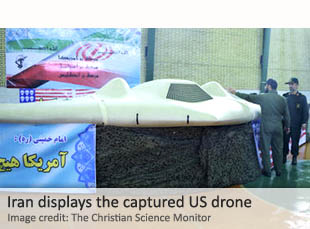
A European intelligence official has said that Iran downed an unmanned American surveillance aircraft earlier this month by remotely sabotaging its satellite navigation system. The official, who has not been named, told The Christian Science Monitor that the Iranians used a state-of-the-art laser system to effectively “blind” the American spy satellite that guided the drone’s global positioning system (GPS). In doing this, Iran’s military was able to remotely skyjack the aircraft and assume control over its navigational system. The paper also published an exclusive interview with an Iranian electronic warfare specialist, who claimed he was part of a team that hacked into the drone’s communication frequency and reprogrammed its GPS data. Eventually, the Iranian specialists managed to cause the unmanned aircraft to switch into autopilot mode, and guided it to land relatively smoothly on Iranian territory, where it was eventually captured intact by Iranian authorities. If this is true, it will mark the first-ever indication that the Iranian state is in possession of sophisticated satellite jamming technology. In an important development, Iran’s Minister of Foreign Affairs, Ali Akbar Salehi, told Iran’s government-run IRNA news agency on Saturday that the American drone was brought down by Iranian armed forces, without any foreign assistance. If this is so, then does it mean that the Iranians developed the state-of-the-art jamming system themselves? Read more of this post

Newspaper reveals name of Russian ‘spy’ expelled from Britain

Mikhail Repin

Mikhail Repin

By JOSEPH FITSANAKIS | intelNews.org |
In December of 2010, the British government quietly ordered the expulsion of a diplomat from the Russian embassy in London, whom it accused of “activities incompatible with his diplomatic status” —technical terminology implying espionage. Moscow quickly responded with an expulsion of a British diplomat stationed in the Russian capital. The tit-for-tat incident saw no publicity, and neither man was named, as is customary in such cases. But, in its Saturday edition, British newspaper The Daily Telegraph identified the expelled Russian diplomat as Mikhail Viktorovich Repin, Third Secretary in the Political Section at the Russian embassy in London. The paper said that Repin, a fluent English speaker, was a junior officer of the political directorate of the SVR, Russia’s Foreign Intelligence Service, operating under standard diplomatic cover. Repin arrived in London in late 2007, shortly after the British government expelled four Russian diplomats in connection with the fatal poisoning of former KGB officer Alexander Litvinenko, who had defected to Britain. A “tall, suave, urbane young man”, “Michael”, as he identified himself, quickly became a permanent fixture on the embassy reception circuit and the various events hosted by London-based organizations and think tanks. He specifically joined —and regularly attended meetings of— the Royal United Services Institute, the International Institute of Strategic Studies, and Chatham House —formerly known as the Royal Institute of International Affairs. Most people that met him in those gatherings took him for “a fast-track civil servant, defense industry high flier or political adviser”, says The Telegraph. Read more of this post

News you may have missed #639 (Katia Zatuliveter edition)

Katia Zatuliveter

Katia Zatuliveter

►►Russian woman accused of spying wins right to stay in UK. Katia Zatuliveter, 26, who was accused by British counterintelligence service MI5 of being a spy for Russia, has won a court appeal against her planned deportation. A panel of the UK’s Special Immigration Appeals Commission, which included the former MI5 director general Sir Stephen Lander, ruled that MI5’s suspicions about Zatuliveter had been reasonably held, but were wrong.
►►Zatuliveter espionage case reveals MI5 fears. MI5, the security service, will be hugely disappointed that the Special Immigration Appeals Commission has overturned the government’s attempt to deport Katia Zatuliveter on allegations that she spied for Russia. But senior figures at the domestic intelligence service will have no regrets about undertaking their yearlong attempt to secure the expulsion of an individual who has given them ample grounds for suspicion.
►►How big is the threat from Russian spies? There may well be Russian spies operating in Britain today, but Katia Zatuliveter –who has won an appeal against deportation– is not one of them, and the failure of the case against her is an embarrassing blow to a security service for whom the Russians were once the top target.

Hezbollah uncovered CIA network in Lebanon, admit US officials

Hezbollah rally

Hezbollah rally

By JOSEPH FITSANAKIS | intelNews.org |
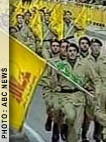
In June of this year, Lebanese militant group Hezbollah claimed it had rooted out three of its members who were allegedly spying for the United States Central Intelligence Agency. The US State Department refused to comment on the allegations, and the US embassy in Lebanon issued a statement denying Hezbollah’s accusation. But the Associated Press now says that the Lebanese Shiite group’s claims were accurate, and that the CIA has had to significantly scale back its operations in Lebanon, as a result of Hezbollah’s counterintelligence success. The news agency cites current and former US officials, who say that the Agency’s operations in Lebanon were “badly damaged” after Hezbollah identified and captured several CIA ‘assets’. It appears that the militant group, which controls large parts of southern Lebanon, was able to capture CIA agents —local ‘assets’ recruited by CIA case officers to spy on behalf of Washington— but not actual CIA officers. Still, according to the Associated Press, the operational blow suffered by the Agency’s station in the Near Eastern country has been substantial, and local CIA case officers “have secretly been scrambling to protect their remaining spies […] before Hezbollah can find them”. The agency quotes an unnamed government source, who claims that the damage to the CIA’s network of agents in Lebanon has been “greater than usual”. Many attribute the Shiite group’s counterintelligence success to a relatively new counterespionage apparatus, which Hezbollah’s leader, Sheik Hassan Hasrallah often calls the “spy combat unit”. The group, which is said to have gone operational in 2004, is responsible for essentially decimating Israel’s intelligence network in southern Lebanon, having conducted over 100 arrests since 2009.   Read more of this post

News you may have missed #626

Katia Zatuliveter

Katia Zatuliveter

►►Analysis: On largely forgotten CIA officer Jim Thompson. The CIA’s longtime man in Southeast Asia, Jim Thompson, fought to stop the agency’s progression from a small spy ring to a large paramilitary agency. He was in many ways unique, but by the 1950s and early 1960s he would become part of a larger, growing, and much less idealistic machine, one that would expose his naiveté –and punish him for it. Interesting historical analysis from Foreign Policy.
►►Court blocks naming NATO official who had affair with alleged Russian spy. We have written before that Katia Zatuliveter, who is accused by British MI5 of being a spy for Russia, has admitted having a four-year affair with Liberal Democrat MP Mike Hancock, as well as with a Dutch diplomat and a NATO official. The latter, a German diplomat, was pictured in a newspaper last week. However, his face was obscured because of the terms of a court order that means he cannot be identified.
►►Promises made about Colombia’s new spy agency. Colombia’s disgraced DAS intelligence agency has finally been dissolved. Now the government’s senior National Security adviser, Sergio Jaramillo, has said that Colombia’s new intelligence service will focus on combating “government infiltration by criminal organizations”. I guess it doesn’t hurt to be ambitious.