News you may have missed #493 (MI6 edition)

  • MI6 scientist’s death questioned by close friend. A close friend of MI6 worker Gareth Williams, whose body was found in a locked bag in a London apartment, has questioned suggestions that his death was linked to his private sex life.
  • Who killed MI6 agent Lionel Crabb? A relative of MI6 agent Lionel Crabb wants to know who killed him. Crabb is thought to have disappeared in a 1956 botched CIA/MI6 attempt to sabotage a Soviet warship docked at Portsmouth harbor. In 2007, Eduard Koltsov, a retired Russian military diver, said he killed a man he thinks was Crabb, as he was “trying to place a mine” on the Soviet ship.
  • Analysis: Libya gives spies a chance to shine. British officers of the Secret Intelligence Service, better known as MI6, are actively operating in Libya. Among their tasks is encouraging senior Libyan officials to defect to the West.

Suspicion mounts as US unlocks Moussa Koussa’s foreign assets

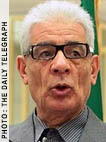
Moussa Koussa

Moussa Koussa

By JOSEPH FITSANAKIS | intelNews.org |
Eyebrows were raised in intelligence circles on Monday, after the United States lifted its freeze of foreign assets belonging to Libya’s former intelligence chief, who defected to London last week. Libya’s Minister of Foreign Affairs, Moussa Koussa, who headed the country’s intelligence agency from 1994 to 2009, managed to escape to the UK from Tunisia on a Swiss-registered private airplane. He is currently reported to be in an MI6 safe house in England, allegedly being interrogated about his inside knowledge of the regime of Muammar al-Gaddafi. But Koussa is also thought to be the mastermind behind the 1988 bombing of Pan Am flight 103 over Lockerbie, Scotland, which killed nearly 300 people. The 57-year-old defector is also believed to have facilitated Libya’s funding of the Provisional Irish Republican Army and to have authorized the assassination of several Libyan dissidents living in Britain. In light of that, the news that Washington lifted its sanctions on Koussa’s sizeable fortune abroad is worth noting. It is also interesting to note that Britain’s Foreign Secretary, William Hague, is reportedly pressuring European Union member-states to follow the US’ example in also unfreezing Koussa’s foreign assets. Read more of this post

News you may have missed #492 (history edition)

  • Holocaust spy’s memoir gets movie treatment. The extraordinary memoir of Jan Karski, a Polish resistance fighter who gave the first eyewitness report on the Holocaust to the Allies, is to be made into a film by the producer of The King’s Speech. In 1943, Karski escaped from Nazi-occupied Poland and went to London with a hidden microfilm, revealing the persecution of Europe’s Jews by the Third Reich.
  • British spy files shed light on Nazi saboteurs in the US. Declassified British intelligence files describe the activities of Nazi sabotage teams sent to the US in June 1942 to undermine the American war effort. A detailed new account of the German mission, code-named Pastorius, is provided in a report written in 1943 by MI5 intelligence officer Victor Rosthchild.
  • New information on Evdokia Petrova’s defection. New information has emerged on the 1954 defection to Australia of Evdokia Petrova, wife of Vladimir Petrov, who was the most senior Soviet intelligence official to have defected to the West until that time.

News you may have missed #491

MI5 concealed report on Soviet penetration from CIA

Kim Philby

Kim Philby

By IAN ALLEN | intelNews.org |
British counterintelligence officials decided to conceal from their American counterparts a report detailing Soviet spy penetration of the UK, because it showed London’s permissive attitude towards intelligence infiltration. The secret report, entitled “Survey of Russian Espionage in the UK 1935-1955”, was authored by the D Branch of MI5, which was tasked with countering Soviet intelligence operations on British soil. It was declassified on Monday by Britain’s National Archives, 55 years after it was initially authored. The survey was apparently commissioned following the embarrassing defections of Guy Burgess and Donald Maclean, MI5 and MI6 officers respectively, who escaped to Moscow in 1951, after several years of spying for the Soviet Union. Its pages detail the cases of over 50 Soviet intelligence operatives and double agents who were believed at the time to be mostly at large in the UK or abroad. But senior MI5 officials decided to limit the report’s distribution, fearing that it revealed too many weaknesses in Britain’s counterintelligence posture. Instead, they decided to print only about 25 copies of the report, which were to be distributed strictly within MI5. Read more of this post

News you may have missed #490

  • How Moussa Koussa defected to Britain. This is the best account (so far) of the recent defection of the Libyan former intelligence chief, by The Independent of London, republished here by The New Zealand Herald.
  • Mossad does not play by the rules, says ex-MI6 director. “Israel plays by a different set of rules than the rules that we observe in the UK”, said former MI6 director Sir Richard Dearlove in a conference Wednesday, adding that British intelligence isn’t always forthcoming with sharing information with the Mossad.
  • Kuwait may expel Iranian diplomats over spying affair. Kuwait’s foreign minister said yesterday that three Iranian diplomats may be expelled over a spying row in the Gulf Arab state, and that his government had withdrawn its ambassador from Tehran.

News you may have missed #487 (Canada edition)

  • Canadian MPs want spy services director to quit. A group of Canadian parliamentarians have asked for the resignation of the country’s Security Intelligence Service director Dick Fadden, who claimed last summer that several Canadian politicians were under the control of foreign governments.
  • Canada agencies still not sharing intelligence. Almost a decade after 9/11, the many arms of Canada’s national security network still do not share all their intelligence about terrorist threats with sister agencies, according to a new parliamentary report by the special Senate Committee on Anti-terrorism.
  • Chinese intelligence are after us, say immigrants to Canada. A spokesman for a Falun Gong group in Ottawa has accused the Chinese government of planting spies among the Chinese ex-pat community in the country. According to an unnamed former employee at China’s embassy in Sydney, Australia, who defected in 2005, there are more than 1,000 Chinese spies operating in Canada.

West directs spies, information-warfare at Libya

Libyan rebels

Libyan rebels

By JOSEPH FITSANAKIS | intelNews.org |
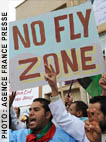
Along with airborne surveillance and the bombing of targets, Western nations in charge of imposing a no-fly-zone over Libya are directing their intelligence and information-warfare arsenals against the Libyan regime. British newspaper The Daily Mail reports that MI6, the UK’s primary external intelligence agency, is sharing with the British military its lists of telephone numbers belonging to senior Libyan military officials. The latter are now receiving calls from British civilian or military intelligence officers prompting them to defect. The paper cited “a senior source” who claimed MI6 is warning senior Libyan military officers that the Royal Air Force has “the GPS coordinates” of their command posts and that “it could be fatal to remain loyal to the Libyan leader” Muammar al-Gaddafi. Presumably, the calls are conducted in the Arabic language. They also do not appear to be pre-recorded, unlike those directed by the Israel Defense Forces at Palestinians during the 2008-2009 Israel-Gaza conflict. The “senior source” told The Mail that the same technique “worked in Iraq” in convincing senior military commanders to either defect or —in most cases— abandon their posts. Read more of this post

News you may have missed #478

  • Israel and Chile collaborated to spy on Iran and Venezuela. Documents released by WikiLeaks show Israel and Chile cooperated to spy on Iran as it developed bilateral links with Venezuela. A diplomatic cable from the US embassy in Santiago to the State Department in Washington, dated July 21, 2008, said Chile and Israel both expressed concern about growing ties as well as a potential Iranian presence on the border with Brazil, Argentina and Paraguay.
  • Korean spies broke into Indonesian delegation’s hotel room. Members of South Korea’s NIS spy agency broke into a hotel room of a visiting high-level Indonesian delegation to try to steal sensitive information on a possible arms deal, according to Seoul-based Chosun Ilbo newspaper. The report said the NIS officers left “after being disturbed by a delegate”.
  • High-ranking Libyan pilots defect to Malta. Two air force jets landed in Malta on Monday and their pilots, who said they are “senior colonels” in the Libyan air force, asked for political asylum. The pilots claim to have defected after refusing to follow orders to attack civilians protesting in Benghazi in Libya. Meanwhile, a group of Libyan army officers have issued a statement urging fellow soldiers to “join the people” and help remove Muammar Gaddafi by marching to Tripoli.

News you may have missed #465

  • Germany denies secret spy collaboration with the US. Germany’s aerospace center denied Monday that it is working with the US on a $270 million high-tech secret spy program, insisting that its plans for a high-resolution optical satellite have purely scientific and security uses. The denial was in response to US State Department cables obtained by WikiLeaks and revealed by Norwegian daily Aftenposten.
  • Was Iranian nuclear defector tortured? Iranian nuclear scientist Shahram Amiri, who returned to Tehran in July after what he called a “kidnapping” by the CIA, has been held in detention by Iranian authorities for two months and tortured so badly he was hospitalized, according to a dissident Iranian web site.
  • WikiLeaks reveals France leads industrial spying in Europe. France is the country that conducts the most industrial espionage on other European countries, even ahead of China and Russia, according to leaked US diplomatic cables, reported in a translation by Agence France Presse of Norwegian daily Aftenposten‘s reporting.

Comment: Russian Espionage Steals 2010 Limelight

GRU emblem

GRU emblem

By JOSEPH FITSANAKIS | intelNews.org |
As the first decade of the 21st century is coming to an end, few would dispute that Israeli and American spy agencies have been among the most talked-about intelligence organizations of 2010. The reasons for this are equally undeniable: the United States tops the list because of its political prominence, which inevitably attracts media attention; Israel tops it because of the sheer ferocity of its espionage output throughout the Middle East. And yet there is nothing new about this, since neither the Central Intelligence Agency nor the Mossad are exactly novices when it comes to high-profile media exposures. The same cannot be said with respect to Russian intelligence agencies, which went through a period of prolonged hibernation following the end of the Cold War. Indeed, the year that is about to end demonstrates that the stagnant interlude in Russian espionage may well be in its closing stages.

Read more of this post

News you may have missed #459 (Russia edition)

  • Son of CIA double spy strikes deal with FBI. Nathan Nicholson, son of CIA officer Harold James Nicholson, who in 1997 was jailed for spying for Russia, has avoided a prison sentence after promising to help the FBI build a new case against his father. The latter has pleaded guilty to enlisting his son from prison to sell the Russians more secrets and collect money owed to him by the Russian spy services.
  • Moscow warns UK of tit-for-tat expulsions. Alexander Sternik, the Russian government’s senior official in Britain, has hinted that any attempt to deport parliamentary assistant Katia Zatuliveter, detained by MI5 for allegedly spying for Russia, could result in tit-for-tat expulsions.
  • Kim Philby honored by plaque at Moscow SVR HQ. Russia has honored British Cold War spy Kim Philby with a plaque at the headquarters of the country’s foreign intelligence agency. Philby, who defected to the Soviet Union in 1963, is depicted in a sculptured portrait on the plaque as the two-faced Roman god Janus.

News you may have missed #458

  • More arrests of alleged Russian agents in Georgia. The government of Georgia arrested six people suspected of being agents for Russia and accused them of staging a series of explosions, including one outside the US embassy in capital Tbilisi. At least 13 more people were arrested last month in Georgia, and are facing charges of spying for Moscow.
  • Iran defector says Tehran hosted N. Korean techs. Mohammad Reza Heydari, who resigned in January from his post as Iranian consul in Norway, and defected to the West, has told a conference in Paris that he saw North Korean technicians “repeatedly” travel to Iran.
  • Spy scandal MP helped second Russian woman stay in UK. British Liberal Democrat parliamentarian Mike Hancock, whose assistant, Katia Zatuliveter, is accused by MI5 of spying for Russia, helped 25-year-old Russian citizen Ekaterina Paderina stay in Britain after she ran into visa problems, in the late 1990s.

More underreported WikiLeaks revelations

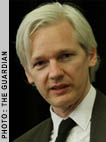
Julian Assange

Julian Assange

By JOSEPH FITSANAKIS | intelNews.org |
As the world’s media shift their attention to the consequences of the WikiLeaks revelations for its founder Julian Assange, as well as the reactions of American officials, the leaked diplomatic cables keep coming in, almost on an hourly basis. Some of the least noticed revelations include a 2009 dispatch from a US diplomat in Tel Aviv, which appears to confirm the close secret relations between Israel and the United Arab Emirates, despite the fact that these two countries have no official diplomatic connections. Another diplomatic cable reveals that Iranian intelligence officials approached their Canadian counterparts in 2008 and offered to share with them “information on potential attacks in Afghanistan”. Perhaps not surprisingly, the Canadians reacted guardedly, with Canadian Security Intelligence Service Director Jim Judd stating that his agency had “not figured out what they [the Iranians] are up to”. Read more of this post

Did FSB leak Russian double spy’s name to the media?

SVR seal

SVR seal

By JOSEPH FITSANAKIS | intelNews.org |
The revelation that a double agent betrayed the ten Russian deep-cover spies, who were arrested in the United States last summer, may have been leaked to the media as part of a turf war between two rival Russian spy agencies. On November 11, Russian newspaper Kommersant disclosed that a senior officer in Russia’s Foreign Intelligence Service (SVR) had defected to the United States shortly before the arrest of ten Russian deep-cover spies by the FBI, on June 27, 2010. The paper identified the alleged double agent as “Colonel Shcherbakov”, believed by veteran KGB officer Oleg Kalugin to be Aleksandr Vasilyevich Shcherbakov. The Kommersant disclosure was later confirmed by no other than Russian President Dmitry Medvedev. But who leaked Shcherbakov’s name to Kommersant, and why? According to Pavel Felgenhauer, military and intelligence correspondent for Russia’s Novaya Gazeta newspaper, the leak originated from within the Russian intelligence establishment. Specifically, Felgenhauer suggests that it was Russia’s Federal Security Service (FSB) that leaked the information to the media, in an attempt to score points against the SVR. Read more of this post