News you may have missed #729 (intel blunder edition)

Alleged Venezuelan 'spy crossword'By IAN ALLEN | intelNews.org |
►►US drones ‘incidentally’ spy on Americans. A leaked US Air Force document stipulates that a drone that happens to capture surveillance images of Americans may store them for a period of 90 days. The paper appears to justify spying on citizens, as long as it is “incidental”. The document accepts that the Air Force may not record information non-consensually; however it does state: “collected imagery may incidentally include US persons or private property without consent”. The report, dated April 23 was discovered by Steven Aftergood of the Federation of American Scientists and has been put online.
►►Indian intel blunder sparks anger in Pakistan. India’s Research and Analysis Wing (RAW) intelligence agency sparked outrage in Pakistan and self-deprecatory jokes in India itself last week, after it listed ordinary Pakistani shopkeepers as terrorists on a mission to attack some of India’s landmark institutions. RAW, which is considered India’s premier intelligence agency, issued an advisory to state governments in which it said that five trained militants from Pakistan’s banned Lashkar-e-Taiba group had sneaked into India with fake identities to attack a nuclear facility, oil refinery, seaport and defense academy. Within hours after photographs of the five men were released, a Pakistani television channel reported that two of the three men on the list were shopkeepers and one was a guard, all living in Lahore, and that none of them had ever left Pakistan.
►►Venezuelan spies face criticism over ‘crossword puzzle’ plot. Venezuelan government critics, and even some supporters, are ridiculing a Venezuelan state TV host’s allegation that a newspaper crossword puzzle may have had a hidden call for a plot to kill President Hugo Chavez’s elder brother. Intelligence agents questioned Neptali Segovia, the author of the puzzle, after state TV presenter Miguel Perez Pirela pointed out that Wednesday’s crossword contained the word “ASESINEN”, or kill, intersecting with the name of Chavez’s brother, “ADAN”. He noted they were below the word “RAFAGAS”, meaning either gusts of wind or bursts of gunfire.

News you may have missed #714

Tjostolv Moland and Joshua FrenchBy IAN ALLEN | intelNews.org |
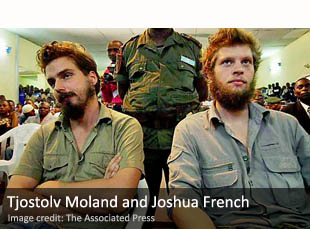
►►British PM urged to intervene in Congo spy case. The mother of Joshua French, who has dual British and Norwegian nationality, and is facing execution in the Democratic Republic of Congo, has urged British Prime Minister David Cameron to ask Congolese authorities to pardon him. French, and his Norwegian friend Tjostolv Moland, were sentenced to death for murder and spying in the vast central African country in 2009. A prison official claimed in August last year that the pair had tried to escape, but their lawyer denies this.
►►Computers of Syrian activists infected with Trojan. Since the beginning of the year, pro-Syrian-government hackers have steadily escalated the frequency and sophistication of their attacks on Syrian opposition activists. Many of these attacks are carried out through Trojans, which covertly install spying software onto infected computers, as well as phishing attacks which steal YouTube and Facebook login credentials. According to the Electronic Frontier Foundation, the latest surveillance malware comes in the form of an extracting file which is made to look like a PDF if users have their file extensions turned off. The PDF purports to be a document concerning the formation of the leadership council of the Syrian revolution and is delivered via Skype message from a known friend.
►►Report claims Australian government spied on anti-coal activists. The leader of the Australian Greens, Bob Brown, says he is outraged at reports that the Australian Security Intelligence Organisation (ASIO) is spying on mining protesters, and says such action is a misuse of the spy agency’s resources. The revelations were reported in Australian newspapers yesterday, and are based on a Freedom of Information request to the Department of Resources, Energy and Tourism that was reportedly rejected because it involved “an intelligence agency document”. The ASIO says it cannot confirm whether it has conducted surveillance of anti-coal protesters, but it says it does not target particular groups or individuals unless there is a security-related reason to do so.
News you may have missed #690

Katya ZatuliveterBy IAN ALLEN| intelNews.org |
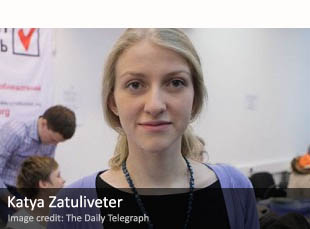
►►Interview with Katia Zatuliveter. Just over three months ago Katia Zatuliveter was fighting to clear her name over claims she was a Russian spy who had passed British military secrets to Moscow. Now, in her first newspaper interview since winning her appeal against deportation from the UK, Katia Zatuliveter has told The Daily Telegraph why she does not support Vladimir Putin.
►►US Special Forces in Afghanistan to transfer to CIA. Top US Pentagon officials are considering putting elite special operations troops under CIA control in Afghanistan after 2014. If the plan were adopted, the US and Afghanistan could say there are no more U.S. troops on the ground in the war-torn country because once the SEALs, Rangers and other elite units are assigned to CIA control, even temporarily, they are not considered soldiers.
►►Indian army accused of spying on government officials. The Indian army is accused of using two surveillance vehicles to snoop near the offices and houses of senior Indian Defense Ministry officials. The vehicles with “off the air interceptors” were alleged to be parked in various localities in the New Delhi. Similar equipment is said to be used by the National Technical Research Organisation to listen to conversations without bugging the premises. The Defense Ministry has reportedly ordered a probe by the country’s Intelligence Bureau.

News you may have missed #675

Maria del Pilar HurtadoBy IAN ALLEN | intelNews.org |
►►Panama refuses to extradite Colombian ex-spy chief. Panama’s foreign ministry cited the Inter-American Convention on Human Rights, an international accord on asylum and Panamanian law, as reason for denying Colombia’s request to extradite Maria del Pilar Hurtado, who faces charges in Bogota over an illegal wiretapping scandal. Currently enjoying asylum in Panama are former presidents of Guatemala, Jorge Serrano Elias; and Ecuador, Abdala Bucaram; as well as erstwhile Haitian military strongman Raoul Cedras.
►►Russian spy chief to visit Syria. Russian Foreign Minister Sergei Lavrov said on Saturday he and Foreign Intelligence Service (SVR) head Mikhail Fradkov will visit Syria and meet with President Bashar al-Assad on February 7. The visit will be made on instructions from Russian President Dmitry Medvedev. Lavrov did not reveal any details of the upcoming the visit.
►►US spy chief: ‘we don’t know if Iran is building a bomb’. At a hearing of the Senate Select Committee on Intelligence last Tuesday, James Clapper, the US Director of National Intelligence, released the following statement: “We assess Iran is keeping open the option to develop nuclear weapons, in part by developing various nuclear capabilities that better position it to produce such weapons, should it choose to do so.  We do not know, however, if Iran will eventually decide to build nuclear weapons”.

News you may have missed #672

Osama bin LadenBy IAN ALLEN | intelNews.org |
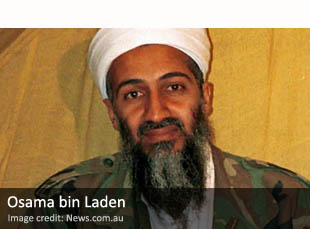
►►CIA claims bin Laden death photos would trigger violence. The Central Intelligence Agency says releasing images of a dead Osama bin Laden “could trigger violence, attacks, or acts of revenge against the United States”. Disclosing such images, including one showing the bullet wound to bin Laden’s head, the government said, “plausibly and logically pose a particularly grave threat of inflaming anti-American sentiment and resulting in retaliatory harm”. The agency made that argument Wednesday in a Freedom of Information Act lawsuit brought by Judicial Watch, which claims the CIA should release the photos taken by US forces. The American public, Judicial Watch said, has a “right to these historical artifacts”.
►►Kuwait accused of tapping phones of prominent citizens. According to the report published in Kuwaiti media, the country’s State Security Department purchased an integrated intelligence system from a former Soviet country last year, and placed it in a restricted zone inside the headquarters’ building. But last July, everything in the isolated room, including staff members hired specifically to operate the devices, vanished without an explanation, said sources. An investigation is currently ongoing to unearth the mystery behind the devices’ disappearance, and also examine information which hint that the devices could have been used by a certain unnamed individual to spy on prominent Kuwaitis.
►►Did US FDA spy on whistleblowers? The US Food and Drug Administration electronically spied on whistleblowers who alerted the Obama administration and Congress of alleged misconduct in the agency, according to a complaint filed in a US federal court. Named as defendants in the lawsuit are the FDA and several of its employees, the Surgeon General, the Health and Human Services Secretary, among others.

News you may have missed #676

Diego MurilloBy IAN ALLEN| intelNews.org |
►►US admits Pakistani doctor was CIA agent. The United States has confirmed publicly for the first time that a Pakistani doctor long suspected of collecting vital evidence before the assassination of Osama bin Laden was indeed working for the CIA. Defense Secretary Leon Panetta has told 60 Minutes on CBS that Shakil Afridi helped provide proof that the compound in Abbottabad, to which they had tracked a Bin Laden courier, was indeed sheltering the al-Qaeda leader. Panetta also told 60 Minutes that he remains convinced that someone in the Pakistani government “must have had some sense” that a person of interest was in the compound. He added that he has no proof that Pakistan knew it was bin Laden.
►►Czech secret services accused of political spying. The Czech government “spies on” the Communist Party of Bohemia and Moravia (KSCM), Miroslav Grebenicek, its former leader, said in a parliamentary question to Prime Minister Petr Necas. Grebenicek said he had recently received information that the Interior Ministry and some intelligence bodies were “tasked to spying on the KSCM or to incite for, organize and execute the shadowing of the KSCM”. Necas dismissed the allegation, saying that the government does not shadow any party.
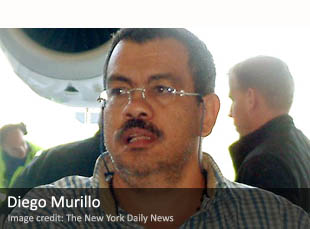
►►Colombian paramilitaries protected by spy agency. Colombia’s rightwing paramilitary organization AUC received the support of the country’s now-defunct intelligence agency DAS. The group also helped the government of former President Alvaro Uribe in a conspiracy to discredit the country’s Supreme Court that was investigating ties between the paramilitaries and politicians, according to official testimony by senior AUC commander Diego Murillo, alias “Don Berna”.

News you may have missed #675

Eugene ForseyBy IAN ALLEN | intelNews.org |
►►US ‘has engaged in cyberwarfare’. Former National Security Agency Director Mike McConnell said in an interview with Reuters that the United States has already used cyber attacks against an adversary. Most believe he was referring to Stuxnet, the computer virus unleashed against Iran in 2010.
►►Philippines studying US offer to deploy spy planes. The Philippines is considering a US proposal to deploy surveillance aircraft on a temporary, rotating basis to enhance its ability to guard disputed areas in the South China Sea, the Philippine defense minister said last week. The effort to expand military ties between the United States and the Philippines, which voted to remove huge American naval and air bases 20 years ago, occurs as both countries grapple with the growing assertiveness of China.
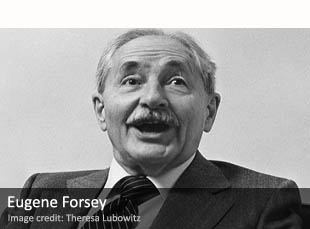
►►Canadian intelligence spied on constitutional expert. Canadian security forces kept close tabs on renowned constitutional scholar Eugene Forsey from his early days as a left-wing academic to his stint as a senator, according to newly declassified documents. The collection of more than 400 pages, which has been obtained by Canadian newspaper The Toronto Star, reveals the RCMP Security Service (the predecessor to the Canadian Security Intelligence Service), followed Forsey for four decades throughout his career as an economics professor, research director for the Canadian Congress of Labour (now called the Canadian Labour Congress), a two-time Ottawa-area candidate for the Cooperative Commonwealth Federation and then his 1970 appointment as a Liberal senator. No surprises here.

Revealed: German spy agency monitors leftwing politicians

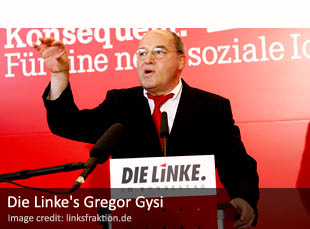
Die Linke's Gregor GysiBy JOSEPH FITSANAKIS | intelNews.org |
Well over a third of leftwing German parliamentarians are currently being monitored by the country’s domestic intelligence agency, according to a government report released on Sunday. Germany’s quality newsmagazine Der Spiegel has cited an internal document from the Ministry of the Interior, which states that 27 of the Left Party’s 76 members of parliament are currently “being observed” by the authorities. The document, which is dated January 4, 2012, also reveals that the Federal Office for the Protection of the Constitution (BfV, Germany’s primary domestic spy organization) is keeping tabs on another 11 Left Party elected officials serving in regional parliaments. The document does not name the 27 parliamentarians, but the list is believed to include the Left Party’s leading political figures. The party, known in Germany as Die Linke, is one of the country’s largest, having received nearly 12% of the national vote in the 2009 federal elections. It was established in 2007, after the Electoral Alternative for Labor and Social Justice party merged with the Party of Democratic Socialism —the successor of the Socialist Unity Party of Germany, which ruled East Germany until 1989. The party’s electoral stronghold rests in the regions of the former East Germany, while some of the party’s older members held senior government positions under East Germany’s communist system. For this reason, some in Germany view the Left Party as an extremist organization —a characterization that presumably forms the rationale for the BfV’s monitoring operation. On the other hand, some critics raise concerns that, even if some Die Linke members have links with the former East German security establishment, the BfV operation against the party is too intense, and that more attention should instead be given to German neo-Nazi groups, such as the National Democratic Party (NPD). Read more of this post

News you may have missed #667

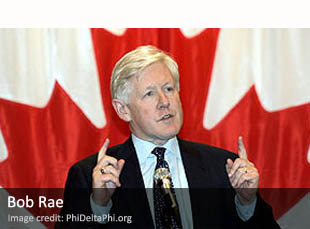
Bob RaeBy IAN ALLEN | intelNews.org |
►►Canadian authorities spied on political leader. The Royal Canadian Mounted Police spied on Bob Rae, current leader of Canada’s Liberal Party, when he was a student, and likely amassed a personal dossier on him, newly declassified documents reveal. Really, is there anyone in Canada who has not been spied on by the RCMP?
►►US intel community says Taliban want Afghanistan back. The Associated Press cites “two current and one former US official” who said anonymously that the classified Afghan National Intelligence Estimate declares the Afghanistan War “at a stalemate“, and says NATO security gains are “far outweighed by corruption at all levels of Afghan government”.
►►Canadian naval officer charged with espionage. A member of the Royal Canadian Navy has become the first person charged under the country’s post-9/11 secrets law for allegedly passing protected government information to an unknown foreign body. Sub-Lt. Jeffrey Paul Delisle, 40, was charged Monday under the Security of Information Act, which came into effect in 2001.

News you may have missed #660

Margaret ThatcherBy IAN ALLEN | intelNews.org |
►►Taiwan President accused of spying on political opponents. Taiwan’s opposition challenger for the presidency, Tsai Ing-wen, has accused intelligence services under the control of incumbent President Ma Ying-jeou of tracking her campaign events for political advantage. The allegations – unproven and denied by Ma – conjure up memories of Taiwan’s one-party past when Ma’s party, the Nationalists, used their total control of the state apparatus to persecute opponents.
►►Analysis: Has Israeli-Australian spy relationship been restored? Intelligence sharing between Israel and Australia was halted this time last year, when a Mossad hit squad with forged Australian passports assassinated senior Hamas official Mahmoud al-Mabhouh in in Dubai. But Australian newspaper The Age reports that “the flow of top secret intelligence between the two countries has now been restored”, in a move apparently initiated by the Australian side.
►►Thatcher threatened to ban BBC program on MI5 and MI6. The Conservative government of British Prime Minister Margaret Thatcher threatened to “veto” a BBC investigative program about British intelligence services MI5 and MI6, because it would reveal details about how they operated and question their public accountability. In a letter marked “top secret and personal”, cabinet secretary Sir Robert Armstrong, recommended that Margaret Thatcher consider invoking the rarely used power, saying that “the government has the power to ban any program”. Thatcher wrote on the note: “I would be prepared to use the veto”.

News you may have missed #654

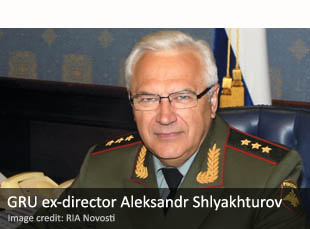
Aleksandr ShlyakhturovBy IAN ALLEN | intelNews.org |
►►Anonymous hacks intel analysis firm StratFor. The loose-knit hacking movement Anonymous claimed Sunday via Twitter that it had stolen thousands of credit card numbers and other personal information belonging to clients of intelligence analysis firm Stratfor. The company had apparently failed to encrypt its customers’ credit card account information. The hackers announced their intention to use the credit cards for charitable donations.
►►CIA Inspector General clears assistance with NYPD. Back in August, The CIA denied allegations by the Associated Press that it helped the New York Police Department conduct covert surveillance on New York Muslims. The agency said the report “mischaracterized the nature and scope” of the CIA’s support for the NYPD. Now a report by the office of the CIA Inspector General, the CIA’s internal watchdog, has concluded that there was “no evidence that any part of the agency’s support to the NYPD constituted ‘domestic spying’”. The Associated Press notes that it is not clear if this report opens the door for other municipal police departments nationwide to work closely with the CIA in the war on terrorism.
►►Russia replaces head of military spy agency. After denying initial rumors, Russia’s Defense Ministry said on Monday that “Major General Igor Sergun has been appointed head of the GRU [Russia’s Main Intelligence Directorate] through a Kremlin decree”. Sergun replaces Aleksandr Shlyakhturov, who had spearheaded a shake-up of the service since his appointment in 2009. The state RIA Novosti news agency quoted a ministry spokesman suggesting that Shlyakhturov had reached retirement age. No other reason was given for the move. Incidentally, if you are wondering how spies are faring in Dmitri Medvedev’s and Vladimir Putin’s administration, read this enlightening analysis by Mark Galeotti, Professor of Global Affairs at New York University.

News you may have missed #654

Abdel Hakim Belhaj►►Libyan military commander sues British intelligence. Just as he said he would, Abdel Hakim Belhaj, who commands the new Libyan military forces in Tripoli, has sued Britain for its role in his rendition into imprisonment and torture at the hands of Muammar Gaddafi’s regime. He said he resorted to legal action after waiting in vain for the British government to offer an apology for his seven years spent in the jails of the secret police.
►►Argentine Admiral fired over espionage scandal. The head of the Argentine Navy, Admiral Jorge Godoy, has stepped down after being accused of illegal espionage. He has been indicted for alleged practices of “domestic intelligence” –which are prohibited by Argentina’s laws– against political leaders and of human rights activists, in the years between 2003 and 2006.
►►US intelligence warned of strive after US Iraq pullout. This is what Reuters news agency reports, citing anonymous sources inside the US government. Then again, US intelligence agencies warned in 2002 of increasing strife in case of a US invasion in Iraq, and nobody in government listened to them. So why would anyone listen to them now?

News you may have missed #653: India edition

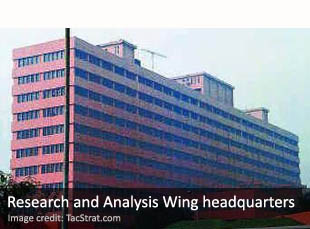
Research and Analysis WingBy IAN ALLEN | intelNews.org |
►►India’s external intel agency gets wiretapping powers. India’s government has given the country’s external intelligence agency, the Research and Analysis Wing (RAW), the right to intercept domestic phone calls, emails and voice and data communications. This is the first time that RAW has been authorized to intercept communications inside the country. Should Indian citizens be bracing for more political policing?
►►India uncovers alleged Pakistan honey trap operation. A lieutenant colonel in the Indian Army was reportedly caught in a ‘honey trap’ by Pakistani intelligence agencies, as a result of which he was forced to spy for them against Indian interests, according to Indian media. The officer was allegedly in Bangladesh this past summer to attend a course at a military academy, when he was trapped by Pakistan’s Inter-Services Intelligence (ISI), sources said. What is it with Indian government employees and honey trap operations?
►►Indian arrested for spying for Pakistan. Indian police in Rajasthan said it arrested Pawan Kumar Sharma, a clerk working at the regional Sub-Divisional Magistrate’s office in Suratgarh town, on charges of spying for Pakistan. Authorities said Sharma is suspected of spying for Pakistan’s Inter-Services Intelligence (ISI) directorate for the past year-and-a-half, using a prepaid cell phone provided by the ISI.

News you may have missed #652

Amir Mirzaei HekmatiBy IAN ALLEN | intelNews.org |
►►Kremlin accused of covert tactics against opposition. The Kremlin says it will allow opposition groups to hold rallies, but cases of alleged preemptive arrests and phone-tapping show that it may be still seeking to defeat the protest movement. For previous intelNews coverage of civil liberties in Russia see here.
►►Iran releases two Kuwaitis accused of spying. Iran’s semi-official Mehr news agency says that two Kuwaitis detained In Iran for spying last month have been cleared of their charges and released. The report quoted Iran’s ambassador to Kuwait, Ruhollah Qahremani, as saying the men had illegally worked as journalists in Iran while traveling on tourist visas, but initial speculation that they were spies “had been wrong”.
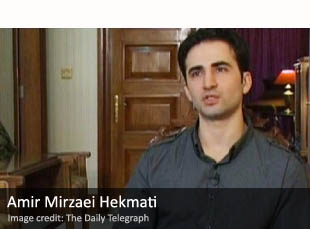
►►US sources deny spy charges for American detained in Iran. Amir Mirzaei Hekmati (pictured), from Arizona, who has been captured in Iran allegedly on a CIA mission, has not received any intelligence training from the US military, according to Pentagon sources. Also, one of Hekmati’s colleagues claims the Iranian-American helped develop an electronic translator for US troops but “wouldn’t have been involved in espionage”.

News you may have missed #646

Syed Ghulam Nabi Fai

Syed Fai

►►Analysis: Reorganizing Colombia’s disgraced spy agency. One former director of Colombia’s Administrative Department of Security, or DAS, has been convicted of conspiring to kill union activists. A former high-ranking manager is accused of collaborating with death squads to assassinate a television humorist. Dozens of agents have been implicated in what prosecutors call a systematic effort to illegally spy on the Supreme Court and opposition politicians, which some former DAS agents said was done with US equipment and funding. The new man in charge, however, Ricardo Giraldo, is an affable bankruptcy lawyer and former university professor, and his role is decidedly different from his predecessors’: namely to dismantle the agency.
►►Russian site snubs FSB request to block opposition networking. Russia’s top social networking site on Thursday defiantly rejected a request by the Federal Security Service to block opposition groups from using it to organize street protests accusing the authorities of rigging this week’s election. Over 45,000 people in Moscow alone have pledged on Facebook and the Russian site, VKontakte, to join fresh protests on Saturday against the 12-year rule of Vladimir Putin and the victory of his United Russia party in last Sunday’s parliament vote.
►►American citizen admits he took Pakistan spy money. Ghulam Nabi Fai, who is accused of working in Washington for Pakistan’s Inter-Services Intelligence (ISI) directorate, to lobby for Kashmiri independence, has pleaded guilty to secretly receiving millions of dollars from Pakistan’s spy agency in violation of US federal laws.