News you may have missed #751

Leonid ShebarshinBy IAN ALLEN | intelNews.org |
►►Ex-CIA officer remembers his KGB rival. In April, Leonid Shebarshin, a retired General of the KGB, who was often referred to as “the last Soviet spy”, was found dead in his downtown Moscow apartment. Apparently, he had committed suicide. Now Milt Bearden, who was the CIA’s Chief of the Soviet/East European Division during the final years of the USSR, has written a piece in which he remembers Shebarshin. He says that, even though Shebarshin was “the closest thing [he] had to a main adversary” in the USSR, the two became friends in the late 1990s, despite the fact that Shebarshin remained a true believer in the USSR until the very end of his life.
►►NSA won’t reveal how many Americans it spied on. Last month, US Senators Ron Wyden and Mark Udall –both members of the US Senate’s Select Committee on Intelligence– asked the NSA how many persons inside the US it had spied upon since 2008. But Charles McCullough, the Inspector General of the Office of the Director of National Intelligence, has told the two Senators that giving such a figure of how many Americans were spied on was “beyond the capacity” of NSA’s oversight mechanisms, and that –ironically– looking into this matter would violate the privacy of American citizens.
►►Russian scientist who ‘spied for China’ freed. Igor Reshetin, the former director of Russian rocket technology firm TsNIIMASH-Export, who was jailed in 2007 for selling state secrets to China, has been released on parole. Reshetin had been initially sentenced to nearly 12 years, for illegally selling state-controlled technology secrets to a Chinese firm, and with stealing 30 million rubles (US$925,000) through a scheme involving bogus companies. His initial sentence was later reduced on appeal.

Russian professors jailed for passing military secrets to China

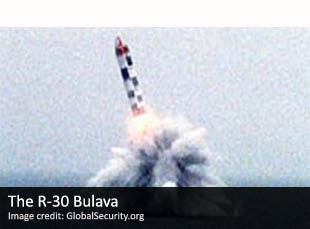
The R-30 BulavaBy IAN ALLEN | intelNews.org |
Two Russian professors were convicted yesterday of handing over to Chinese government agents highly classified technical details about one of Russia’s most secretive military projects. Svyatoslav Bobyshev and Yevgeny Afanasyev, both employees of the military-affiliated Baltic State Technological University in St. Petersburg, had been arrested in March 2010 on suspicion of spying for a foreign government. The two have now been sentenced by the St. Petersburg City Court to 12 and 12 ½ years in prison respectively, after having been found guilty of treason. According to the court documents, Bobyshev and Afanasyev traveled to China in 2009, where they passed on to Chinese military intelligence officers highly secret technical details about Russia’s R-30 Bulava ballistic missile. Specifically, the two professors are accused of sharing information relating to Bulava’s underwater launch specifications. Additionally, the Russian government prosecutor said that the two were preparing to provide the Chinese with information about two of Russia’s land-based missile systems, the Topol-M and Iskander. The R-30 Bulava (the Russian word for “mace”) is the name for Moscow’s latest-generation submarine-based ballistic missile technology. It is widely considered to be one of the future cornerstones of Russia’s nuclear weapons capability, and is thought to be the most expensive weapons project currently being developed in the country. The missile was approved for production last year, and is expected to come to service this coming October, when it will begin to replace Russia’s Soviet-era stock of submarine-launched nuclear missiles. Read more of this post


News you may have missed #747

Israeli athletes at the 1972 Munich OlympicsBy TIMOTHY W. COLEMAN | intelNews.org |
►►Dutch media reportedly spied on China. Dutch media participated in a clandestine intelligence collection effort on behalf of the Netherlands General Intelligence and Security Service (AIVD) during the 2008 Summer Olympic Games in Beijing. According to Dutch sources, at least seven reporters attending the Olympics were coaxed into, and were paid for, collecting information and taking photos of targeted Chinese officials interested in speaking with Dutch company and industry representatives. The AIVD did not comment on the allegations but did remark that Dutch law allows them to contact anyone who could provide or has access to intelligence.
►►Nicaragua arrests Colombian national for espionage. According to the Spanish-language weekly newspaper Semana, General Julio Cesar Aviles, the head of Nicaragua’s Army, announced the arrest of Colombian national Luis Felipe Rios, for seeking to “obtain Nicaraguan state documents about defense and national security”. The 34-year old Rios was apparently captured in Managua on Tuesday after having been under the surveillance of Nicaraguan counterintelligence officials for over a year. Rios was in Nicaragua under the guise of being a Spanish national working for a media outlet. The lead prosecutor in Nicaragua, Armando Juarez, claimed that there was “sufficient proof” to prosecute Rios. Colombian officials, including President Juan Manuel Santos, have stated they are investigating the matter.
►►Neo-Nazi linked to 1972 Munich Olympic terrorists. Recently released files by Germany’s security service, the Federal Office for the Protection of the Constitution (BfV), links neo-Nazi Willi Pohl to forged passports provided to Black September terrorists who perpetrated the 1972 attack at the Munich Olympics. The attack resulted in the deaths of 11 Israeli athletes. According to German magazine Der Spiegel, over 2,000 documents were released in which the BfV asserts that Pohl assisted and even chauffeured one Black September member around Germany in the weeks leading up to the attack. German police arrested Pohl in 1972 for “unauthorized possession of firearms” and sentenced him to two years’ incarceration for possessing grenades and weapons. He was released only a few days after his conviction and he fled the country, ending up in Lebanon.

News you may have missed #746

Jeffrey Paul DelisleBy IAN ALLEN | intelNews.org |
►►Germany charges alleged Moroccan spy. German Federal prosecutors on Tuesday said the suspect, identified only as Moroccan-German dual national Mohammed B., was spying for Moroccan intelligence on supporters of the POLISARIO Front, which seeks independence for the Western Sahara region. They say he was paid €22,800 for the work in 2011, and then falsified invoices to claim he had done work for Morocco’s state airline to disguise where the money originated. He was arrested in February but released from custody on June 5 after prosecutors say he admitted to the charges.
►►Delisle spy case in Canada adjourned until July 4. The case of Canadian navy intelligence officer Jeffrey Paul Delisle, who is accused of espionage, has been adjourned until next month, because his lawyer, Mike Taylor, says he needs more time to review information about his client. According to Taylor, much of the information he has received so far from the Canadian government has been redacted because of security concerns. Moreover, he said that the “voluminous” amount of information has to be vetted by several justice and intelligence agencies before it can be handed over to him, slowing down the process of moving the case forward.
►►Obama to deny Israeli calls for Pollard’s release. The administration of US President Barack Obama has indicated that it will reject any appeal by senior Israeli political figures to commute the life sentence of convicted Israeli spy Jonathan Pollard. “Our position has not changed and will not change today”, White House spokesman Jay Carney told reporters at his daily briefing last week. “Mr. Pollard was convicted of extremely serious crimes”, he said.

CIA ‘seriously damaged’ China’s overseas spy network, sources say

Ministry of State Security branch office in Hubei Province, ChinaBy JOSEPH FITSANAKIS | intelNews.org |
A high-level Chinese security official, who was arrested earlier this year in China for spying for the United States, compromised several Chinese agents operating on American soil, according to sources. Reuters news agency, which broke the initial story of the Chinese official’s arrest earlier this month, published last week a lengthy update on the spy affair. The article quoted “two sources with direct knowledge on the matter”, who claimed the issue was considered serious enough in Beijing to prompt the personal intervention of Chinese President Hu Jintao. Jintao, who is also General Secretary of the Communist Party of China, personally ordered an investigation into the case, said Reuters. The investigation focused on China’s Ministry of State Security (MSS), China’s primary intelligence agency, where the accused spy was reportedly working at the time of his arrest. Although Chinese media have remained silent on the issue, the arrested official is said to have worked as a senior aide to MSS Vice Minister Lu Zhongwei. The Reuters article alleges that the investigation, which is said to be continuing, has concluded that the aide had been a paid informant of the US Central Intelligence Agency, and that the information he provided to the CIA included “political, economic and strategic intelligence”. But the sources also told Reuters that some of the government secrets that the MSS aide gave the CIA related to China’s network of spies operating on American soil. The latest Reuters article strengthens the widespread view that the latest espionage scandal caused serious damage to China’s espionage network in the US. Some observers now argue that this represents China’s most damaging espionage scandal since 1985, when Yu Qiangsheng, a senior Chinese intelligence official, defected to the United States. Read more of this post

Ex-diplomat: US thinks Israeli spy Pollard was not acting alone

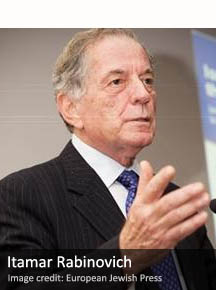
Itamar RabinovichBy JOSEPH FITSANAKIS | intelNews.org |
One of Israel’s former ambassadors to Washington has told a radio program that United States officials suspect Jonathan Jay Pollard, an American who spied for Israel in the 1980s, was not acting alone. Itamar Rabinovich, who was Tel Aviv’s most senior diplomat on US soil from 1993 to 1996, told Israel Radio on Monday that this is probably the reason behind Washington’s refusal to release the imprisoned spy. Pollard was a US Navy intelligence analyst who spied for Israel, in exchange for money, from 1984 until his arrest in 1986. Many in US counterintelligence consider him one of the most damaging double spies in American history. But he is widely viewed as a hero in Israel, and Israelis, as well as many pro-Israel Americans, are actively pressuring the US administration of President Barack Obama to release him. According to Rabinovich, however, the main reason behind the US refusal to release Pollard is that officials in the US Intelligence Community think that Israel has concealed the full extent of his activities on US soil. Furthermore, Rabinovich said in his interview that Washington believes Israel has shielded other Americans who either collaborated with Pollard or worked alongside him at the time. “They suspect that he wasn’t the only one, that there were additional Pollards”, said Rabinovich, adding that “Israel, despite its promises, did not reveal all the cards in this case and in similar cases”. The former ambassador said that, to his knowledge, “Israel [still] hasn’t said everything” to the Americans about the extent of Pollard’s espionage activities on US soil. Expounding on this, he said that “the claim concerning the enormous damage done to the Americans” by Pollard’s activities is one thing, “but there is also a hidden [claim], which is not voiced openly, but is implied”. The Americans, said Rabinovich, are “punishing Israel at Jonathan Pollard’s expense. They are angry with Israel more than with Pollard”. Read more of this post

Interview with agent who caught US-Israeli spy Jonathan Pollard

Jonathan PollardBy JOSEPH FITSANAKIS | intelNews.org |
Twenty-six years ago this month, a United States court convicted Jonathan Jay Pollard, a US Navy analyst who had been caught spying on his country for Israel. Pollard, who is still serving his life sentence, enjoys tremendous popularity in Israel as well as among pro-Israeli public figures in the US. His supporters in Israel and elsewhere view him as a hero who is serving an unfairly harsh sentence and they pressure the US government to release him. In light of that, it is worth paying attention to a recent radio interview with the man who caught him spying on America. The interview was conducted by Mike Lanchin, a reporter and producer for BBC radio’s Witness program. Lanchin managed to trace Ron Olive, a retired Assistant Special Agent at US Navy Counterintelligence, who in June 1986 cracked the Pollard case, leading to the spy’s arrest and eventual conviction. Olive, who now runs his own security consultancy firm in Arizona, told Witness that it took him and his fellow investigators over six months to piece together their case against Pollard. He added that, according to his investigation, “Pollard stole so many documents, so highly classified, more so than any other spy in the history of this country, in such a short period of time”. The case, said Olive, was the worst he had ever seen and it “devastated the entire [US] Intelligence Community”. The reason was not only the volume of stolen classified material, but also the fact that Pollard “could have been stopped from the very beginning”. Read more of this post

News you may have missed #744

Navi PillayBy IAN ALLEN | intelNews.org |
►►Source says Mikhailov ‘will not be exchanged’ with US. There are rumors going around that the US might consider exchanging Russian arms merchant Viktor Bout, who is serving a 25-year sentence in a New York prison, for one or more CIA spies currently being held in Russian prisons. Russian news agency RIA Novosti has cited a “high ranking official in the Russian security services”, who suggests that Bout “might be exchanged”, but not with Valery Mikhailov, a Russian former counterintelligence officer, who was sentenced this week to 18 years in prison for allegedly spying for the CIA.
►►CIA preparing to pull back from Iraq. The US Central Intelligence Agency is preparing to cut its presence in Iraq to less than half of wartime levels, according to The Wall Street Journal, which cites “US officials familiar with the planning”. Under the plans being considered, says the paper, the CIA’s presence in Iraq would be reduced to 40% of wartime levels, when Baghdad was the largest CIA station in the world with more than 700 agency personnel. Interestingly, the plan would also reduce the US intelligence presence in the region as neighboring Syria appears to be verging on civil war.
►►Senior UN official blasts US drone strikes. The United Nations High Commissioner for Human Rights, Navi Pillay, has said US drone attacks in Pakistan “raise serious questions about compliance with international law, in particular the principle of distinction and proportionality”. She also voiced concerns that the strikes were being conducted “beyond effective and transparent mechanisms of civilian or military control”. IntelNews provided this opinion on the matter, in 2009.

Russian colonel was ‘most successful CIA spy’ in recent years

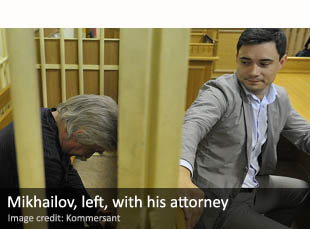
Valery Mikhailov, left, with his attorneyBy JOSEPH FITSANAKIS | intelNews.org |
Before the dust could settle from last month’s closed-door trial of Vladimir Lazar, and the arrest of an unnamed missile engineer on charges of espionage, Russia claims to have exposed yet another spy. Valery Mikhailov, a retired Russian counterintelligence officer, has been given an 18-year prison sentence for allegedly spying on behalf of the United States Central Intelligence Agency. In disclosing Mikhailov’s sentence yesterday, Moscow District Military Court officials were deliberately vague about Mikhailov’s alleged espionage activities, and provided limited information on the precise charges against him. But reporters, who were not allowed to attend Mikhailov’s trial, were told that he voluntarily approached CIA officers in Russia in 2001 and offered to spy on his country on behalf of the US, in exchange for regular payments in cash. Russian government prosecutors said that, from 2001 until 2007, when his activities were detected by Russia’s Federal Security Service (FSB), Mikhailov gave his American handlers access to over a thousand copies of secret or top-secret documents. Most of these, according to reports in the Russian media, had been prepared by FSB analysts for top-level Russian government officials, including the President, Prime Minister, and members of the Security Council of the Russian Federation. Russian government prosecutors say that Mikhailov was arrested following an extensive period of surveillance by the FSB, which allegedly resulted in the capture of an American CIA courier. The latter was apprehended while surreptitiously collecting classified documents copied by Mikhailov. Following his arrest, Mikhailov is said to have admitted that he earned over $2 million from his espionage activities. Read more of this post

US State Department silent on ‘massive’ China spy revelations

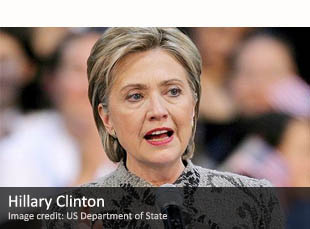
Hillary ClintonBy JOSEPH FITSANAKIS | intelNews.org |
The United States Secretary of State, Hillary Clinton, has declined to comment publicly on the arrest of a senior Chinese government aide, who is said to have conducted “massive” spying for Washington. According to Reuters news agency, who broke the story last week, the aide was arrested several months ago, but both the US and China have chosen to keep the issue under wraps in order “to prevent a fresh crisis in relations” between the two countries. Reuters cited “three sources [with] direct knowledge of the matter”, who said that the aide was employed at a critical post in the office of a vice minister in China’s Ministry of State Security (MSS). The MSS is China’s foremost intelligence agency, with responsibility for both domestic and international intelligence collection. According to the sources quoted by Reuters, the unnamed aide was arrested “sometime between January and March” of 2012 and stands accused of supplying his American handlers with classified information on Chinese espionage activities abroad. According to the report, the accused spy had been working for the US “for several years” and his case could represent the worst breach of China’s MSS in two decades; according to one source, the damage inflicted to the MSS’ operations by this case “has been massive”. Reuters said that the aide, who speaks English, was recruited by the US Central Intelligence Agency, and was paid “hundreds of thousands of US dollars” to provide “political, economic and strategic intelligence” to American intelligence officers. Read more of this post

News you may have missed #743 (espionage edition)

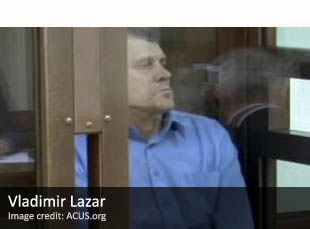
Vladimir LazarBy IAN ALLEN | intelNews.org |
►►Denmark professor jailed for spying. Timo Kivimäki a Finnish professor of international politics in Copenhagen, Denmark, has been sentenced to five months in prison for spying, following a trial held behind closed doors, from which even the verdict was not released. Several Russian diplomats left Denmark after the start of the spy case and, according to Danish media, Kivimäki’s lawyer, Anders Nemeth, had attempted to have them return to act as witnesses.
►►Retired Russian colonel convicted of spying for US. A Russian court has ruled that retired Colonel Vladimir Lazar spied for the US, and sentenced him to 12 years in prison. Lazar will be sent to a high-security prison and stripped of his military rank, the Federal Security Service said in a statement. Prosecutors said Lazar purchased several computer disks with more than 7,000 images of classified maps of Russia from a collector in 2008 and smuggled them to neighboring Belarus, where he gave them to an alleged American intelligence agent.
►►India arrests military intel staffer for spying. The soldier, identified only as Shivdasan, worked for the Indian Army’s Technical Support Division, which is a newly founded unit within Indian Military Intelligence. He was reportedly trapped by the Indian Directorate of Revenue Intelligence in an elaborate operation that involved a “double agent” and a relative of the soldier in Dubai.

Japan investigates senior Chinese diplomat for spying

Chinese embassy in TokyoBy IAN ALLEN | intelNews.org |
Japanese authorities are investigating a senior Chinese diplomat for having engaged in “activities in violation of the Vienna Convention on Diplomatic Relations”, which is technical language for espionage. The diplomat, who has been named by the Associated Press as Li Chunguang, and is fluent in Japanese, was posted at the Chinese Embassy in Tokyo in July of 2007 as the Embassy’s Second Secretary in charge of economic affairs. But Japan’s Public Security Intelligence Agency, which serves as the country’s primary counterintelligence organization, secretly monitored Li’s activities almost from the moment he was posted in Tokyo, eventually reaching the conclusion that the Chinese diplomat had ties to “an intelligence division of the Chinese People’s Liberation Army”. Earlier this year, the Agency determined that Li had used fraudulent information and had failed to disclose his diplomatic status while applying for an alien registration certificate from the Japanese government. According to news reports, he used the fraudulent certificate to open a bank account in Tokyo, where he deposited ¥100,000 (about US$ 1,300). According to Japanese investigators, Li he planned to “use [the money] for intelligence activities”. In mid-May of this year, the Japanese Ministry of Foreign Affairs, acting on a tip from Tokyo’s Metropolitan Police Department, requested from the Chinese Embassy that Li turned himself in “for questioning”. However, instead of presenting himself to Japanese authorities, as requested, Li left his Tokyo Embassy post for good on May 23, and is presumed to be Read more of this post

News you may have missed #740

Timo KivimäkiBy IAN ALLEN | intelNews.org |
►►Denmark professor accused of spying challenges court secrecy. Timo Kivimäki, a Finnish humanities professor at the University of Copenhagen, is accused of spying for the Russians and is being tried at the city court in the Danish city of Glostrup behind closed doors, meaning no information about the trial, including the precise charges, can be disseminated. But following demands from both Kivimäki’s lawyer and the Danish media, he has been granted permission to appeal against the decision to hold the trial in secret.
►►Analysis: CIA’s links with Hollywood are longstanding. Some US officials are suggesting that the producers of a new motion picture, which deals with the raid that killed al-Qaeda founder Osama bin Laden, received “extremely close, unprecedented and potentially dangerous collaboration” from the Obama administration, and particularly the US Intelligence Community. In light of this, a well-researched article in The Los Angeles Times reminds readers that the close connection between the movie industry and the US military and intelligence community goes back decades. The US military has been using movies to drive up recruitment since the 1920s; and the CIA these days even posts potential movie story lines on its website.
►►CIA funds helped launch literary journal. The Paris Review has been hailed by Time magazine as the “biggest ‘little magazine’ in history”. At the celebration of its 200th issue this spring, current editors and board members ran down the roster of literary heavyweights it helped launch since its first issue in 1953. Philip Roth, V. S. Naipaul, T.C. Boyle, Edward P. Jones and Rick Moody published their first stories in The Review; Jack Kerouac, Jim Carroll, Jonathan Franzen and Jeffrey Eugenides all had important early stories in its pages. But as American novelist Peter Matthiessen has told interviewers –most recently at Penn State– the journal also began as part of his CIA cover.

Comment: US helped Canada nab accused spy Jeff Delisle

Jeffrey Paul DelisleBy JOSEPH FITSANAKIS | intelNews.org |
Back in January of this year, when the Jeffrey Delisle spy affair made headlines around the world, I spoke with several journalists from The Globe & Mail, The Canadian Press, and other Canadian news outlets. Most of them were –rightly– curious about the role of the United States in the affair, in which Sub-Lieutenant Delisle, who had been employed at Canada’s ultra-secure TRINITY communications center in Halifax, was accused of spying for a foreign power. I told them that, given that Trinity handled –aside from Canadian– NATO communications, Canada was in fact obligated to notify all of its NATO partners about the suspected penetration. That aside, I said that it could be “safely assumed” that US counterintelligence agencies were “fully involved in the Delisle case, and probably ha[d] been for several months”. By the latter phrase, I implied that US counterintelligence agencies had been closely involved in helping their Canadian counterparts build their case against Delisle. Now a new report in The Globe & Mail suggests that US counterintelligence officials “supplied vital information” to their Canadian colleagues during “the early days of the investigation” into the Delisle affair. The article says that the full extent of what the Americans told Canadian authorities remains unclear; but it quotes “a source familiar with the matter”, who claims that the US “helped Canada build its investigation”, not necessarily by providing a single tipoff clue, but through “an accumulation of information”. The paper adds that Washington’s involvement in the investigation from an early stage “adds a key new detail to [the] story”. Not necessarily, I would argue. Read more of this post

How an ambitious Nazi spy operation in the US ended in failure

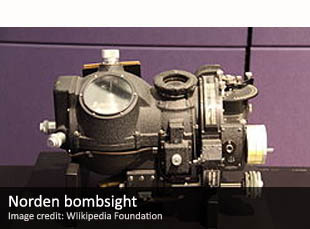
Norden bombsightBy IAN ALLEN | intelNews.org |
A well-researched article in The Chicago Tribune revisits one of the least known covert action episodes of World War II, which involved an ambitious Nazi espionage operation on US soil. The article, written by Ron Grossman, centers on Herbert Haupt, one of several American citizens and Nazi sympathizers, who were involved in the ruse. The German-born Haupt grew up in Chicago’s North Side and was working in West Garfield Park, at a factory that produced parts used for the Norden bombsight. The Norden bombsight was a sophisticated device that calculated the trajectory of a bomb dropped by an airplane, based on real-time flight conditions; moreover, it was connected to the aircraft’s autopilot, and was thus able to alter bomb trajectories according to changes in the wind, altitude, aircraft speed, or other effects. The Norden bombsight facilitated unprecedented bombing accuracy from high altitudes, and was thus rightly considered one of America’s most highly valued military secrets. In 1941, shortly before the United States entered World War II, Haupt took a leave of absence from his factory job and disappeared from the streets of Chicago’s North Side. It was later revealed that he traveled to Mexico City and presented himself at the German embassy there, offering to conduct espionage work for Nazi Germany. After securing a sum of money from German embassy officials, Haupt sailed to Japan and eventually made his way to Germany. A few months later, he illegally re-entered the US, sailing on a German U-boat that landed secretly in Florida carrying four German agents, all fluent English speakers. A second U-boat, carrying another four German agents, had landed almost simultaneously on Long Island. Haupt’s mission was to reenlist at the Norden bombsight factory in Chicago, so as to provide Nazi Germany with access to the top-secret device. Read more of this post