News you may have missed #743 (espionage edition)

Vladimir LazarBy IAN ALLEN | intelNews.org |
►►Denmark professor jailed for spying. Timo Kivimäki a Finnish professor of international politics in Copenhagen, Denmark, has been sentenced to five months in prison for spying, following a trial held behind closed doors, from which even the verdict was not released. Several Russian diplomats left Denmark after the start of the spy case and, according to Danish media, Kivimäki’s lawyer, Anders Nemeth, had attempted to have them return to act as witnesses.
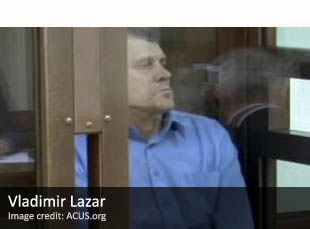
►►Retired Russian colonel convicted of spying for US. A Russian court has ruled that retired Colonel Vladimir Lazar spied for the US, and sentenced him to 12 years in prison. Lazar will be sent to a high-security prison and stripped of his military rank, the Federal Security Service said in a statement. Prosecutors said Lazar purchased several computer disks with more than 7,000 images of classified maps of Russia from a collector in 2008 and smuggled them to neighboring Belarus, where he gave them to an alleged American intelligence agent.
►►India arrests military intel staffer for spying. The soldier, identified only as Shivdasan, worked for the Indian Army’s Technical Support Division, which is a newly founded unit within Indian Military Intelligence. He was reportedly trapped by the Indian Directorate of Revenue Intelligence in an elaborate operation that involved a “double agent” and a relative of the soldier in Dubai.

Japan investigates senior Chinese diplomat for spying

Chinese embassy in TokyoBy IAN ALLEN | intelNews.org |
Japanese authorities are investigating a senior Chinese diplomat for having engaged in “activities in violation of the Vienna Convention on Diplomatic Relations”, which is technical language for espionage. The diplomat, who has been named by the Associated Press as Li Chunguang, and is fluent in Japanese, was posted at the Chinese Embassy in Tokyo in July of 2007 as the Embassy’s Second Secretary in charge of economic affairs. But Japan’s Public Security Intelligence Agency, which serves as the country’s primary counterintelligence organization, secretly monitored Li’s activities almost from the moment he was posted in Tokyo, eventually reaching the conclusion that the Chinese diplomat had ties to “an intelligence division of the Chinese People’s Liberation Army”. Earlier this year, the Agency determined that Li had used fraudulent information and had failed to disclose his diplomatic status while applying for an alien registration certificate from the Japanese government. According to news reports, he used the fraudulent certificate to open a bank account in Tokyo, where he deposited ¥100,000 (about US$ 1,300). According to Japanese investigators, Li he planned to “use [the money] for intelligence activities”. In mid-May of this year, the Japanese Ministry of Foreign Affairs, acting on a tip from Tokyo’s Metropolitan Police Department, requested from the Chinese Embassy that Li turned himself in “for questioning”. However, instead of presenting himself to Japanese authorities, as requested, Li left his Tokyo Embassy post for good on May 23, and is presumed to be Read more of this post

News you may have missed #740

Timo KivimäkiBy IAN ALLEN | intelNews.org |
►►Denmark professor accused of spying challenges court secrecy. Timo Kivimäki, a Finnish humanities professor at the University of Copenhagen, is accused of spying for the Russians and is being tried at the city court in the Danish city of Glostrup behind closed doors, meaning no information about the trial, including the precise charges, can be disseminated. But following demands from both Kivimäki’s lawyer and the Danish media, he has been granted permission to appeal against the decision to hold the trial in secret.
►►Analysis: CIA’s links with Hollywood are longstanding. Some US officials are suggesting that the producers of a new motion picture, which deals with the raid that killed al-Qaeda founder Osama bin Laden, received “extremely close, unprecedented and potentially dangerous collaboration” from the Obama administration, and particularly the US Intelligence Community. In light of this, a well-researched article in The Los Angeles Times reminds readers that the close connection between the movie industry and the US military and intelligence community goes back decades. The US military has been using movies to drive up recruitment since the 1920s; and the CIA these days even posts potential movie story lines on its website.
►►CIA funds helped launch literary journal. The Paris Review has been hailed by Time magazine as the “biggest ‘little magazine’ in history”. At the celebration of its 200th issue this spring, current editors and board members ran down the roster of literary heavyweights it helped launch since its first issue in 1953. Philip Roth, V. S. Naipaul, T.C. Boyle, Edward P. Jones and Rick Moody published their first stories in The Review; Jack Kerouac, Jim Carroll, Jonathan Franzen and Jeffrey Eugenides all had important early stories in its pages. But as American novelist Peter Matthiessen has told interviewers –most recently at Penn State– the journal also began as part of his CIA cover.

Comment: US helped Canada nab accused spy Jeff Delisle

Jeffrey Paul DelisleBy JOSEPH FITSANAKIS | intelNews.org |
Back in January of this year, when the Jeffrey Delisle spy affair made headlines around the world, I spoke with several journalists from The Globe & Mail, The Canadian Press, and other Canadian news outlets. Most of them were –rightly– curious about the role of the United States in the affair, in which Sub-Lieutenant Delisle, who had been employed at Canada’s ultra-secure TRINITY communications center in Halifax, was accused of spying for a foreign power. I told them that, given that Trinity handled –aside from Canadian– NATO communications, Canada was in fact obligated to notify all of its NATO partners about the suspected penetration. That aside, I said that it could be “safely assumed” that US counterintelligence agencies were “fully involved in the Delisle case, and probably ha[d] been for several months”. By the latter phrase, I implied that US counterintelligence agencies had been closely involved in helping their Canadian counterparts build their case against Delisle. Now a new report in The Globe & Mail suggests that US counterintelligence officials “supplied vital information” to their Canadian colleagues during “the early days of the investigation” into the Delisle affair. The article says that the full extent of what the Americans told Canadian authorities remains unclear; but it quotes “a source familiar with the matter”, who claims that the US “helped Canada build its investigation”, not necessarily by providing a single tipoff clue, but through “an accumulation of information”. The paper adds that Washington’s involvement in the investigation from an early stage “adds a key new detail to [the] story”. Not necessarily, I would argue. Read more of this post

How an ambitious Nazi spy operation in the US ended in failure

Norden bombsightBy IAN ALLEN | intelNews.org |
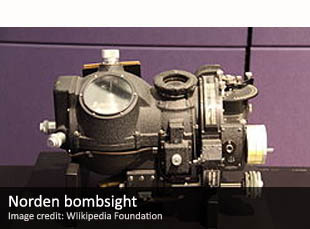
A well-researched article in The Chicago Tribune revisits one of the least known covert action episodes of World War II, which involved an ambitious Nazi espionage operation on US soil. The article, written by Ron Grossman, centers on Herbert Haupt, one of several American citizens and Nazi sympathizers, who were involved in the ruse. The German-born Haupt grew up in Chicago’s North Side and was working in West Garfield Park, at a factory that produced parts used for the Norden bombsight. The Norden bombsight was a sophisticated device that calculated the trajectory of a bomb dropped by an airplane, based on real-time flight conditions; moreover, it was connected to the aircraft’s autopilot, and was thus able to alter bomb trajectories according to changes in the wind, altitude, aircraft speed, or other effects. The Norden bombsight facilitated unprecedented bombing accuracy from high altitudes, and was thus rightly considered one of America’s most highly valued military secrets. In 1941, shortly before the United States entered World War II, Haupt took a leave of absence from his factory job and disappeared from the streets of Chicago’s North Side. It was later revealed that he traveled to Mexico City and presented himself at the German embassy there, offering to conduct espionage work for Nazi Germany. After securing a sum of money from German embassy officials, Haupt sailed to Japan and eventually made his way to Germany. A few months later, he illegally re-entered the US, sailing on a German U-boat that landed secretly in Florida carrying four German agents, all fluent English speakers. A second U-boat, carrying another four German agents, had landed almost simultaneously on Long Island. Haupt’s mission was to reenlist at the Norden bombsight factory in Chicago, so as to provide Nazi Germany with access to the top-secret device. Read more of this post

News you may have missed #730

Majid Jamali FashiBy IAN ALLEN | intelNews.org |
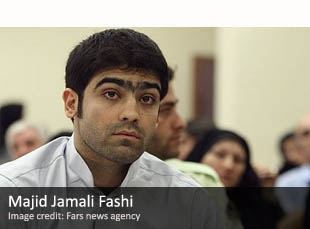
►►Iran executes man convicted of killing nuclear physicist. Iran on Tuesday hanged Majid Jamali Fashi, convicted of playing a key role in the 2010 murder of Iranian nuclear scientist Masoud Ali Mohammadi, and of spying for Israel. Mohammadi, a particle physics professor at Tehran University who was killed in a bomb attack outside his home in January 2010.
►►Bahrain sentences man accused of spying for Iran. Bahraini authorities accused the unnamed 47-year-old man of having leaked high-level information on Bahrain’s military, Interior Ministry and US Naval Base. He was allegedly paid more than BD27,000 on behalf of Iran’s Revolutionary Guard by two Iranians who lived in Kuwait. The two Iranians, who worked as diplomats in the Iranian Embassy in Kuwait, were convicted in absentia for selling military, industrial and economic information to Iran between 2002 and last April.
►►NSA declassifies document after publishing it. The National Security Agency last week invoked a rarely-used authority in order to declassify a secret document that was mistakenly posted on the NSA website with all of its classified passages intact. The article (.pdf) is a historical study entitled Maybe You Had to Be There: The SIGINT on Thirteen Soviet Shootdowns of US Reconnaissance Aircraft. It was written by Michael L. Peterson and was originally published in the classified journal Cryptologic Quarterly in 1993.

Russia charges engineer with spying for foreign agency

The R-30 BulavaBy JOSEPH FITSANAKIS | intelNews.org |
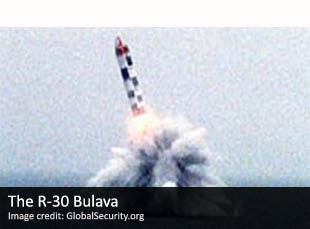
Russian authorities have charged an engineer working at a top-secret military facility in the Urals with espionage, accusing him of passing classified information about Russian ballistic missiles to agents of a foreign government. According to the InterFax news agency, which has strong links with the Russian government, the engineer had disclosed “secret data [and] state secrets concerning the area of strategic defense systems “. The Moscow-based news agency quoted an unnamed “Russian law enforcement official” who said that the accused spy worked at a critical research and development position inside a “restricted government facility that develops missile technology”. The source told InterFax that the alleged spy was working on the Russian R-30 Bulava ballistic missile, which is said to be in its final development stage. The R-30 Bulava (the Russian word for “mace”) is the name for Moscow’s latest-generation submarine-based ballistic missile technology. It is widely considered to be one of the future cornerstones of Russia’s nuclear weapons capability, and is thought to be the most expensive weapons project currently being developed in the country. The missile was approved for production last year, and is expected to come to service this coming October, when it will begin to replace Russia’s Soviet-era stock of submarine-launched nuclear missiles. The program is strongly linked to the country’s Borei-class ballistic-missile-capable nuclear submarines, which are expected to be able to launch the R-30 Bulava while underwater and in motion. Read more of this post

News you may have missed #727

Jeffrey Paul DelisleBy IAN ALLEN | intelNews.org |
►►US government-authorized wiretaps increased in 2011. The US Justice Department sought 1,745 secret wiretapping warrants in 2011, an increase of 239 over 2010, according to correspondence sent to Congressional leaders and oversight committees. The secret warrants are governed under the Foreign Intelligence Surveillance Act (FISA) and are used in terrorist and espionage investigations by the FBI. The letter, dated April 30, 2012, also notes that the FBI issued 16,511 National Security Letters (NSLs) to obtain certain records and information in investigations. It further asserts that the requests were for investigations relating to 7,201 different US persons. The number of NSLs declined dramatically from 2010 when the FBI had sought 24,287.
►►Australia axes spy agency funding. Large budget cuts by the Australian Labour government, which is trying to engineer a federal budget surplus, are expected to affect funding for the country’s intelligence agencies. The six agencies of the Australian intelligence community have been given a collective budget of $81 million over four years, a figure that is $20.4 million lower than previous budgets. The government said that savings will be “redirected to support other national intelligence priorities”.
►►Canada spy case adjourned until June. The case of Jeffrey Delisle, a Halifax naval intelligence officer accused of espionage, has been adjourned until next month because his lawyer has not yet received all of the files in the case. Delisle is charged with communicating information to a foreign entity —probably Russia— that could harm national interests. Until 2010, Delisle worked for both Canada’s Chief of Defence Intelligence and at the Strategic Joint Staff, which oversees virtually every major aspect of the military’s domestic and international plans and operations.

News you may have missed #726

Barbara Annette RobbinsBy IAN ALLEN | intelNews.org |
►►Portrait of first female CIA officer to die in line of duty. In 1965, a 21-year-old American woman, Barbara Annette Robbins (photo), was among the victims of a car bombing at the US Embassy in Saigon, South Vietnam. Washington said she was a diplomat. But, at a ceremony last year, the CIA admitted she was an employee of the Agency. This makes her the first woman at the male-dominated CIA killed in the line of duty. She is also the youngest CIA employee ever killed. And she appears to be the first American woman to die in the Vietnam War. The Washington Post has an interesting article about her short life and career.
►►US Jewish leader says release of Israeli spy Pollard ‘inevitable’. The release of Jonathan Pollard, who is serving a life sentence in a US prison for spying on the US for Israel, is “inevitable” and could take place shortly on “technical grounds”, according to Jack Rosen, a prominent Jewish leader and supporter of US President Barack Obama. A New York City real estate executive who hosted Obama at his Upper East Side home for a Democratic Party fundraiser last November, Rosen said that “there are some technical reasons, I’m told, why [Pollard] will be released. I think there’s an inevitability to that happening”.
►►Senior reshuffle at South Korean spy agency. South Korean President Lee Myung-bak reshuffled two top posts at South Korea’s main intelligence agency Monday in a shake-up that also affected five other vice-ministerial posts. Nam Joo-hong, a former well-known security scholar who has so far served as ambassador to Canada, was named the first deputy chief of the National Intelligence Service, while Cha Moon-hee, a veteran intelligence official, was tapped as the agency’s second deputy chief. The spy agency’s first and second deputy chiefs are in charge of its overseas and domestic operations, respectively.

News you may have missed #720

Betty SappBy IAN ALLEN | intelNews.org |
►►Lebanese national wanted for spying for Israel. A Lebanese military court has issued an arrest warrant for a Lebanese national suspected of spying for Israel. The judge in the case accused the suspect, whose name is yet to be released, of being in touch with Israel and passing on information about Ron Arad, an Israeli Air Force weapon systems officer who went missing in 1986.
►►Article sheds light on UK Home Office’s ex-spy official. An article in The Sunday London Times examines the role of Charles Farr, a former MI6 officer, who is considered as “the heart” of the British Home Office’s security policy. Farr, who joined MI6 some time in the 1980s, and served in South Africa and Jordan among other places, directs the Office’s Security and Counter-Terrorism unit. He is now in charge of the Home Office’s Communications Capabilities Development Programme, an attempt to augment online government surveillance. One former official, who had a showdown with Farr over policy, tells The Times: “He’s almost messianic. He’s like he’s on a mission to protect the nation. When you disagree with him he gets very emotional. He’s one of these guys who goes white and shakes when he loses his temper”.
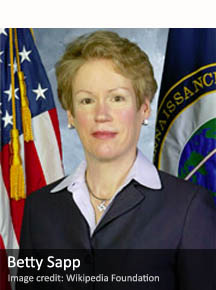
►►First woman tapped to lead US spy satellite agency. For the first time in its storied history, the secretive builder and operator of America’s spy satellites, the National Reconnaissance Office, will be run by a woman. Betty Sapp, currently principal deputy director at the spysat agency, will move up one slot and replace NRO Director Bruce Carlson, who many credit with turning around the agency’s problem-plagued acquisition system. While Sapp is the first woman to lead the NRO, she is the second woman to lead one of the major intelligence agencies. Letitia “Tish” Long, director of the National Geospatial Intelligence Agency, gets to claim the honor of first woman to break that glass ceiling.

Iran offers more details on alleged Israeli sabotage ring

Israel and IranBy IAN ALLEN | intelNews.org |
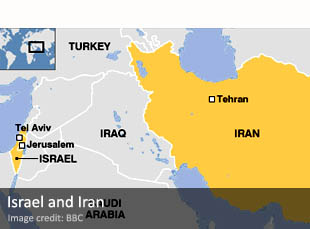
Iranian state media have released fresh details about the arrests of several members of an alleged Israeli sabotage ring, which were initially announced last week. According to the original reports from Tehran, which were notably vague, the ring was allegedly supported by Israel and its members were “plotting attacks” against Iranian government targets. The latest reports from Iran’s IRNA news agency state that the arrestees include “more than fifteen Iranian and foreign nationals […] spying for Israel” and that those arrested were involved in a complex sabotage plot orchestrated by the “Zionist regime” —a term used by Iranian government media to refer to the Jewish state. The reports claim that the group had planned to assassinate an Iranian government “specialist”, possibly a reference to employees in the Islamic Republic’s nuclear program. Moreover, Iranian state prosecutors allege that the planned assassination had been scheduled for last February 10, but was preempted by the planners’ arrests. The date suggests that the arrests were conducted over two months ago. If the February 10 date is accurate, it would also signify that the alleged assassination had been planned for the day before the 33rd anniversary of the 1979 Islamic Revolution, which commemorates the day when the regime of Iran’s Shah collapsed and power was transferred to the hands of the revolutionaries led by Ayatollah Khomeini. Read more of this post

News you may have missed #716 (analysis edition)

Mordechai VanunuBy IAN ALLEN | intelNews.org |
►►Kabul attacks show intel failures in Afghanistan. Dozens, possibly hundreds of people would have been involved in training, equipping and then infiltrating into the heart of Kabul the large number of insurgents who were prepared to fight to a certain death in the Afghan capital last Sunday. Yet neither Afghan nor foreign intelligence operatives appeared to have any idea that an unprecedented wave of attacks was about to engulf both Kabul and several other key locations around the country. So it seems that Afghan President Hamid Karzai may have a point when he says that the “infiltration in Kabul and other provinces is an intelligence failure for us and especially for NATO and should be seriously investigated”.
►►Report claims China spies on US space technology. China is stealing US military and civilian space technology in an effort to disrupt US access to intelligence, navigation and communications satellites, according to a report authored by the State and Defense Departments. The report (.pdf) argues China should be excluded from recommendations made to the US government to ease restrictions on exports of communications and remote-sensing satellites and equipment. Chinese officials have denied the report’s allegations, calling it a “Cold War ghost”.
►►The long and sordid history of sex and espionage. Using seduction to extract valuable information is as old as the Old Testament —literally— Whether from conviction or for profit, women —and men— have traded sex for secrets for centuries. The Cold War provided plenty of opportunities for so-called “honey-pot” scandals. Perhaps the most dramatic case of seduction in recent times involved Israeli nuclear technician Mordechai Vanunu. In 1986 he visited London and provided The Sunday Times with dozens of photographs of Israel’s alleged nuclear weapons program. But Mossad was on his trail and a female agent —Cheryl Ben Tov— befriended him (reportedly bumping into him at a cigarette kiosk in London’s Leicester Square). She lured him to Rome for a weekend, where he was drugged and spirited to Israel.

News you may have missed #715 (Israel edition)

Dan MeridorBy IAN ALLEN | intelNews.org |
►►Israeli Deputy PM says “attack on Iran won’t help us”. In this interview conducted at Israel’s embassy in London, the country’s Deputy Prime Minister and Minister of Intelligence and Atomic Energy, Dan Meridor, says that “an attack on Iran wouldn’t add anything to [Israel’s] security”. He adds that “it’s possible that we have to use force”. But, he notes, “I don’t think Israel should use the military option. I don’t agree with some of my colleagues who support a military strike”. Compare that with the last time he spoke about this issue.
►►Analysis: Beware of faulty intelligence on Iran. The experienced Israeli intelligence correspondent Ronen Bergman argues that the decision to attack Israeli militarily “will be driven to an extraordinary extent by intelligence reports” produced by Washington and Tel Aviv. For this reason, he argues, “even a slight intelligence gaffe could have an outcome of historic proportions”. Furthermore, he calls on America and Israel not to rely on “scraps of information […] as the basis for action against Iran”, insisting that “a miscalculation could be the worst possible outcome”.
►►Israeli spy Pollard back in prison after hospitalization. Israeli President Shimon Peres sent a letter to United States President Barack Obama last week urging him to consider granting clemency to convicted spy Jonathan Pollard based on his ill health. The White House rejected the appeal and now Pollard, who was convicted in 1987 for selling classified US government information to Israel, is back in prison.

News you may have missed #714

Tjostolv Moland and Joshua FrenchBy IAN ALLEN | intelNews.org |
►►British PM urged to intervene in Congo spy case. The mother of Joshua French, who has dual British and Norwegian nationality, and is facing execution in the Democratic Republic of Congo, has urged British Prime Minister David Cameron to ask Congolese authorities to pardon him. French, and his Norwegian friend Tjostolv Moland, were sentenced to death for murder and spying in the vast central African country in 2009. A prison official claimed in August last year that the pair had tried to escape, but their lawyer denies this.
►►Computers of Syrian activists infected with Trojan. Since the beginning of the year, pro-Syrian-government hackers have steadily escalated the frequency and sophistication of their attacks on Syrian opposition activists. Many of these attacks are carried out through Trojans, which covertly install spying software onto infected computers, as well as phishing attacks which steal YouTube and Facebook login credentials. According to the Electronic Frontier Foundation, the latest surveillance malware comes in the form of an extracting file which is made to look like a PDF if users have their file extensions turned off. The PDF purports to be a document concerning the formation of the leadership council of the Syrian revolution and is delivered via Skype message from a known friend.
►►Report claims Australian government spied on anti-coal activists. The leader of the Australian Greens, Bob Brown, says he is outraged at reports that the Australian Security Intelligence Organisation (ASIO) is spying on mining protesters, and says such action is a misuse of the spy agency’s resources. The revelations were reported in Australian newspapers yesterday, and are based on a Freedom of Information request to the Department of Resources, Energy and Tourism that was reportedly rejected because it involved “an intelligence agency document”. The ASIO says it cannot confirm whether it has conducted surveillance of anti-coal protesters, but it says it does not target particular groups or individuals unless there is a security-related reason to do so.

Denmark university professor faces charges of spying for Russia

Timo KivimäkiBy JOSEPH FITSANAKIS | intelNews.org |
Authorities in Denmark have charged a university professor with assisting “foreign intelligence operatives”, believed to be Russian. Professor Timo Kivimäki, a conflict resolution expert, who teaches international politics at the University of Copenhagen, is accused of “providing or attempting to provide” information to four Russian government officials on several documented instances between 2005 and 2010. The indictment claims Kivimäki, who was born in Finland, intended to give the Russians “information relating to individuals and subjects connected with intelligence activities”. The charges were filed after a lengthy investigation, launched in 2009 by the Danish Security and Intelligence Service (PET) in cooperation with Finland’s Security Intelligence Service (SUPO). The university professor spoke to leading Finnish newspaper Helsingin Sanomat and admitted that he carried out contractual “consulting work” for the Ministry of Foreign Affairs of the Russian Federation, for six years. He said he was paid approximately €16,000 (US$20,000) for his services, but denied that he knowingly contacted Russian intelligence operatives in the course of his consulting duties. According to Kivimäki, the Russian officials he interacted with appeared to be “diplomats, not spies”. He also pointed to the fact that none of the Russian officials he worked with as a consultant were apprehended or expelled by Danish counterintelligence, as is customary in such cases. Despite its relatively small size, Denmark had its share of international intelligence activity during the Cold War. During that period, PET amassed detailed files on approximately 300,000 Danish citizens considered to be “leftist sympathizers”. More recently, in November of 2010, media reports from Denmark suggested that the US embassy in Copenhagen maintained a network of local former police and intelligence officers, who were conducting “illegal systematic surveillance of Danish citizens”. Read more of this post