News you may have missed #800

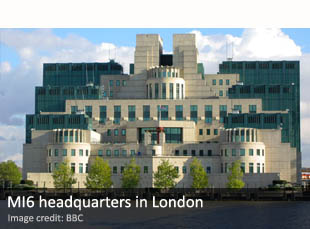
MI6 headquartersBy IAN ALLEN | intelNews.org |
►►British MI6 spy agency feeling shaken not stirred. Analysis on Salon.com about the current state of MI6, Britain’s external intelligence agency, featuring comments by intelNews‘ own Joseph Fitsanakis. The article, written by former CNN and BBC correspondent Barry Neild, argues that MI6 is feeling the heat caused by a series of recent allegations which threaten to disrupt its clandestine operations. The agency, he suggests, is thus undergoing one of the most troubling periods of its hundred-year existence.
►►Germany charges couple with spying for Russia. German government prosecutors say the couple, who called themselves Andreas and Heidrun Anschlag, worked in Germany for Russia’s foreign intelligence service for more than 20 years, gathering information on European Union and NATO strategy. The pair entered Germany in 1988 and 1990, claiming to be Austrian citizens of South American origin. They were arrested in October 2011. German media said it is the first such case in Germany since the end of the Cold War.
►►US allegedly widens covert operations in North Africa. The Associated Press quotes “three US counterterror[ism] officials and a former intelligence official” as saying that the United States is in the process of building “a new military task force” in the North African region. But by the time the US consulate in the east Libyan city of Benghazi was attacked last month, the new task force consisted only of “liaison officers who were assigned to establish relationships with local governments and US officials in the region”.

Belgium suspends senior diplomat on suspicion of spying for Russia

Belgian embassy in CopenhagenBy JOSEPH FITSANAKIS | intelNews.org |
The Belgian government has admitted suspending one of its senior diplomats following allegations in the press that he had spied for the Soviet Union and Russia for over two decades. According to Flemish-language Belgian magazine MO, the diplomat, identified only as “O.G.”, has been “suspended in the interest of the [Belgian diplomatic] service” and is currently under investigation by the Office of the Federal Prosecutor. Citing “sources in the Belgian State Security Service”, the SV/SE, the article said the subject was stationed at the Belgian embassy in Danish capital Copenhagen when he was recalled to Brussels late last year. The man is said to have spent nearly three decades as an employee of the Belgian Ministry of Foreign Affairs, having served in several Belgian embassies and consulates in Japan, India, Algeria, Nigeria, Portugal, and the United States, prior to arriving in Denmark. However, according to the MO article, he was accosted by the Soviet KGB in the late 1980s, shortly after he arrived at the Belgian embassy in Tokyo, Japan, for his first-ever diplomatic posting. Since that time, said the magazine, “O.G.” has spied for the KGB and its successor, the SVR, having stayed in contact with “several different Russian handlers”. Prior to 2011, when he ceased contact with Russian intelligence, the Belgian diplomat was allegedly tasked with providing the FSB with information that could be used to concoct false identities belonging to deceased Belgian citizens. The Russians would then use these identities to supply their intelligence operatives with high-quality Belgian identity papers and travel documentation. Late last week, another Belgian publication, The EU Observer, contacted the Belgian Foreign Ministry to inquire about “O.G.”. A Ministry spokesperson told the paper: “we can confirm that an official from our ministry was suspended from his functions a bit over one year ago, following indications of a security breach”. Read more of this post

Russian court upholds 15-year prison sentence for alleged CIA spy

Igor SutyaginBy JOSEPH FITSANAKIS | intelNews.org |
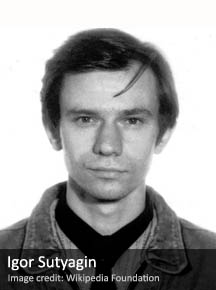
Russia’s highest court has upheld a lengthy prison sentence given to a Russian arms control and nuclear weapons expert, who Moscow alleges was a spy for the United States. The Russian government accuses Igor Sutyagin of collaborating with Alternative Futures, a British-registered consulting company alleged by Moscow to be a front for the United States Central Intelligence Agency. Before his 1999 arrest, Sutyagin was Division Chairman on the Russian Academy of Sciences’ USA and Canada Institute. His indictment, prepared by the Russian Federal Security Service, said that he shared with the CIA “classified technical information” about nuclear submarine technology. Sutyagin maintained his innocence throughout his trial, and Human Rights Watch as well as Amnesty International classified him as a political prisoner. The two groups brought the accused spy’s case before the European Court of Human Rights, which ruled that Russian government prosecutors had violated Sutyagin’s right to a fair trial. Moreover, the Court ruled that Sutyagin’s pre-trial detention, which lasted five years, was illegal. Eventually, Moscow complied with the Court’s ruling and a retrial was ordered, to the delight of Sutyagin’s family. In the retrial, which ended last week, Russia’s Supreme Court agreed with the European Court of Human Rights that Sutyagin’s pre-trial detention had been unlawful; but the court upheld Sutyagin’s 15-yeard sentenced as “entirely legitimate”. Sutyagin was tried in absentia, however, because in the summer of 2010 he was released and fled to the West, as part of the largest postwar spy-exchange between Russia and United States. Sutyagin was one of four men behind bars in Russia, who were swapped for 10 Russian non-official-cover intelligence operatives that had been arrested in a sting operation by the Federal Bureau of Investigation. Read more of this post

News you may have missed #796

Richard FaddenBy IAN ALLEN | intelNews.org |
►►Iranian spy scandal sparks outrage in Turkey. After a nearly yearlong investigation into an alleged Iranian spy ring in Turkey, seven people were charged in early September with “providing information related to state security and establishing an [illegal] organization”. The charges against five Turkish citizens and two Iranian nationals followed a raid on the suspects’ residences and workplaces on August 29, in which videos and pictures of border security, documents, correspondence with Iranian intelligence and weapons were found, according to the investigation materials. Tehran denied any connections to those arrested, while officials in Ankara revealed more alleged evidence showing that Iran is providing support to the PKK.
►►British SIGINT agency ‘helps US drone attacks’. Britain’s former Director of Public Prosecutions, Lord Macdonald, has said there is “pretty compelling” evidence that the British government’s signals intelligence agency, GCHQ, is passing information to the United States to help it locate targets for controversial drone attacks in Pakistan. Earlier this year David Anderson, the British state’s independent reviewer of terrorism-related legislation, warned that the British government faced “a raft of civil cases” over possible complicity in the CIA drone attacks.
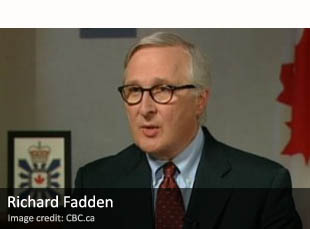
►►Canada’s top spy dismisses call for human rights scrutiny. In a newly declassified memo, CSIS director Richard Fadden appears to dismiss the Canadian Human Rights Commission’s recommendation that national security agencies do more to ensure they are not taking part in racial profiling or other objectionable practices. “I am confident in the service’s existing human rights policies and procedures, as well as our accountability and review structures”, Fadden says in the January 2012 memo, which is addressed to Canada’s Public Safety Minister Vic Toews. The memo —initially classified secret— was discovered by Mike Larsen, a criminology instructor in British Columbia, who obtained it under the Access to Information Act.

News you may have missed #791

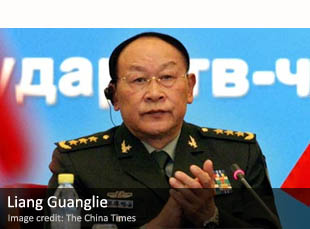
Liang GuanglieBy IAN ALLEN | intelNews.org |
►►India sees espionage behind Chinese cash payments to Indian pilots. According to Indian government sources, Chinese Defense Minister General Liang Guanglie gave two envelopes to the two Indian pilots, both wing commanders, who had flown him in a special Indian Air Force aircraft to New Delhi from Mumbai. After seeing off Liang, the pilots opened the sealed envelopes and found cash gifts inside. They immediately reported this to their superiors, who, in turn, informed the Indian Defense Ministry. India is now planning to lodge a protest with China over the incident.
►►NSA says foreign cyberattacks increasingly reckless. Debora Plunkett, of the secretive National Security Agency, whose responsibilities include protecting US government computer networks, has said that other nations are increasingly employing cyberattacks without “any sense of restraint”, citing “reckless” behaviors that neither the United States nor the Soviet Union would have dared at the height of Cold War tensions. She also predicted that Congress would pass long-stalled cybersecurity legislation within the next year. One wonders whether the Stuxnet incident is included in such “reckless” cyberattacks?
►►Taliban ‘using Facebook to lure Australian soldiers’. According to a review of social media by the Australian federal government, Australian soldiers are being warned by their commanders that enemies are creating fake Facebook profiles to spy on them. The report says that Taliban insurgents in Afghanistan are posing as “attractive women” on Facebook to befriend coalition soldiers and gather intelligence about operations. It adds that family and friends of soldiers are inadvertently jeopardizing missions by sharing confidential information online. This is not the first such warning in recent years.

News you may have missed #788

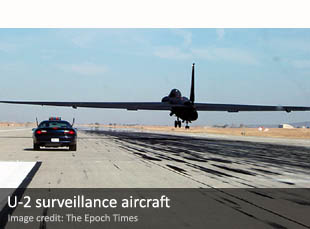
U-2 surveillance aircraftBy IAN ALLEN | intelNews.org |
►►US spy planes violated Israeli airspace in 1950s. American U-2 espionage planes repeatedly entered Israeli airspace in the 1950s for a series of secret spy missions, according to new information to be published by the Israel Air Force magazine next week, bringing to an end a decades-long mystery. At the time, Israel’s defense establishment was baffled by the entrance of high-flying crafts. For years, officials in IAF command disagreed on the identity of the mystery crafts, with some claiming that they were British Vickers-Valiants, and others saying they were American Vought F-8 Crusader planes, that had been stationed on a US aircraft carrier. According to documents to be published next week, it was the USSR that aided Israeli officials to expose the identity of the mystery planes, after a US U-2 espionage plane was shot down over Soviet soil.
►►US guard pleads guilty to espionage. A civilian guard at a new US consulate in China pleaded guilty on Thursday to attempting to sell Chinese security officials photographs and access to the compound so they could plant listening devices. According to a court proffer, Bryan Underwood had lost a significant amount of money in the stock market and hoped to make between $3 million and $5 million by supplying classified photos and information to China’s Ministry of State Security. Underwood, 32, appeared in federal court in Washington and pleaded guilty to one count of attempting to communicate national defense information to a foreign government.
►►CIA torture probe ends without any charges. The US Department of Justice has ended its investigation into the CIA’s interrogation program for terror detainees, without bringing charges. Attorney General Eric Holder said there was not enough evidence to “sustain a conviction beyond a reasonable doubt”. Jameel Jaffer, deputy legal director of the American Civil Liberties Union, said the investigation’s conclusions were a “nothing short of a scandal”. But CIA officials welcomed the decision. CIA Director David Petraeus thanked his staff for co-operating with the investigation. “As intelligence officers, our inclination is to look ahead to the challenges of the future rather than backwards at those of the past”, he said. No surprises here, surely.

News you may have missed #784

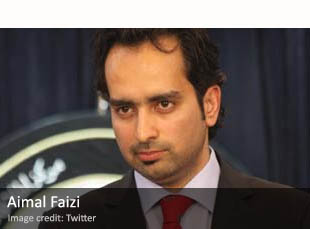
Aimal FaiziBy IAN ALLEN | intelNews.org |
►►US agencies still not sharing intelligence. Nearly half of US federal agencies are not sharing documented incidents of potential terrorist activity with US intelligence centers, according to officials in the Office of the Director of National Intelligence. Federal and police officials are supposed to deposit reports of suspicious behavior through a system known as the Nationwide Suspicious Activity Reporting Initiative (NSARI). It is a virtualized inventory of tips that can be reached by federal, state or local government authorities. But progress in connecting local agencies to fusion centers through the NSARI appears to be slow-going. Almost exactly a year ago, a similar report by the US Congressional Research Service found that US intelligence agencies were still struggling to strengthen their information-sharing networks.
►►Russian spies ‘top priority’ for Czech intelligence. A new report by the Czech Security Information Service (BIS) says that Russian intelligence services are the most active foreign espionage organizations in the Czech Republic. The report, published last Wednesday, states that Russian spies work under different covers, mainly at Russian diplomatic missions, and in numbers that are utterly unjustified, given the current status of Czech-Russian relations. “Russian intelligence officers were spotted at different public and corporate events, where they tried to resume old contacts and meet new people”, the report said. It is worth noting that the BIS report devoted nine paragraphs to Russian espionage and only one to Chinese. Chinese intelligence officers “do not pose an immediate risk to Czech citizens”, the report said.
►►Afghanistan blames ‘foreign spies’ for insider attacks. Some of Afghan President Hamid Karzai’s top advisers said this week that the recent rise in insider attacks on NATO troops is the product of foreign spy agencies infiltrating Afghanistan’s security forces. They said that Afghanistan’s National Security Council has concluded that both Pakistani and Iranian intelligence organizations are recruiting young Afghans to enlist in the army and police with the intention of targeting Western service members. The officials suggested that the ultimate aim of the alleged efforts by foreign agencies is to destabilize Afghanistan’s forces. One of the Afghan government’s spokesmen, Aymal Faizi (pictured), said that the allegations from Kabul rested on classified evidence from “documents, telephone calls, pictures and audio that show direct contact between these individuals and foreign spy agencies”.

News you may have missed #775

Ramstein Air Base, GermanyBy IAN ALLEN | intelNews.org |
►►Israel arrests man for allegedly spying for Syria. Israeli prosecutors have charged Iyad Jamil Assad al-Johari, a Druze resident of the occupied Golan Heights, with spying for Syria. The Shin Bet internal security service said in a statement that Johari, who is from the border village of Majdal Shams, was charged with “having contact with a foreign agent” and “passing information to the enemy”. The Shin Bet said Johari was arrested last month “on suspicion of maintaining contact with Syrian intelligence and passed information on Israeli army deployment on the Golan Heights”. The man’s family has denied the accusations.
►►German NATO employee charged with spying. Markus Koehler, a spokesman for German federal prosecutors, said in a statement that the suspect –identified only as Manfred K. in accordance with German privacy rules– was arrested Monday on charges of obtaining state secrets with the intent to provide them to an unidentified third party. The civilian NATO employee, who works at the US air base at Ramstein, is alleged to have obtained the data and then transferred it to his private computer.
►►Aussie spy agency looking for locksmith. In a new notice on its careers webpage, ASIS, Australia’s foreign intelligence agency, is looking for a “corporate locksmith”. “This is a unique role for a highly motivated and dedicated locksmith to provide complex locksmith services and advice across our organisation”, the notice states. “The position involves interstate and overseas travel, often at short notice”. The job notice says the successful applicant would have to manage the purchasing of all locks, safes and other secure containers for the service.

News you may have missed #774 (lawsuit edition)

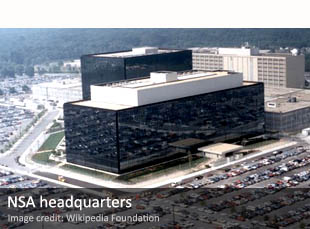
NSA headquartersBy IAN ALLEN | intelNews.org |
►►NSA whistleblower sues over property seized in leak raid. Diane Roark, a former staffer for the US House of Representatives Permanent Select Committee on Intelligence, has filed a lawsuit to seek return of computers, electronic devices and papers seized from her home in 2007. Roark, who handled the House’s oversight of the National Security Agency from 1997 to 2002, was suspected by the FBI of being a source for The New York Times‘ disclosure of the NSA’s warrantless wiretapping program STELLAR WIND, which she denies.
►►Lawsuit forces US agency to disclose CIA files. The US Veterans Administration has been ordered to disclose documents relating to the CIA’s Cold War-era experimentation on American soldiers. Beginning in the 1950s, the military and CIA utilized former Nazi scientists to test the effects of 400 types of drugs and chemicals, including mescaline, LSD, amphetamines, mustard gas, and nerve agents, on US soldiers, according to a lawsuit brought by the Vietnam Veterans of America and individual soldiers. Under the lawsuit, a judge in California has ruled the VA must hand over documents pertaining to the use of at least 7,800 service personnel as “human guinea pigs” by the US Army and the CIA.
►►Syrian spy tried to infiltrate German intelligence. A suspected Syrian spy who was arrested in Germany earlier this year and has now been charged with espionage, once tried to infiltrate the country’s intelligence services, according to German officials. The man, identified only as Akram O., was employed by Syria’s embassy in Berlin, and tasked with keeping tabs on Syrian opposition activists living in Germany. His application to work for the German federal government was made “at the behest of his intelligence agency handlers”, according to prosecutors. His application was turned down, however. The Syrian national applied for German citizenship in 2009, which was also denied.

News you may have missed #772

Israeli team at the 1972 Munich OlympicsBy TIMOTHY W. COLEMAN | intelNews.org |
►►India restricts agency-to-agency contacts with CIA. According to The Deccan Herald, Indian intelligence officials are growing increasingly wary of the frequent interactions between their own intelligence personnel and the CIA. Cooperation between the US intelligence organizations and Indian government agencies has been increasing under the guise of counter-terrorism efforts. Calcutta News reports that a book published by author Prem Mahadevan, called The Politics of Counterterrorism in India, identifies at least two CIA penetrations of Indian intelligence officials since 2001.
►►Canadian spy revealed classified information in “massive leak”. As was previously reported on this blog, former Sub-Lieutenant Jeffrey Paul Delisle, a navy intelligence officer, is accused of spying for Russia. According to The New Zealand Herald, the accused Canadian spy provided the Russian government with classified information on the US, Britain, Canada, New Zealand and Australia in what is being termed a “massive leak”.
►►Germany had advance warning of 1972 Olympics massacre. Israel-based English-language newspaper The Jerusalem Post is reporting that an article in the German newsmagazine Der Spiegel, stated Germany had advance warning about a potential terrorist attack on Israeli athletes at the 1972 Olympic games. Previously classified documents accessed by Der Spiegel show that not only were there indications of a terror plot, but that there were explicit warnings and details. Perhaps more damaging are the lengths and extremes that German intelligence officials went to in order to cover up blatant mistakes in the case.

US-based Russian illegals ‘groomed children to be spies’

Yelena Vavilova and Andrey BezrukovBy JOSEPH FITSANAKIS | intelNews.org |
A group of Russian non-official-cover operatives, who were arrested in the United States by the Federal Bureau of Investigation in 2010, were grooming some of their children to become spies, according to insider accounts. Nearly a dozen covert members of the Russian Foreign Intelligence Service (SVR), one of the successor agencies of the Cold-War-era KGB, were detained on June 26, 2010, in a series of coordinated raids by the FBI, which marked the culmination of a lengthy counterintelligence operation against the deep-cover operatives. None of those arrested were associated with the diplomatic representation of the Russian Federation in the US; eight were married couples and all were using fake identities. But media coverage of the case, which centered overwhelmingly on the glamorous looks of one of the arrestees, Anna Chapman, paid little attention to the seven children belonging to the captured Russian operatives, whose ages ranged from 1 to 20 years at the time of their parents’ arrests. In an article published late last week, The Wall Street Journal reported that some of the SVR operatives were actively grooming their children to follow in their footsteps as unregistered agents of the Russian government in the US. The paper based its claims on discussions “with current and former US officials”, who allegedly had access to surveillance data from the FBI’s investigation against the Russians. According to the unnamed officials, the SVR operatives had secured the cooperation of at least one of the children, Tim Foley, whose parents operated in the US for over a decade under the assumed names of Donald Heathfield and Tracey Foley. The couple (real names: Andrey Bezrukov, Elena or Yelena Vavilova) had allegedly revealed their secret mission to their son “well before their arrest” in 2010, and had indicated that “they wanted him to follow in their footsteps”. According to the FBI surveillance records, says The Journal, Tim had agreed and offered to travel to Russia “to begin formal espionage training”. He eventually traveled to the land of his birth at least once following the alleged arrangement with his parents. Read more of this post

Canadian spy compromised Australian, British intelligence

Jeffrey Paul DelisleBy JOSEPH FITSANAKIS | intelNews.org |
Most regular readers of this blog are undoubtedly familiar with the case of Jeffrey Paul Delisle, a Sub-Lieutenant in the Royal Canadian Navy, who until recently was employed at Canada’s ultra-secure TRINITY communications center in Halifax. Delisle was arrested in January on suspicion of passing information gathered from radio and radar signal interceptions to a foreign power, most likely Russia. Back in May, when it was disclosed that the United States helped Canadian counterintelligence investigators build their case against Delisle, we warned that “a far more important subject concerns the degree in which [Delisle’s] penetration has affected Canada’s intelligence-sharing relationship with its […] partners”. Now a new report in The Sydney Morning Herald reveals that Delisle’s espionage activities compromised Australian secrets that had been shared with Canada under longstanding intelligence cooperation arrangements. Citing “Australian security sources”, the paper said that the Delisle case “has sent shock waves through Western security agencies” due to the volume of compromised information. The Herald claims that the stolen intelligence is “on a scale comparable to the alleged handover to WikiLeaks of US military and diplomatic reports by US Army private Bradley Manning”. An unnamed “Australian security source” told the paper that Delisle’s access to classified information was “apparently very wide” and that Australian intercepts were “inevitably compromised”. Read more of this post

News you may have missed #767

Omar SuleimanBy IAN ALLEN | intelNews.org |
►►Aussie spy chief warns of ‘digital footprints’. For the first time in the 60-year history of the Australian Secret Intelligence Service (ASIS), Australia’s main external spy agency, its Director has spoken publicly. Nick Warner used this unprecedented opportunity to reflect on where ASIS has come in the last 60 years, and the challenges it faces into the future. Among them, he said, are “developments in the cyber-realm”, which “are a two-edged sword for an agency like ASIS; they offer new ways of collecting new information, but the digital fingerprints and footprints which we all now leave behind complicate the task of operating covertly”.
►►India arrests alleged Pakistani spy. Indian authorities have announced the arrest of Zubair Khan, 37, of Uttar Pradesh, who was allegedly caught with several Indian Army documents in his possession. He had been reportedly asked to gather information on Air India pilots, military bases in the country, journalists who frequently visit Pakistan, and relatives of officials working in the Indian High Commission in Pakistan. Maps of cantonment boards and details of many battalions have been recovered from him, according to Indian media reports. Investigators are also said to have identified one of Khan’s handlers, a man named “Talib”, who works at Pakistan’s High Commission in New Delhi.
►►Egypt spies try to repair image as ex-Director dies. Egypt’s top spy agency, the General Intelligence Service —known as the “Mukhabarat” in Arabic— is taking a small but unprecedented step out of the shadows, in an apparent attempt to win the public’s support in the new Egypt. In an unusual move, the agency released a 41-minute-long documentary boasting of its achievements, presenting itself as the defender of the nation and vowing to continue to protect the country. The effort comes as the Mukhabarat’s former Director, the notorious Omar Suleiman, has died in the United States.

News you may have missed #766 (Arab world edition)

David SheddBy IAN ALLEN | intelNews.org |
►►Yemen busts alleged Iranian spy ring. Yemeni president Abd-Rabbu Mansour Hadi called on Tehran to stay out of Yemen’s internal affairs last week, after security officials in Sana’a, Yemen’s capital, announced they had uncovered an Iranian spy ring there. Yemen’s government-run SABA news agency said the spy cell, which was allegedly led by a former commander of Iran’s Islamic Revolutionary Guard corps, had operated in Yemen as well as in the Horn of Africa,  and that it had kept an operations center in Sana’a. An interior ministry official said all those detained were Yemenis.
►►CIA sued for killing US citizens in Yemen. Survivors of three Americans killed by targeted drone attacks in Yemen last year have sued top-ranking members of the United States government, alleging they illegally killed the three, including a 16 year-old boy, in violation of international human rights law and the US Constitution. The suit (.pdf), the first of its kind, alleges the United States was not engaged in an armed conflict with or within Yemen, prohibiting the use of lethal force unless “at the time it is applied, lethal force is a last resort to protect against a concrete, specific, and imminent threat of death or serious physical injury”. The case directly challenges the government’s decision to kill Americans without judicial scrutiny.
►►US intel official acknowledges missed Arab Spring signs. David Shedd, deputy director of the US Defense Intelligence Agency, the Pentagon’s intelligence arm, said analysts failed to note signs of the unrest across the Middle East and North Africa that exploded into the Arab Spring. Shedd’s comments were posted Thursday by the American Forces Press Service, a Pentagon information wire. They constitute a rare public acknowledgment of the US intelligence failure regarding the turmoil that has redrawn the Middle East’s political landscape, toppling autocratic rulers in Tunisia, Egypt, Yemen and Libya and now engulfing Syria.

News you may have missed #763

RedHack posterBy IAN ALLEN | intelNews.org |
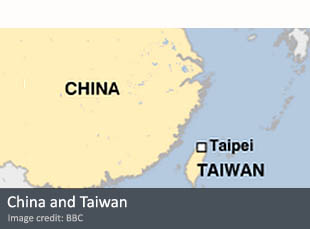
►►Taiwan ex-colonel nabbed for spying for China. Cheng Lin-feng, a retired Lieutenant Colonel in the Taiwanese army, and civilian Tsai Teng-han, were taken in by Taiwanese police last week on suspicion of spying for China. Cheng was allegedly recruited by Chinese intelligence when he travelled to the mainland to do business, Taiwan’s Ministry of National Defense said in a statement, adding that he had been investigated ever since a tip-off in 2009. A court spokesman said that details of case will be held until the investigation is completed.
Russian law brands foreign-funded NGOs ‘foreign agents’. Russia’s Lower House of Parliament has approved a bill that brands non-governmental organizations receiving funding from abroad as “foreign agents”, a law that activists fear the Kremlin will use to target critics. The bill is almost certain to be approved by the Upper House before being signed into law by President Vladimir Putin, who last year accused the US State Department of funding protests against him. The bill is seen by many analysts as setting up a legal infrastructure for a crackdown on the opposition. Meanwhile, official statistics show that wiretapping in the Russian Federation has nearly doubled over the past five years. The main driver of the rise, analysts say, involves the myriad of Russia’s rival security services spying on each other.
►►Turkish hackers release names of police informants. Members of Turkey’s Marxist cyberactivist group RedHack have dumped online a 75-megabyte text file with thousands of emails from Turkish police informants. The group said it released the information in retaliation against ultra-nationalist hackers who have been threatening opposition academics and journalists. RedHack, which has been using ‘defacement hacking’ to promote a Marxist political agenda since its founding, in 1997, is included on the Turkish government’s list of terrorist organizations. In March of this year, RedHack stole data from the Turkish police’s network, forcing the police to shut down all its servers.