Biden stopped Obama from granting clemency to Israel spy

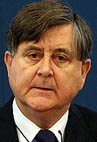
Joe Biden

Joe Biden

By JOSEPH FITSANAKIS | intelNews.org |
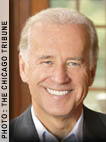
The President of the United States considered clemency for an American Navy analyst who spied on the US for Israel, but was stopped by his Vice President, Joe Biden, according to a report in The New York Times. The report claims that Barack Obama gave in to concerted pressure from the Israeli government and members of the pro-Israel lobby in the US, and proposed that Jonathan Pollard, who was jailed for life in 1986 for handing over classified US government documents to Israeli spies, be released. But Joe Biden rejected Obama’s proposal, reportedly telling the President that “over my dead body are we going to let [Pollard] out before his time”. The information appears to have come from Joe Biden himself, who revealed it during a recent meeting with rabbis in Boca Raton, Florida. The Times reports that, “according to several people at the meeting”, Biden was asked by one of the rabbis why it was that Pollard remained in prison, despite a lengthy campaign in Israel to have him released, or transferred to an Israeli jail. Biden responded that Obama had proposed releasing Pollard, but his suggestion never reached the heads of America’s intelligence community, because it was blocked by Biden himself. The Vice President said he told Obama that, if it were up to him, Pollard “would stay in jail for life”. The Times article does not relay the reaction to Biden’s forceful answer at the meeting; but the paper states that Biden appears to be on a mission to improve Obama’s image with Jewish voters in the United States. Although Jewish Americans traditionally tend to vote for the Democratic Party, they are currently being aggressively courted by the Republicans, worrying some Democratic electoral strategists. By answering the way he did in response to the question about Pollard, Biden “took a punch meant for his boss”, argues the paper. Read more of this post

News you may have missed #600 (China edition)

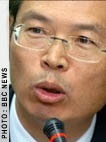
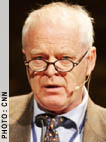
Lo Hsien-che

Lo Hsien-che

►►Chinese spy stirs unease in Taiwan military. Excellent, well-researched piece by The Washington Post about Lo Hsien-che, a Major General in the Taiwanese military, who earlier this year was convicted in what has been described as Taiwan’s biggest spy scandal in over 50 years. Lo appears to have fallen victim to a carefully planned Chinese honey-trap operation, involving a “tall, beautiful and chic” Chinese female operative, who held an Australian passport.
►►US consulate guard accused of trying to spy for China. Bryan Underwood, a former contract security guard at a US consulate under construction in southern China’s largest city, Guangzhou, was charged Wednesday with trying to pass defense secrets about the site to Chinese intelligence officials. Scheduled for completion next year, the consulate is the only one under construction in the world’s most populous nation.
►►Taiwan professor detained for spying for China. Wu Chang-yu, of Taiwan’s Central Police University, was detained Friday for allegedly providing data on visiting Chinese activists to Beijing. Taiwan’s United Daily News quoted unidentified sources as saying Wu was recruited during a recent visit to China.

Spy archivist discusses fate of Swedish diplomat abducted by KGB

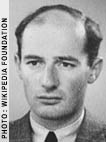
Raoul Wallenberg

Raoul Wallenberg

By JOSEPH FITSANAKIS | intelNews.org |
The fate of Swedish diplomat Raoul Wallenberg, who was abducted by Soviet intelligence officers in the closing stages of World War II, is one of the unsolved mysteries of 20th century espionage. The 33-year-old Wallenberg was a shrewd businessman who, in the summer of 1944, was posted as Sweden’s ambassador in Budapest, Hungary. During his time in Budapest, he was able to save over 20,000 Hungarian Jews from the Nazi concentration camps, by supplying them with Swedish travel documentation, or smuggling them out of the country through a network of safe houses. He is also reported to have managed to dissuade German military commanders from launching an all-out attack on Budapest’s Jewish ghetto. But Wallenberg was also an American intelligence asset, having been recruited by a US spy operating out of the War Refugee Board, an American government outfit with offices throughout Eastern Europe. In January of 1945, as Soviet forces descended on Axis ally Hungary, Moscow gave orders for Wallenberg’s arrest on charges of spying for Washington. The Swedish diplomat disappeared, never to be seen in public again. Some historians speculate that Joseph Stalin initially intended to exchange Wallenberg for a number of Soviet diplomats and intelligence officers who had defected to Sweden. But according to official Soviet government reports, Wallenberg died of a heart attack on July 17, 1947, while being interrogated at the Lubyanka, a KGB-affiliated prison complex in downtown Moscow. Despite the claims of the official Soviet record, historians have cited periodic reports that Wallenberg may have managed to survive in the Soviet concentration camp system until as late as the 1980s. Earlier this week, Lt. Gen. Vasily Khristoforov, Chief Archivist for the Russian Federal Security Service (FSB), one of two successor agencies to the old Soviet KGB, gave an interview about Wallenberg to the Associated Press. Read more of this post

More Arabs want to work for Mossad, says Israeli Foreign Ministry

Ahmed Jamal Daif

Ahmed Jamal Daif

By JOSEPH FITSANAKIS | intelNews.org |
The unprecedented political changes in the Arab world have generated a flurry of electronic correspondence between young Arabs and the Israeli government, according to Israel’s Ministry of Foreign Affairs. Israeli officials say that the lifting of Internet restrictions in much of the Arab world has allowed young people to access the Israeli government’s Arabic-language websites and social networking sites. This has facilitated “thousands of messages […] with words of praise, requests for asylum […], and even offers [by young Arabs] to serve in the [Israel Defense Forces] and Mossad”. In a carefully coordinated public relations campaign, the Ministry voluntarily released on Monday some anonymous messages —allegedly from Arabs and Iranians— to Israel’s Yedioth Ahronoth newspaper, which leans politically toward Israel’s center-right Kadima party. In one message, an Iraqi computer technician wrote to request political asylum, adding that Israel is the Middle East’s “only country that respects personal freedom”. In another released message, an Iranian Muslim expressed the will to resettle in Israel, because its population is “the strongest and most cultured in the region”. The story in Yedioth Ahronoth includes comments by the Israeli Foreign Ministry spokesman Paul Hirschson, who argues that the flood of electronic correspondence from the Muslim world “is illustrative of the fact that across the Middle East there are people who hold Israel in far higher regard than is presumed”. Hirschson added that some of the electronic messages have come from “from Arab politicians and officials”. Read more of this post

US spy Pollard tried to spy for Australia before spying for Israel

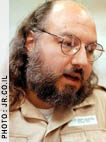
Jonathan Pollard

Jonathan Pollard

By JOSEPH FITSANAKIS | intelNews.org |
Lobbyists campaigning for the release of jailed spy Jonathan Pollard portray him as a genuine Jewish patriot, who risked his freedom to spy on the United States for Israel. But in her first-ever public interview, Pollard’s FBI interrogator has revealed that he also spied for South Africa and tried to spy for Australia, before working as an agent for Israel. Lydia Jechorek was the FBI agent assigned to the case of Jonathan Pollard, after the United States Navy analyst was arrested for spying against his country, by handing countless classified documents over to his Israeli handlers. She spent countless hours with Pollard, interrogating him in jails in Washington, DC, and Lewisburg, PA. On Monday, Jechorek, who has never publicly commented about her role in the Pollard case, spoke to Newsmax, after having received clearance from the FBI to do so. She told the website that, during his FBI interrogation sessions, Pollard said that, before spying for Israel, he had attempted to spy on the United States for a “friendly country”. Jechorek did not mention the “friendly country” by name. But John L. Martin, who supervised the Pollard case on behalf of the Counterespionage Division of the United States Department of Justice, told Newsmax that the “friendly country” was Australia. It appears that Pollard approached Australian officials in the United States and offered to provide them with classified US government documents. It was only after they rejected his offer that Pollard accosted Israeli intelligence officers and began spying for Tel Aviv. Read more of this post

News you may have missed #596

August Hanning

August Hanning

►►Analysis: China’s growing spy threat. Extensive and well-research analysis by Alex Newman in The Dipomat magazine. The article contains input by –among others– Charles Viar, of the Center for Intelligence Studies, Larry Wortzel, formerly of the US-China Economic and Security Review Commission, and intelNews’ own Joseph Fitsanakis.
►►Dutch court orders compensation for Indonesian massacre widows. The Dutch state is responsible for executions committed by colonial troops at an Indonesian village in 1947 and relatives of victims should be compensated, a Dutch court has ruled. Eight widows and one survivor from the town of Rawagedeh, east of Jakarta, took the Dutch state to court in 2008 to claim compensation for the execution of men and boys on December 9, 1947 by Dutch colonial troops.
►►Bush official says Germany partly responsible for Iraq War fiasco. A few weeks ago, August Hanning, the former Director of Germany’s foreign intelligence service, the BND, accused the Bush administration of consciously falsifying intelligence supplied by Germany in order to justify going to war in Iraq. Hanning’s charges related to ‘Curveball’, an Iraqi defector to Germany who supplied the CIA with false information about Iraq’s alleged weapons of mass destruction, in order to justify his political asylum. But now the American side is fighting back. Larry Wilkerson, Colin Powell’s former chief of staff has told German newspaper Die Welt that the Germans were “at least partly responsible” for the war (article in German).

News you may have missed #594

David Irvine

David Irvine

►►Egypt extends detention of alleged Israel spy. An Egyptian court has extended the detention of alleged Israeli spy Ilan Grapel by 45 days, the Egyptian Al-Ahram newspaper reported on Wednesday. Grapel was arrested in Cairo in June.
►►Australian spy chief raises cyberespionage concerns. The advent of cyberespionage is serving only to reinvigorate the craft of espionage, making such spying easier than ever, the Australian Security Intelligence Organization chief, David Irvine, has told a conference in Canberra. Espionage, which has taken a back seat to terrorism since the attacks of September 11, 2001, is alive and well, said Irvine.
►►US intel official says al-Qaeda operations could end in two years. Michael G. Vickers, the US undersecretary of defense for intelligence, said at a defense conference that if the current pace of US operations continues, “within 18 to 24 months, core al-Qaeda’s cohesion and operational capabilities could be degraded to the point that the group could fragment”. Vickers’s remark represents the first time that a senior US official has offered a time frame for achieving the collapse of the organization responsible for the 9/11 attacks.

News you may have missed #588

Thomas Hammarberg

Hammarberg

►►Thai court convicts three of spying. A Thai court on Tuesday jailed three men, a Cambodian, a Vietnamese and a local, for two years each for espionage. The trio were arrested in June in Kantharalak District, near the disputed border with Cambodia, amid a territorial row between Thailand and its neighbor. Police said that the three were carrying maps with military facilities marked on them.
►►Council of Europe wants truth on CIA black sites. Thomas Hammarberg, the human rights commissioner for the Council of Europe, urged countries that have hosted secret CIA prisons to come clean Monday, as the 10th anniversary of 9/11 approaches. Well, that would be…let’s see…pretty much all of them.
►►Doctor who helped CIA find bin Laden barred from leaving Pakistan. Before bin Laden’s death in May, Shakil Afridi helped the CIA set up a fake vaccination programm in Abbottabad, in the hope of obtaining DNA samples from the house where the al-Qaida chief was suspected of living. But now he has been detained by Pakistani security and cannot go abroad without permission.

News you may have missed #586

Stewart David Nozette

David Nozette

►►Top CIA official says Obama ‘changed virtually nothing’. An examination of Top Secret America, which aired on PBS’s Frontline yesterday, includes a rare and lengthy interview with 34-year-CIA-veteran John Rizzo, who is described as “the most influential lawyer in CIA history”. Among other things, Rizzo told Frontline that “with a notable exception of the enhanced interrogation program, the incoming Obama administration changed virtually nothing with respect to existing CIA programs and operations. Things continued. Authorities were continued that were originally granted by President Bush beginning shortly after 9/11. Those were all picked up, reviewed and endorsed by the Obama administration”.
►►Turkish military intel chief arrested in coup plot. Lt. General Ismail Hakki Pekin, the head of the Intelligence Department of the Turkish General Staff, has been arrested pending trial over an alleged plot to overthrow the government. Around 200 members of the military are thought to have planned attacks on mosques and worked to create tension in neighboring Greece to pave the way for a coup to topple the government, as part of the Ergenekon operation.
►►US scientist accused of spying reaches plea deal. US government space scientist Stewart David Nozette, who is accused of trying to sell secrets to Israel, has reached a plea deal with prosecutors. US District Judge Paul Friedman scheduled a hearing Wednesday morning to take Nozette’s plea.

News you may have missed #585 [updated]

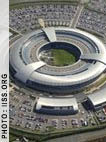
GCHQ

GCHQ

►►GCHQ recovers £300m worth of stolen information. Details stolen from more than a million credit cards across Europe, worth an estimated £300 million, have been recovered by Britain’s GCHQ signals intelligence spy agency, according to The Daily Telegraph.
►►Kuwait arrests alleged Iraqi spy. Kuwait security forces have arrested a man of Iraqi origin for alleged intelligence links with Iraq, a Kuwaiti daily said on Sunday. The man, who was arrested on Friday, and is referred to by the media as “Abu Ahmad”, was staying illegally in the country and allegedly provided Iraq with sensitive information about vital facilities in Kuwait. This is the third time in recent months that the government of Kuwait has pressed espionage charges against a spy suspect. [Update: Kuwait denies reports of spy’s arrest]
►►Hackers steal CIA and Mossad SSL certificates. The tally of digital certificates stolen from a Dutch company in July has exploded to more than 500, including ones for intelligence services like the CIA, the UK’s MI6, and Israel’s Mossad, a Mozilla developer said Sunday. According to some sources, the hackers were Iranian.

News you may have missed #581

Jin Yinan

Jin Yinan

►►CIA wants to censor book by ex-FBI agent. The agent, Ali H. Soufan, argues in the book that the CIA missed a chance to derail the 9/11 plot by withholding from the FBI information about two future 9/11 hijackers living in San Diego. He also says that torture interrogation methods against terrorism detainees were unnecessary and, ultimately, counterproductive. Both these things are known and have been publicly discussed. As The Independent correctly notes, the CIA’s objections are “less for national security reasons than out of a desire to avoid re-airing incidents that show the Agency in an unflattering light”.
►►New scandal at India’s SIGINT agency. The Indian government founded the National Technical Research Organisation (NTRO) in 2004, as a potential communications nerve center for all of India’s intelligence agencies. But the SIGINT agency has been involved in one financial scandal after the other, most recently relating to an elaborate procurement scam.
►►China silent about spy lecture leak. China has remained quiet as a recently leaked video of a Chinese general’s candid remarks on sensitive spying cases continued to draw international attention. The ministries of defense and foreign affairs have not responded to media inquiries, and numerous phone calls to National Defense University, where the general, Jin Yinan (pictured), teaches, went unanswered. State media made no mention of the story.

News you may have missed #580

Baroness Manningham-Buller

Manningham-Buller

►►Ex-MI5 director says Iraq posed not threat to UK. Iraq posed no threat to the UK when then Prime Minister Tony Blair took Britain to war there, according to Baroness Manningham-Buller, former Director of MI5, Britain’s domestic intelligence agency. In an interview, she described the Iraq war as an unnecessary action that increased the domestic threat to the UK, and “a distraction from the pursuit of al-Qaeda”. No kidding.
►►Interview about DAS wiretaps with Colombia Attorney General. This blog has covered extensively the wiretapping program against opposition politicians, journalists and civil rights activists, by Colombia’s disgraced DAS domestic intelligence agency. This Washington Post interview with Colombia’s new attorney general, Vivian Morales, displays the toothless nature of the government’s ‘investigation’ into the scandal. Morales says that her investigation has “nothing to do” with allegations that the Colombian government used funds provided by Washington to implement the wiretapping. She also says that she cannot “legally investigate” the question of whether former President Alvaro Uribe knew about the wiretaps.
►►Taiwan losing spy game with China. The deputy news editor of The Taipei Times argues that the United States is scaling back its sales of defense equipment to Taiwan because of “the penetration of almost every sector of Taiwanese society by Chinese intelligence”. Accordingly, “any arms sale to Taiwan carries the risk that sensitive military technology will end up in Beijing”, he says.

Was French mercenary a ‘spy for Gaddafi’?

Pierre Marziali

Pierre Marziali

By JOSEPH FITSANAKIS | intelNews.org |
Back in May of 2011, The New York Times reported that the co-founder of one of France’s largest private security firms had been shot dead in rebel-held Benghazi. His name was Pierre Marziali, a former paratrooper, who in 2003 co-founded Secopex, described as France’s leading private security company. At first, the rebels blamed his death on “gangs that the old regime used”. But a few days later, a press release by the rebel National Transitional Council alleged that the dead Frenchman had been shot because he was among several French “spies hired by the Gaddafi regime”. The story gets murkier when one considers that, according to the Times, Marziali had gone to Libya “on a mission which, I believe, had been ordered by France”. This should not surprise anyone. As intelNews reported on August 23, Western governments have instructed Libya’s rebel authority to use Western-supplied funds to hire Western-based mercenary companies; this ensures plausible deniability on the part of the rebels’ Western allies, while allowing them to engage with boots on the ground outside the NATO command structure. But why would members of a private security firm based in France —a country that supports the Libyan opposition— be spying for Muammar al-Gaddafi? The case of Marziali’s death shows that not everything is what it seems in Libya. Nobody seems to have information about Secopex’s precise operational mission in the North African nation. But, according to Wired magazine’s Danger Room blog, it appears that the Libyan rebels tried to apprehend Marziali and four other Frenchmen employees of Secopex, after noticing that their passports had Libyan entry stamps from Tripoli —an indication that they had entered the country with the blessings of the Gaddafi regime. Read more of this post

Video of Chinese general’s espionage lecture leaked onto YouTube

Jin Yinan

Jin Yinan

By JOSEPH FITSANAKIS | intelNews.org |
Video footage of a lecture on recent espionage incidents against China, delivered before a vetted audience by a senior Chinese military official, has been leaked to online video sites, including YouTube. The lecturer has been identified as Major General Jin Yinan, and the location appears to be one of the main lecture halls at China’s National Defense University (NDU) in Beijing. Administered by the Central Committee of the Chinese People’s Liberation Army (PLA), NDU is China’s equivalent of the United States’ West Point Military Academy. The precise date of the venue cannot be verified, though it appears to have been intended as a cautionary lesson for NDU students, on the fate that awaits Chinese officials spying against their country. In the video, General Jin laments the fact that too many Chinese Communist Party members have “become decadent” and have succumbed to selling classified national secrets to foreign adversaries. He also discusses several recent cases of espionage against China, including that of Xu Junping, a senior colonel in the PLA, who defected to the United States in December of 2000. The speaker also mentions the case of Tong Daning, a Social Security Department economist who was executed in 2006 for sharing classified Chinese economic data with Taiwanese intelligence operatives. But the primary revelations of the speech concern the cases of Li Bin and Kang Rixin, which General Jin addresses in detail. Li Bin was arrested during his tenure as China’s Ambassador to South Korea, and was eventually sentenced to a seven-year prison term for corruption. But General Jin discloses in his speech that the Ambassador was arrested for selling classified information to South Korean intelligence, and that the Chinese prosecutors decided to bring him up on corruption charges, to “avoid embarrassing [our] country”. Read more of this post

News you may have missed #578

Syria

Syria

►►CIA agent who helped kill Che wants payout from Cuba. This is from the “news that isn’t” department: Gustavo Villoldo, a Cuban-born CIA operative, who helped track down and kill Che Guevara in Bolivia, has won $2.8 billion in damages from the Cuban government, for confiscating his family property after the 1959 revolution. But he is unlikely to ever collect the money because Cuba does not recognize US court rulings.
►►Cheney wanted Bush to destroy suspected Syrian nuke site. Former US Vice President Dick Cheney says in a new memoir that he urged President George W. Bush to bomb a suspected Syrian nuclear reactor site in June 2007. But, he wrote, Bush opted for a diplomatic approach expressed misgivings. Eventually Israeli jets bombed the site. Cheney’s account of the discussion appears in his autobiography, In My Time: A Personal and Political Memoir, which is to be published by Simon & Schuster next week.
►►South Korea indicts five for spying for North. Five South Koreans, including a former parliamentary aide, have been indicted for allegedly spying for North Korea, in connection with the Wangjaesan spy ring.