News you may have missed #434 (book news edition)

Lebanon charges PKK Kurds with spying for Israel

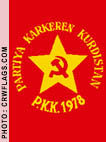
PKK banner

PKK banner

By IAN ALLEN| intelNews.org |
Lebanese authorities have detained three alleged members of the Kurdistan Workers’ Party (PKK) on charges of spying for Israel. The three arrestees, whose names have not been released to the media, were reportedly arrested last week by Lebanese military intelligence forces in Jounieh, a town located on the Mediterranean coast, about 15 kilometers north of Beirut. The arrests form part of a wider Lebanese counterintelligence offensive that has netted over 100 alleged Israeli agents in Lebanon since April of 2009. But news of the detentions have inflamed an ongoing discussion in Turkey about alleged covert links between Israeli intelligence agencies and Kurdish separatists operating in Turkey, Iraq and Syria. Read more of this post

News you may have missed #433

  • White House quiet on Pollard release speculation. The Barack Obama administration is staying silent on a reported offer from Israeli Prime Minister Benjamin Netanyahu to extend a settlements freeze in the occupied areas, in exchange for the release of Jonathan Pollard, currently held in a US prison for spying on America for Israel.
  • ‘The Secret History of MI6’ published. An authorized history of the first forty years of Britain’s Secret Intelligence Service, MI6, has been published by Bloomsbury. The book is written by Professor Keith Jeffery, of Queen’s University, Belfast, based on his unrestricted access to SIS archives of the period.
  • Pakistan accuses Briton of spying. Authorities in Pakistan are holding a 70-year-old Briton on suspicion of spying for almost a month in the country’s lawless tribal areas. Nicholas Bain, who claims he is an author researching a book, is suspected of “working for a British intelligence agency”, according to a Pakistani official.

Israel offers settlement freeze in exchange for US spy’s release

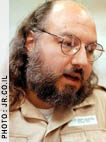
Jonathan Pollard

Jonathan Pollard

By JOSEPH FITSANAKIS | intelNews.org |
Israeli government officials are considering extending a settlement freeze in Israeli-occupied territories in exchange for the release of an American citizen serving a life sentence for spying on the US for Israel. Laura Rozen over at Politico reports that a representative of the embassy of Israel in Washington DC has denied knowledge of the rumored deal. But according to Israel Army Radio, an envoy of Israeli Prime Minister Benjamin Netanyahu has already “unofficially” passed the proposal along to US government officials. If accepted by the White House, the deal would involve the freezing of all new construction of illegal Israeli settlements in the West Bank, in exchange for the release of Jonathan Jay Pollard, a US Navy intelligence analyst who in 1987 was sentenced to life imprisonment for spying on the US on behalf of Israel. Pollard, who has since been awarded honorary Israeli citizenship, and is considered a hero in Israel, has so far served 25 years in prison. Read more of this post

News you may have missed #430

  • Russians arrested outside US power plant. Police in the US state of Georgia have arrested one Kazakh and two Russian citizens, who were carrying “a machete, shovel, wire cutters and ski masks”, outside Georgia Power’s Plant McIntosh, at 1:00 in the morning. Hmm….
  • MI6 spy could have climbed into sports bag before death. British detectives reportedly believe that someone else padlocked GCHQ and MI6 employee Gareth Williams into the sports bag where his body was found on August 23. But they remain open to the possibility that Dr Williams climbed into the bag as part of a sex game and then suffocated.
  • Tamils claim espionage behind Canada HQ break-in. The Canadian Tamil Congress believes that lists containing the names of hundreds of Tamil asylum-seekers were stolen from its Toronto headquarters by Sri Lankan government spies.

News you may have missed #416 (Iran edition)

  • Israel not to attack Iran in 2011, say US sources. The Obama administration, citing evidence of continued troubles inside Iran’s nuclear program, has persuaded Israel that it would take roughly a year for Iran to complete a “dash” for a nuclear weapon. US officials say the assessment has dimmed the prospect that Israel would pre-emptively strike Iran within the next year.
  • Iran launches first spy drone. Iran has launched a domestically made long-range high-altitude drone, called Karrar, according to state media. Hamed Saeedi, managing director of Farnas Aerospace Company, which is in charge of the project, said plans are under way to produce additional drones and unmanned choppers.
  • Iranian tried for espionage collapses in Armenian court. Behnam Bagheri, an Iranian citizen being tried in Armenia on charges of spying for Azerbaijan, collapsed in court in Yerevan on August 19 while delivering his defense speech, according to reports. In a similar case in October of 2009, Armenia charged one of its own officers with spying for Azerbaijan.

Bookmark and Share

Analysis: Russian-Czech spy scandals show new direction in Russian espionage

ÚZSI seal

ÚZSI seal

By JOSEPH FITSANAKIS | intelNews.org |
Last July saw the resignations of three Czech Generals, including the head of the president’s military office and the country’s representative to NATO, following revelations that one of their senior staffers had a relationship with a Russian spy.  Intelligence observers have become accustomed to frequent reports of Russian-Czech spy scandals in recent years. But, according to reports from Prague, recent Russian intelligence activity in the Czech Republic may indicate a change of direction by Moscow. Some say that Russia’s new espionage doctrine focuses less on military intelligence in the post-US-missile-shield strategic environment, and more on political and economic espionage. To be sure, Russia’s intelligence presence in the Czech capital remains substantial: Czech counterintelligence sources estimate that at least 60 –that is, one in three– Russian diplomats in Prague are engaged in intelligence-related activities. But the intensity of Russian espionage in Prague is not unique. Read more of this post

News you may have missed #411

  • Third Lebanese telecom worker charged with spying for Israel. A Lebanese prosecutor has charged a third state telecommunications employee with spying for Israel. Milad Eid, who worked at the state-owned fixed-line operator Ogero, is accused of “dealing with the Israeli enemy [and] giving them technical information in his position as head of international communications at the Telecommunications Ministry”.
  • Author Roald Dahl was British spy, new book claims. A new book by Donald Sturrock, entitled Storyteller: The Life of Roald Dahl, claims that children’s author worked for British Security Coordination (BSC), a 1940s secret service network based in the United States, and was ‘run’ from New York by Canadian industrialist William Stephenson.
  • Israeli nuclear whistleblower wants to leave country. Nuclear whistle-blower Mordechai Vanunu has been released from prison after serving a 10-week sentence for violating the terms of his parole by speaking to a foreign journalist. Upon his release, he asked that he be allowed to leave the country.

Bookmark and Share

Mossad operative to avoid jail in extradition deal

Uri Brodsky

"Uri Brodsky"

By IAN ALLEN | intelNews.org |
An operative of Israeli intelligence agency Mossad, who was arrested in Poland on charges of forging a German passport, will avoid prison time for the offense, under a suspected Polish-German-Israeli secret deal. The man, whose travel documents identify him as Uri Brodsky, was arrested upon arriving in Poland on June 4. He is wanted by German prosecutors for procuring a forged German passport for use by a member of a Mossad hit squad, who used it to enter Dubai, United Arab Emirates, in mid-January of this year. The user of the forged passport is thought to have participated in the killing of Mahmoud al-Mabhouh, a Hamas weapons procurer, who was found dead in his luxury Dubai hotel room on January 20.  German prosecutors believe that Brodsky, who worked in Germany under the name of Alexander Werin, assisted numerous Mossad operatives acquire forged identity papers of several European countries, including Estonia, Latvia, Austria and Switzerland. Read more of this post

News you may have missed #410

  • Clapper confirmed as US DNI in Senate-White House deal. Retired general James Clapper has been unanimously confirmed by the Senate as US National Intelligence Director, after a series of last-minute deals between objecting Republican Senators and the White House, which nominated Clapper several months ago.
  • Canada rejects residency request by Pakistani ex-ISI spy. The Canadian government has refused a permanent residency application by Haroon Peer, a Danish citizen, who worked for three Pakistani intelligence agencies, including the Inter-Services Intelligence directorate. Haroon is married to a Canadian-born woman and has three Canadian-born children.
  • Lebanon in shock after ex-general’s arrest on spy charges. Last week’s arrest of Fayez Karam, a well-respected retired general and politician with the Hezbollah-allied Christian Free Patriotic Movement (FPM), on suspicion of spying for Israel, has sent shock waves through Lebanon and left many wondering how deep the Jewish state has infiltrated the country.

Bookmark and Share

News you may have missed #408

  • Russian military spy supervised Czech prisons. Robert Rakhardzho, a Russian spy whose relationship with a Czech female Army major prompted the resignation of three senior Czech military officials, worked as a psychologist at the Czech Prison Service headquarters until last September. Rakhardzho is now hiding in Russia.
  • US undercover feds able to easily obtain fraudulent passports. Gregory Kutz, an investigator for the US Government Accountability Office, testified last week to a Senate panel about how his team of undercover Federal agents was able to get the State Department to issue five of the seven e-Passports it requested using fraudulent information. The government apparently failed to detect such basic red flags as a fake driver’s license.
  • Russia widens powers of KGB successor agency. Russian president Dmitry Medvedev has signed a law widening (again) the powers of the Federal Security Service, the KGB’s main successor agency. The new law allows the FSB to issue warnings to people suspected of preparing to commit “crimes against Russia’s security”. Perpetrators face fines or up to 15 days detention.

Bookmark and Share

Lebanon releases German suspected of spying for Israel

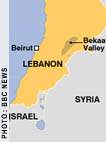
Bekaa Valley, Lebanon

Bekaa Valley

By JOSEPH FITSANAKIS | intelNews.org |
German officials have confirmed reports from Lebanon that a German citizen has been released after being questioned in connection with Israeli espionage activity in eastern Lebanon. Manfred Peter Mog, 58, who has lived in Lebanon since 1999, was detained on Monday by Lebanese counterintelligence officers, who suspected him of sharing “sensitive information” with Israeli intelligence operatives. It is believed that Mr. Mog, an engineer who has worked since 2009 at the Liban Lait dairy factory in Lebanon’s Bekaa Valley, was questioned in connection to “sophisticated transmitters” found in his possession. But the German Foreign Ministry on Wednesday firmly denied that the German citizen had had any charges brought against him by the Lebanese government. Soon afterwards, unnamed Lebanese officials confirmed that Mr. Mog had indeed been released without charges, following intense questioning by counterintelligence officers. It is worth noting that there have recently been several intelligence stories linking Israel and Germany. Read more of this post

News you may have missed #402

Bookmark and Share

Did fugitive spy Metsos lead to Russian spy arrests?

Christopher Metsos

C.R. Metsos

By JOSEPH FITSANAKIS | intelNews.org |
Soon after the June 27 arrests of 10 Russian non-official-cover (NOC) spies in several US cities, one name came to the attention of intelligence observers: Sergei Tretyakov. Tretyakov was a senior Russian Foreign Intelligence Service (SVR) officer who defected to the US in 2000, while second-in-command at the SVR station in Russia’s United Nations mission in New York –the same outfit that run the deep-cover operatives arrested in June by the FBI. The Bureau’s own admission that it began monitoring the operatives around 2001, has caused many to believe that Tretyakov, who died suddenly on June 13, at age 53, may have tipped off the FBI about the NOCs. But Russian investigative journalist Yulia Latynina has raised a second possibility, no less intriguing than the first. Namely that it was not Tretyakov who betrayed the deep-cover operatives to the FBI, but rather the mysterious so-called 11th spy, Christopher R. Metsos, a seasoned SVR operative who is said to have acted as a go-between and financier for all 10 Russian spies. Read more of this post