News you may have missed #354

  • Germany arrests Libyans on spy charges. Two Libyans have been arrested in Berlin on suspicion of working as secret agents, spying on members of the Libyan opposition in Germany. The two, identified only as 42-year-old ‘Adel Ab’ and 46-year-old ‘Adel Al’, are being held in custody in Berlin, pending possible spying charges.
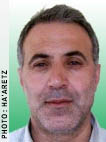
  • Israeli handler discusses relationship with Hamas spy. Israeli broadsheet Ha’aretz has aired a fascinating interview with ‘Captain Loai’, a Shin Bet operative who handled Mosab Hassan Yousef, son of a senior Hamas official, who was an informant for Israeli intelligence for at least a decade. Note the strong personal connection between handler and informant, which would be considered unprofessional in US intelligence culture.
  • Analysis: Iran’s murky link to al-Qaeda confounds CIA. It’s one of the enduring mysteries of the US ‘war on terrorism’: what will become of the al-Qaeda leaders and operatives who fled into Iran after 9/11 and have been detained there for years?

Bookmark and Share

News you may have missed #353

  • Name of British Mossad agent handed to Interpol. Dubai police have identified another suspect in the January murder of Hamas operative Mahmoud al-Mabhouh, by Israeli intelligence agency Mossad. He is reportedly a 62-year-old British citizen, who is believed to be currently hiding in western Africa.
  • Russia jails man for spying for the US. Gennady Sipachyov, a Russian whose age and profession have been kept secret by Moscow, has been sentenced to a four-year sentence for allegedly emailing secret military maps identifying classified Russian military infrastructure to the US Pentagon in 2008. Earlier this month, a Russian court rejected an appeal by another alleged US spy, Igor Sutyagin.
  • Bulgarian government wants to copy CIA. Bulgaria’s Defense Minister, Anyu Angelov, has proposed the merging of intelligence services to create a mega-structure of the CIA type. Meanwhile, a panel investigating Bulgaria’s communist-era police files has exposed two of the country’s former counterintelligence heads as former communist state security agents.

Bookmark and Share

News you may have missed #350

Bookmark and Share

Israel arrests prominent Arabs on Hezbollah spying charges

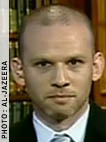
Omar Sayid

Omar Sayid

By JOSEPH FITSANAKIS | intelNews.org |
Israeli authorities have arrested two prominent Arab-Israeli political activists, accusing them of spying on behalf of Lebanese Shiite organization Hezbollah. The arrestees are Omar Sayid (or Sayeed), who campaigns on behalf of Israeli-Arab political party Balad, and Amir Makhoul, who heads Ittijah. This Haifa-based group, known as the Union of Arab Community-Based Associations, aims to combat alleged cases of discrimination against Arab-Israelis. Sayid was arrested by members of the Israeli police and intelligence agency Shin Bet on April 24, and Makhoul was arrested on May 6. But the Israeli media were not allowed to report on the arrests until late last Sunday, due to Israeli censorship laws enforced in “national security investigations”. Nevertheless, news of the arrests began circulating almost immediately on Arab electronic media outside of Israel, and the Israeli government was eventually forced to lift the gag order, upon learning that hundreds of Haifa residents were preparing a demonstration on Monday in support of the two arrestees. Read more of this post

News you may have missed #347

  • CIA drones now target non-listed targets in Pakistan. It used to be the case that the CIA unmanned drone attacks in Pakistan were directed at confirmed Taliban senior operatives. But an American official has said that the CIA does “not always have their names”. Instead, the Agency targets them based on their “actions over time” that make it “obvious that they are a threat”.
  • Democrat Senator presses Obama for more NSA powers. Senator Barbara Mikulski (D-MD) is pressing the Obama Administration to give the National Security Agency more power to oversee privately owned portions of the Internet. Speaking on Thursday, Mikulski complained that “we don’t know who the hell is in charge” over the security of private networks.
  • Lebanese officer charged as Israel spy may get death. A Lebanese prosecutor has requested the death penalty for Gazwan Shahin, an army colonel charged with having provided Israel’s spy agency with pictures, information and coordinates of Lebanese civil and military posts during and after the 2006 Israeli invasion of Lebanon.

Bookmark and Share

News you may have missed #346 (Iran spy ring edition)

Bookmark and Share

News you may have missed #341

  • Russian court rejects ‘spy’ scientist’s appeal. A Russian court has rejected an appeal for the release of academic Igor Sutyagin, former division head in the Russian Academy of Sciences’ USA and Canada Institute, who is serving a 15-year sentence for allegedly passing state secrets to foreign officials.
  • Ex-CIA agent’s arrest in VA was eventful, say sources. We reported earlier this week that Andrew M. Warren, the CIA’s Algiers station chief, who is accused of having drugged and raped two Algerian women at his official residence, was arrested at a Norfolk, Virginia motel, after he failed to show up for a court hearing. It now appears that Warren “had a gun in his waistband […] and officers used a taser to subdue him”.
  • Documents show CIA thought Gary Powers had defected. Declassified documents show the CIA did not believe that Gary Powers, who piloted the U2 spy plane shot down over Russia in 1960, causing the U2 incident, had been shot down. Instead, the agency spread the rumor that Powers “baled out and spent his first night as a defector in a Sverdlovsk nightclub”!

Bookmark and Share

Alleged Iranian spy cell busted in Kuwait

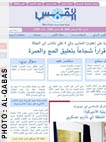
Al-Qabas

Al-Qabas website

By IAN ALLEN | intelNews.org |
A leading Kuwaiti newspaper has claimed that government agencies captured members of an alleged Iranian spy cell in the Gulf state. Citing “senior intelligence sources”, Al-Qabas daily said that Kuwaiti counterintelligence officers arrested at least seven men last week, and are looking for up to seven others, in connection with an extensive espionage ring operating on behalf of the Islamic Revolutionary Guards. The Revolutionary Guards are an independent administrative and paramilitary institution in Iran, tasked with –among other things– exporting the Iranian Revolution abroad. They handle most of Iran’s intelligence operatives around the world, who, according to some observers, number in the tens of thousands. Read more of this post

News you may have missed #339 (arrest edition!)

  • US couple arrested for spying for Cuba cooperating, say authorities. Admitted spies Walter and Gwendolyn Myers have met with US federal officials “50 to 60 times” to divulge details of their three decades of spying for Cuba, Justice Department officials said Tuesday. The couple pleaded guilty in November to working for the government of Caribbean island.
  • Indian diplomat arrested for spying for Pakistan. Madhuri Gupta, a second secretary at the Indian high commission in Islamabad, Pakistan, has been arrested and accused of passing on secrets to Pakistan’s ISI spy agency. Indian officials believe she may be part of a wider spy ring.
  • Former CIA station chief arrested in Virginia. Andrew M. Warren, the CIA’s Algiers station chief, who is accused of having drugged and raped two Algerian women at his official residence, has been arrested at a Norfolk, Virginia motel, after he failed to show up for a court hearing last week. It is unclear why he skipped the hearing and why he was staying at the motel in his hometown.

Bookmark and Share

New book on Canada’s mysterious Agent 235

Johann Heinrich Amadeus de Graaf

De Graaf

By IAN ALLEN | intelNews.org |
A new book published by the Pennsylvania State University Press sheds new light into the life and work of mysterious Agent 235, Canada’s mysterious mid-20th-century spy known as ‘Johnny’. In Johnny: A Spy’s Life, R.S. Rose and Gordon Scott present the outcome of 14 years of research on ‘Johnny’, whose real name was Johann Heinrich Amadeus de Graaf. De Graaf was born in Germany in 1894, but later moved to Britain, and at the start of World War II worked as an informant for MI6. Although he conducted some of his operations in Germany, most of them took place in the UK, where he unmasked a number of native pro-Nazi sympathizers and agents of the Gestapo. Read more of this post

News you may have missed #333

  • Ex-MI6 officer allegedly betrayed spies. Daniel Houghton was arrested last month while trying to sell classified documents to MI5 spooks posing as foreign agents. But now the former MI6 employee is accused by British authorities of trying to trade lists of British intelligence personnel. It is unclear which nation’s spy service Houghton believed he was selling to at the time of his arrest, though it is believed that Dutch intelligence tipped off MI5.
  • NSA director under friendly fire in US Senate. US National Security Agency director, Army Lt. Gen. Keith Alexander, spoke last Thursday before the Senate Armed Services Committee. He addressed the synergies among the NSA, the newly created Cyber Command, and the Department of Homeland Security, as well as the concept of cyberwar: “In general terms, I do think a cyberwar could exist”, he said, but only “as part of a larger military campaign”.

Bookmark and Share

News you may have missed #332

Bookmark and Share

News you may have missed #329

  • Iran insists US hikers had intelligence links. Iran’s intelligence minister, Heydar Moslehi, has said that Americans Shane Bauer, Joshua Fattal and Sarah Shourd, who were arrested on Iranian soil last July, “were in contact with intelligence services”. The evidence would “soon be made public”, he said.
  • Gerdes case shows difficulty of CIA jobs. The case of CIA employee Kerry Gerdes, who was recently convicted for falsifying interview reports while performing background checks on CIA employees and potential employees, reveals how difficult the job is for young CIA recruits, who expect it to be exciting or glamorous, according to seasoned investigators.
  • US still denying India access to Headley. There has been intense speculation in India and Pakistan that David Coleman Headley, a former US Drug Enforcement Administration informant, who was arrested by the FBI in October for plotting an attack on a Danish newspaper, is in fact a renegade CIA agent. Could this be why the US is denying India access to Headley?

Bookmark and Share

News you may have missed #328 (breaking)

  • Breaking: Real IRA admits NI MI5 base bomb. The Real IRA has admitted it was behind a car bomb which exploded shortly after midnight local hour, outside the Palace Barracks army base, in Holywood, County Down, which houses MI5’s Northern Ireland headquarters. Police said no warning was given.
  • Venezuela releases 4 of 8 alleged spies. Four of the eight Colombians arrested by Venezuela on espionage charges last week have been released, after a judge found there was not enough evidence to take them to trial. Meanwhile Venezuelan president Hugo Chávez has said that the alleged spy ring used “secret or semi-secret codes”.
  • Analysis: Security services will determine fate of Kyrgyz uprising. Unlike the 2005 so-called Tulip Revolution, this time the anti-government protesters in Kyrgyzstan are armed. But the real question may be whether they have the support of (and control over) the Internal Security Services and the military.

Bookmark and Share

Malaysia to investigate alleged Israeli spy infiltration

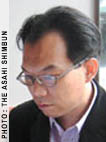
Anwar Ibrahim

By JOSEPH FITSANAKIS | intelNews.org |
The Malaysian government has ordered an investigation into claims by a prominent opposition leader that Israeli spies, posing as communications technicians, infiltrated the headquarters of the country’s national police. Anwar Ibrahim, leader of Parti Keadilan Rakyat (People’s Justice Party), told the Malaysian parliament on April 4 that he was in possession of police documents confirming the infiltration. According to Anwar’s allegations, two former officers of Israel’s Military Intelligence Directorate were able to enter the head office of Malaysia’s national police, acting as representatives of a private communications technology contractor. While there, Anwar said, they were able to access the police’s communications network. Read more of this post